




 here!
I’m your shopping assistant for PC builds, upgrades, and everything tech.
Got questions? Ask away!
Start a conversation
here!
I’m your shopping assistant for PC builds, upgrades, and everything tech.
Got questions? Ask away!
Start a conversation





Any questions? Ask CelesteSM will help you find out quickly.


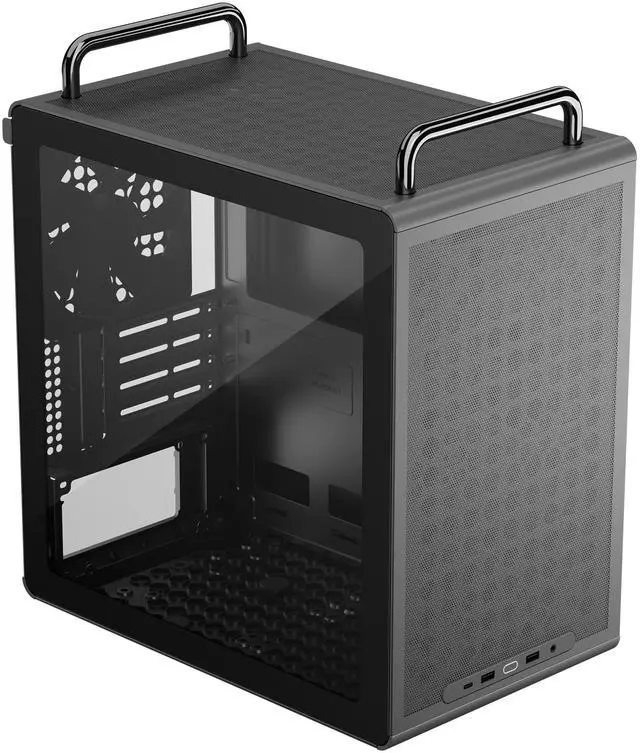
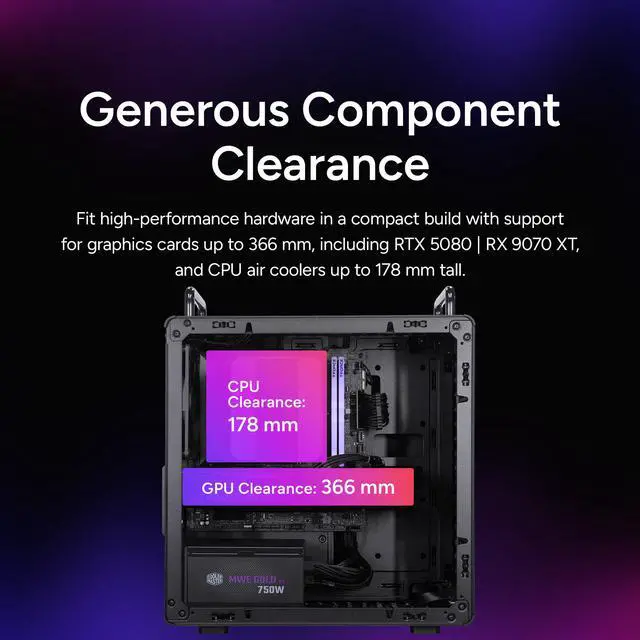
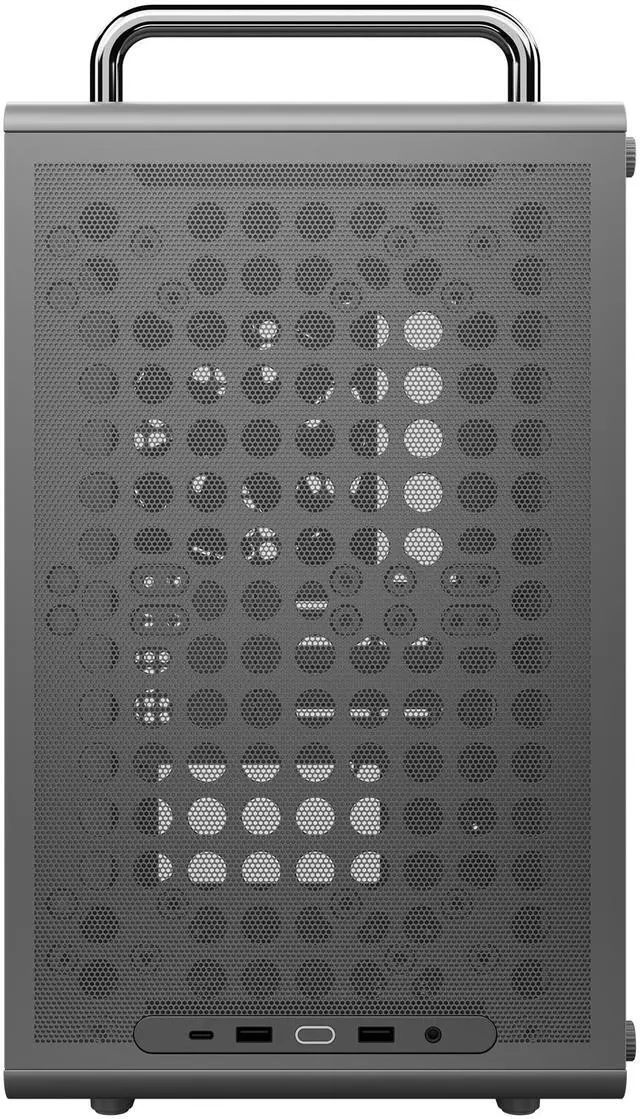
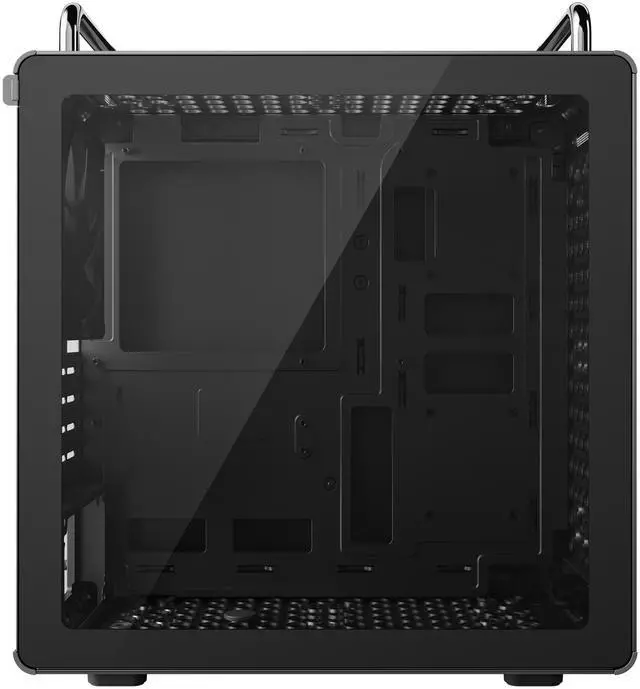
The Cooler Master QUBE 340 is a compact Micro-ATX/Mini-ITX PC case for builders who want a small footprint, modular layout flexibility, and strong hardware support, including GPUs up to 366 mm and CPU air coolers up to 178 mm.
| Attribute | Value |
|---|---|
| Best For | Building compact Micro-ATX or Mini-ITX systems that need room for long graphics cards (366 mm) and support for up to 240 mm AIO radiators |
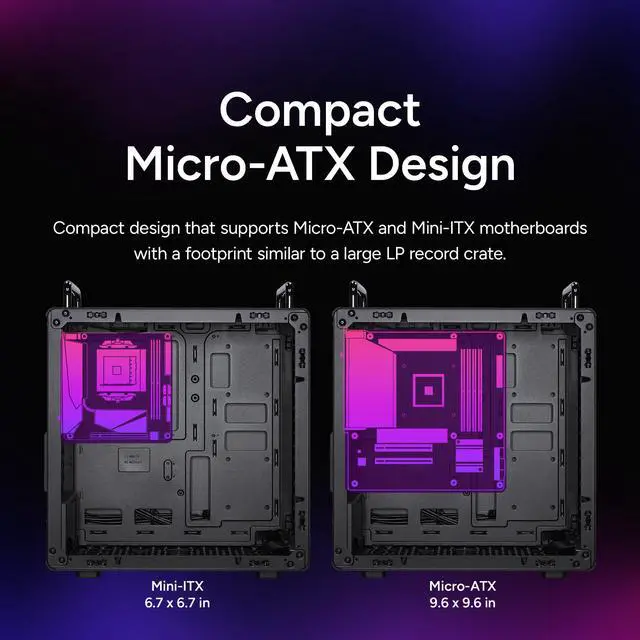
| Compatibility & Form Factor | Supports Micro-ATX and Mini-ITX motherboards in a compact Mini-Tower / medium-sized chassis |
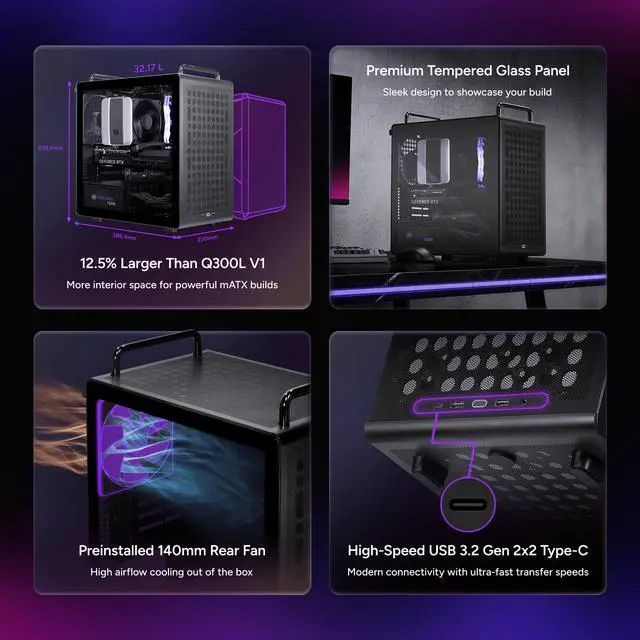
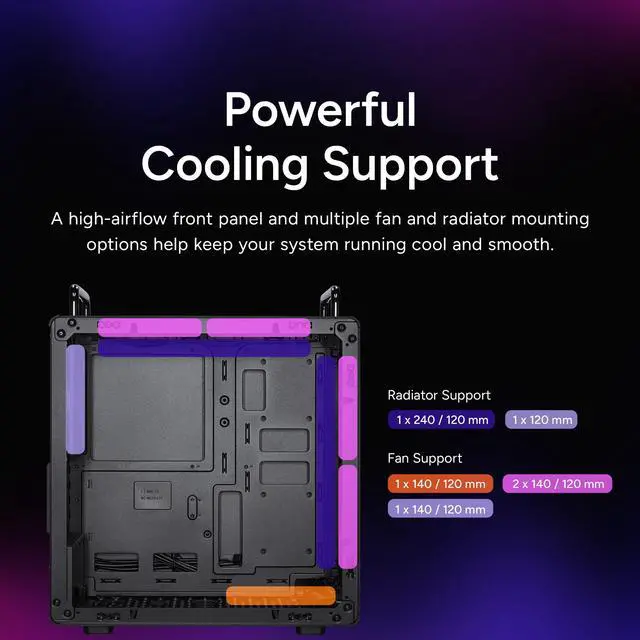
| Cooling & Radiator Support | Air and water cooling support with multiple fan mounts (front/top/rear/bottom) and a preinstalled 140 mm rear fan; radiator support up to 240 mm (front or top) and up to 120 mm in other positions |
| GPU, CPU & PSU Clearance | Supports GPUs up to 366 mm (external notes indicate this may be measured without a front fan), CPU coolers up to 178 mm tall, and PSUs up to 200 mm (PSU length may be limited if a bottom fan is installed) |
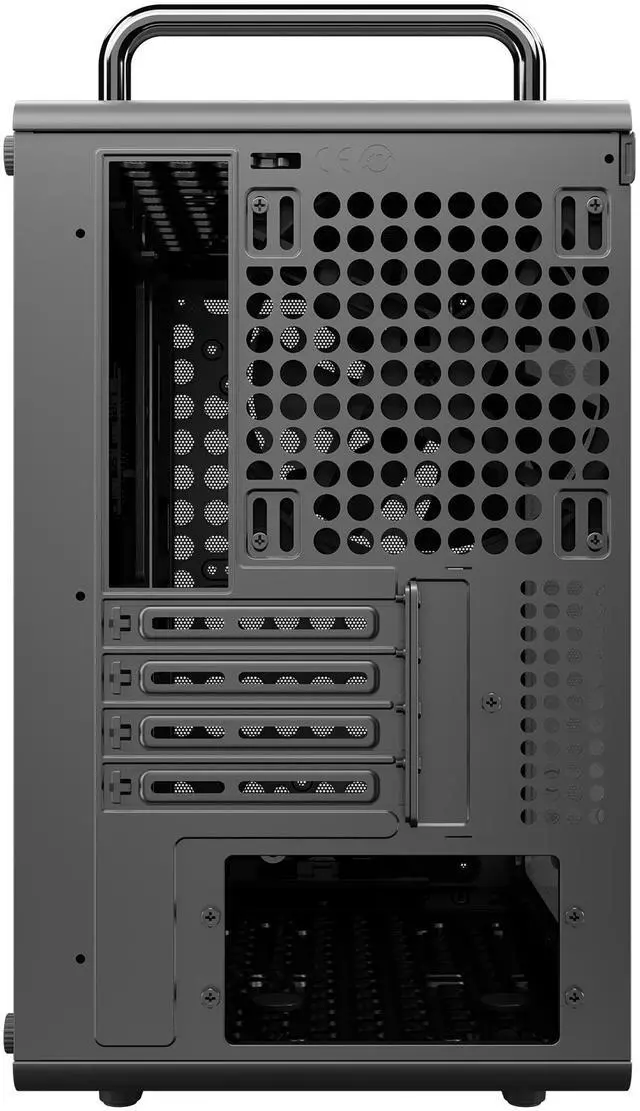
| Drives & Expansion | One 3.5-inch drive bay and one 2.5-inch drive bay, with four expansion slots |
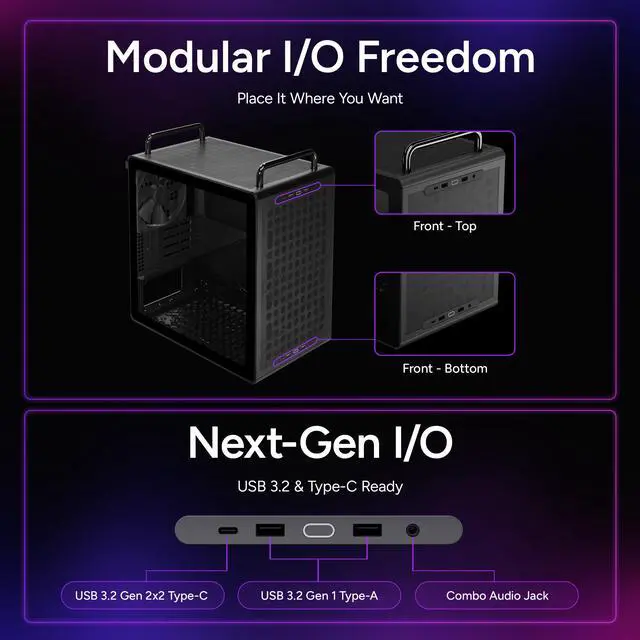
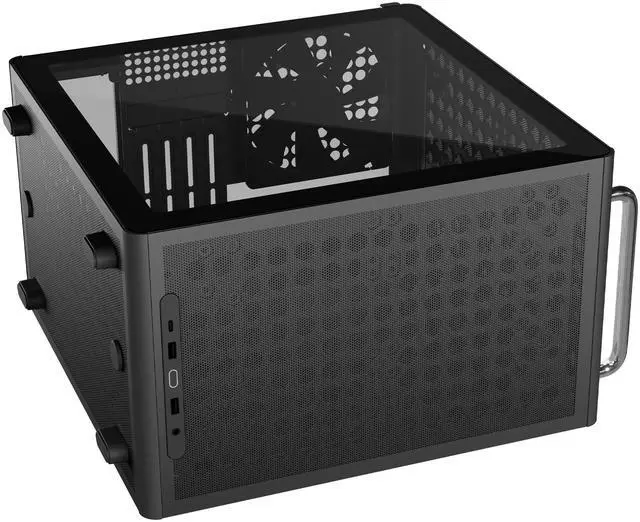
| Front I/O & Internal Ports | Front I/O includes 2x USB 3.2 Gen1 Type-A, 1x USB 3.2 Gen2x2 Type-C, and a 3.5 mm combo mic/audio jack |
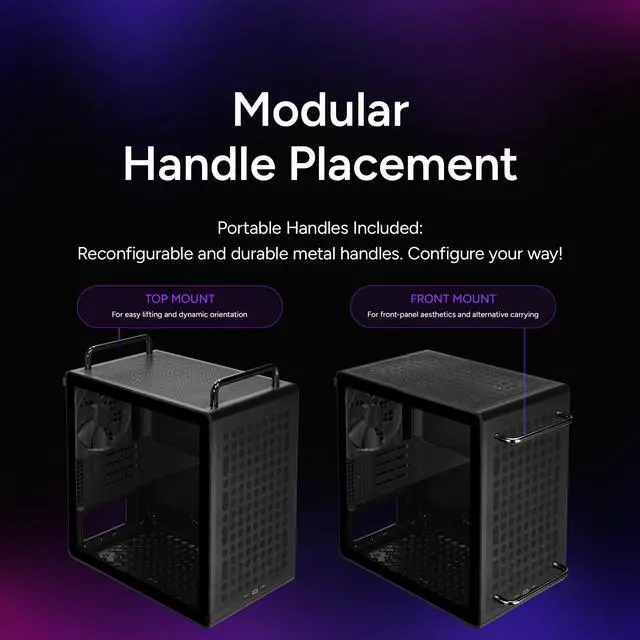
| Chassis & Exterior Features | Metal chassis with a tempered glass panel, magnetic dust filters on bottom/front/top, modular/movable I/O panel and portable handles |
| Dimensions & Weight | Product dimensions 374 x 230 x 374 mm; weight 6 kg |
| Model Identifiers | Cooler Master QUBE Series — Model Q340-KGNN-S00 (Qube 340 Black); Manufacturer Cooler Master; Color: Black |
Q: Should I buy the Cooler Master QUBE 340 or the ASUS Prime AP201 for a Micro-ATX build?
A: Choose the QUBE 340 if you want a more configurable small-footprint case with movable front I/O, carry handles, and support for both vertical and horizontal orientation. Choose the ASUS Prime AP201 if your priority is a more conventional airflow-focused layout with larger top radiator support, including up to 360 mm, and simpler off-the-shelf compatibility planning. In short: QUBE 340 fits buyers who value modularity and portability, while AP201 fits buyers who want a more straightforward performance-first Micro-ATX case.
Q: Is the QUBE 340 a better choice than the Cooler Master Q300L V3?
A: The QUBE 340 is the better choice if you want the newer modular version of Cooler Master's compact Micro-ATX concept. It adds a more flexible exterior layout, movable I/O placement, carry handles, and access to the QUBE accessory ecosystem while keeping the same general board class and compact positioning. The Q300L V3 makes more sense if you want a simpler, likely more budget-oriented case without the extra modular features.
Q: Should I get the QUBE 340 or move up to the QUBE 500 Flatpack?
A: Buy the QUBE 340 if you are building around Micro-ATX or Mini-ITX and want a smaller case that is easier to carry and easier to place on a desk or shelf. Move up to the QUBE 500 Flatpack if you need broader motherboard support, including ATX, and want more expansion flexibility from the larger chassis. The trade-off is simple: QUBE 340 is the space-saving option, while QUBE 500 Flatpack is the more expandable option.
Q: Is the QUBE 340 better for a portable LAN-style PC or for a max-cooling build?
A: The QUBE 340 is better suited to a portable LAN-style or space-conscious build than to a radiator-heavy showcase build. Its handles, compact footprint, and movable I/O design align well with users who relocate the system or change placement often. If your priority is the largest radiator support and the least restrictive cooling layout, a larger Micro-ATX case such as the AP201 is usually the more practical choice.
Q: Is the Cooler Master QUBE 340 a good choice for a compact high-performance Micro-ATX build?
A: Yes, if you want a smaller Micro-ATX case without giving up support for large modern parts. The QUBE 340 supports Micro-ATX and Mini-ITX boards, GPUs up to 366 mm, CPU air coolers up to 178 mm, and up to 240 mm radiators. That makes it better suited to high-performance compact builds than many small mATX cases that become restrictive with long GPUs or tall air coolers. The trade-off is that it is still a compact case, so builder comfort, cable routing, and drive expansion are more limited than in a larger mid-tower.
Q: Is the QUBE 340 easy to move for LAN parties or desk-to-desk transport?
A: It is more travel-friendly than a typical tempered-glass Micro-ATX case because it includes portable handles and has a compact 374 x 230 x 374 mm footprint at about 6 kg. That said, it is still a steel-and-glass desktop case, not a rugged travel chassis. It is best for occasional transport between rooms, offices, or events rather than frequent rough travel. If portability is the main priority, the handles are a real advantage; if durability in transit matters most, the tempered-glass panel is the main compromise.
Q: Who is the QUBE 340 best suited for?
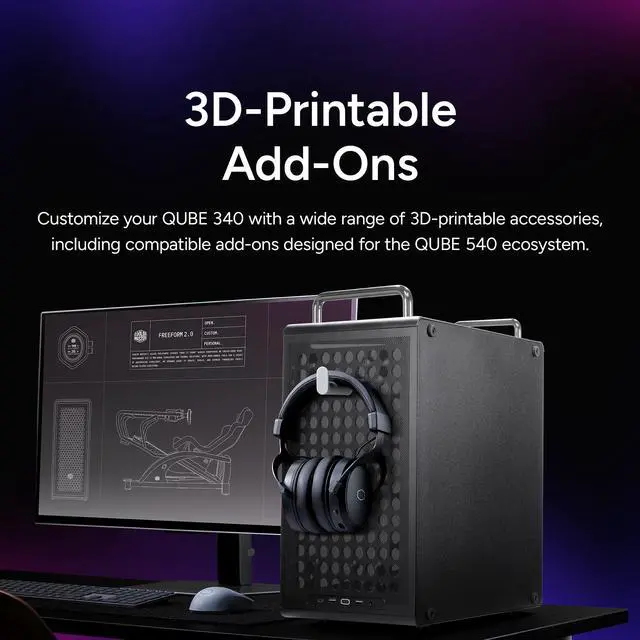
A: The QUBE 340 is best for builders who want a compact Micro-ATX or Mini-ITX gaming or productivity PC with some customization flexibility. It is a strong fit for users who care about desk footprint, airflow, and part compatibility, and who may want features like movable front I/O, reconfigurable handles, and 3D-printable add-ons. It is less suitable for buyers who need many drive bays, maximum internal space for easy building, or a simpler no-planning case layout.
Q: What are the main trade-offs versus a roomier Micro-ATX alternative like the ASUS AP201?
A: The QUBE 340 offers more portability-oriented design, including handles, movable I/O placement, and a more modular layout. A roomier alternative like the ASUS AP201 is usually the safer choice if your priority is easier building, more cooling headroom, or fewer clearance compromises in complex builds. The QUBE 340 is the better fit when compact size and customization matter more; the AP201-style option is better when build convenience and extra internal flexibility matter more.
Q: Does the QUBE 340 make sense if I need lots of storage or expansion?
A: Only if your storage needs are modest. The QUBE 340 includes 1 internal 3.5-inch bay, 1 internal 2.5-inch bay, and 4 expansion slots, which is enough for a modern gaming build or a clean productivity system, but not ideal for users planning several drives or broader internal expansion. If you want a compact case for a single-GPU build with limited local storage, it fits well. If you need many hard drives or more upgrade room, a larger case is the better choice.
Q: Who is the Cooler Master QUBE 340 best suited for?
A: The QUBE 340 is best for builders who want a compact micro-ATX case with more hardware clearance than most small-form-factor cases. It fits Micro-ATX or Mini-ITX boards, supports GPUs up to 366 mm, CPU coolers up to 178 mm, includes a carry-handle concept, and offers movable I/O plus modular customization. It is a better fit for compact performance builds than for buyers who want the smallest possible case.
Q: Is the QUBE 340 a good choice if I want a compact case without giving up large GPU support?
A: Yes, if your priority is balancing compact size with mainstream high-end part support. The case is small for a micro-ATX tower but still allows a 366 mm GPU, a 200 mm PSU, and a 178 mm air cooler. The trade-off is that it is not an ultra-small chassis, so buyers focused only on minimum volume may find smaller ITX cases more appealing.
Q: What are the main trade-offs of buying the QUBE 340?
A: The main trade-offs are feature priorities rather than raw compatibility. The QUBE 340 favors modular layout options, a tempered-glass side panel, and portability features over alternative panel choices or more specialized airflow layouts. Based on discussion around the case, buyers looking for side-mounted fan positions, mesh side panels, or more traditional non-glass variants may see it as close to ideal but not fully aligned with those preferences.
Q: Is the QUBE 340 worth buying now, or is it still too early?
A: It looks promising on paper for compact mATX builders, but discussion volume is still limited and early community posts were asking for hands-on reviews rather than sharing long-term experience. That means it is easier to recommend for buyers who are comfortable deciding from specifications and layout features, and harder to recommend for buyers who want broad real-world validation first.


