




 here!
I’m your shopping assistant for PC builds, upgrades, and everything tech.
Got questions? Ask away!
Start a conversation
here!
I’m your shopping assistant for PC builds, upgrades, and everything tech.
Got questions? Ask away!
Start a conversation



Any questions? Ask CelesteSM will help you find out quickly.
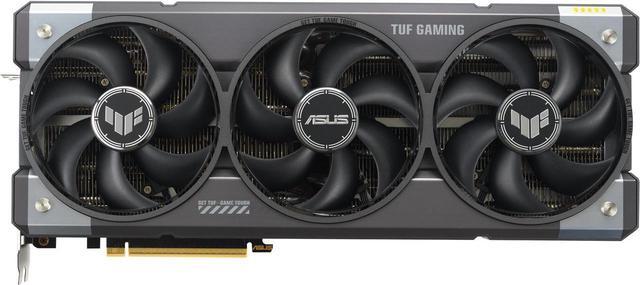
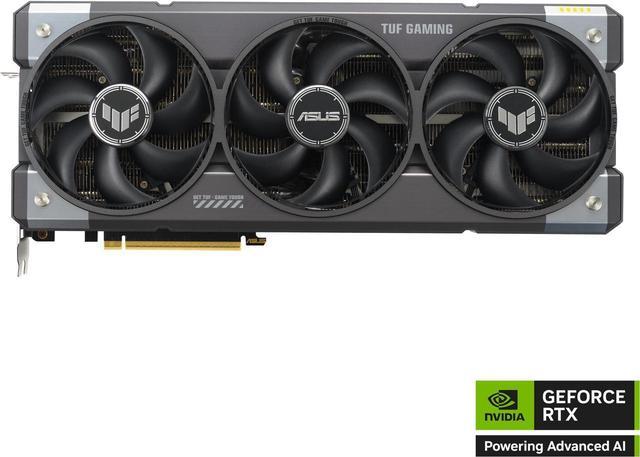
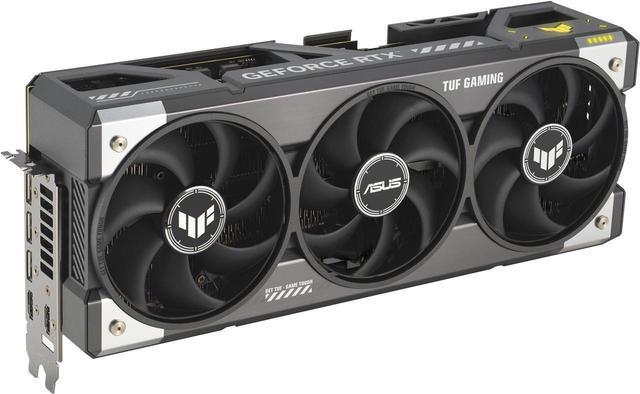
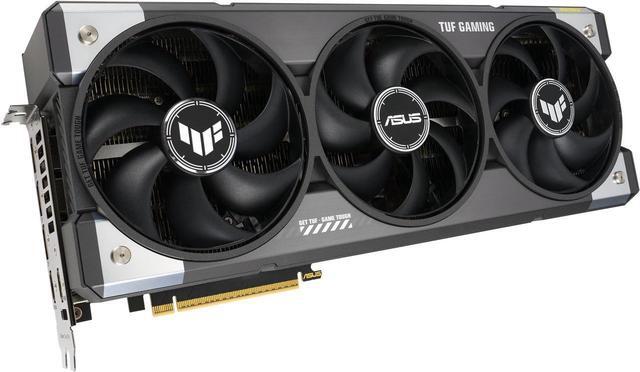
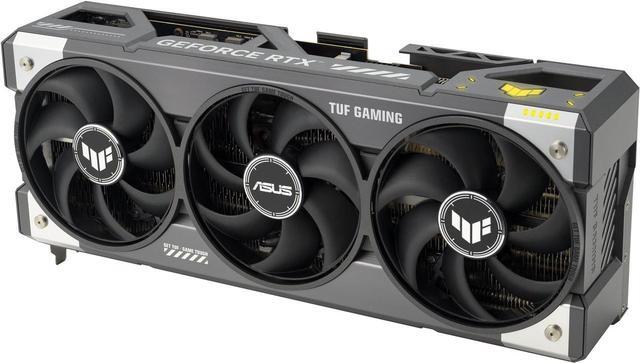
The ASUS TUF Gaming GeForce RTX 5090 is a high-end 32GB GDDR7 graphics card built for 4K to 8K gaming, advanced creator workflows, and AI-ready desktop builds that need top-tier GPU memory, display output flexibility, and strong cooling in a full-size ATX system.
| Attribute | Value |
|---|---|
| Best For | High‑end desktop gaming and VR-ready workstation use requiring large-frame ATX cards with 32GB GDDR7 VRAM, multi-monitor support, and a high‑wattage PSU |
| Model Identifiers | ASUS TUF Gaming — model TUF-RTX5090-32G-GAMING (Part Number 90YV0LY1-M0AA00) |
| GPU And Architecture | NVIDIA GeForce RTX 5090 (NVIDIA GeForce RTX 50 Series) using Blackwell architecture |
| Memory Configuration | 32GB GDDR7 on a 512‑bit memory bus; effective memory clock 28000 MHz (28 Gbps) |
| Clocks And CUDA Cores | Game clock 2437 MHz, boost clock 2407 MHz, 21,760 CUDA cores |
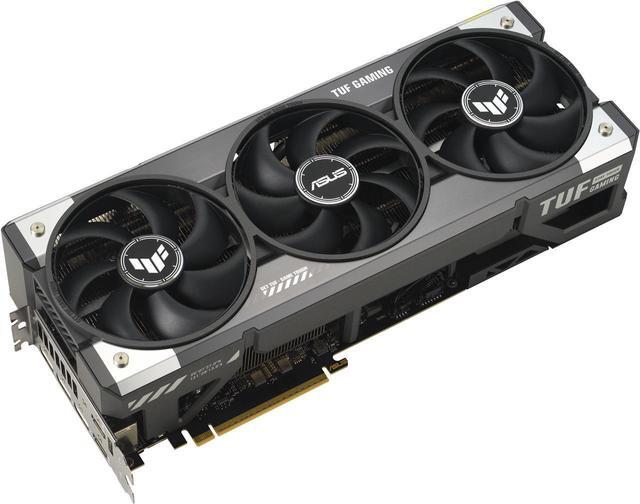
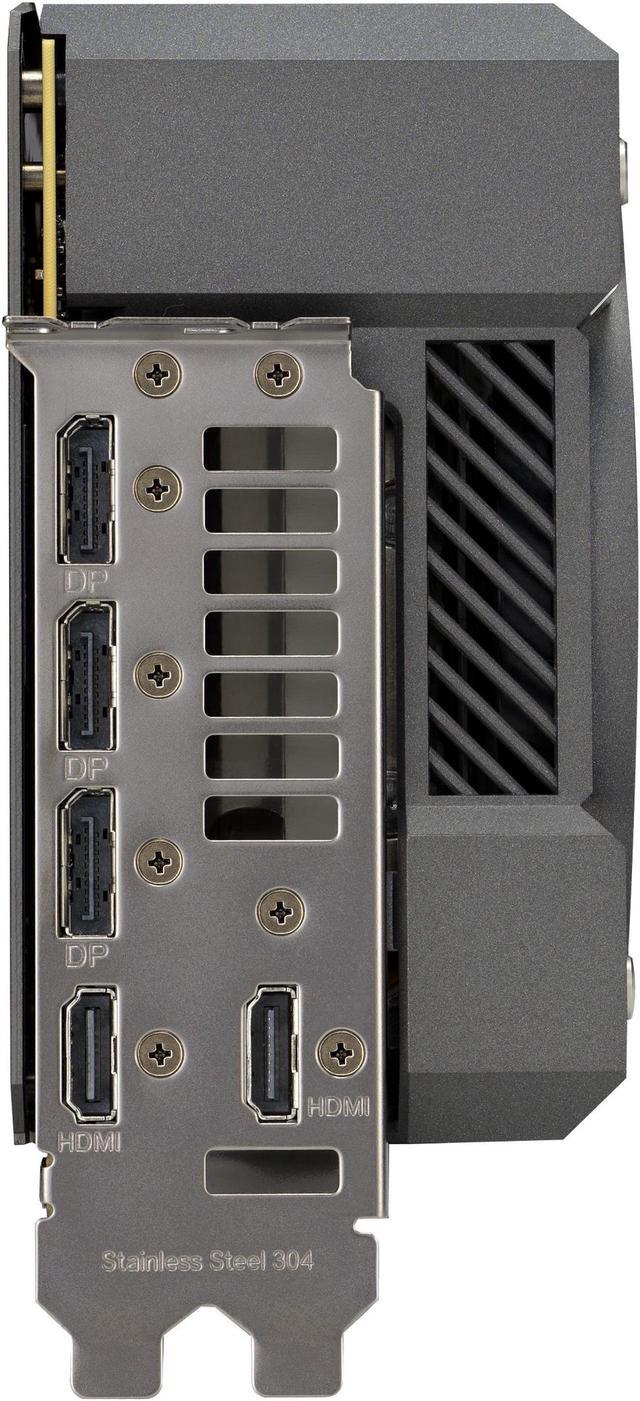
| Display Outputs And Resolution | 3× DisplayPort 2.1b and 2× HDMI 2.1b; supports up to 7680 x 4320 and up to 4 simultaneous displays |
| Interface And Expansion | PCI Express 4.0 x16 interface (fits a standard PCIe x16 slot) |
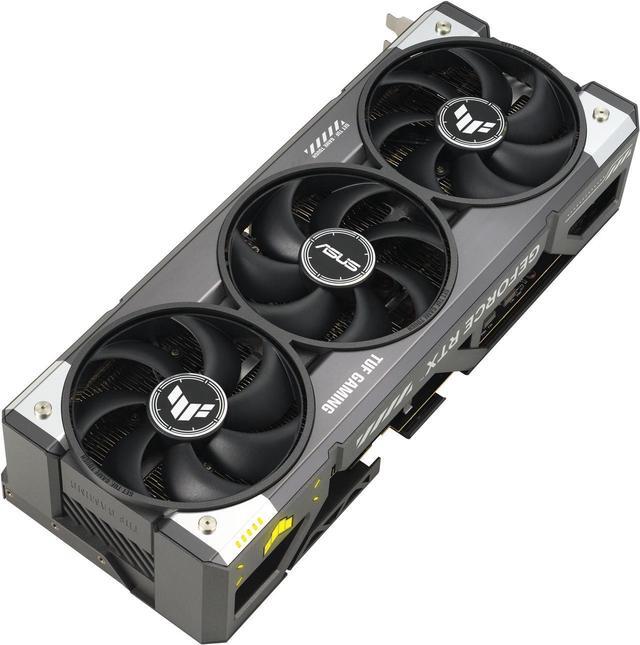
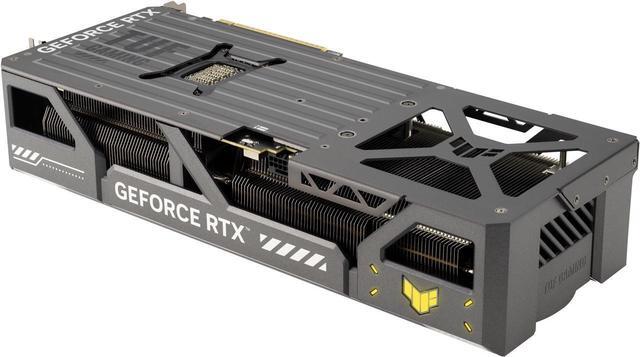
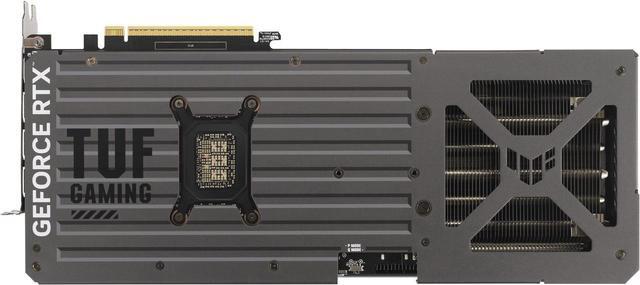
| Cooling And Card Fit | Triple‑fan cooling solution; occupies approximately 3.6 expansion slots and a full‑length ATX card footprint |
| Power And Thermal | Thermal Design Power 575W; recommended system PSU 1000W |
| Dimensions And Weight | Card dimensions 13.7" × 5.7" × 2.8" (max GPU length 348 mm); item weight 5 lb; package weight 3.335 kg; package dimensions 10.1 L × 26.7 W × 43.1 H cm |
| Compatibility And APIs | Desktop graphics card; VR ready; supports DirectX 12 Ultimate and OpenGL 4.6; AI‑enabled features |
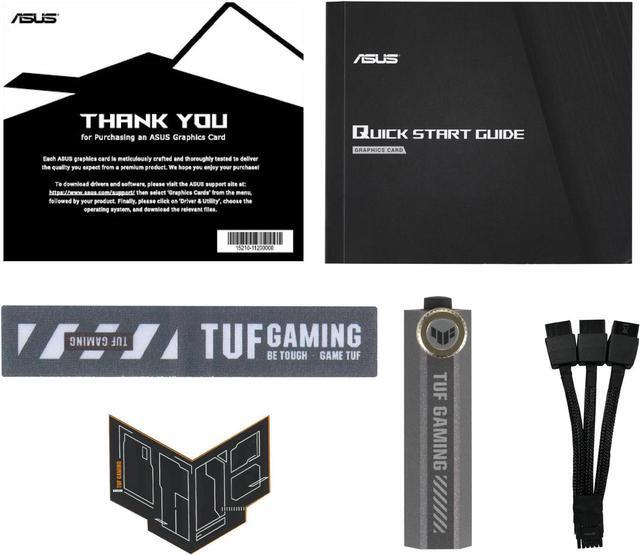
| Package Contents | Includes speedsetup manual, TUF graphics card holder, TUF velcro hook & loop, TUF magnet, TUF gaming certificate, thank you card, and an adapter cable (1 to 4) |
Q: Should I buy the ASUS TUF RTX 5090 or move down to an RTX 5080?
A: Choose the ASUS TUF RTX 5090 if you want the highest-tier 4K performance, heavier ray tracing headroom, or 32GB of VRAM for AI, rendering, and large texture workloads. Reviews consistently place the RTX 5090 well ahead of the RTX 5080, while the trade-off is much higher power draw and a larger cooling requirement. The RTX 5080 is the more practical choice when your target is high-end gaming without the size, PSU, and power demands of a 575W flagship.
Q: Is the ASUS TUF RTX 5090 a worthwhile upgrade over an RTX 4090?
A: The ASUS TUF RTX 5090 makes the most sense as an upgrade from RTX 4090 if you want more 4K ray tracing performance, access to the RTX 50-series feature set such as DLSS 4, and a larger 32GB memory pool. Review coverage generally shows a meaningful but not one-generation-transformative uplift in conventional gaming, with stronger gains in some ray tracing and frame-generation scenarios. If your RTX 4090 already meets your needs, the main reasons to move are VRAM capacity, newer frame-generation support, and top-end creator or AI workloads rather than a basic gaming refresh.
Q: Is the ASUS TUF RTX 5090 better for gaming or for creator and AI workloads?
A: The ASUS TUF RTX 5090 is easier to justify when you need both flagship gaming performance and workstation-like memory capacity. Its 32GB of GDDR7 is a clear advantage over lower-tier gaming cards for local AI models, GPU rendering, and professional content creation that can use more VRAM. If your use is mainly standard gaming at 1440p or even many 4K setups, reviews suggest the card's extra compute and memory are often more valuable for creator and AI workloads than for mainstream gaming builds.
Q: Should I choose the ASUS TUF RTX 5090 or keep a smaller, lower-power GPU for easier system compatibility?
A: Choose the ASUS TUF RTX 5090 when peak performance matters more than build flexibility. This card is large at 348 mm, uses a 3.6-slot cooler, and ASUS recommends a 1000W power supply, so it fits best in full-size, airflow-focused desktops. A smaller lower-power GPU is the better fit if you are prioritizing compact cases, easier cable management, lower thermal load, or a quieter and simpler upgrade path.
Q: Will this RTX 5090 fit in most PC cases and motherboards?
A: It fits standard desktop builds with a full-length PCIe x16 slot, but case clearance is the main concern. This ASUS TUF card is 348 mm long and 3.6 slots thick, so it is best suited to large mid-tower or full-tower cases with strong GPU clearance and enough adjacent slot space. Buyers should verify case GPU length support and make sure nearby front radiators or drive cages will not block the card.
Q: What power supply do I need for this card?
A: A 1000 W power supply is the practical minimum for this card, and a high-quality unit matters because the GPU has a 575 W thermal design power. This model also includes a 1-to-4 adapter cable, so buyers should confirm they have the required power connectors and enough cable room. If the system has a high-end CPU, heavy overclocking, or many peripherals, moving above 1000 W can make more sense.
Q: Who is this card actually suitable for?
A: This card is best for buyers building a top-tier gaming or creator desktop who want flagship-class performance, 32 GB of VRAM, and support for up to four displays at very high resolutions. It is not a practical choice for casual gaming, office work, or small-form-factor systems because it is physically large, power-hungry, and expensive to support properly.
Q: Is this a good choice if I need multiple monitors or an HDMI 2.1 TV setup?
A: Yes. This ASUS TUF RTX 5090 is a strong fit for multi-display setups because it supports up to four monitors and includes five physical outputs: 2 x HDMI 2.1b and 3 x DisplayPort 2.1b. That makes it more flexible than some competing RTX 5090 cards that offer only one HDMI port, which can matter for users running a high-refresh monitor plus an HDMI 2.1 TV or capture/display chain.
Q: Is this better than a smaller RTX 5080-style alternative?
A: It is better only if you specifically need flagship-class performance, 32 GB of memory, or the highest-end 4K, 8K, or heavy creator workloads. Compared with RTX 5080-class alternatives, this card gives more VRAM and a higher performance ceiling, but the trade-offs are much higher power draw, a larger 3.6-slot size, and stricter case and PSU requirements. Buyers who want an easier fit, lower power use, and lower total build cost may find a 5080-class card more practical.
Q: Is the ASUS TUF RTX 5090 worth buying?
A: It is mainly worth buying if you specifically need flagship-class GPU performance for 4K, VR, or heavy GPU compute, and you are comfortable with the very high power, size, and price trade-offs. It is a poor value-focused choice for buyers comparing cost per frame.
Q: Who is the ASUS TUF RTX 5090 best suited for?
A: It is best suited for enthusiasts building around 4K gaming, high-refresh ultra settings, VR, or workflows that benefit from 32GB of VRAM. It is less suitable for typical gaming upgrades where lower-tier cards already meet the target resolution and frame rate.
Q: What are the main trade-offs of choosing the ASUS TUF RTX 5090?
A: The main trade-offs are physical size, power demand, and system compatibility. This card is very large at 348 mm long and 3.6 slots wide, has a 575 W TDP, and ASUS recommends a 1000 W PSU. Buyers should expect case-fit, airflow, cable, and power-supply planning to matter.
Q: Is the ASUS TUF RTX 5090 a good choice if I care about noise and thermals?
A: Based on repeated owner discussion, it appears to be a reasonable choice for buyers who prioritize a quiet, cool-running air-cooled flagship card. However, noise and coil whine reports are unit-dependent, so it should not be treated as guaranteed silent.
Q: Should I choose the ASUS TUF RTX 5090 over a more expensive RTX 5090 model?
A: If similarly priced premium variants mainly add aesthetics, minor tuning, or higher factory clocks, the TUF model is the more practical choice. For most buyers, it makes more sense to prioritize price, availability, and fit over paying extra for small real-world differences.







