




 here!
I’m your shopping assistant for PC builds, upgrades, and everything tech.
Got questions? Ask away!
Start a conversation
here!
I’m your shopping assistant for PC builds, upgrades, and everything tech.
Got questions? Ask away!
Start a conversation



Any questions? Ask CelesteSM will help you find out quickly.
We want to ensure your holiday shopping this year is hassle-free. That’s why we’re automatically extending our return policies on almost every product! For purchases placed between November 1st, 2026 and December 31, 2026 you will have until January 31, 2027 to return your product.
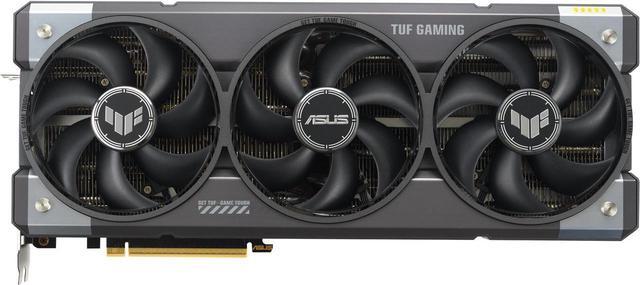
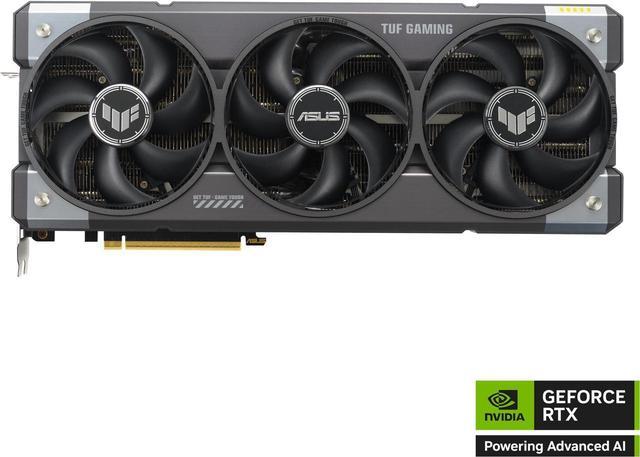
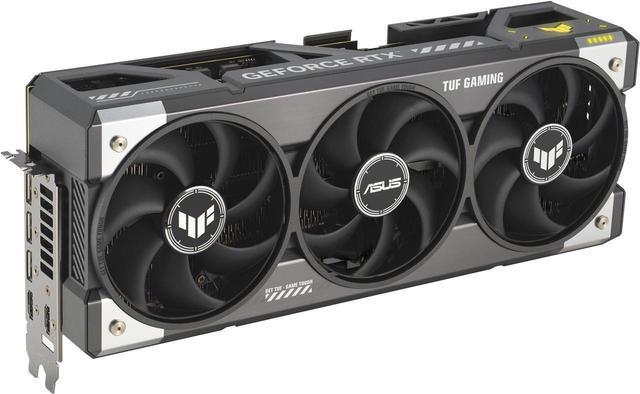
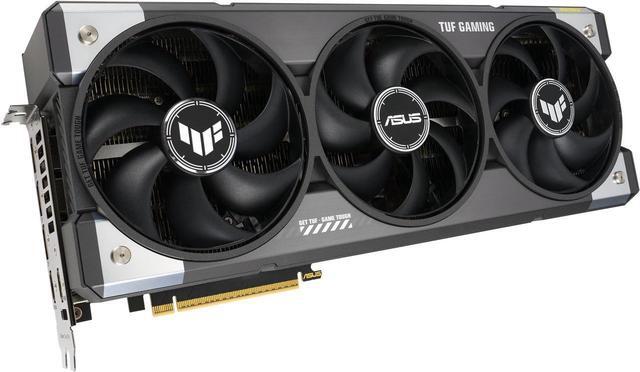
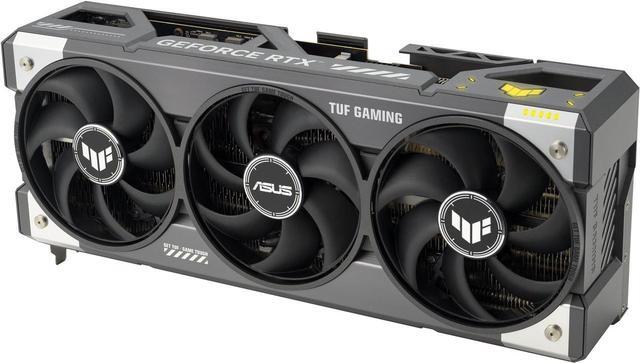
The ASUS TUF Gaming GeForce RTX 5090 OC Edition is a flagship 32GB GDDR7 graphics card built for enthusiasts who want top-tier 4K gaming, advanced ray tracing, and heavy AI or creator workloads in a full-size desktop with strong cooling and a high-capacity power supply.
| Attribute | Value |
|---|---|
| Best For | High-resolution gaming, VR, and memory‑heavy creative or professional workloads that benefit from a 32GB GDDR7 GPU and support for up to 7680×4320 output |
| Model Identifiers | ASUS TUF Gaming model TUF-RTX5090-O32G-GAMING (GeForce RTX 5090) |
| GPU And Architecture | NVIDIA GeForce RTX 5090 based on Blackwell architecture, part of the NVIDIA GeForce RTX 50 Series |
| Clock And CUDA Cores | Game clock 2580 MHz and Boost clock 2550 MHz with 21,760 CUDA cores |
| Memory Configuration | 32GB GDDR7 on a 512-bit memory bus with an effective memory clock of 28000 MHz (28 Gbps) |
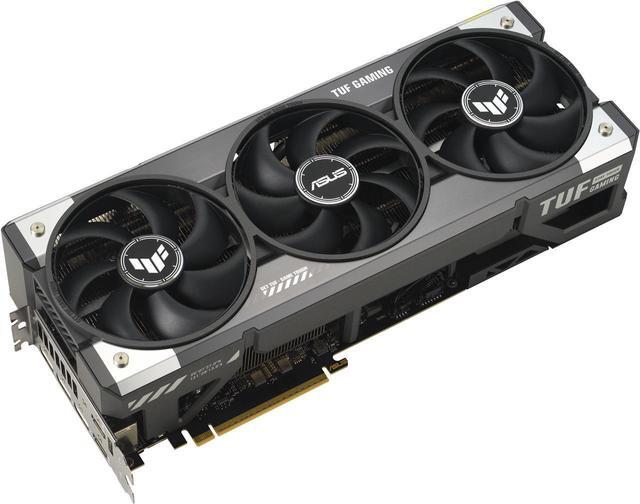
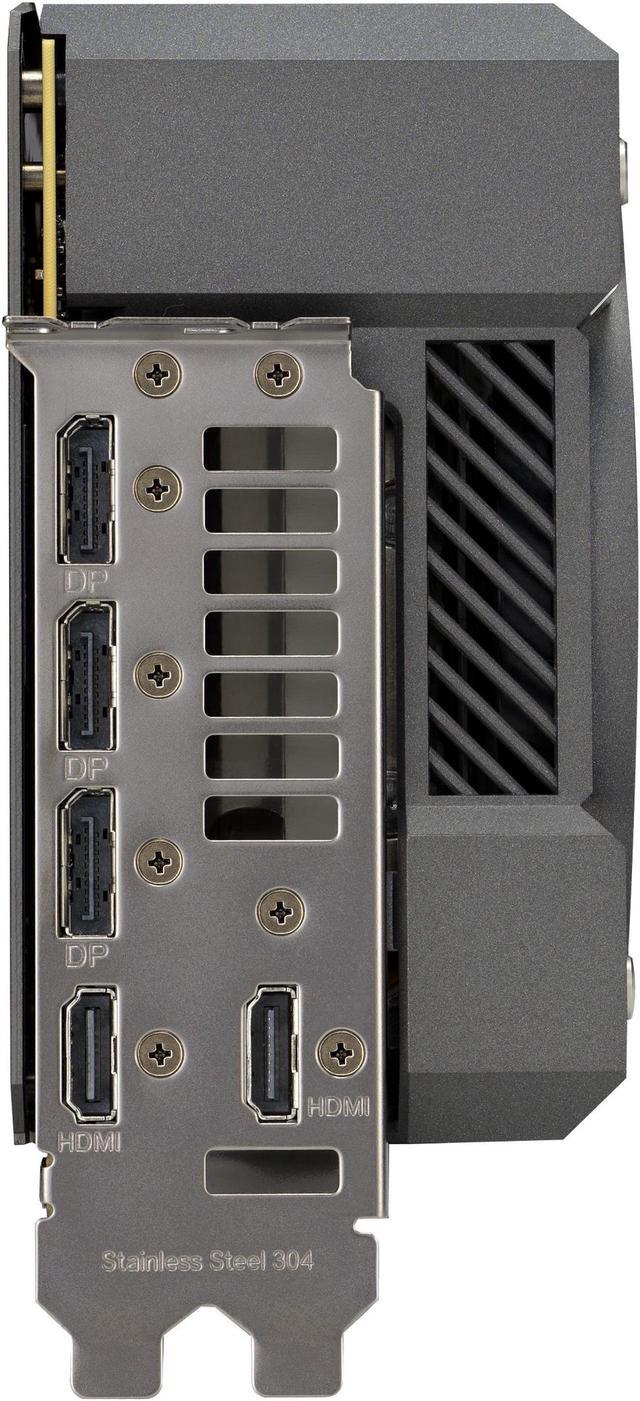
| Display Outputs And Max Resolution | 3× DisplayPort 2.1b and 2× HDMI 2.1b outputs, maximum resolution 7680×4320, supports up to 4 monitors |
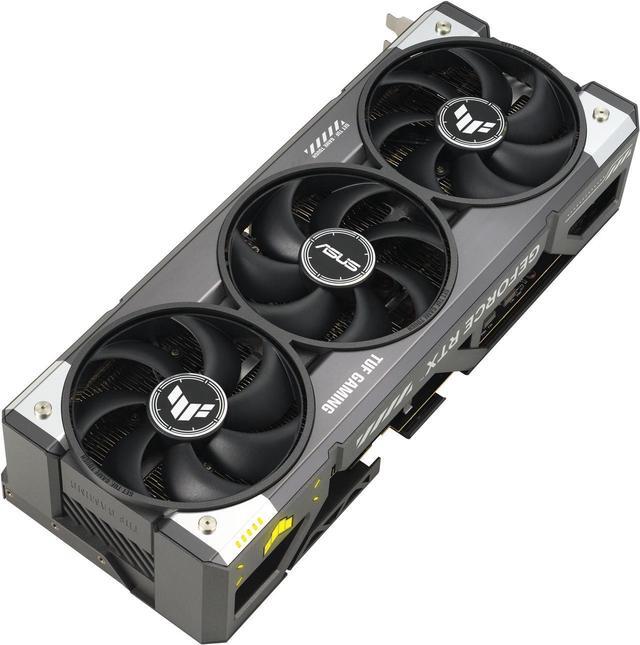
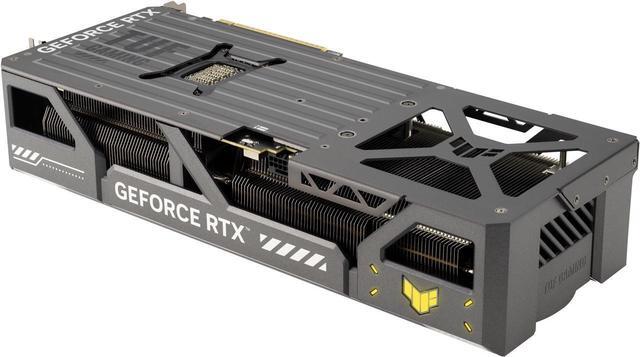
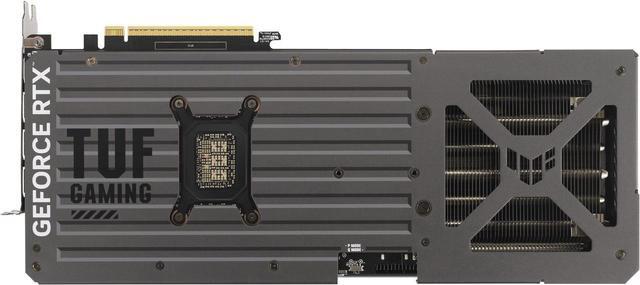
| Cooling And Physical | Triple-fan axial cooler (3 fans) with vapor chamber and protective PCB features; card dimensions 13.7" × 5.7" × 2.8" (max GPU length 348 mm), 3.6-slot width, item weight 5 Pounds |
| Interface And Form Factor | PCI Express 5.0 x16 interface, ATX form factor |
| Power And PSU | Thermal Design Power 575W with a recommended system PSU of 1000W |
| APIs And VR | DirectX 12 Ultimate and OpenGL 4.6 support; marked Virtual Reality Ready |
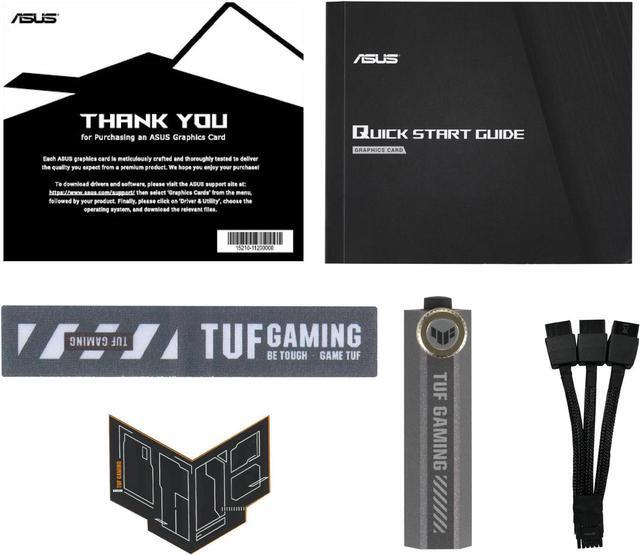
| Package Contents And Compatibility | Includes speedsetup manual, TUF graphics card holder, TUF Velcro Hook & Loop, TUF Magnet, TUF Gaming Certificate, thank you card, and adapter cable (1 to 4); packaged as one unit and intended for desktop systems |
| Additional Features | Military-grade components and protective PCB coating, axial‑tech fans and vapor chamber cooling, AI Ready |
Q: Should I buy the ASUS TUF RTX 5090 OC or RTX 4090?
A: Choose the ASUS TUF RTX 5090 OC if you want a clear step up for 4K ultra settings, heavy ray tracing, DLSS 4 features, or workflows that benefit from 32GB of VRAM instead of 24GB. Reviews and NVIDIA’s positioning show the RTX 5090 targets a new top tier with more cores, more memory bandwidth, and stronger performance than RTX 4090-class cards. The trade-off is much higher power draw and a larger 3.6-slot card, so RTX 4090-class options remain the more practical fit when your goal is strong high-end performance with lower system demands.
Q: Is the ASUS TUF RTX 5090 OC worth it over RTX 5080 for gaming?
A: The ASUS TUF RTX 5090 OC makes more sense if you are building specifically for top-end 4K, high refresh gaming, path tracing, or want extra VRAM headroom for modded games and creator or AI workloads. Review coverage consistently places RTX 5090 well above RTX 5080 in raw performance, while community discussion often frames RTX 5080 as the more balanced choice for buyers who do not need the last tier of performance. In short: pick RTX 5090 for maximum headroom; pick RTX 5080 when efficiency, cost control, and easier system fit matter more.
Q: Is the ASUS TUF RTX 5090 OC better for AI, 3D, or video work than gaming-focused alternatives?
A: Yes, this card is easier to justify when your workload mixes gaming with local AI, 3D rendering, or high-end video work. The 32GB frame buffer, Blackwell media and AI feature stack, and flagship-class compute position it beyond a pure gaming upgrade. Community and creator-side discussion repeatedly points to 32GB as a meaningful step over 24GB cards for some local model, generation, and complex scene workloads. The trade-off is that if your use is mostly standard gaming, much of that extra memory may go unused.
Q: Should I get the ASUS TUF RTX 5090 OC or wait for a higher-tier RTX 5090 model like ROG Astral or another extreme OC card?
A: The ASUS TUF RTX 5090 OC is the better choice for most buyers who want flagship RTX 5090 performance without moving to a more specialized premium tier. Third-party testing of RTX 5090 partner cards shows factory-overclocked variants usually stay in the same performance class, with differences that are smaller than the jump between GPU tiers. A higher-tier RTX 5090 model can make sense if you specifically want maximum power limits, more aggressive cooling, or premium build features. Otherwise, the TUF model already delivers the core RTX 5090 experience.
Q: Is the ASUS TUF RTX 5090 OC a good choice if I want a smaller or lower-power build?
A: A smaller or lower-power build usually points away from this card. The ASUS TUF RTX 5090 OC is a 348 mm, 3.6-slot, 575 W flagship that is designed for full-size systems with strong airflow and a 1000 W class power supply. It is the right choice when performance comes first and your case, cooling, and PSU are already sized for that level of hardware. If compact fit, lower heat, or easier power planning matters more, a lower-tier GPU is typically the cleaner fit.
Q: Will this ASUS TUF RTX 5090 fit in most PC cases and motherboards?
A: It fits standard full-size PCIe x16 motherboards, but case clearance is the bigger concern. This card is very large at 348 mm long and 3.6 slots thick, so it is best suited to roomy mid-tower or full-tower cases. Buyers should check GPU length, slot clearance, and cable space before purchase.
Q: Do I need a high-wattage power supply for this card?
A: Yes. This model has a 575 W board power and a 1000 W recommended PSU, so it is intended for high-end desktops with strong power delivery. It is not a practical upgrade for older or budget systems unless the power supply is already sized for flagship GPUs.
Q: Who is this graphics card actually suitable for?
A: It is best for buyers who specifically want a top-tier GPU for 4K or 8K gaming, advanced ray tracing, heavy content creation, or local AI workloads. It is not a sensible choice for casual gaming, office work, or compact builds, because the size, power draw, and cost are all unusually high.
Q: Is this a good choice over a smaller or lower-tier GPU?
A: Choose it if maximum GPU performance matters more than space, power efficiency, and budget. A smaller or lower-tier card is usually the better decision for most users, because it is easier to fit, easier to power, and still sufficient for mainstream 1440p or 4K gaming. The main trade-off with this TUF RTX 5090 is that you gain flagship-class performance but accept extreme size and power requirements.
Q: Is this card a better option if I need multiple HDMI displays?
A: Yes, if your setup depends on more than one native HDMI output, this card is unusually flexible. The ASUS TUF RTX 5090 provides 2 HDMI 2.1b ports and 3 DisplayPort outputs, which is more HDMI connectivity than many flagship cards. That makes it more suitable for users connecting TVs, capture workflows, or mixed monitor setups without relying on adapters.
Q: Who is the ASUS TUF RTX 5090 OC best suited for?
A: It is best suited for buyers who specifically want flagship-class GPU performance, 32GB of VRAM, and a large air-cooled design for a high-end gaming or creator PC. It is less suitable for compact builds, lower-wattage systems, or buyers who do not need top-tier performance because the card is very large at 348 mm, uses 3.6 slots, and has a 575W TDP with a 1000W PSU recommendation.
Q: Is the ASUS TUF RTX 5090 OC a good choice if I care about cooling and noise?
A: Generally yes for buyers who want a premium air-cooled RTX 5090 rather than a liquid-cooled model. Community discussion repeatedly focuses on thermals and noise, and the card’s triple-fan 3.6-slot cooler is one of its main reasons to choose it. The trade-off is size and power draw: you get a large cooling solution, but you need enough case clearance and strong system airflow.
Q: Is the ASUS TUF RTX 5090 OC worth buying over other RTX 5090 models?
A: It is a sensible choice if you want a high-end ASUS air-cooled card without stepping up to more expensive halo variants. Community comparisons commonly frame the TUF as the practical option: flagship-class RTX 5090 performance, strong cooling, and fewer extras than top-tier premium models. It is less compelling if you are paying a large markup for minor gains, or if you want the quietest or most feature-heavy 5090 regardless of price.
Q: Will the ASUS TUF RTX 5090 OC fit in most PCs?
A: No, fit is a real buying decision. This card is 348 mm long and 3.6 slots thick, so buyers should verify case clearance, slot spacing, and front-radiator or cable clearance before purchase. It is a better match for full-size or roomy mid-tower builds than for small form factor systems.
Q: Are there any reliability or buyer-risk concerns with the ASUS TUF RTX 5090 OC?
A: There are some buyer-risk considerations beyond raw performance. Reddit discussion includes reports about isolated stability issues and concern around missing-ROP cases on some RTX 5090 units, so buyers who want the lowest hassle should plan to test the card early after purchase and buy from a retailer with a clear return policy. That does not make the model a bad choice, but it does make post-purchase validation more important.







