




 here!
I’m your shopping assistant for PC builds, upgrades, and everything tech.
Got questions? Ask away!
Start a conversation
here!
I’m your shopping assistant for PC builds, upgrades, and everything tech.
Got questions? Ask away!
Start a conversation Top Rated Top Rated



Make informed decisions with expert advice. Learn More




Any questions? Ask CelesteSM will help you find out quickly.

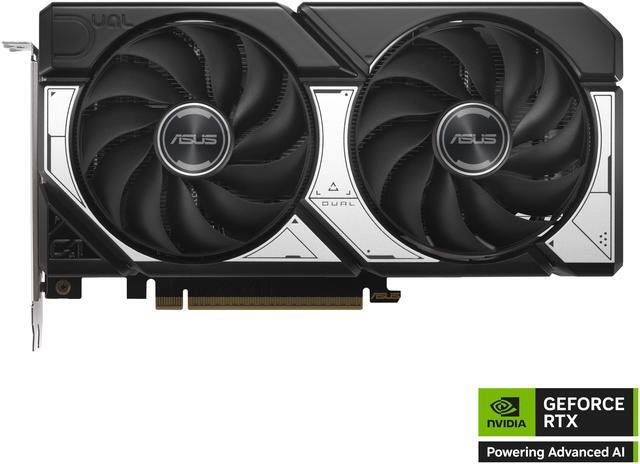
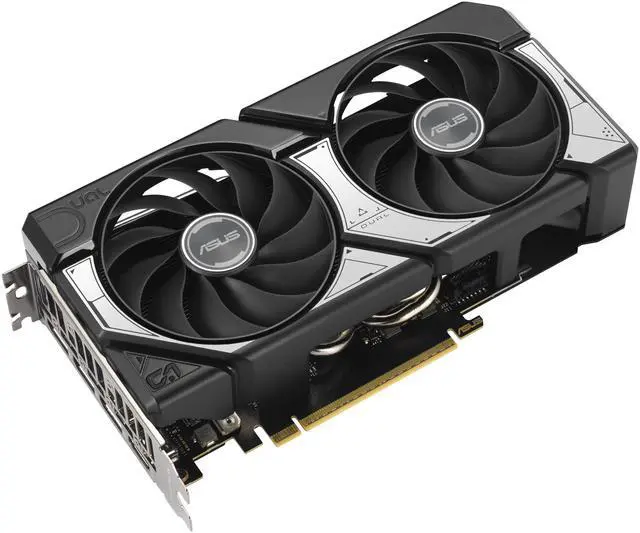
The ASUS Dual GeForce RTX 5060 Ti 16GB is a compact dual-fan graphics card built for gamers and creators who want current-gen NVIDIA features, 16GB of GDDR7 memory, and strong 4K display connectivity in a small-form-factor-friendly build.
| Attribute | Value |
|---|---|
| Best For | Desktop users who need high-resolution and VR-capable graphics with multi-monitor support and small-chassis compatibility — 16GB GDDR7, VR Ready, 4-monitor support, SFF-ready 2.5-slot design |
| GPU And Compute | NVIDIA GeForce RTX 5060 Ti (Blackwell architecture) with 4608 CUDA cores, 767 AI TOPS and support for DLSS 4 |
| Memory Configuration | 16GB GDDR7 on a 128-bit memory bus with an effective memory clock of 28 Gbps |
| Clock Speeds | GPU clocks: 2632 MHz (OC mode) / 2602 MHz (Default); memory clock references shown as 28 Gbps effective and listed memory clock entries of 2602 MHz |
| Interface And Bus | PCI Express 5.0 x8 electrical interface, compatible with standard PCIe x16 slots (external listings also show PCI Express x16) |
| Display Outputs And Max Resolution | 1 × HDMI 2.1b and 3 × DisplayPort 2.1b outputs, supports up to 7680 x 4320 (8K) resolution |
| Cooling And Form Factor | Dual axial-tech fans (2 fans) with dual-ball bearings, 0dB technology and a 2.5-slot ATX design (SFF-ready) with max GPU length 229 mm |
| Power And Recommendations | Single 8-pin power connector; recommended system PSU 550W; HDCP ready |
| Compatibility And Standards | DirectX 12 Ultimate and OpenGL 4.6 support, Virtual Reality Ready, multi-monitor support for up to 4 displays |
| Dimensions And Weight | Card dimensions 229 x 120 x 50 mm (9.02 x 4.72 x 1.97 in), card weight 0.656 kg, package weight 1.111 kg, package quantity 1 |
| Software, Features And Extras | Dual BIOS (Quiet / Performance), OC-capable profile, SFF-ready design, axial-tech fan design with smaller hub and barrier ring, dual-ball fan bearings, 0dB technology |
| What's In The Box | Includes DUAL-RTX5060TI-16G video card, speedsetup manual and thank you card; sold as a single unit |
| Model Identifiers | ASUS Dual series model DUAL-RTX5060TI-O16G, Part Number 90YV0MH0-M0AA00 |
| Compliance & Safety | Safety attestation: true; California Proposition 65 warning present (on_product_cancer) |
Q: Should I buy the ASUS Dual RTX 5060 Ti 16GB or step up to an RTX 5070?
A: Choose the ASUS Dual RTX 5060 Ti 16GB if you want a smaller card, lower PSU demand, and 16GB of VRAM at a lower total cost. Step up to an RTX 5070 if your priority is higher average frame rates at 1440p or more headroom for ray tracing. Multiple review sources show the RTX 5070 is meaningfully faster overall, while the 5060 Ti 16GB remains the more space-efficient option in compact builds.
Q: Is the RTX 5060 Ti 16GB a better buy than the RTX 4060 Ti 16GB?
A: Yes for most new builds. The RTX 5060 Ti 16GB keeps the same 16GB capacity but adds newer Blackwell-generation features, much higher memory bandwidth from GDDR7, and consistently higher gaming performance in reviews. The RTX 4060 Ti 16GB mainly makes sense only if found at a clearly lower street price.
Q: Should I get the RTX 5060 Ti 16GB or save money with the RTX 5060 Ti 8GB?
A: Get the 16GB model if you want a safer choice for newer games, heavier texture settings, creator workloads, or longer upgrade life. Reviews show the 8GB and 16GB cards can be close in lighter scenarios because they use the same GPU, but the 16GB version avoids the VRAM limits that appear in newer titles and more demanding settings. The 8GB version fits better only when upfront price matters more than long-term flexibility.
Q: RTX 5060 Ti 16GB or Radeon RX 7700 XT for 1440p gaming?
A: Choose the ASUS Dual RTX 5060 Ti 16GB if you want NVIDIA features such as DLSS 4 support, 16GB of VRAM in this specific card, and a compact dual-fan design for smaller cases. Choose the Radeon RX 7700 XT if you are comparing around the same price and your focus is straightforward 1440p raster gaming rather than NVIDIA-specific features. This comparison is usually decided by feature preference, card size, and actual local pricing more than by one simple winner.
Q: Is the ASUS Dual RTX 5060 Ti 16GB a good choice for a compact PC, or should I pick a larger triple-fan card?
A: Pick the ASUS Dual RTX 5060 Ti 16GB if case compatibility is a key requirement. ASUS positions it as an SFF-ready card, and its 229 mm length plus 2.5-slot size make it easier to fit in smaller cases than many larger triple-fan alternatives. A larger cooler can still make sense if your case has room and you want more thermal overhead or lower fan speeds under sustained load, but the ASUS Dual is the more practical option when build size comes first.
Q: Is this a good choice for a compact or small-form-factor gaming PC?
A: Yes, if your case supports a 229 mm long, 2.5-slot card. This ASUS Dual RTX 5060 Ti 16GB is positioned as an SFF-ready model, so it fits more easily than larger triple-fan cards while still offering 16GB of GDDR7 memory. The main trade-off is that compact dual-fan cards usually prioritize fit and balance over the absolute lowest temperatures of larger coolers.
Q: Will this card work with my current PC, or do I need to check power and space first?
A: You should check both before buying. This card uses one 8-pin power connector, ASUS recommends a 550W power supply, and the card measures 229 x 120 x 50 mm with a 2.5-slot width. In practice, the most common upgrade questions on retail Q&A pages are about PSU wattage, case clearance, and whether the card will fit prebuilt systems.
Q: Is the 16GB version worth choosing over an 8GB RTX 5060 Ti?
A: The 16GB version is the safer choice for buyers who want more headroom for newer games, heavier texture settings, mods, or creative workloads. An 8GB model can still be the better value for strictly budget-focused 1080p gaming, but the 16GB version is more flexible and likely to age better if you keep the card for several years.
Q: Is this better for quiet, everyday gaming than a larger triple-fan alternative?
A: It is a balanced choice, not automatically the quietest choice. This ASUS Dual model includes 0dB fan behavior for light loads and a Dual BIOS with Quiet and Performance modes, which makes it well-suited for buyers who care about noise. A larger triple-fan card may still run cooler or quieter under sustained heavy gaming, but it usually takes more case space.
Q: Who is this card most suitable for?
A: This card is best suited to mainstream gamers and upgraders who want modern NVIDIA features, 16GB VRAM, and easier case compatibility without moving up to a bigger, more expensive class of GPU. It is a practical fit for 1080p high-refresh and many 1440p gaming setups, especially when compact size, low-load silence, and a simple 8-pin power requirement matter more than maximum-tier performance.
Q: Is the ASUS Dual RTX 5060 Ti 16GB worth buying over an 8GB card?
A: Usually yes if you want a card to keep for several years, play newer games at 1440p, or use VRAM-heavy workloads. The main reason is the 16GB memory capacity, which gives more headroom than 8GB models. The trade-off is that this card still uses a 128-bit memory bus, so the extra VRAM does not make it a high-end 4K card. It makes the most sense when the price premium over 8GB models is modest.
Q: Who is the ASUS Dual RTX 5060 Ti 16GB best for?
A: It is best for buyers who want a compact NVIDIA card for 1080p to 1440p gaming, small-form-factor builds, or mixed gaming and creator use where 16GB VRAM is useful. Based on the product specs, it is a short 229 mm, 2.5-slot card with one 8-pin power connector and a 550 W recommended PSU, so it fits more cases and power supplies than larger triple-fan cards. It is less suited to buyers specifically chasing maximum performance per dollar regardless of size, because larger or higher-tier cards may offer better raw speed.
Q: Is the ASUS Dual model good enough, or should I pay more for a higher-end 5060 Ti version?
A: The ASUS Dual version is the practical choice if you want the RTX 5060 Ti 16GB feature set in a smaller, simpler card. Its trade-offs versus more premium models are mainly cooler size, acoustics, and thermal headroom, not core functionality. Paying more for a larger TUF-style model is more justified if you specifically want lower noise, lower temperatures, or a more premium build, rather than meaningfully different gaming capability.
Q: Is this a good choice for beginner creator work, AI, or 3D use as well as gaming?
A: Yes, if you want an NVIDIA card that can handle gaming plus light-to-moderate creator or AI workloads without moving into a much higher price tier. The 16GB VRAM is the main reason it is considered for 3D, CUDA, and local AI tasks. The limitation is compute tier: this is still a midrange GPU, so it is suitable for entry-level to mainstream work rather than heavy professional rendering or large-model AI use.
Q: What are the main trade-offs of choosing this card instead of stepping up to a faster GPU?
A: The main trade-off is that you get 16GB VRAM, compact size, and lower power requirements, but not the raw performance of a higher-tier card such as an RTX 5070-class option. This ASUS Dual card is easier to fit into smaller builds and only needs a single 8-pin connector with a 550 W recommended PSU. The downside is that if price gaps to faster cards are small, buyers focused mainly on frame rate may prefer to step up instead of paying mostly for extra VRAM and compactness.


