




 here!
I’m your shopping assistant for PC builds, upgrades, and everything tech.
Got questions? Ask away!
Start a conversation
here!
I’m your shopping assistant for PC builds, upgrades, and everything tech.
Got questions? Ask away!
Start a conversation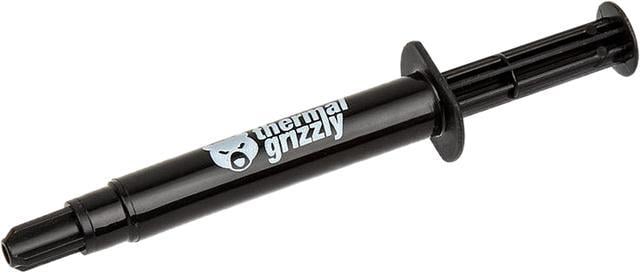



Any questions? Ask CelesteSM will help you find out quickly.
Thermal Grizzly Hydronaut is a silicone-free thermal paste for CPUs, GPUs, notebooks and ICs, made for larger-scale cooling solutions like water cooling systems. This is the 3ml (7.8g) syringe; our other sizes are 1g, 1.5ml (3.9g) and 10ml (26g).
The paste achieves its best results if used on medium- to large-scale cooling solutions, which is to say systems with large-surface heat sinks. It was created specifically for users who are looking for a quality product with an excellent price-performance ratio, for example for their water cooling system. Thermal Grizzly's data sheet calls it ideal for water-cooled processors and graphics cards, and suitable for processors with a high TDP (Intel Core i5/i7, AMD Ryzen 5/7). As a silicone-free compound it can also be used in industrial applications, and it is RoHS-compliant for demanding users. The same line has Hydronaut Pro.
On a large-surface heat transfer medium this paste delivers what the manufacturer calls optimal heat transfer capabilities. Due to its excellent thermal conductivity it can be used for overclocking as well, and Thermal Grizzly lists it as suited for overclocking. But the paste it designed for that job is Kryonaut, and its entry-level one is Aeronaut. There is no curing and no electrical conductivity. The formula consists of a silicone-free carrier structure, and this makes it very light, highly flexible and easy to apply.
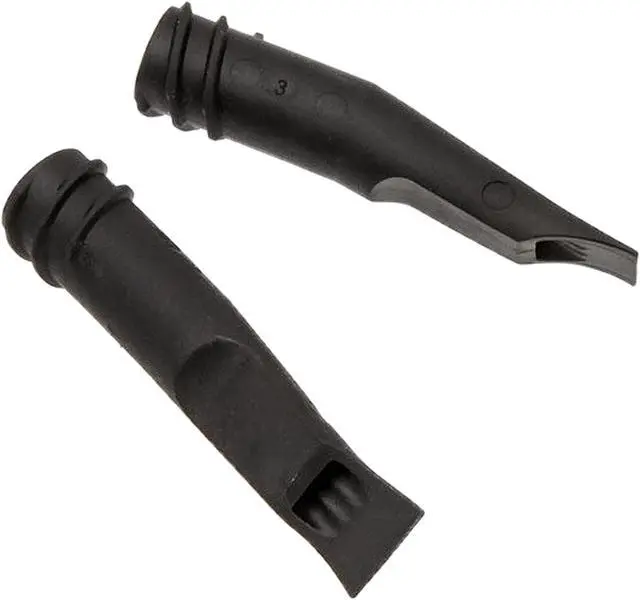
Clean the CPU heat spreader and cooler with a dry cloth or high-percentage isopropanol, or with Remove. Mount the applicator on the syringe and lay down the thinnest layer that still covers the entire heat spreader. Afterwards pull the plunger back slightly so the leftover paste returns into the syringe. Only the 1g includes a spatula, though a plastic spatula or a plastic card with a straight edge works here too, never a metal one.
Thermal Grizzly Hydronaut TG-H-030-R is a 3ml silicone-free, electrically nonconductive thermal grease with 11.8 W/mK thermal conductivity, suited to PC builders and overclockers using medium- to large-scale cooling solutions such as water-cooling systems.
| Attribute | Value |
|---|---|
| Best For | Overclocking and medium- to large-scale cooling solutions, including water-cooling systems |
| Thermal Performance | Thermal conductivity of 11.8 W/mK; long-term operating range from -200 °C to +350 °C |
| Composition And Application | Silicone-free and electrically non-conductive; requires no curing and is applicable with aluminum |
| Package Amount And Weight | 3 ml; net weight 7.8 g |
| Brand And Series | Thermal Grizzly Hydronaut |
| Model Identifier | TG-H-030-R |
Q: Thermal Grizzly Hydronaut vs. Kryonaut: which should I use with a custom water loop?
A: Hydronaut is the more targeted fit for a custom water loop: Thermal Grizzly positions it for larger cooling solutions and large-surface heat sinks. Kryonaut is positioned for demanding overclocking applications, so it may suit a build where that is the primary priority.
Q: Hydronaut or Kryonaut Extreme for overclocking?
A: Choose Hydronaut for a medium- to large-scale cooling setup such as water cooling. Kryonaut Extreme is Thermal Grizzly’s option for overclocking that emphasizes high performance and low-temperature resilience, including liquid-nitrogen cooling.
Q: Hydronaut vs. Hydronaut Pro: which fits a high-performance custom water-cooled PC?
A: Both are silicone-free Thermal Grizzly pastes intended for large-surface cooling applications, including water cooling. Hydronaut Pro is the newer optimized formulation; Thermal Grizzly reports increased thermal conductivity compared with the standard version. Choose based on whether you want the newer Pro formulation or the standard Hydronaut.
Q: Hydronaut or Aeronaut for a cooling upgrade?
A: Hydronaut is the more directly aligned choice for medium- to large-scale cooling solutions such as water cooling. Aeronaut is positioned as a thermal paste for general cooling applications, so it can be considered when that broader product positioning matches the build.
Q: Who is Hydronaut best suited for?
A: Hydronaut is best suited to medium- or large-scale cooling setups, including water cooling, and can be used for overclocking. The product information lists a thermal conductivity of 11.8 W/mK and a 3 ml volume.
Q: Is Hydronaut electrically conductive?
A: No. The product information describes Hydronaut as electrically non-conductive. Apply it to the intended thermal interface and follow the cooler or device’s installation instructions.
Q: Does Hydronaut need a curing or break-in period?
A: No. Hydronaut is specified as a no-curing thermal grease, so it does not require a curing period after application.
Q: Can Hydronaut be used with an aluminum heatsink?
A: Yes. The supplied product information says Hydronaut is applicable with aluminum. Its aluminum compatibility is distinct from the warning specified for Conductonaut.
Q: Can I use Hydronaut with an air cooler, or is it only for water cooling?
A: Hydronaut can be used with air cooling; a Reddit discussion describes use with an air-cooled CPU and GPU without identifying a compatibility problem. The product information positions it as especially suited to medium- and large-scale cooling solutions, including water cooling, but that does not make water cooling a requirement.
Q: How does Hydronaut compare with Kryonaut for a regular CPU or GPU build?
A: Reddit users report that temperature differences can be small and that Hydronaut may be easier to spread, but these are individual experiences, not controlled comparisons. Choose based on the specific use and application trade-offs rather than assuming one paste will always run cooler.
Q: Is Hydronaut easy to apply?
A: Some Reddit users describe Hydronaut as easier to spread than certain alternatives. Application experiences vary, so use the supplied spreader carefully and aim for an even layer over the contact area.
Q: Is Hydronaut a good choice for a GPU die, and can it pump out?
A: Reddit reports are mixed: some users describe satisfactory GPU results, while others report paste movement or pump-out. Those accounts do not establish how often it happens, so for a GPU die, careful application and checking cooler contact are important; the discussion does not support a guarantee of long-term results.



