
Your Browsing History
- New

Any questions? Our AI beta will help you find out quickly.
Try me now
Quick View
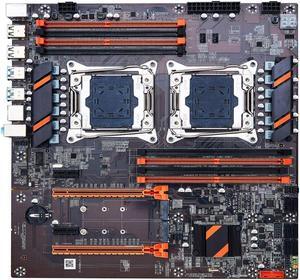
X99 Motherboard Dual CPU with XEON E5 2666 V3 4x16GB=64GB DDR4 RECC REG ECC Memory Kit
- CPU Type: Intel Atom
- Model #: ff-rr-541
- $681.36 –
- Free Shipping
Quick View
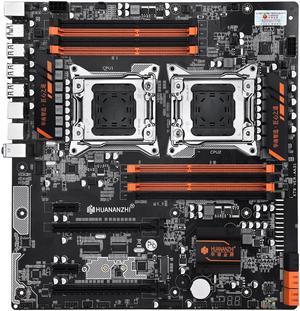
X79 Dual Motherboard 8D Dual CPU LGA 2011 Xeon E5 DDR3 1333/1600/1866MHz 256GB M.2 NVME SATA3 USB3.0 E-ATX
- CPU Type: Intel Atom
- Model #: ff-rr-565
- $406.68 –
- More options from $406.68
- Free Shipping

Quick View
X99 Motherboard Combo Set with Intel XEON E5 2683 V4x2 4x16G DDR4 2400 RECC Memory Server
- CPU Type: Dual Intel Xeon
- Model #: B2B-U-A044
- $1,167.18 –
- Free Shipping
Quick View
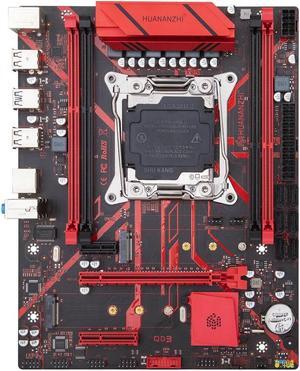
X99 QD3 Motherboard Kit LGA 2011-3 Xeox with E5 2666 V3 32GB DDR3 RECC Support NVME X99 Motherboard Combo
- CPU Type: Dual Intel Xeon
- Model #: B2B-U-A035
- $418.20 –
- More options from $418.20
- Free Shipping
Quick View
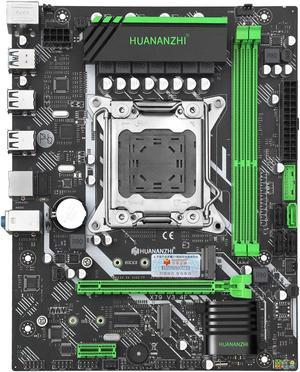
X79 6M Motherboard Intel xeon E5 LGA2011 All Series DDR3 RECC NON-ECC memory NVME USB3.0 processor C2/V1/V2
- CPU Type: Dual Intel Xeon
- Model #: B2B-U-A010
- $233.28 –
- Free Shipping
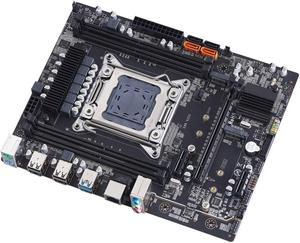
Quick View
X99 Motherboard LGA 2011-3 NVME M.2 Slot Support Xeon E5 V3 V4 CPU Processor DDR4 RAM Gamer PC
- CPU Type: Intel Atom
- Model #: ff-rr-560
- $187.13 –
- More options from $187.13
- Free Shipping
Quick View
X99 QD3 Motherboard Kit LGA 2011-3 Xeox with E5 2666 V3 32GB DDR3 RECC Support NVME X99 Motherboard Combo
- CPU Type: Intel Atom
- Model #: ff-rr-534
- $418.10 –
- More options from $418.10
- Free Shipping
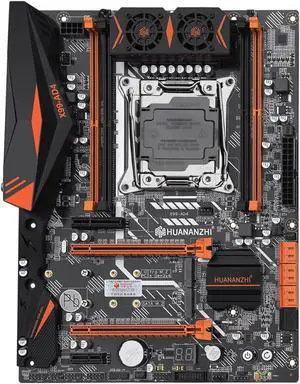
Quick View
X99 AD4 Motherboard V2.0 Intel X99 LGA 2011-3 All Series DDR4 RECC128GB M.2 PCI-E NVME NGFF ATX Server Mainboard
- CPU Type: Dual Intel Xeon
- Model #: B2B-U-A029
- $350.02 –
- More options from $350.02
- Free Shipping
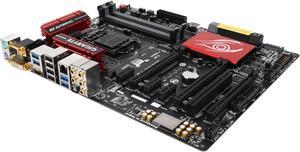
Quick View
Used - Very Good GIGABYTE G1 Gaming GA-Z97X-Gaming 7 LGA 1150 Intel Z97 HDMI USB 3.0 ATX Intel Motherboard
- Memory Standard: DDR3 3200(O.C.)/ 3100(O.C.)/ 3000(O.C.)/ 2933(O.C.)/ 2800(O.C.)/ 2666(O.C.)/ 2600(O.C.)/ 2500(O.C.)/ 2400(O.C.)/ 2200(O.C.)/ 2133(O.C.)/ 2000(O.C.)/ 1866(O.C.)/ 1800(O.C.)/ 1600/ 1333
- Number of Memory Slots: 4x240pin
- Audio Chipset: Realtek ALC1150
- Brand: GIGABYTE
- Model #: GA-Z97X-GAMING 7
- $129.90 –
- More options from $99.98 - $129.90
- Free Shipping
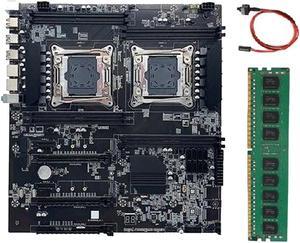
Quick View
X99 Dual-Socket Motherboard LGA2011-3 Dual CPU Support RECC DDR4 Memory with DDR4 4GB 2666Mhz RAM Memory+Switch Cable
- CPU Type: Intel Atom
- Model #: ff-rr-256
- $373.05 –
- More options from $373.05
- Free Shipping
Quick View
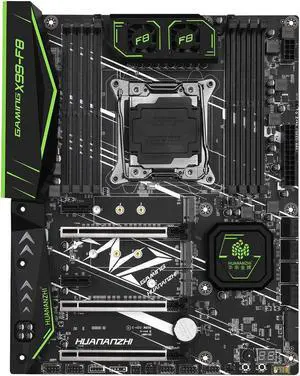
X99 F8 Motherboard Support Intel Xeox E5 cpu DDR4 3200MHz REG ECC Memoryt NVME USB3.0 Server
- CPU Type: Intel Atom
- Model #: ff-rr-533
- $379.00 –
- More options from $378.00
- Free Shipping
Quick View

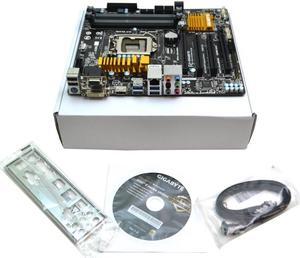
- Model #: GA-Z97M-D3H rev.1.0
- $105.00 –
- Free Shipping
Quick View
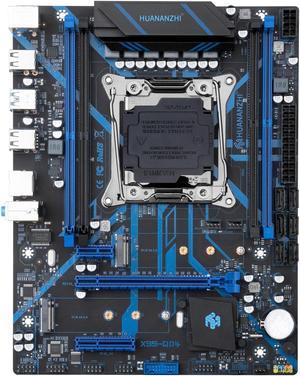
X99 QD4 Motherboard Intel XEON E5 X99 LGA2011-3 All Series DDR4 RECC NON-ECC Memory NVME USB3.0 SATA
- CPU Type: Dual Intel Xeon
- Model #: B2B-U-A055
- $230.02 –
- More options from $230.02
- Free Shipping

Quick View
X79 Motherboard Combo with Xeon E5 2689 4x8GB 32GB 1600MHz 12800R DDR3 ECC REG Memory Set
- CPU Type: Intel Atom
- Model #: ff-rr-526
- $392.78 –
- More options from $392.78
- Free Shipping
Quick View
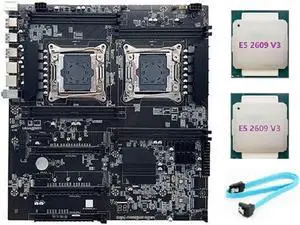
X99 Dual-Socket Motherboard LGA2011-3 Dual CPU Support RECC DDR4 Memory with 2XE5 2609 V3 CPU+SATA Cable
- CPU Type: Intel Atom
- Model #: ff-rr-255
- $364.05 –
- More options from $364.05
- Free Shipping
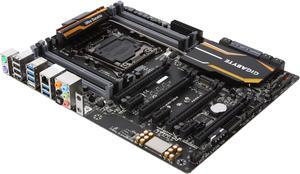
Quick View
Used - Very Good GIGABYTE GA-X99-UD4 LGA 2011-v3 Intel X99 USB 3.0 ATX Intel Motherboard
- Memory Standard: DDR4 3000(O.C.) / 2800(O.C.) / 2666(O.C.) / 2400(O.C.) / 2133
- Number of Memory Slots: 8x288pin (DDR4)
- PCI Express x16: 2 x PCI Express x16 slots, running at x16 (PCIE_1, PCIE_2) * For optimum performance, if only one PCI Express graphics card is to be installed, be sure to install it in the PCIE_1 slot; if you are installing two PCI Express graphics cards, it is recommended that you install them in the PCIE_1 and PCIE_2 slots. 2 x PCI Express x16 slots, running at x8 (PCIE_3, PCIE_4) * The PCIE_4 slot shares bandwidth with the PCIE_1 slot. When the PCIE_4 slot is populated, the PCIE_1 slot will operate at up to x8 mode. * When an i7-5820K CPU is installed, the PCIE_2 slot operates at up to x8 mode and the PCIE_3 operates at up to x4 mode. (All PCI Express x16 slots conform to PCI Express 3.0 standard.)
- Audio Chipset...
- Model #: GA-X99-UD4
- $149.99 –
- More options from $137.98 - $202.99
- Free Shipping
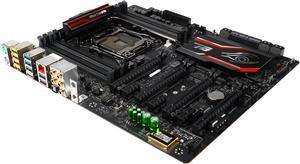
Quick View
Used - Very Good GIGABYTE G1 Gaming GA-X99-Gaming 5P (rev. 1.0) LGA 2011-v3 Intel X99 USB 3.0 Extended ATX Intel Motherboard
- Memory Standard: DDR4 3333*(*O.C.)/ 3200*/ 3000*/ 2800*/ 2666*/ 2400*/ 2133
- Number of Memory Slots: 8x288pin (DDR4)
- Audio Chipset: Creative Sound Core 3D chip
- Brand: GIGABYTE
- Model #: GA-X99-Gaming 5P
- $179.99 –
- More options from $169.55 - $196.92
- Free Shipping
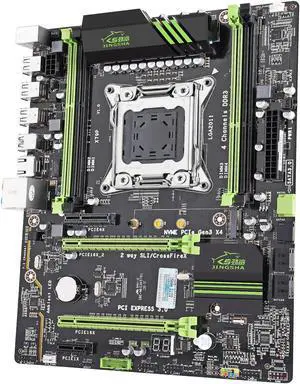
Quick View
X79 P Motherboard LGA2011 Support Xeon E5 CPU DDR3 RAM 1600Mhz Four Channels ATX
- CPU Type: Dual Intel Xeon
- Model #: B2B-U-A060
- $198.65 –
- More options from $198.65
- Free Shipping
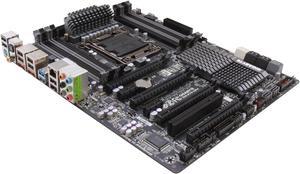
Quick View
Used - Very Good GIGABYTE GA-X79-UP4 LGA 2011 Intel X79 USB 3.0 ATX Intel Motherboard
- Memory Standard: DDR3 2133/1866/1600/1333/1066
- Number of Memory Slots: 8x240pin
- Audio Chipset: Realtek ALC892
- Brand: GIGABYTE
- Model #: GA-X79-UP4
- $129.55 –
- More options from $109.98 - $139.99
- $10.00 Shipping
Quick View
X99 F8 Motherboard Support Intel Xeox E5 cpu DDR4 3200MHz REG ECC Memoryt NVME USB3.0 Server
- CPU Type: Dual Intel Xeon
- Model #: B2B-U-A034
- $379.00 –
- Free Shipping

Quick View
X79G PC Game Motherboard+Switch Cable LGA2011 4XDDR3 RECC RAM Slot M.2 NVME PCIE X16 6XUSB2.0 SATA3.0 Server Motherboard
- CPU Type: Intel Atom
- Model #: ff-rr-108
- $173.91 –
- Free Shipping
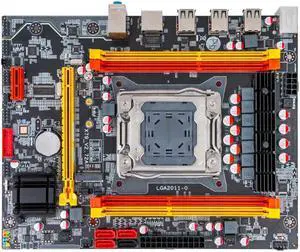
Quick View
X79M Motherboard LGA 2011 CPU Xeon E5 Support ECC REG DDR3 128GB M.2 NVME NGFF SATA3.0 USB2.0 X79 Server Mainboard
- CPU Type: Dual Intel Xeon
- Model #: B2B-U-A015
- $167.23 –
- More options from $167.23
- Free Shipping
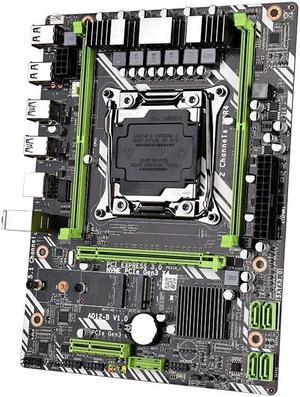
Quick View
X99 Motherboard LGA 2011-3 USB3.0 NVME M.2 SATA3 Support Xeon E5 V3/v4 CPU ECC DDR4 RAM Memory
- CPU Type: Intel Atom
- Model #: ff-rr-505
- $178.55 –
- More options from $178.55
- Free Shipping
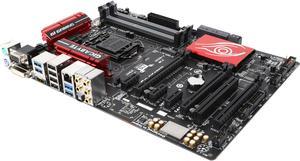
Quick View
Used - Very Good GIGABYTE G1 Gaming GA-Z97X-Gaming 5 (rev. 1.0) LGA 1150 Intel Z97 HDMI USB 3.0 ATX Intel Motherboard
- Memory Standard: DDR3 3200*(*O.C.)/ 3100*/ 3000*/ 2933*/ 2800*/ 2666*/ 2600*/ 2500*/ 2400*/ 2200*/ 2133*/ 2000*/ 1866*/ 1800*/ 1600/ 1333
- Number of Memory Slots: 4x240pin
- PCI Express x16: 1 x PCI Express x16 slot, running at x4 (PCIEX4) * The PCIEX4 slot shares bandwidth with all PCI Express x1 slots. All PCI Express x1 slots will become unavailable when a PCIe x4 expansion card is installed. * When installing a x8 or above card in the PCIEX4 slot, make sure to set PCIE Slot Configuration in BIOS Setup to x4.
- Audio Chipset: Realtek ALC1150
- Model #: GA-Z97X-GAMING 5
- $109.99 –
- More options from $79.95 - $109.99
- Free Shipping
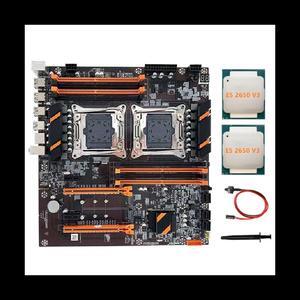
Quick View
X99 Dual CPU Motherboard LGA2011 Support DDR4 ECC Memory Motherboard+2XE5 2650 V3 CPU+Switch Cable+Thermal Grease
- CPU Type: Intel Atom
- Model #: ff-rr-288
- $415.64 –
- More options from $415.64
- Free Shipping
Quick View
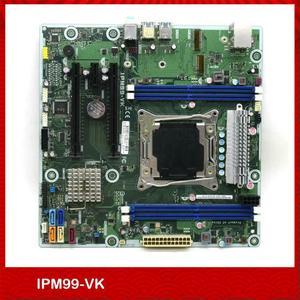
Desktop Motherboard For 850 860 x99 IPM99-VK 793186-001 DDR4 Stand By I7-5820K Card Delivery After Testing
- Model #: AGCC-2351833
- $195.00 –
- More options from $194.00
- Free Shipping
Quick View
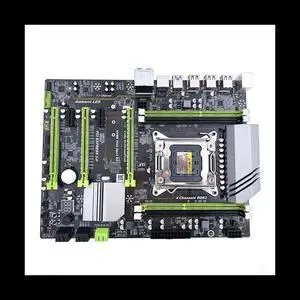
X79T LGA 2011 CPU Mainboard USB3.0 4 DDR3 Motherboard Desktop PC Computer Motherboard
- CPU Type: Intel Atom
- Model #: ff-rr-294
- $214.85 –
- Free Shipping
Quick View
Used - Very Good GIGABYTE G1 Gaming GA-X99-GAMING 5 LGA 2011-v3 Intel X99 USB 3.0 ATX Intel Motherboard
- Memory Standard: DDR4 3000(O.C.) / 2800(O.C.) / 2666(O.C.) / 2400(O.C.) / 2133
- Number of Memory Slots: 8x288pin (DDR4)
- PCI Express x16: 2 x PCI Express x16 slots, running at x16 (PCIE_1/PCIE_2) * For optimum performance, if only one PCI Express graphics card is to be installed, be sure to install it in the PCIE_1 slot; if you are installing two PCI Express graphics cards, it is recommended that you install them in the PCIE_1 and PCIE_2 slots. 2 x PCI Express x16 slots, running at x8 (PCIE_3/PCIE_4) * The PCIE_4 slot shares bandwidth with the PCIE_1 slot. When the PCIE_4 slot is populated, the PCIE_1 slot will operate at up to x8 mode. * When an i7-5820K CPU is installed, the PCIE_2 slot operates at up to x8 mode and the PCIE_3 operates at up to x4 mode. (All PCI Express x16 slots conform to PCI Express 3.0 standard.)
- Audio Chipset: C...
- Model #: GA-X99-GAMING 5
- $179.99 –
- More options from $169.55 - $223.99
- Free Shipping
Quick View
Used - Very Good GIGABYTE G1 Gaming GA-Z97X-Gaming 3 LGA 1150 Intel Z97 HDMI USB 3.0 ATX Intel Motherboard
- Memory Standard: DDR3 3200(OC)/3100(OC)/3000(OC)/2933(OC)/ 2800(OC)/2666(OC)/2600(OC)/2500(OC)/2400(OC)/2200(OC)/2133(OC)/
- Number of Memory Slots: 4x240pin
- PCI Express x16: 1 (x4)
- Audio Chipset: Realtek ALC1150
- Model #: GA-Z97X-GAMING 3
- $89.99 –
- More options from $59.96 - $89.99
- Free Shipping
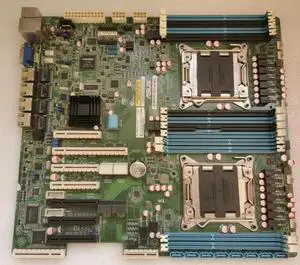
Quick View
Refurbished For Z9PR-D12/4L Dual X79 Supports 7 Server Graphics Card Motherboards
- Model #: 721607680609
- $482.90 –
- $15.00 Shipping
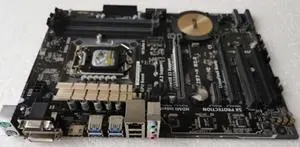
Quick View
Refurbished For Z97-K R2.0 1150 Motherboard Z97 Supports I7 5775C
- Model #: 726099772146
- $218.90 –
- $5.00 Shipping

Quick View
Refurbished For X79 G 2011 DDR3 motherboard supports ECC server E5 2620 2650v2
- Model #: 721607681316
- $163.90 –
- $15.00 Shipping
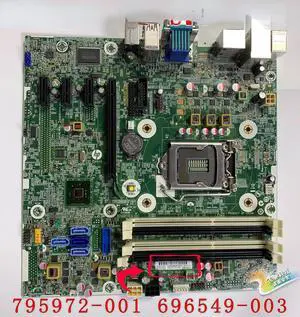
Quick View
Refurbished For 600 680 G1 SFF TWR Motherboard 795972-001 739682-001 696549-002
- Model #: 721607685956
- $141.90 –
- $5.00 Shipping
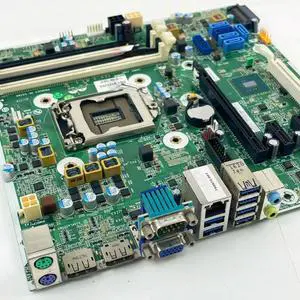
Quick View
Refurbished For 800G2 880 G2 TWR motherboard 795206-001 795970-001
- Model #: 721607687264
- $163.90 –
- $15.00 Shipping
Quick View

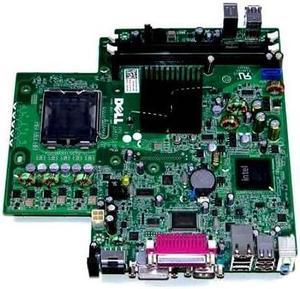
- Brand: DELL
- CPU Type: computer-motherboards
- Model #: G919G
- $35.94 –
- $8.99 Shipping
Quick View
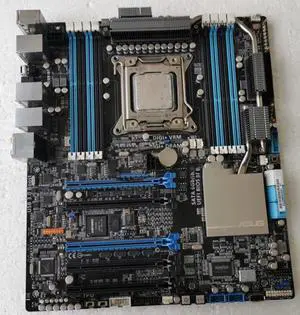
Refurbished For P9X79 WS/IPMI 2011 Pin X79 Main Board 5 PCIE
- Model #: 721607679184
- $658.90 –
- $15.00 Shipping