
 Holiday Shipping Details & Extended Holiday Returns

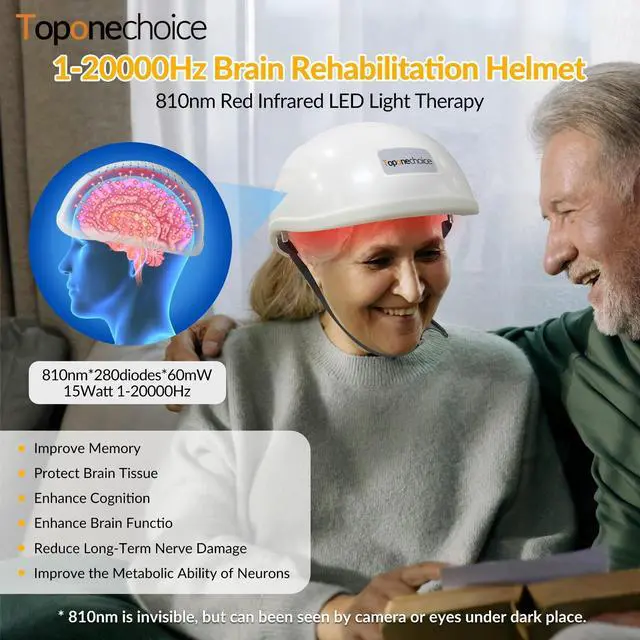
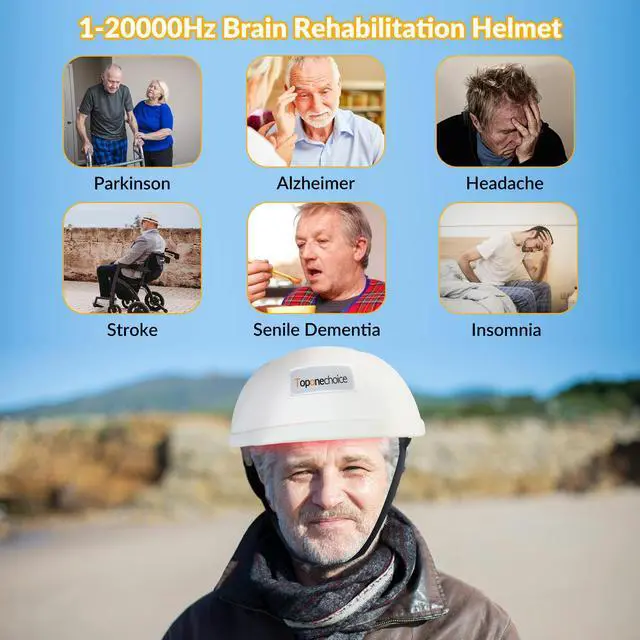

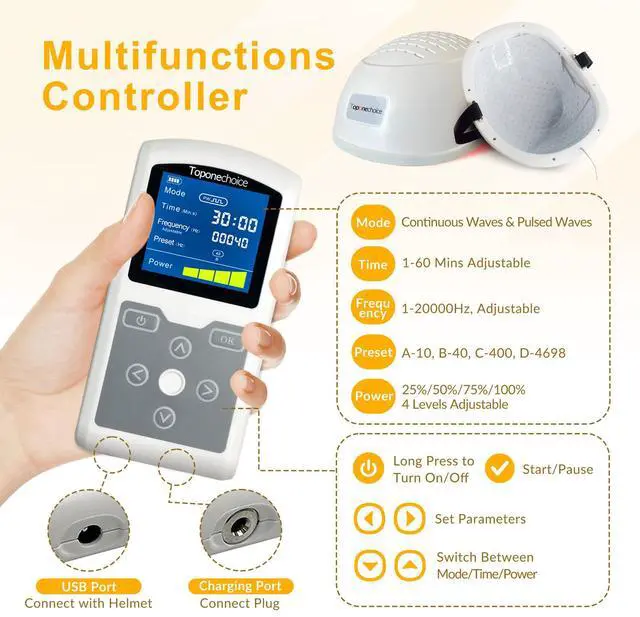


The Near-Infrared Light Therapy Helmet uses 810nm wavelengths to achieve deep brain tissue penetration. Its core mechanism is photobiomodulation (PBM) - stimulating mitochondria to produce ATP for brain cell repair, promoting nitric oxide to improve cerebral blood flow, and also having neuroprotective effects. The 40Hz frequency can resonate with brain waves, enhancing cognition and potentially alleviating symptoms of neurodegenerative diseases.
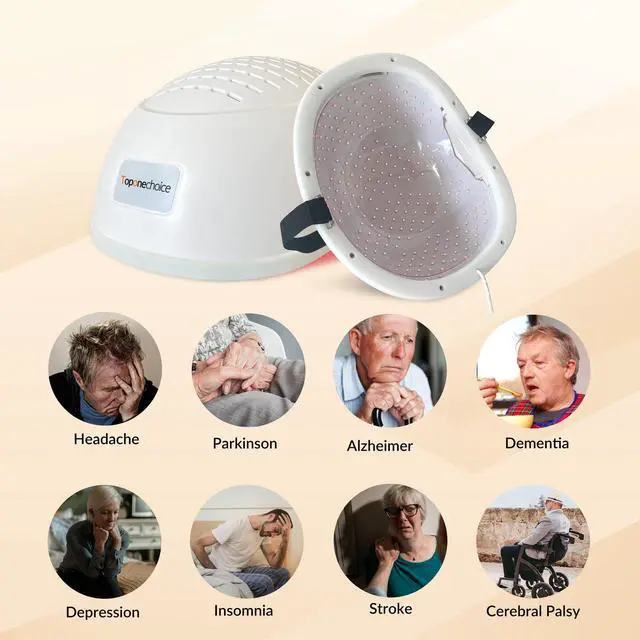
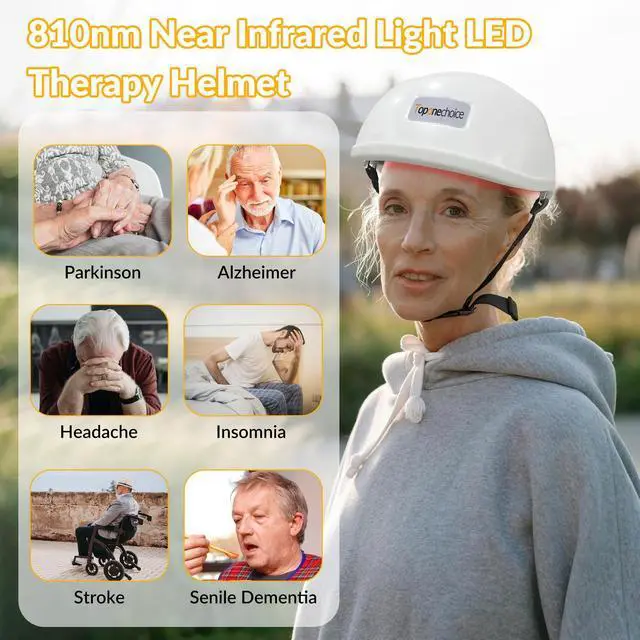
In terms of applications, it can alleviate cognitive decline in Alzheimer's disease, motor symptoms in Parkinson's disease, and dementia progression; aid in the recovery of traumatic brain injury (TBI) and stroke; improve mood in PTSD, as well as alleviate anxiety, insomnia, and depression; reduce symptoms of chronic migraines, multiple sclerosis (MS), and chronic fatigue, and relieve chronic pain; additionally, it can improve memory loss and enhance cognitive abilities such as attention.


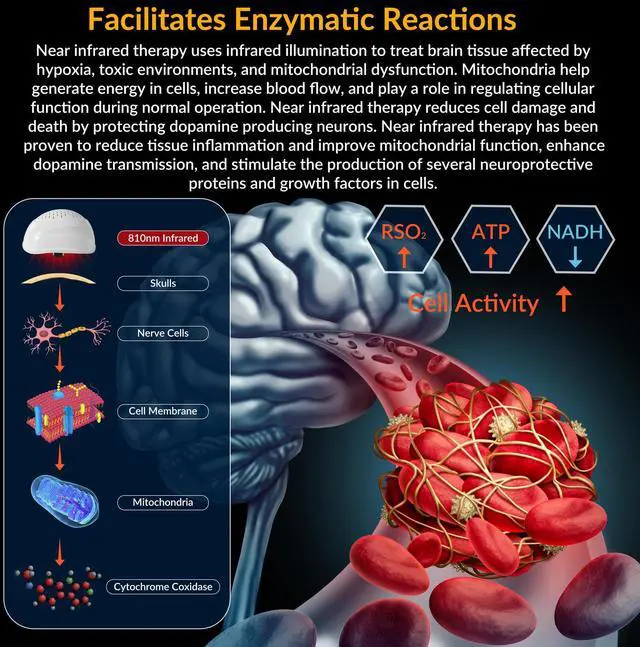
Photons of near-infrared light penetrate through the skull into brain cells and stimulate their mitochondria to produce more ATP, thereby increasing the metabolism of neurons. Near-infrared light therapy uses infrared illumination to treat brain tissue affected by hypoxia, toxic environments, and mitochondrial dysfunction.
Mitochondria, which help generate energy in cells, promote blood flow, and play a role in regulating cellular function during normal operation. Specifically, near-infrared light therapy reduces cell damage and death by protecting dopamine-producing neurons. It has also been proven to reduce tissue inflammation, improve mitochondrial function, enhance dopamine transmission, and stimulate the production of several neuroprotective proteins and growth factors in cells.

810nm has become one of the core technical wavelengths in near-infrared light therapy brain therapy helmets due to its combination of excellent tissue penetration and biological safety.
The key advantage of 810nm lies in its deep tissue penetration capability: it can effectively penetrate tissue barriers such as the human scalp and skull, reaching deep into intracerebral cells - this is the core prerequisite for its application in brain therapy, ensuring that photons act precisely on intracerebral mitochondria rather than remaining only in superficial tissues. At the same time, this wavelength has mild energy; unlike short-wavelength light (such as visible light and ultraviolet light), it is not easily absorbed by the skin or subcutaneous tissues to generate excessive heat, and it also avoids the issue of long-wavelength near-infrared light having sufficient penetration depth but lower biological activity, thus striking a balance between "penetration depth" and "biological efficacy".
40Hz
40Hz is a typical frequency of gamma waves, representing high-speed synchronous firing of neurons in the brain. It is closely related to higher-order cognition such as attention, memory, and decision-making, and can coordinate brain activity to ensure efficient cognitive operation. It can resonate with the brain's own gamma waves. For patients with neurodegenerative diseases such as Alzheimer's disease, where 40Hz gamma waves are weakened, near-infrared phototherapy helmets can induce the visual cortex, auditory cortex, and hippocampus to generate 40Hz waves synchronously through external stimulation, thus rebuilding neural coordination in the brain. At the same time, it can also enhance the function of the brain's lymphoid system to clear amyloid plaques and tau protein, regulate neurons to maintain cerebral vascular stability, protect dopaminergic neurons, and improve the efficiency of information transmission between brain regions to improve cognitive decline.


- Resonates with brain gamma waves to restore neural coordination in brain regions such as the hippocampus and temporal lobe.
- Enhances glymphatic system function to accelerate the clearance of amyloid deposits and tau proteins;3. Activates microglial anti-inflammatory responses to protect dopaminergic neurons and cholinergic neural pathways.

- Regulates the activity of the trigeminal spinal tract nucleus to reduce the release of headache-related neurotransmitters (e.g., substance P).
- Improves neural regulation in brain regions related to myocardial blood supply (e.g., insula) to assist in the coordination of cardiac and cerebral functions in patients with stable myocardial infarction.
- Resonantly regulates the synchrony of neurons in damaged brain regions (e.g., motor cortex, language center) to promote functional compensation.
- Improves cerebral microcirculation, enhances blood supply to ischemic areas, and reduces neuronal apoptosis after cerebral infarction/stroke.
- Activates neurogenesis-related pathways (e.g., BDNF release) to assist in repairing neural connections after traumatic brain injury (TBI).

- Improves information transmission efficiency between brain regions (prefrontal cortex-parietal lobe) to enhance attention, working memory, and executive function.
- Cooperates with 810nm wavelength to enhance mitochondrial ATP production, improve neuronal metabolism, and increase cognitive processing speed.
- Activates neural networks related to the language center to assist autistic patients in language comprehension and social communication.

- Regulates neural activity in the prefrontal cortex and amygdala, balances neurotransmitters such as serotonin and dopamine, and alleviates anxiety/depressive symptoms.
- Stabilizes limbic system function to reduce overactivation of brain regions associated with traumatic memories in PTSD patients.
- Synchronizes brain regions related to circadian rhythm (e.g., suprachiasmatic nucleus) to improve sleep structure in insomniac patients.
- Regulates the balance between neural excitation and inhibition in patients with bipolar disorder during manic/depressive episodes.

- Senile dementia
- Parkinson's disease (early stage),
- Dementia with Lewy bodies (mild stage)
- Frontotemporal dementia (behavioral variant, early stage)

- Chronic primary headaches
- Stable myocardial infarction
- Patients with stable coronary heart disease
- Hypertensive encephalopathy
- Post-herpetic neuralgia involving the head and face

- Stroke
- Cerebral infarction (ischemic/hemorrhagic)
- Hemiplegia, aphasia (motor/sensory)
- Brain injury (traumatic/hypoxic)
- Neural repair
- Concussion (recovery stage)
- Stroke sequelae (limb dysfunction)

- Memory improvement (working memory/episodic memory)
- Cognitive enhancement (attention/executive function)
- Autism (mild-to-moderate, with delayed language development)
- Attention deficit hyperactivity disorder (ADHD, inattentive type)
- Mild cognitive impairment (MCI)
- Language development delay (children)
Depression (mild-to-moderate/episodic)
Bipolar disorder (stable phase/hypomanic phase)
PTSD (with sleep disorders/emotional flashbacks)
Neurasthenia
Insomnia (chronic/refractory)
-
anxiety (generalized/social)
-
post-traumatic emotional disorder

| Product Name | Near-infrared Light Helmet for Brain Diseases |
|---|---|
| LED Wavelength | 810nm / 1070nm |
| Power | 15W / 28W |
| Working Mode | Continuous Wave & Pulsed Wave, Adjustable |
| Frequency | 1-20000Hz Adjustable |
| Time | 1-60 Minutes Adjustable |
| Net Weight | 0.91kg/ 2.01lb |
| Power Supply | DC Charging and Rechargeable Lithium Battery (10000mAh) |
| Model Number | LH280-A / LH280-B |
|---|---|
| Number of Diodes | 280pcs |
| Light Source | LED Diodes |
| Power Adjustment | 4 Grades Adjustable (25% / 50% / 75% / 100%) |
| Preset Frequency | 10Hz, 40Hz, 400Hz, 4698Hz for Quick Selection |
| Size | 24*28*13cm / 9.45*11.02*5.12in |
| Input Voltage | AC 100V-240V, 50Hz/60Hz, DC 10V |


1*Goggles
1*Box
1*Usermanual
1*Chargingwire (US/EU/UK/AU)
1*Connectingwire
1*Charger


