



 here!
here!
I’m your shopping assistant for PC builds, upgrades, and everything tech.
Got questions? Ask away!
Start a conversation
here!
I’m your shopping assistant for PC builds, upgrades, and everything tech.
Got questions? Ask away!
Start a conversation



Any questions? Ask CelesteSM will help you find out quickly.
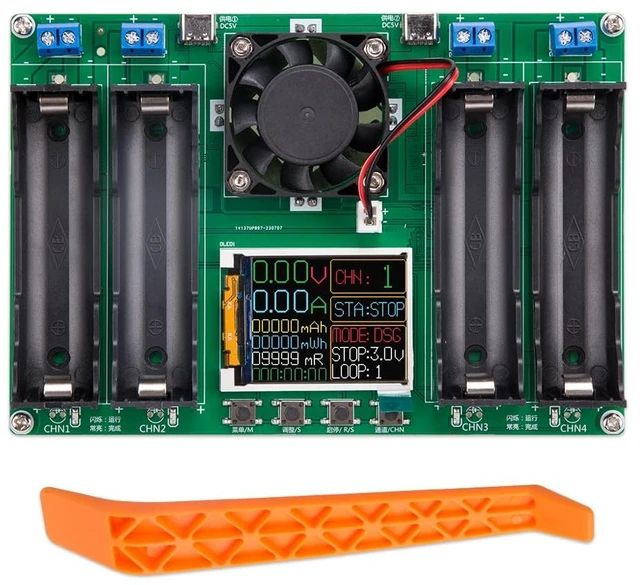
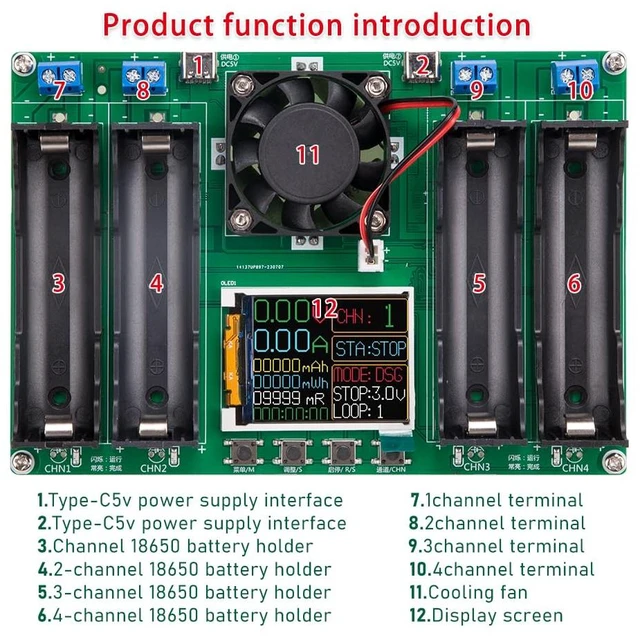
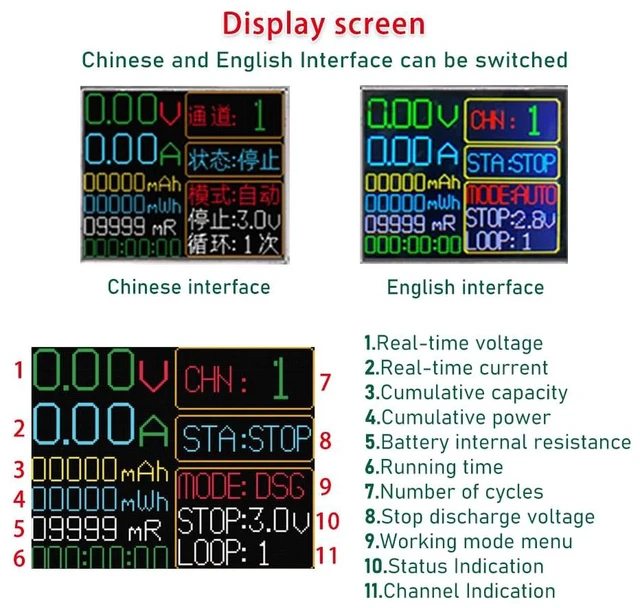
Working voltage: DC5V/System language: Chinese, English/Automatic charging and discharging: supported/Status prompt: Support/Overheating protection: Supports/Cooling method: Fan active cooling/Power off saving: only saves the set parameters, not the measurement data
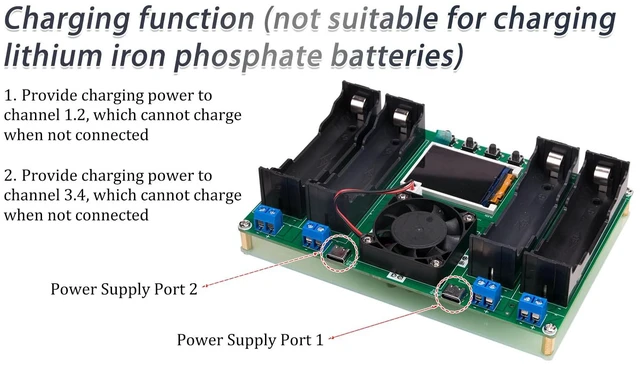
Applicable batteries: Suitable for batteries that meet the stopping discharge voltage of 2.5-3.5V, starting from 2.8V and fully charged to 4.2VPower supply interface: Two Type-C power supply interfaces (power supply and power cord provided)
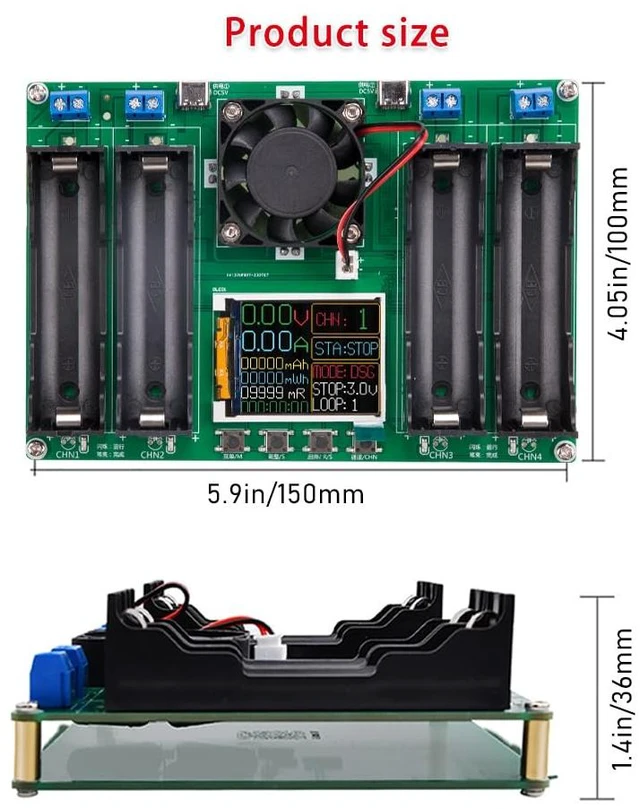
Test route: 4 charging and discharging measurements, each independent and not affecting each other
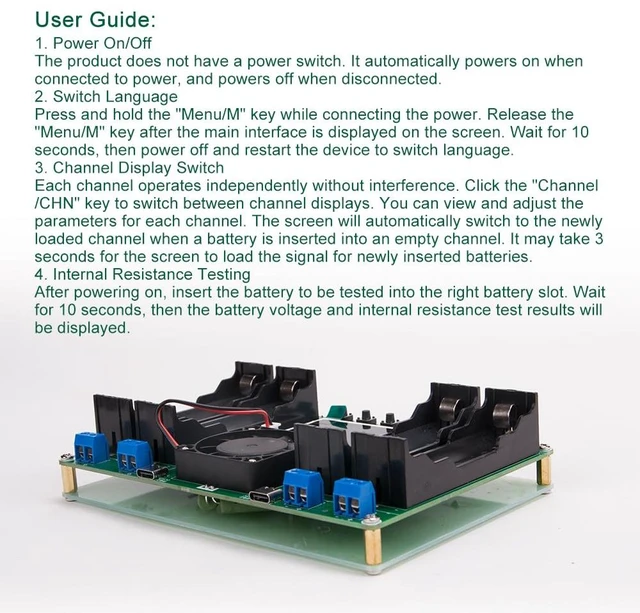
Internal resistance measurement: supported, using DC two-wire method to test internal resistance, test results are for reference only
Charging function: Supports, automatically cuts off charging when fully charged (does not support charging lithium iron phosphate batteries)
Discharge function: supported, automatically stops when conditions are met,The discharge current is not adjustable
Cycle charging and discharging: supported, adjustable from 1 to 9 cycles (only supported in automatic mode)
Stop discharge voltage: 2.5V, 2.6V, 2.7V, 2.8V, 2.9V, 3.0V, 3.1V, 3.2V3.3V, 3.4V, 3.5V, a total of 11 adjustable levels
Discharge current: Maximum of about 1A Non constant current, non adjustable, not supported for modification
Charging voltage: 4056 battery charging chip control, maximum charging of about 1A, fixed 4.2V, non adjustable
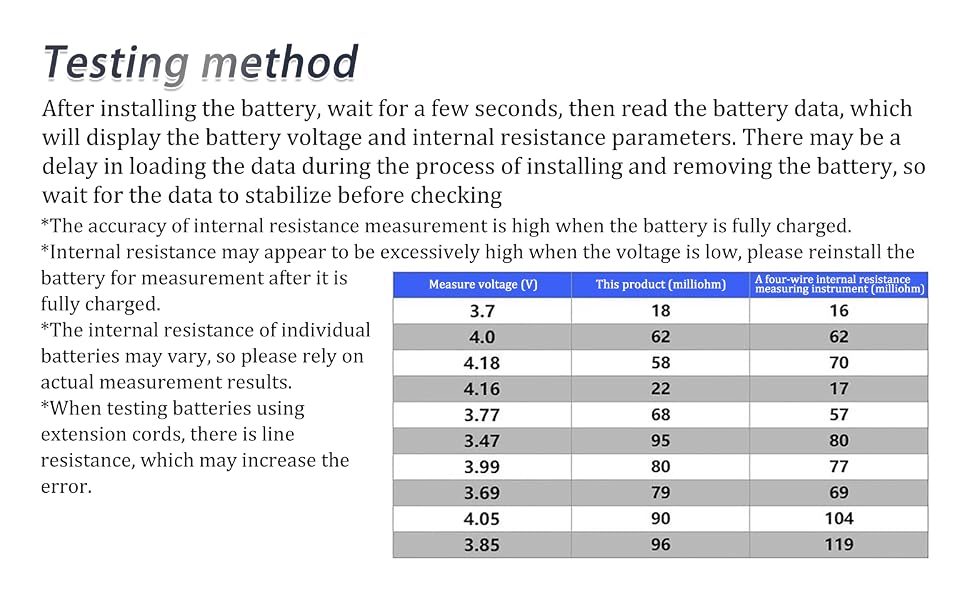
The principle of using direct current two-wire method to test battery internal resistance is: The direct current impedance is based on the physical formula R = V/I. The testing equipment forces the battery to pass a large constant direct current (generally 10A-80A) for a short period of time (typically 2-3 seconds), measures the voltage across the battery terminals at this time, and calculates the current battery internal resistance according to the formula. The test results are used for reference comparison between batteries in the same batch. For higher accuracy requirements for internal resistance, it is recommended to use a professional internal resistance meter with 4-wire method for testing.
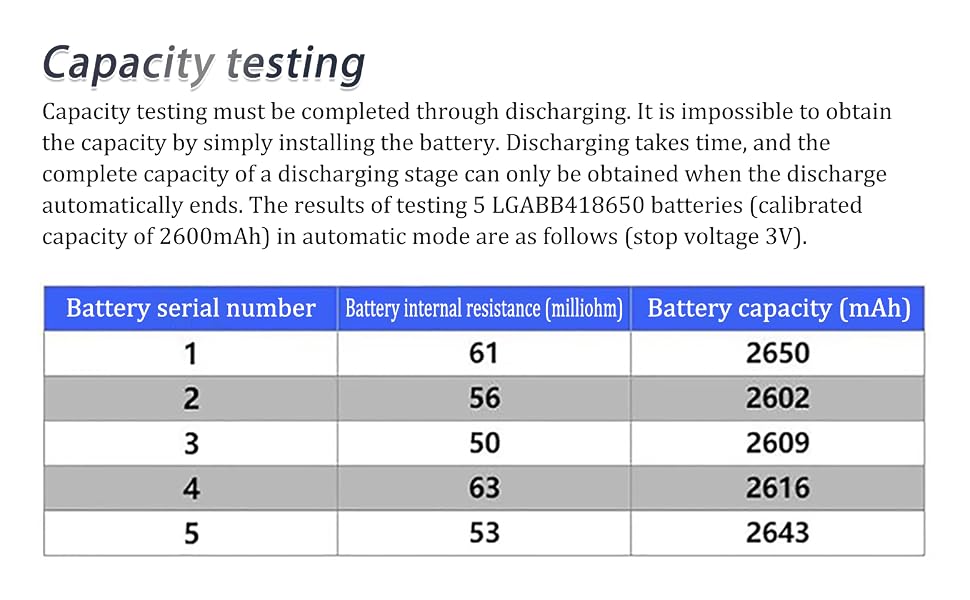
Capacity testing must be completed through discharging. It is impossible to obtain the capacity by simply installing the battery. Discharging takes time, and the complete capacity of a discharging stage can only be obtained when the discharge automatically ends. The results of testing 5 LGABB418650 batteries (calibrated capacity of 2600mAh) in automatic mode are as follows (stop voltage 3V).
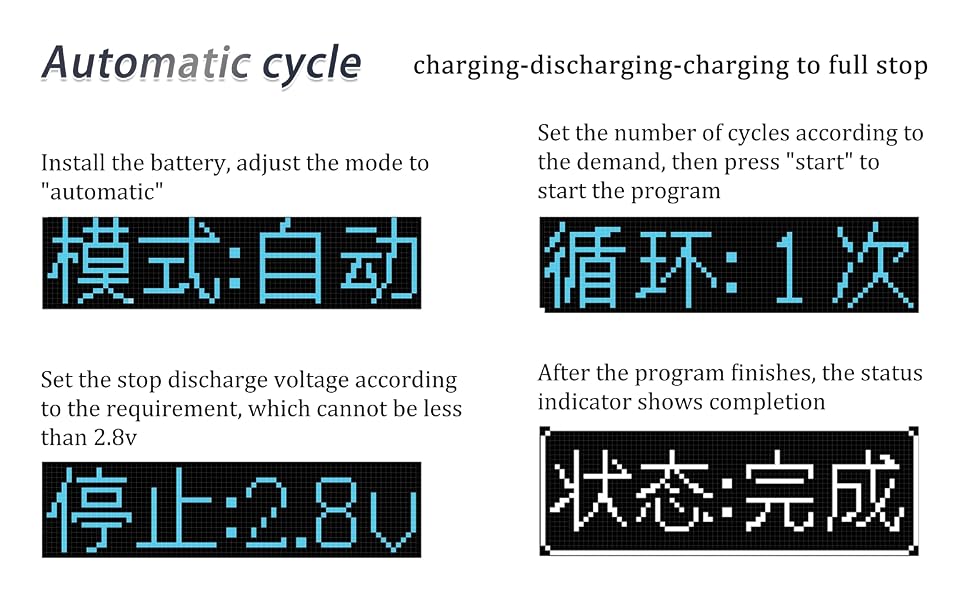
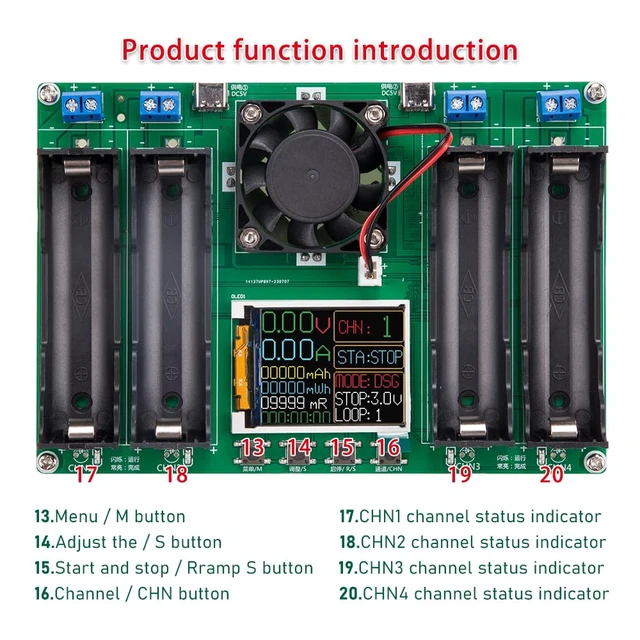
Install the battery, adjust the mode to "automatic"
Set the stop discharge voltage according to the requirement, which cannot be less than 2.8v
Set the number of cycles according to the demand, then press "start" to start the program
After the program finishes, the status indicator shows completion.
Working voltage: DC5V/System language: Chinese, English/Automatic charging and discharging: supported/Status prompt: Support/Overheating protection: Supports/Cooling method: Fan active cooling/Power off saving: only saves the set parameters, not the measurement data
Applicable batteries: Suitable for batteries that meet the stopping discharge voltage of 2.5-3.5V, starting from 2.8V and fully charged to 4.2VPower supply interface: Two Type-C power supply interfaces (power supply and power cord provided)
Test route: 4 charging and discharging measurements, each independent and not affecting each other
Internal resistance measurement: supported, using DC two-wire method to test internal resistance, test results are for reference only
Charging function: Supports, automatically cuts off charging when fully charged (does not support charging lithium iron phosphate batteries)
Discharge function: supported, automatically stops when conditions are met,The discharge current is not adjustable
Cycle charging and discharging: supported, adjustable from 1 to 9 cycles (only supported in automatic mode)
Stop discharge voltage: 2.5V, 2.6V, 2.7V, 2.8V, 2.9V, 3.0V, 3.1V, 3.2V3.3V, 3.4V, 3.5V, a total of 11 adjustable levels
Discharge current: Maximum of about 1A Non constant current, non adjustable, not supported for modification
Charging voltage: 4056 battery charging chip control, maximum charging of about 1A, fixed 4.2V, non adjustable
The principle of using direct current two-wire method to test battery internal resistance is: The direct current impedance is based on the physical formula R = V/I. The testing equipment forces the battery to pass a large constant direct current (generally 10A-80A) for a short period of time (typically 2-3 seconds), measures the voltage across the battery terminals at this time, and calculates the current battery internal resistance according to the formula. The test results are used for reference comparison between batteries in the same batch. For higher accuracy requirements for internal resistance, it is recommended to use a professional internal resistance meter with 4-wire method for testing.
Capacity testing must be completed through discharging. It is impossible to obtain the capacity by simply installing the battery. Discharging takes time, and the complete capacity of a discharging stage can only be obtained when the discharge automatically ends. The results of testing 5 LGABB418650 batteries (calibrated capacity of 2600mAh) in automatic mode are as follows (stop voltage 3V).
Install the battery, adjust the mode to "automatic"
Set the stop discharge voltage according to the requirement, which cannot be less than 2.8v
Set the number of cycles according to the demand, then press "start" to start the program
After the program finishes, the status indicator shows completion.