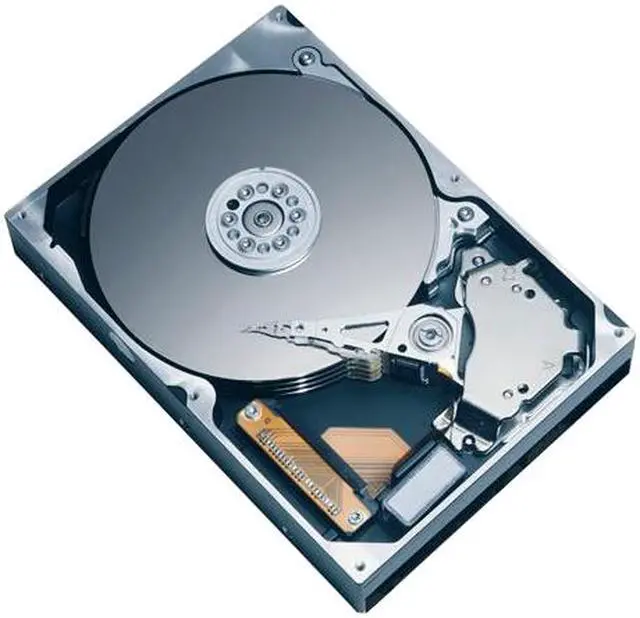
Image Viewer
-
-
-
Deactivated Item
-
-

Similar Items
Not the product you're looking for? We can make some suggestions to help you decide on a product that fits your needs.
view similar products
-
Manufacturer Contact Info
Return Policies
This item is covered by Newegg.com's Standard Return Policy.
- Return for refund within: 30 days
- Return for replacement within: 30 days
- Restocking Fee: Yes
|
-
- 5
-

- 73%
- 4
-

- 9%
- 3
-

- 6%
- 2
-

- 6%
- 1
-

- 6%
| Product Rating: |
   
|
| Total Reviews: |
33 |
'High' Level of Understanding?
- Pros: Western Digital has always been the best drive around for my money.
- Cons: There are always exceptions, though.
- Other Thoughts: Just an added thought in response to ak2000's post. Cameraman is on the right track. I manage a quite large server farm of over 100 IBM servers, all using some sort of SAS RAID controller. IBM's documentation clearly states that SATA drives will function connected to their SAS controllers. IBM even states that a mix of SAS and SATA drives is acceptable, but you cannot mix different drive interface types in a single RAID array. You cannot, however, use a SAS drive connected to a SATA controller. Physically, the SATA and SAS drive interface connectors *appear* the same, but there is also a minor difference there as well.
People with "HIgh Level" of understanding
- Pros: I use nothing other than WD drives these days, all other brands HDDs have failed at one time or another. Just bought 5 of these to replace some Seagates I bought a few years ago (what was I thinking?)
- Cons: I guarantee that 99% of the hard drive failures that result in poor review scores here are due to poor packaging by Newegg and poor handling by the carrier. If Newegg could just get their packaging act together, they would have far fewer "defective product" problems.
- Other Thoughts: To the reviewer below "CameraMan" who claims to have a "high understanding". SAS is Serial Attached SCSI, a different interface than SATA. So I am not surprised that these drives will not be recognized by your controller.
Nothing but problems
- Pros: Price. Capacity.
- Cons: I tried to install two of these on an IBM x3455 server with an IBM SAS HBA controller. The drives were not detected. I tested the card and server by trying different drives and they were detected fine. I tried the drives on another system (Dell PowerEdge SC430) and they weren't detected there either. I called Western Digital for support and they said they wouldn't support the drives if installed on a server. They wouldn't support the drives if installed on a RAID controller.
- Other Thoughts: It's odd to me that these are RAID EDTION drives promoted as being great for servers and yet they won't support them if you use them in exactly that configuration. I will not be buying Western Digital again.
I did not buy the drives from Newegg unfortunately. I'm stuck trying to get these replaced by identical drives and hoping they work.
| Model |
| Brand |
Western Digital |
| Series |
RE2 |
| Model |
WD7500AYYS |
| Packaging |
Bare Drive |
| Performance |
| Interface |
SATA 3.0Gb/s |
| Capacity |
750GB |
| RPM |
7200 RPM |
| Cache |
16MB |
| Average Seek Time |
8.9ms |
| Average Write Time |
9.6ms |
| Average Latency |
4.2ms |
| Physical Spec |
| Form Factor |
3.5" |
| Features |
| Features |
Superior reliability - Designed and manufactured to server-class standards to provide best-in-class enterprise reliability in high duty cycle environments. With 1.2 million hours MTBF, these drives have the highest available reliability rating on a high-capacity drive. Low power - Active Power Save delivers best-in-class seek mode power consumption through an advanced WD firmware which conserves power in active seek modes without degrading performance. RAID-specific, time-limited error recovery (TLER) - A feature pioneered by WD, significantly reduces drive fallout caused by the extended hard drive error-recovery processes common to desktop drives. Rotary Acceleration Feed Forward (RAFF) - Provides best-in-class vibration tolerance by optimizing operation and performance when the drives are used in vibration-prone, multidrive systems such as rack-mounted servers or network storage. |
|
|