here!
I’m your shopping assistant for PC builds, upgrades, and everything tech.
Got questions? Ask away!
Start a conversation
here!
I’m your shopping assistant for PC builds, upgrades, and everything tech.
Got questions? Ask away!
Start a conversation

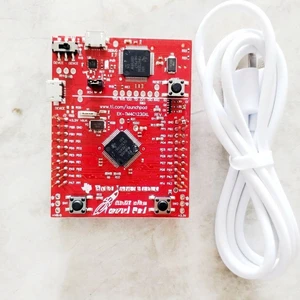

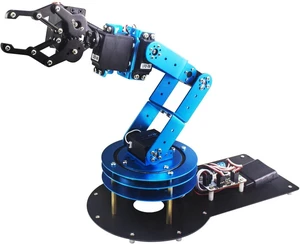
Limited time offer, ends 12/01

Limited time offer, ends 11/22


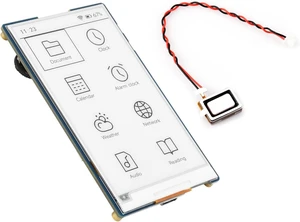


Limited time offer, ends 11/25


Limited time offer, ends 11/22
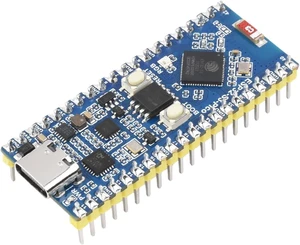

Limited time offer, ends 11/21


Limited time offer, ends 11/21
Limited time offer, ends 11/25
Limited time offer, ends 11/22

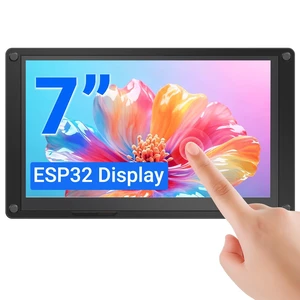
Modern development boards integrate multiple ICs, processors, interfaces, and essential controllers on a compact PCB to enable dedicated functions. Many platforms also include networking, core logic, security, and multimedia engines to accelerate embedded system design, IoT prototyping, and edge AI. Engineers, students, and hobbyists rely on these boards to learn, prototype, and rapidly iterate from concept to production.
Microcontroller boards (MCUs) typically run one focused program (or a lightweight RTOS) for real-time control—ideal for sensors, robotics, and automation. They use efficient processors and offer low power consumption. Single Board Computers (SBCs) are complete, low-profile microcomputers built on a single PCB—perfect where space is tight, such as kiosks or maker projects. SBCs boot full operating systems, support displays, and provide a strong foundation for AI, IoT hubs, and connected applications. FPGA / SoC FPGA boards can be reconfigured via HDL (Verilog/VHDL) and excel at low-latency, high-throughput tasks. Many combine programmable logic with ARM® or RISC-V cores for heterogeneous computing. If you’re new to hardware, start with beginner-friendly DIY boards, then scale to AI-capable platforms as your projects grow. Choose easy-to-program and re-flashable devices to save time and simplify prototyping.
Developer kits include everything needed to get started—CPU, GPU, accelerators, memory, storage slots, and key I/O interfaces. Many boards feature multi-core processors for responsive performance across daily computing and embedded workloads. A microSD™ slot allows quick OS installation and data storage, while built-in RAM provides ample capacity for multitasking. USB 3.x and Type-C ports support peripherals like keyboards, mice, and cameras, while HDMI® or DisplayPort outputs simplify monitor connections. Extended GPIO headers make it easy to integrate sensors and custom circuits. Built-in Bluetooth® 5.x, Wi-Fi® 6, and Gigabit Ethernet™ enable flexible connectivity, and headless configuration over Ethernet allows remote setup. Many kits also include protective cases to safeguard components during development.
Explore NVIDIA’s latest Jetson developer kits designed for AI, robotics, and edge computing:
For specifications, use cases, and buying tips, see our guide to NVIDIA Jetson Orin developer kits.
These Jetson boards offer scalable AI performance from entry-level to flagship, making them ideal for real-time perception, robotics, and edge inference workloads.
Enhance your project with expansion boards and HATs/shields: motor drivers for brushed, brushless, or stepper motors; display boards for LCD/OLED output or VGA/HDMI monitors; audio modules to convert analog signals to digital; and interface boards for buttons, joysticks, and rotary encoders. Sensor modules measure air pressure, light, and motion—essential for robotics or industrial designs. Add high-bandwidth LTE™/5G modules for connected IoT systems. Pin-compatible ecosystems and M.2/PCIe/USB expansion allow plug-and-play scalability as technology advances.
MCUs run a single lightweight program with real-time control and low power draw, while SBCs run full operating systems and handle complex, multitasking applications such as AI gateways or media centers.
Yes. Many modern boards, including the NVIDIA Jetson Orin Nano, AGX Orin, and AGX Thor, support on-device AI inference through frameworks such as TensorFlow Lite, ONNX Runtime, and NVIDIA TensorRT for vision, audio, and sensor intelligence.
Beginner-friendly options include Arduino Uno, Raspberry Pi 5, and ESP32 boards. They offer affordable kits, strong community support, and rich learning resources.
Consider the required interfaces: GPIO, I²C, SPI, and UART for sensors; USB and M.2/PCIe for peripherals; HDMI®/DP for displays; and Wi-Fi®, Bluetooth®, and Ethernet™ for networking. High-end AI boards often include multiple high-bandwidth connectors.
Add modules via GPIO, M.2, PCIe, or USB interfaces. Use compatible HATs, shields, or carrier boards to add displays, motors, storage, audio, and connectivity without redesigning your system.
Adding motor boards to your build allows the control of brushed, brushless and stepper motors. A display module lets you add an LCD to your setup or generate video signals for VGA and HDMI monitors. Convert signals from an analog audio input into digital using audio boards. Physical interfaces enable adding push buttons, joysticks or knobs to your project. Measuring and sensing modules let you measure air pressure, light, rotation and other sensors critical for the specialist build. Add sound to your development boards with MP3 parts, synthesizers and breakouts. LTE™ modules add high-bandwidth functionality to an IoT project. Pin-compatible expansion boards enable plug-and-play functionality for scaling up your platform based on future requirements and technologies.
“ First time with a PI and its off to a great start ”
Case for Raspberry Pi 4 with Large Fan and 4 × Aluminum Heat Sinks for Raspberry Pi 4 Model BPi 4 Board Not IncludedBlackBlue“ Standard Raspberry Pi 400 unit. Nothing fancy, but that's the point, isn't it? ;) ”
Raspberry Pi 400 - Complete Kit