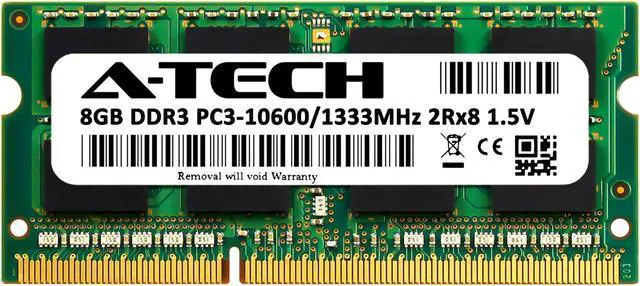
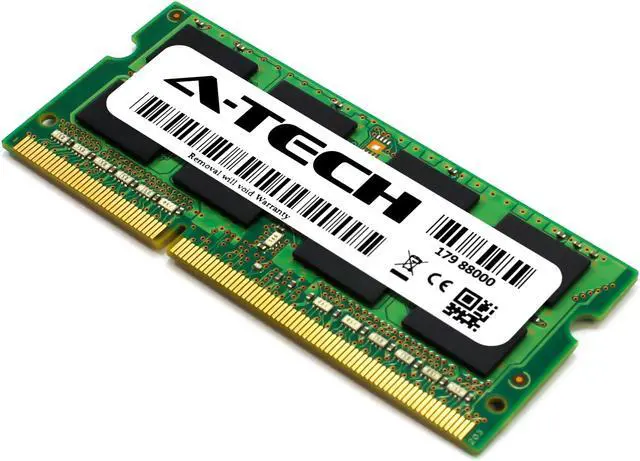
A-Tech’s 8GB DDR3-1333 SO-DIMM is a single 204-pin, 1.5V memory module for compatible laptops, notebooks, and all-in-one PCs, suited to users upgrading systems that support DDR3 PC3-10600 memory.
Recommended For
- Owners of a compatible older DDR3 laptop that currently has too little memory for everyday multitasking, and whose model supports an 8GB, 204-pin, 1.5V SO-DIMM.
- People refurbishing or repairing a legacy notebook who need one 8GB, dual-rank 2Rx8 module to match a system’s documented memory requirements; confirm the exact laptop model’s supported capacity, voltage, and rank before buying.
- Owners of a compatible DDR3 all-in-one or compact computer that uses laptop-size SO-DIMMs and needs an 8GB memory module rather than desktop DIMM memory.
- People keeping a compatible older laptop in service for lighter secondary tasks—such as DVD playback or retro gaming—who want to add memory without replacing the whole system.
Real-World Use Scenarios
- When an older compatible laptop is short on memory, a user can install this module to increase available RAM; switching among a browser, documents, and other lightweight apps may involve fewer slowdowns from memory pressure, though the result depends on the laptop’s existing memory and workload.
- For everyday school or home-office work on a compatible laptop, upgrading a low-memory configuration can make it easier to keep a word processor, spreadsheet, and a few browser tabs open at once; it is not expected to speed up tasks that were not limited by RAM.
- When repurposing an older DDR3 laptop for light browsing, typing, or learning activities, this module can be part of a memory upgrade that helps the system handle basic use; the processor, storage, operating system, and laptop’s supported memory limit still affect responsiveness.
- For a user who wants to keep several lightweight programs open instead of closing and reopening them, adding RAM to a compatible system that currently has little memory may reduce memory-related interruptions; it will not remove CPU or storage bottlenecks.




 here!