• In Stock
  • Sold by Newegg
  • New
Brands
Show More
Ports
Transfer Rate
Show More
Fiber Cable
Max Distance
Show More
Sold by
All Top Brands
Availability
Condition
Useful Links
Customer Ratings
Sort By:
View:
AddOn Cisco GLC-GE-100FX Compatible 100Base-FX SFP Transceiver (MMF, 1310nm, 2km, LC)
Quick View
AddOn Cisco GLC-GE-100FX Compatible 100Base-FX SFP Transceiver (MMF, 1310nm, 2km, LC)

OUT OF STOCK

  • Brand: ACP
  • Model: GLC-GE-100FX-AO
  • Ports: 1 x LC Duplex Connector 100Base-FX
  • Transfer Rate: 100 Mbps
  • Model #: GLC-GE-100FX-AO
StarTech.com Dell EMC SFP-10G-SR Compatible SFP+ Module - 10GBASE-SR - 10GE SFP+ 10GbE Multimode Fiber MMF Optic Transceiver - 400m DDM
Quick View
StarTech.com Dell EMC SFP-10G-SR Compatible SFP+ Module - 10GBASE-SR - 10GE SFP+ 10GbE Multimode Fiber MMF Optic Transceiver - 400m DDM

OUT OF STOCK

  • Device Type: Transceiver
  • Network Media: MMF
  • Wavelength: 850nm
  • Ports: LC
  • Model #: SFP10GSREMST
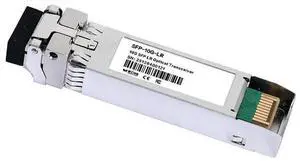
NETGEAR SFP 10GBase-LR for single mode 9/125µm fiber | AXM762
Quick View
Netgear Inc.
NETGEAR SFP 10GBase-LR for single mode 9/125µm fiber | AXM762

OUT OF STOCK

  • Standards: IEEE 802.3ae 10GBase-LR
  • Wavelength: 1310nm
  • Ports: 1 x 10GBase-LR
  • Temperature: Operating Temperature 32 -158º F (0 - 70ºC) Storage Temperature 32 -185 ºF (0 - 85ºC)
  • Model #: AXM762-10000S
  •  
  • AUD$1,544.40 
  • AUD$68.50 Shipping
TRENDnet 1000BASE-T to SFP Fiber Media Converter, Gigabit Ethernet to SFP Media Converter, 4Gbps Switching Capacity, TFC-GSFP
Quick View
TRENDnet 1000BASE-T to SFP Fiber Media Converter, Gigabit Ethernet to SFP Media Converter, 4Gbps Switching Capacity, TFC-GSFP

OUT OF STOCK

  • Brand: TRENDnet
  • Model: TFC-GSFP
  • Protocols: TCP/IP
  • Feature: Network Technology:1000Base-SX/LX Network Technology:1000Base-T
  • Model #: TFC-GSFP
StarTech.com 1000 Mbps Gigabit Single Mode Fiber Media Converter LC 40km
Quick View
StarTech.com 1000 Mbps Gigabit Single Mode Fiber Media Converter LC 40km

OUT OF STOCK

  • Device Type: Converter
  • Standards: IEEE 802.3ab (1000BASE-T) IEEE 802.3z (1000BASE-SX/LX)
  • Wavelength: 1310nm
  • Fiber Cable: Single-mode Optical Fiber
  • Model #: ET1000S40LC2
StarTech.com SFP10GBLRMST 10GBASE-LRM SFP+ Transceiver Module - 10 Gbps - 220m - MSA Compliant Fiber SFP
Quick View
StarTech.com SFP10GBLRMST 10GBASE-LRM SFP+ Transceiver Module - 10 Gbps - 220m - MSA Compliant Fiber SFP

OUT OF STOCK

  • Device Type: Transceiver
  • Standards: IEEE 802.3ae 10GBASE-LRM
  • Wavelength: 1310nm
  • Fiber Cable: Multi-mode Optical Fiber
  • Model #: SFP10GBLRMST
  •  
  • AUD$77.00 
  • AUD$68.50 Shipping
TRENDnet SFP to RJ45 10GBASE-LR SFP+ Single Mode LC Module, TEG-10GBS10, Up to 10 km (6.2 Miles), Hot Pluggable SFP Transceiver, Duplex LC Connector, 1310nm, 3.3V Power Supply, Lifetime Protection
Quick View
Black Box Industrial DIN Rail RS-232/RS-422/RS-485 to Fiber Driver
Quick View
Black Box Industrial DIN Rail RS-232/RS-422/RS-485 to Fiber Driver

OUT OF STOCK

  • Device Type: Transceiver
  • Max Distance: 2.50 Mile
  • Power Adapter: Rail-mountable
  • Model #: MED101A
  •  
  • AUD$816.20 
  • AUD$68.50 Shipping
  • Network Transceivers

Network Transceivers

Communication needs have always revolved around two parties. There is a long history of the digital sender/receiver relationship, dating back to the introduction of tools like radio and walkie-talkies. The technology that goes into networks of this caliber was - and continues to be - defined by the need for a signal to be delivered to another location from its point of origin. As such, devices called transmitters and receivers came into being in order to facilitate this.

But this method of connection is not suitable for all forms of telecom and media due to its inability to open channels in both directions simultaneously. Radios are only able to receive signals, despite the fact that there is a station somewhere broadcasting them. In contrast, telephones allow two people to speak to each other in real time. This is because landline and cellular networks use transceivers to facilitate these calls.

Transceivers are - like the name that they possess - a combination of transmitters and receivers. They have existed for a number of years in various incarnations, but are particularly valuable components in wireless networking set-ups. Network transceivers make many of the varied functions of computers possible, enabling a world of interconnectivity that was only dreamed of at the time that the technology behind these devices was first being realized.

In order to expand a Wi-Fi network into new areas, it may be necessary to invest in a transceiver. They are already in use all over by major companies and Internet providers, and have proven useful in trying to bring everyone in the world onto the World Wide Web.

Analog Transceiver vs. Wireless Transceiver

Much like other aspects of network connectivity, there are options regarding what kind of connection is desired. There are some instances where it makes the most sense to use a wired, analog connection. In these situations, distance or mobility are probably not as big of factors as they could be elsewhere, and the importance of uninterrupted service is critical. But as Wi-Fi connectivity becomes less of an extra perk and more of an expected amenity, providers are seeking out new ways in which to bolster the range of their coverage. Wireless transceivers are going to be absolutely critical in expanding quality access to the Internet.

To provide you with a better idea of how transceivers are being applied today, here is a list of some of the machines they help empower:
  • PC and Console Gaming - One of the biggest benefits to the Gaming world was the inception of Internet-enabled play on a wide scale. Because there is so much data now that needs to be coming and going to and from any console at a given time, video game devices are absolutely enabled by transceivers.
  • Eyeglasses and Wristwatches - Wearable devices are making huge waves in the technology world, and many of them have yet to even be released! Regardless, they are already expected to become major parts of everyday life, and that means more transceivers moving through the world.
  • Cars, buses and people - Some potential places that these transceivers could end up are on public transportation vehicles like buses, which would bring the signal all over the city in which they run. Similarly, rental car participants could receive incentives for carrying a transceiver in their car and parking it in a designated location. This kind of ingenuity could increase global access to the Internet in a big way, and may be instrumental to the development of technology as a whole.