
Your Browsing History
SHOP BY Capacity
Quick View
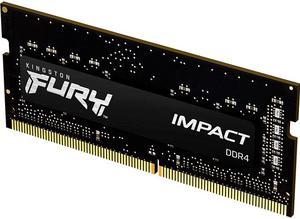
Kingston Fury Impact 8GB 260-Pin DDR4 SO-DIMM DDR4 3200 (PC4 25600) Laptop Memory Model KF432S20IB/8
- CAS Latency: CL20
- Timing: 20-22-22
- Voltage: 1.20V
- Features: Power Supply: VDD = 1.2V Typical VDDQ = 1.2V Typical VPP = 2.5V Typical VDDSPD = 2.2V to 3.6V On-Die termination (ODT) 16 internal banks; 4 groups of 4 banks each Bi-Directional Differential Data Strobe 8 bit pre-fetch Burst Length (BL) switch on-the-fly BL8 or BC4(Burst Chop) Height 1.18" (30.00mm)
- Model #: KF432S20IB/8
- HKD$1,222.99 –
- More options from HKD$973.90 - HKD$1,222.99
- HKD$548.25 Shipping
Quick View
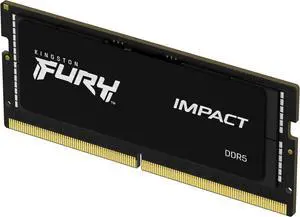
Kingston FURY Impact 16GB 262-Pin DDR5 SO-DIMM DDR5 5600 (PC5 44800) Memory (Notebook Memory) Model KF556S40IB-16
- CAS Latency: CL40
- Timing: 40-40-40
- Voltage: 1.10V
- Part Number: KF556S40IB-16
- Model #: KF556S40IB-16
- HKD$2,258.99 –
- More options from HKD$603.08 - HKD$2,258.99
- HKD$548.25 Shipping
Quick View
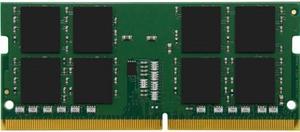
Kingston 8GB 260-Pin DDR4 SO-DIMM DDR4 3200 (PC4 25600) Laptop Memory Model KCP432SS8/8
- CAS Latency: CL22
- Voltage: 1.20V
- Buffered/Registered: Unbuffered
- Model #: KCP432SS8/8
- HKD$1,219.99 –
- More options from HKD$360.99 - HKD$1,219.99
- HKD$548.25 Shipping
Quick View
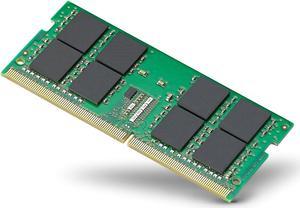
Kingston - KVR32S22D8/16 - Kingston ValueRAM 16GB DDR4 SDRAM Memory Module - 16 GB - DDR4-3200/PC4-25600 DDR4 SDRAM -
- CAS Latency: CL22
- Voltage: 1.20V
- Option: 16GB
- Model #: KVR32S22D8/16
- HKD$2,078.99 –
- More options from HKD$400.10 - HKD$2,078.99
- HKD$548.25 Shipping
Quick View
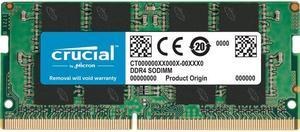
Crucial 32GB Single DDR4 2666 MT/s CL19 SODIMM 260-Pin Memory - CT32G4SFD8266

- CAS Latency: CL19
- Voltage: 1.20V
- Buffered/Registered: Unbuffered
- Features: Speeds up to 3200 MT/s and faster data rates are expected to be available as DDR4 technology matures Increase bandwidth by up to 30% Reduce power consumption by up to 40% and extend battery life Faster bursts access speeds for improved sequential data throughout Optimized for next generation processors and platforms
- Model #: CT32G4SFD8266
- HKD$2,815.99 –
- HKD$548.25 Shipping
Quick View
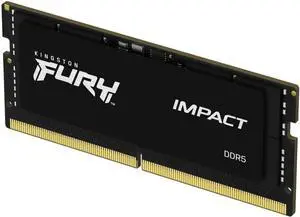
Kingston Impact 32GB 262-Pin DDR5 SO-DIMM DDR5 4800 (PC4 38400) Memory (Notebook Memory) Model KF548S38IB-32
- CAS Latency: CL38
- Voltage: 1.10V
- Model #: KF548S38IB-32
- HKD$4,602.99 –
- More options from HKD$836.99 - HKD$4,602.99
- HKD$548.25 Shipping
Quick View
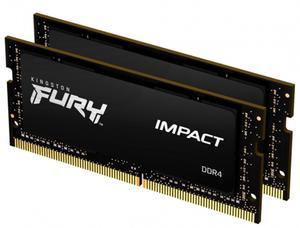
Kingston FURY Impact 16GB (2 x 8GB) 260-Pin DDR4 SO-DIMM DDR4 3200 (PC4 25600) Laptop Memory Model KF432S20IBK2/16
- CAS Latency: CL20
- Timing: 20-22-22
- Voltage: 1.20V
- Multi-channel Kit: Dual Channel Kit
- Model #: KF432S20IBK2/16
- HKD$2,331.99 –
- More options from HKD$621.91 - HKD$2,331.99
- HKD$548.25 Shipping
Quick View
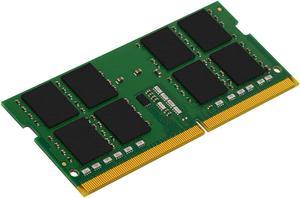
Kingston 16GB 260-Pin DDR4 SO-DIMM DDR4 3200 (PC4 25600) Accessories - General Model KVR32S22S8/16
- CAS Latency: CL22
- Timing: 22-22-22
- Voltage: 1.20V
- Model #: KVR32S22S8/16
- HKD$1,729.99 –
- More options from HKD$1,321.61 - HKD$1,729.99
- HKD$548.25 Shipping
Quick View
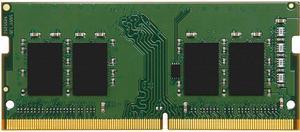
Kingston 8GB 260-Pin DDR4 SO-DIMM DDR4 3200 (PC4 25600) Laptop Memory Model KCP432SS6/8
- CAS Latency: CL22
- Voltage: 1.20V
- Buffered/Registered: Unbuffered
- Model #: KCP432SS6/8
- HKD$1,980.99 –
- More options from HKD$361.99 - HKD$1,980.99
- HKD$548.25 Shipping
Quick View

- Model #: SNP1CXP8C/16G
- HKD$3,072.99 –
- More options from HKD$2,569.74 - HKD$3,072.99
- HKD$548.25 Shipping

Quick View

- Model #: 815098-B21
- HKD$8,333.99 –
- More options from HKD$8,333.99 - HKD$13,197.25
- HKD$783.25 Shipping
Quick View
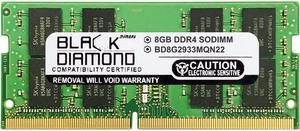
Black Diamond Memory 8GB 260-Pin DDR4 SO-DIMM DDR4 2933 (PC4 23400) Laptop Memory Model BD8G2933MQN22
- Features: With decades of experience specializing in memory and server parts, Black Diamond Memory is a proven manufacturer in the industry. Our products currently support over 200,000 configurations as well as support for enterprise servers, desktops, laptops, and a large variety of other devices.
- Model #: BD8G2933MQN22
- HKD$381.38 –
- HKD$173.24 Shipping


Quick View
32GB DDR4 3200 SODIMM
- Model #: 4X71A11993-AX
- HKD$4,722.99 –
- More options from HKD$4,722.99 - HKD$5,337.76
- HKD$548.25 Shipping
Quick View
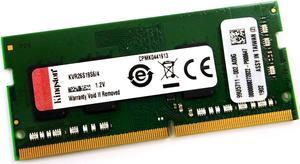
Kingston ValueRAM - DDR4 - 4 GB - SO-DIMM 260-pin - 2666 MHz / PC4-21300 - CL19 - 1.2 V - unbuffered - non-ECC
- CAS Latency: CL19
- Voltage: 1.2 V
- Model #: KVR26S19S6/4
- HKD$443.99 –
- HKD$1,723.25 Shipping
Quick View
- Voltage: 1.20V
- Option: Standard Edition
- Model #: SNPKRVFXC/8G
- HKD$4,330.99 –
- More options from HKD$603.99 - HKD$6,711.00
- HKD$548.25 Shipping
Quick View
Kingston FURY Impact 8GB DDR5 SDRAM Memory Module
- CAS Latency: CL38
- Voltage: 1.10V
- Buffered/Registered: Unbuffered
- Model #: KF548S38IB-8
- HKD$1,304.99 –
- More options from HKD$317.99 - HKD$1,304.99
- HKD$548.25 Shipping
Quick View
64GB DDR4-3200MHZ CL20 SODIMM
- Model #: KF432S20IBK2/64
- HKD$5,962.99 –
- More options from HKD$1,823.51 - HKD$5,962.99
- HKD$783.25 Shipping
Quick View
Kingston FURY Impact 32GB 262-Pin DDR5 SO-DIMM DDR5 5600 (PC5 44800) Memory (Notebook Memory)
- CAS Latency: CL40
- Timing: 40-40-40
- Voltage: 1.10V
- Part Number: KF556S40IB-32
- Model #: KF556S40IB-32
- HKD$4,303.99 –
- More options from HKD$747.67 - HKD$4,303.99
- HKD$548.25 Shipping
Quick View
Axiom 16GB DDR4-3200 SODIMM for HP 13L75AA 141H5AA 286J1AA 13L75AAAX
- CAS Latency: CL1.5
- Color: Black
- LED Color: None
- Model #: 13L75AAAX
- HKD$3,727.99 –
- More options from HKD$2,614.85 - HKD$3,727.99
- HKD$548.25 Shipping
Quick View
- Model #: SNPP6FH5C/32G
- HKD$9,182.99 –
- More options from HKD$9,182.99 - HKD$14,912.98
- HKD$548.25 Shipping
Quick View
Kingston 48GB 262-Pin DDR5 SODIMM DDR5 5600 (PC5 44800) Notebook Memory
- Brand: Kingston
- Capacity: 48GB
- Type: 262-Pin DDR5 SO-DIMM
- Speed: DDR5 5600 (PC5 44800)
- Model #: KVR56S46BD8-48
- HKD$6,613.99 –
- More options from HKD$1,368.99 - HKD$6,613.99
- HKD$783.25 Shipping
Quick View
16GB Transcend JetRam DDR4 2666Mhz PC4-21300 CL19 SO-DIMM Laptop Module 260 Pins
- Voltage: 1.2V
- Model #: JM2666HSE-16G
- HKD$1,330.99 –
- HKD$548.25 Shipping
Quick View
ADDON LENOVO 4X70R38790 COMP 8GB DDR4-2666MHZ 1.2V SRX8 SODIMM
- Model #: 4X70R38790AA
- HKD$993.99 –
- HKD$2,193.25 Shipping

Quick View
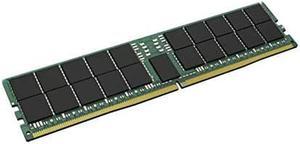
Kingston 16GB DDR5 4800MT/s ECC SODIMM
- Model #: KTL-TN548T-16G
- HKD$3,352.99 –
- More options from HKD$2,189.28 - HKD$3,352.99
- HKD$548.25 Shipping
Quick View
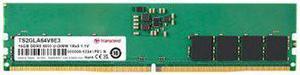
Transcend 32GB DDR5 4800 U-DIMM 2Rx8 2Gx8 CL40 1.1V
- Model #: TS4GLA64V8E
- HKD$10,744.99 –
- More options from HKD$2,511.57 - HKD$10,744.99
- HKD$548.25 Shipping
Quick View
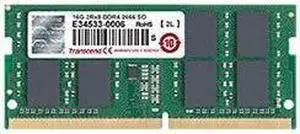
8GB DDR4 2666 SO-DIMM 1RX8 1GX8 CL19
- Model #: TS1GSH64V6B
- HKD$4,048.99 –
- HKD$548.25 Shipping
Quick View

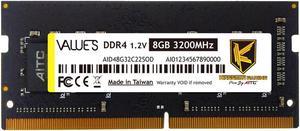
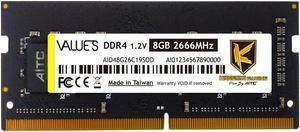
- CAS Latency: CL22
- Model #: AID48G32C22SOD
- HKD$570.46 –
- HKD$80.00 Shipping
Quick View
- HKD$560.30 –
- HKD$80.00 Shipping
Quick View
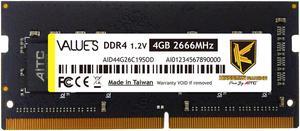
- CAS Latency: CL19
- Model #: AID44G26C19SOD
- HKD$265.65 –
- HKD$80.00 Shipping
Quick View
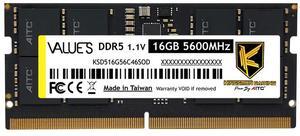
- Capacity: 16GB (1 x 16GB)
- Type: 262-Pin DDR5 SO-DIMM
- CAS Latency: CL46
- Model #: KSD516G56C46SOD
- HKD$1,850.67 –
- HKD$80.00 Shipping
Quick View
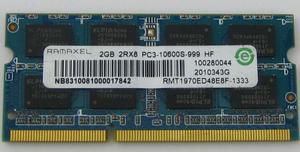
Refurbished Ramaxel 2GB DDR3 1333 PC3-10600S Laptop Memory RAM
- Voltage: 1.50V
- Parts: Warranty: 30 days
- Labor: Warranty: 30 days
- Model #: r2g-ddr3-pc3-10600s
- HKD$309.97 –
- Free Shipping
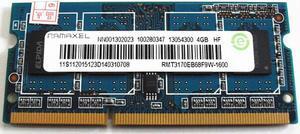
Quick View
Refurbished Ramaxel 4GB DDR3L PC3L-12800S Laptop Memory SO-DIMM
- Voltage: 1.50V
- Parts: Warranty: 30 days
- Labor: Warranty: 30 days
- Model #: r4g-ddr3l-pc3l-12800
- HKD$465.38 –
- Free Shipping
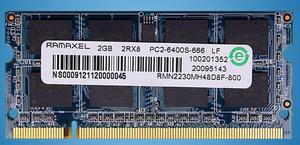
Quick View
Refurbished Ramaxel 2GB DDR2 800 PC2-6400S Laptop Memory
- Parts: 30 days
- Labor: 30 days
- Model #: r2g-pc2-6400s
- HKD$309.97 –
- Free Shipping
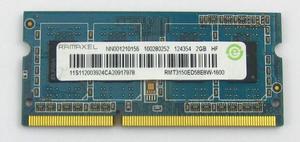
Quick View
Refurbished Ramaxel 2GB DDR3 1600 PC3-12800S Sodimm Laptop Memory RAM
- Voltage: 1.5V
- Parts: Warranty: 30 days
- Labor: Warranty: 30 days
- Model #: r2g-pc3-12800s
- HKD$309.97 –
- Free Shipping
Laptop memory comes in different types. These differences are due to memory technology, the function of memory and other computer hardware components. Determine the right kind of memory for your Windows® laptop with the Task Manager utility program. Alternatively, use the Hardware Overview utility in a MacBook® for the right Mac memory. Both tools will help you determine which memory modules are compatible with your device in terms of speed, capacity and format.
Make Your System Run Faster With Laptop RAM Sticks
A RAM card for your laptop is a critical component for short-term data access when loading applications, editing a spreadsheet or browsing the web, which means that the speed and amount of memory in the system play a crucial role. However, RAM for your system's speed depends entirely on your laptop’s motherboard. A motherboard that supports RAM with clock speeds of up to 1600MHz will only utilize speeds to that limit. The clock speed, cycle or frequency is the number of cycles RAM runs in a second. So, a laptop memory with a clock speed of 2133MHz can perform 2,133 cycles per second. The higher the cycle numbers, the greater the amount of data your laptop can read and write.
Improve Multitasking Capabilities
You probably use your laptop to do lots of things simultaneously. As you edit a document, you are pulling up pictures from memory cards and browsing the Internet. Each active app requires memory, and is competing for limited resources, but you can overcome this by installing high-density memory modules in each slot for seamless multitasking. If the laptop motherboard and operating system allow it, upgrading to an 8GB or 16GB of RAM ensures faster loading of applications and switching between open programs. Upgrades of more than 16GB of memory capacity are advisable for users running resource-intensive games, creative applications and various computer-aided design solutions.
Easy Installation Means No Computer Mechanical Skills Required
All you need is the owner’s manual, a screwdriver and a few minutes to install a laptop memory stick. However, you need to pay attention to the type of RAM your laptop uses. The most common RAM used in modern laptops is DDR SO-DIMM, an acronym for Double Data Rate Small Outline Dual In-Line Memory Module. It comes in three versions: DDR, DDR2, DDR3 and DDR4, with each version faster and using less power than the previous one. The DDR4 SO-DIMMs has up to 260 pins, with each achieving up to 2Gbps transfer speeds, and consuming less power than earlier generation sticks.
Unlike your laptop memory, flash memory is a non-volatile storage medium that retains information, even after cutting off power. Despite the name, when it comes to data transfer and storage, flash memories are closer in operation and form to solid-state drives than an external RAM for laptop devices. Flash memory is commonly used in USB card readers, printers, small electronics and portable media players.