
Every few weeks someone posts that they are nervous about buying a high-end graphics card because of the melting connector stories, and the replies are a mess of half-remembered detail. It is a fair thing to be nervous about and it is also a solved problem, provided you know which three words on a spec sheet to look for.
Here is the version I would give a friend, working through the questions in the order they usually come up.
What Changed With the 16-Pin Connector?
The original 12VHPWR connector carried up to 600W through a much smaller plug than the three 8-pin cables it replaced. Two things went wrong in practice: the plug could be seated almost-but-not-quite fully, and in that state the contact area shrank enough to generate heat.
The revision, 12V-2×6, changes the pin geometry so that a partially seated plug loses its sense pins and the card refuses to draw full power rather than drawing it through a bad connection. Same shape, same cable, different failure behaviour. This is why the phrase to look for is 12V-2×6, not 12VHPWR.
What Do ATX 3.1 and PCIe 5.1 Mean on the Box?
ATX 3.1 is the power supply standard that specifies how a unit handles the short, sharp power spikes modern graphics cards produce. PCIe 5.1 is the matching connector and cable specification, which is where 12V-2×6 comes from. A supply advertising both is telling you it was designed after the problem was understood.
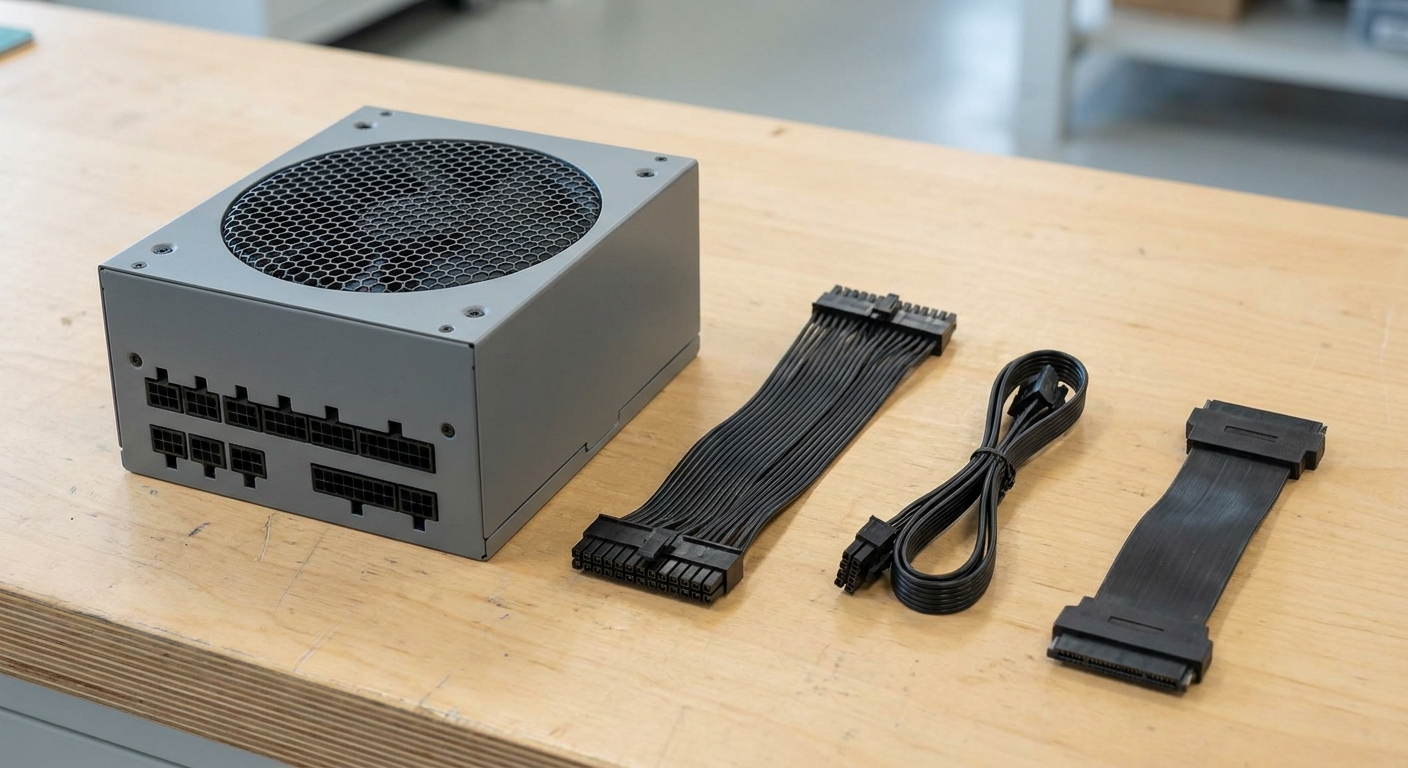
Every unit on this page is an 850W model listing ATX 3.1 compatibility, which is roughly the right size for a single high-end card and a mainstream processor.
Which Ones Get the Connector Right?
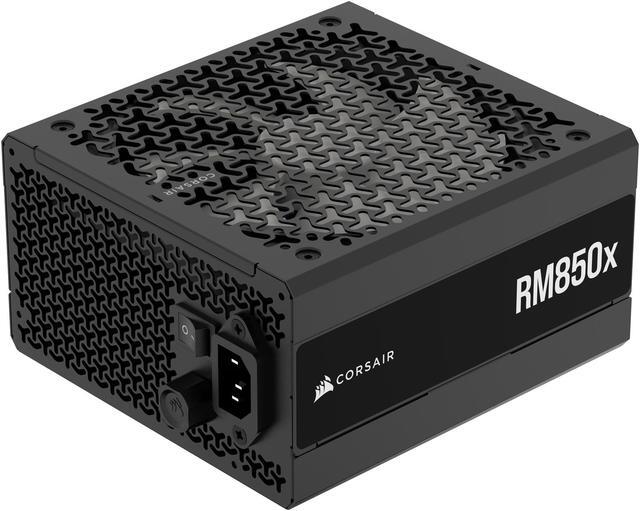
The CORSAIR RM850x is the one I would buy without research. ATX 3.1, PCIe 5.1, Cybenetics Gold, fully modular, Japanese capacitors, and a connector list that covers both worlds: one 12+4 pin 12VHPWR cable, one 24-pin ATX, two 4+4 pin EPS for the processor, three 6+2 pin PCIe, eight SATA and three PATA.
The CORSAIR RM850e is the leaner version of the same idea, also ATX 3.1 compatible, with one 12+4 pin cable, one 24-pin, one 6+2 pin PCIe and six SATA. Fewer legacy cables, which is fine for a build with one modern card and no drive array.
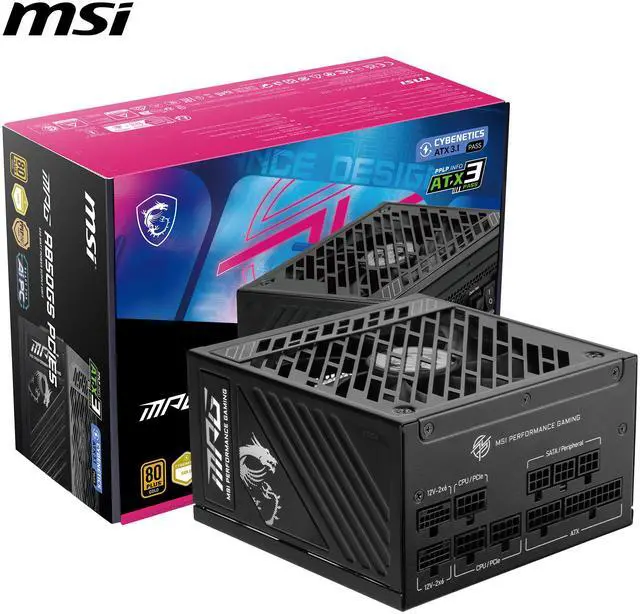
The MSI MPG A850GS PCIE5 is the interesting one: 850W, 80 Plus Gold, fully modular, ATX 3.1 and PCIe 5.1 ready, and two 12V-2×6 cables rather than one, with server-grade capacitors, a semi-digital design, eight SATA connectors and a ten-year warranty.
Its sibling the MSI MAG A850GL PCIE5 uses a native dual-colour 12V-2×6 cable, which is a small design touch that makes it obvious at a glance whether the plug is fully seated. Its connector list runs to one 24/20-pin main, two 8/4-pin CPU, four 8/6-pin PCIe, one 12VHPWR, eight SATA and four Molex, with a 120mm fan and a ten-year warranty.
What If I Want It Quiet?
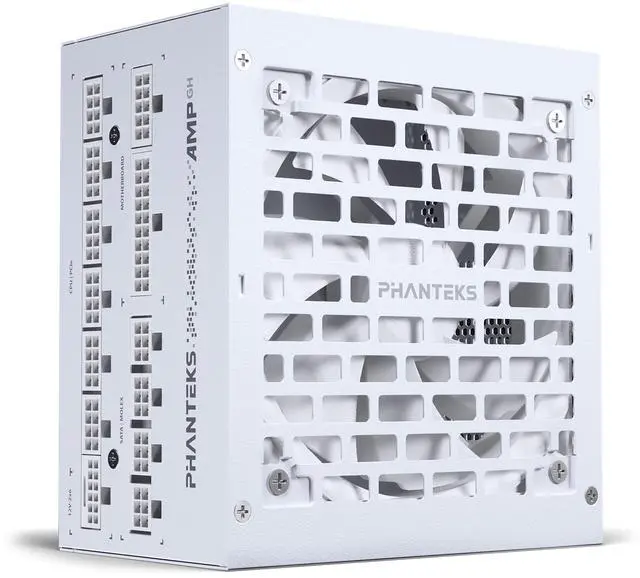
The Phanteks AMP GH 850W is the quiet option, built on the ATX 3.1 and PCIe 5.1 platform with a Gold rating, fully modular individual cables and a silent fanless mode at low load, in white. For a machine that idles most of the day, a supply that stops its fan entirely is a noticeable difference.
The be quiet! Pure Power 13 M 850W takes the same approach with a temperature-controlled fan, 80 Plus Gold efficiency, ATX 3.1 and PCIe 5.1, a modular cable set, six SATA and two PATA connectors.
Is There a Reason to Pay More Than Gold?
Efficiency ratings tell you how much power is lost as heat, and the gap between Gold and the tiers above it is small in absolute terms for a home machine. Where the higher-rated units usually differ is component quality and fan behaviour rather than your electricity bill.
The MONTECH CENTURY II 850W is worth a look on that basis, carrying both an 80 Plus Gold rating and a Cybenetics Platinum rating, fully modular, ATX 3.1 and PCIe 5.1 ready with a 12V-2×6 connector and a 20+4 pin main cable. Two different testing bodies rating the same unit differently is normal, and the Cybenetics number is measured across a wider load range.
The ASRock PRO-850G is the straightforward one: 850W, ATX 3.1 compatible, 80 PLUS Gold, in a compact 140 x 150 x 86mm body that fits cases where depth is tight.
What I Would Actually Buy
One high-end card, mixed old and new hardware: CORSAIR RM850x. Clean modern build, nothing legacy: RM850e. Two cards or a card that wants two 16-pin feeds: MSI MPG A850GS. Want the seating to be visually obvious: MSI MAG A850GL. Quiet machine that idles a lot: Phanteks AMP GH or be quiet! Pure Power 13 M. Small case: ASRock PRO-850G.
And the part that matters more than which unit you pick: push the connector in until it clicks, then look at it from the side to confirm there is no gap. That single check is what the whole 12V-2×6 revision exists to make harder to get wrong. The current range is in Newegg’s 850W ATX 3.1 power supply listings.
Frequently Asked Questions
What is the difference between 12VHPWR and 12V-2×6? They are the same physical connector with different pin geometry. On 12V-2×6 the sense pins are recessed further, so a plug that is not fully seated fails to signal correctly and the card limits its power draw instead of pulling current through a poor contact. Buying a supply that lists 12V-2×6 and ATX 3.1 means you are getting the revised design.
Is 850W enough for a high-end graphics card? For a single card and a mainstream processor, yes, which is why this class is so well populated. Cards vary in what their makers recommend, and some list figures up to 900W out of caution rather than measured need. Add up your processor’s peak draw and your card’s recommendation, then leave headroom rather than sizing exactly.
Can I reuse the 16-pin cable from my old power supply? No. Modular cables are keyed to the supply they shipped with, and the pinout on the power supply end is not standardised between manufacturers. Using a cable from a different unit can short something expensive. Always use the cables that came in the box, or an adapter supplied by the same manufacturer.
Do I need ATX 3.1 specifically, or is ATX 3.0 fine? ATX 3.0 units work, and many handle transient spikes well. The 3.1 revision tightens the requirements and pairs with PCIe 5.1, which is where the 12V-2×6 connector comes from. If you are buying new for a high-end card, there is no reason to choose the older standard.
Does an 80 Plus Gold rating matter for a home PC? Less than the marketing suggests. Efficiency differences between Gold and higher tiers translate to small amounts of heat and electricity over a year. What you are really buying at the higher tiers is component quality, warranty length and fan behaviour, which is why a ten-year warranty like the one on the MSI units is a more useful signal than the badge.
Read More
- Tom’s Hardware: Power Supply Reviews and Buying Guides — Load-tested reviews with transient response and ripple measurements.
- Cybenetics: Power Supply Database — Independent efficiency and noise certification results for consumer power supplies.
- Seasonic: ATX 3.0 vs ATX 3.1 — A clear breakdown of what changed between the two standards and why 12V-2×6 replaced 12VHPWR.
- CORSAIR: RMx Series Power Supplies — Manufacturer documentation for the RMx line, including cable configurations and safety features.
- Newegg: 850W ATX 3.1 Power Supplies — Compare current units by connector set, efficiency rating and warranty.