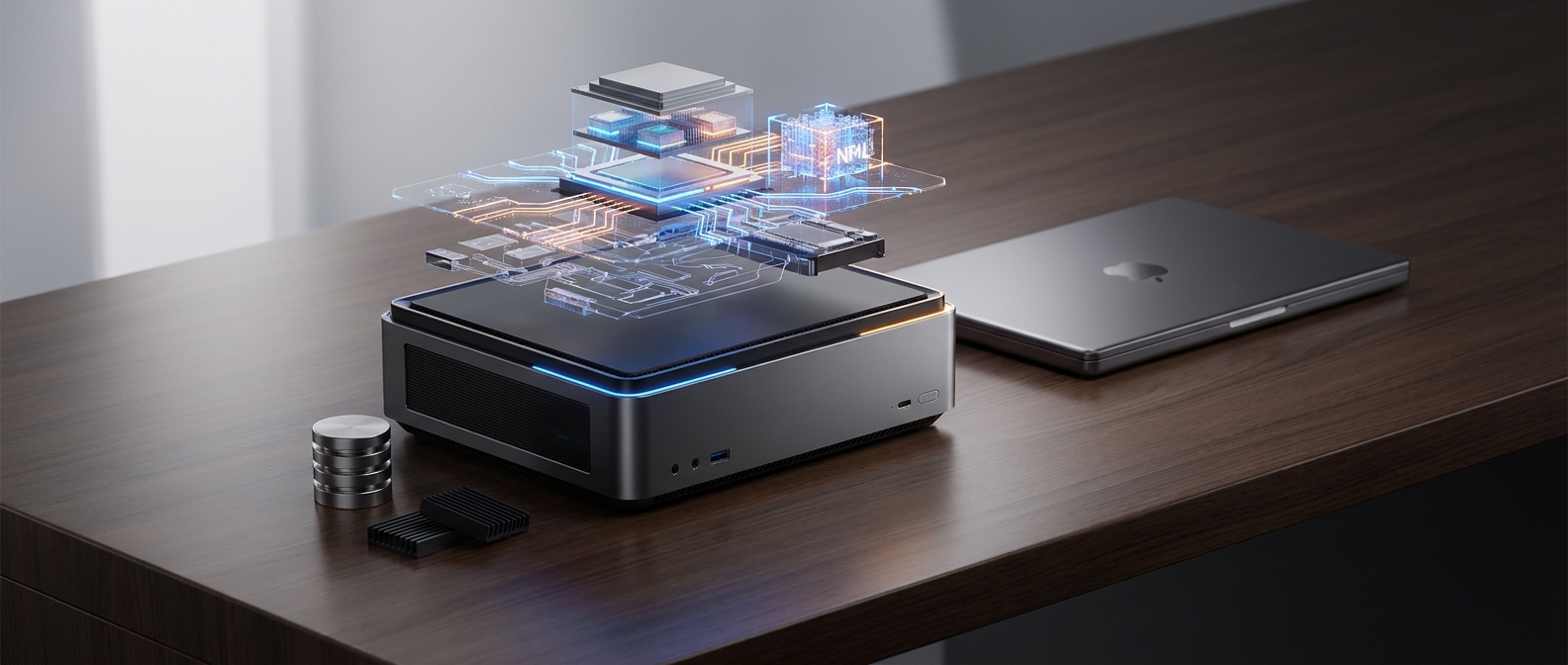
Shopping for a compact PC that can handle local AI? AMD AI Max and NVIDIA N1/N1X take very different paths to AI performance. AMD AI Max processors are available in compact workstations and premium laptops, while NVIDIA's N1X is commercialized through the RTX Spark platform in laptops and compact desktops. N1 is still associated with related NVIDIA Arm-based designs rather than a clearly marketed standalone retail chip.
Contenders Overview
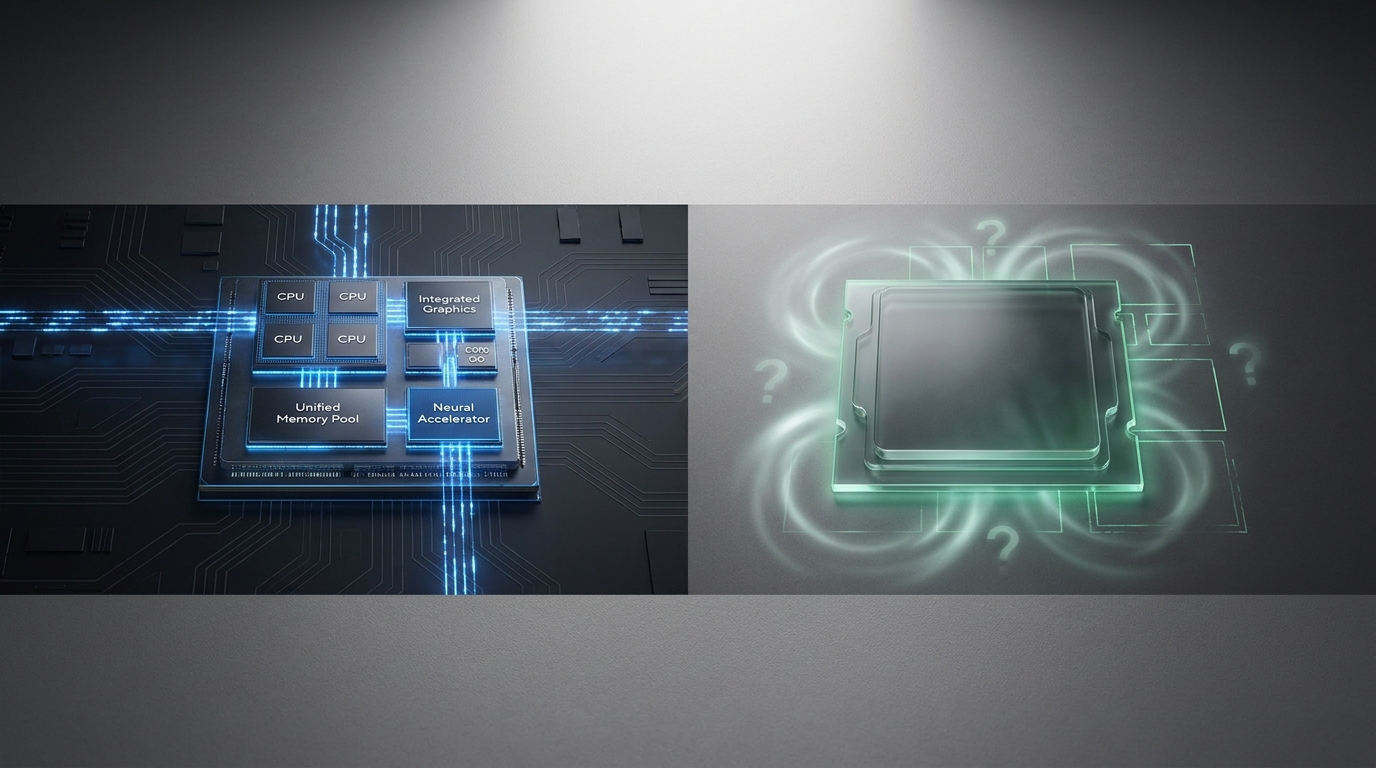
AMD AI Max is built for buyers who want CPU, graphics, and AI acceleration in one processor family. It combines Zen 5 CPU cores, an integrated Radeon graphics engine, and a dedicated Ryzen AI NPU. At the top of the lineup, the Ryzen AI Max+ PRO 395 pairs 16 CPU cores with Radeon 8060S graphics featuring 40 compute units.
AMD's unified memory design can support configurations with up to 128 GB of LPDDR5x memory. That gives the graphics engine access to a large memory pool for local AI models, making the platform a practical option for compact systems that need more than a typical laptop memory configuration.
NVIDIA N1 and N1X names are associated with NVIDIA's Arm-based RTX Spark PC platform. The high-end RTX Spark N1X combines a 20-core NVIDIA Grace CPU with a 6,144-core Blackwell RTX GPU, up to 128 GB of unified LPDDR5X memory, fifth-generation Tensor Cores, CUDA, and the NVIDIA AI software stack.
NVIDIA also offers lower-performance N1X configurations. However, the exact relationship between the N1 name and retail product configurations is less clearly presented in NVIDIA's current product specifications.
Side-by-Side Comparison
Availability: AMD AI Max is a commercial platform found in laptops, workstations, and developer systems. NVIDIA RTX Spark N1X is also available in commercial laptops and compact desktops.
CPU architecture: AMD AI Max uses Zen 5. NVIDIA RTX Spark uses an Arm-based NVIDIA Grace CPU, with the high-end N1X configuration providing 20 cores.
Integrated graphics: AMD AI Max+ systems can use Radeon 8060S graphics with up to 40 compute units. RTX Spark N1X integrates a Blackwell RTX GPU with up to 6,144 CUDA cores.
AI acceleration: AMD combines a Ryzen AI NPU with CPU and GPU acceleration. NVIDIA does not use a separate NPU; instead, AI workloads run on the Blackwell RTX GPU's fifth-generation Tensor Cores, rated at up to 1 petaflop of FP4 AI performance, backed by CUDA, TensorRT, and NVIDIA's broader AI software ecosystem.
Memory: AMD's unified memory approach is documented at up to 128 GB of LPDDR5x. High-end RTX Spark N1X systems also support up to 128 GB of unified LPDDR5X memory.
Deep Dive: AMD AI Max
For shoppers who want a compact system available today, AMD AI Max is a practical choice. A system built around the 16-core Ryzen AI Max+ PRO 395 can handle office workloads, development environments, content creation, and local AI inference from one compact platform.
The large unified memory pool is a key advantage for models that exceed the comfortable capacity of typical 16 GB or 32 GB laptop configurations. It helps AMD AI Max systems serve buyers who want substantial local AI capability without moving to a larger workstation.
There is an important compatibility consideration, however. Integrated Radeon graphics do not provide the same application compatibility as a discrete NVIDIA GPU. AI tools that depend heavily on CUDA may require software adjustments or may run more efficiently on NVIDIA hardware.
AMD AI Max is strongest when compact dimensions, shared memory, and balanced CPU-GPU performance matter more than maximum ecosystem compatibility.
Deep Dive: NVIDIA N1 and N1X
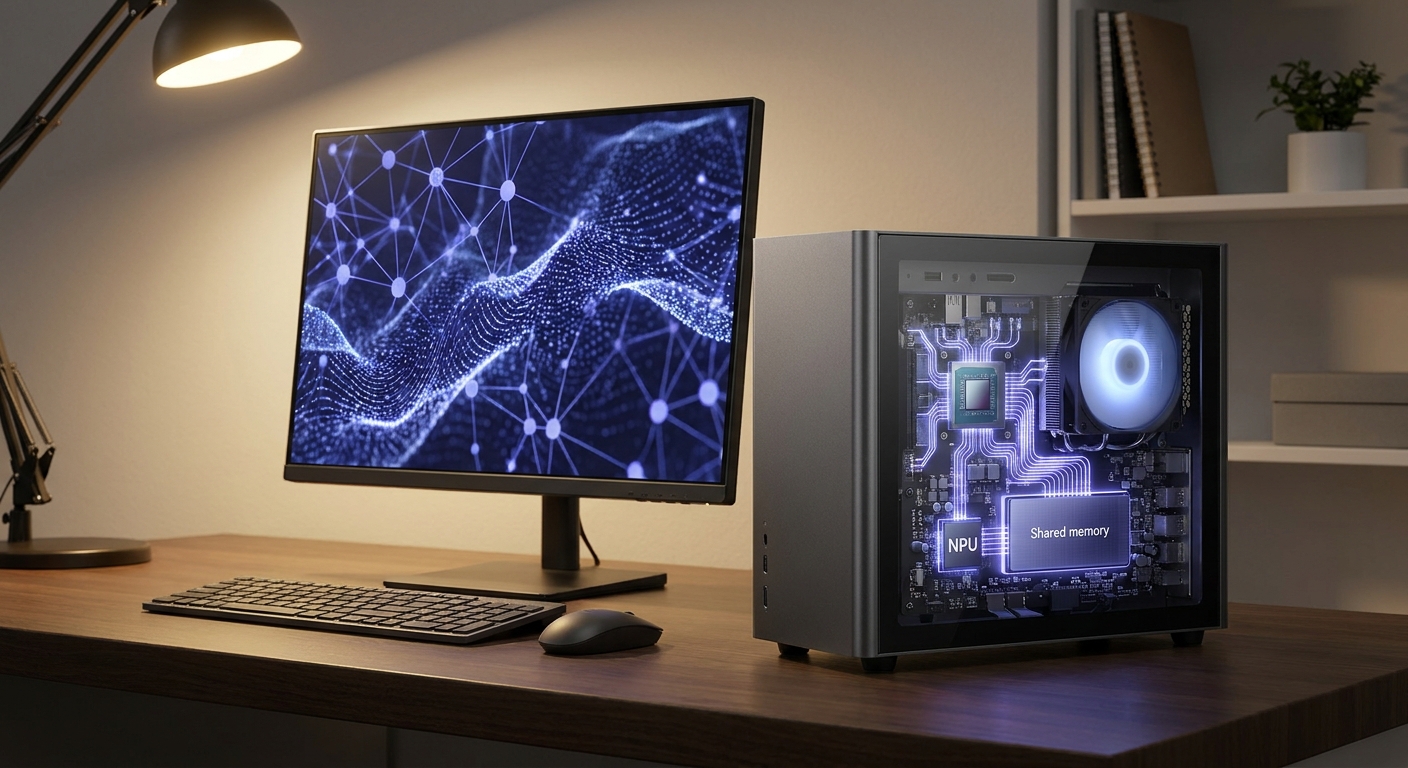
NVIDIA RTX Spark N1X brings together Arm-based Grace CPU technology, a Blackwell RTX GPU, and NVIDIA's established AI software stack. CUDA, TensorRT, Tensor Cores, and broad developer support give NVIDIA a strong advantage for professional inference and machine-learning workflows.
Its unified memory design also supports large local models. That combination makes RTX Spark N1X worth a close look for shoppers whose AI applications already rely on NVIDIA tools and workflows.
Unlike earlier reports that treated N1/N1X as unconfirmed PC designs, RTX Spark systems are now shipping in commercial laptops and compact desktops. Buyers should still review the exact configuration before ordering, since N1X systems can differ in CPU core count, GPU core count, power limits, memory capacity, and form factor.
Winner by Category
Best available AI desktop platform: This is a close contest. AMD AI Max offers strong CPU performance, Radeon graphics, and up to 128 GB of unified memory. RTX Spark N1X offers a 20-core Grace CPU, a 6,144-core Blackwell RTX GPU, and up to 128 GB of unified memory.
Best established software ecosystem: NVIDIA RTX Spark N1X has the advantage because it provides CUDA, TensorRT, Tensor Cores, and the broader NVIDIA AI stack.
Best choice for large local models in a compact system: AMD AI Max and RTX Spark N1X configurations with up to 128 GB of unified memory are both strong candidates. Workload-specific benchmarks should determine the winner.
The best choice depends on the software and workloads you plan to run. Choose AMD AI Max for strong Zen 5 CPU performance, Radeon compute, and a compact unified-memory platform. Choose RTX Spark N1X when CUDA compatibility, Blackwell Tensor acceleration, and NVIDIA's AI software ecosystem are priorities. Before buying, compare the exact system configuration and independent benchmarks.
Frequently Asked Questions
Which platform offers better software compatibility for local AI?
NVIDIA RTX Spark N1X is generally the safer choice for applications built around CUDA, TensorRT, Tensor Cores, and established NVIDIA workflows. AMD AI Max can run many local AI tools, but some applications may require ROCm support, alternative backends, or additional configuration.
Is AMD AI Max a better value than NVIDIA RTX Spark N1X?
Value depends on the complete system price, memory capacity, and the software you plan to use. AMD AI Max may offer a more balanced compact platform, while RTX Spark N1X can justify its premium for buyers who need NVIDIA acceleration and broad AI software compatibility.
Which platform is faster for AI inference and content creation?
There is no universal winner because performance varies by model, framework, power limit, memory configuration, and application optimization. RTX Spark N1X has a major architectural advantage in NVIDIA-optimized workloads, while AMD AI Max remains competitive when large shared memory capacity and strong CPU performance are more important.
Can both platforms run large local AI models?
Yes, configurations with up to 128 GB of unified memory can accommodate substantially larger models than typical 16 GB or 32 GB laptops. Actual usable capacity depends on the operating system, memory allocation, quantization format, context length, and the amount of memory reserved for graphics and other applications.
What should I check before buying an AMD AI Max or RTX Spark system?
Confirm the exact CPU and GPU configuration, unified-memory capacity, power limits, storage, operating system support, and independent benchmark results. Also review the manufacturer's warranty terms and current inventory, because warranty coverage, return policies, and availability vary by laptop or desktop brand.
Read More
AMD Ryzen AI Max+ 395 Official Specifications — AMD's official product page lists the Ryzen AI Max+ 395 architecture, core count, graphics, power range, and supported form factors.
NVIDIA RTX Spark Official Product Overview — NVIDIA's official RTX Spark page compares N1X configurations, unified memory options, Blackwell graphics, and AI features.
ASUS ProArt RTX Spark PCs — ASUS provides configuration details for RTX Spark P14, P16, and GR1X systems aimed at creators and local AI users.
NVIDIA RTX Spark Review and Benchmarks — Windows Central tests RTX Spark N1X performance across AI, applications, gaming, and Windows on Arm workflows.
NVIDIA RTX Spark Platform Review — HotHardware examines RTX Spark N1X performance, efficiency, AI capabilities, and the trade-offs of its premium Arm-based design.