
A case is the part people pick last and regret first. I have had to return exactly one component in the last five years, and it was a case, because the graphics card I already owned was 12mm too long for it. That is the kind of mistake that has nothing to do with taste.
So rather than rank these by how they look, I have sorted them by what you are trying to build. The clearance numbers do most of the choosing for you once you know what is going inside.
Who Actually Needs an Airflow Case?
Anyone running a graphics card that draws over 250W, which now includes most of the mid-range. Anyone with a processor that boosts hard and sustains it. And anyone who has ever opened a case and found a wall of dust on the inside of a glass front panel.
If your build is a low-power office machine, a sealed front panel is fine and quieter. Everyone else should be looking at mesh.
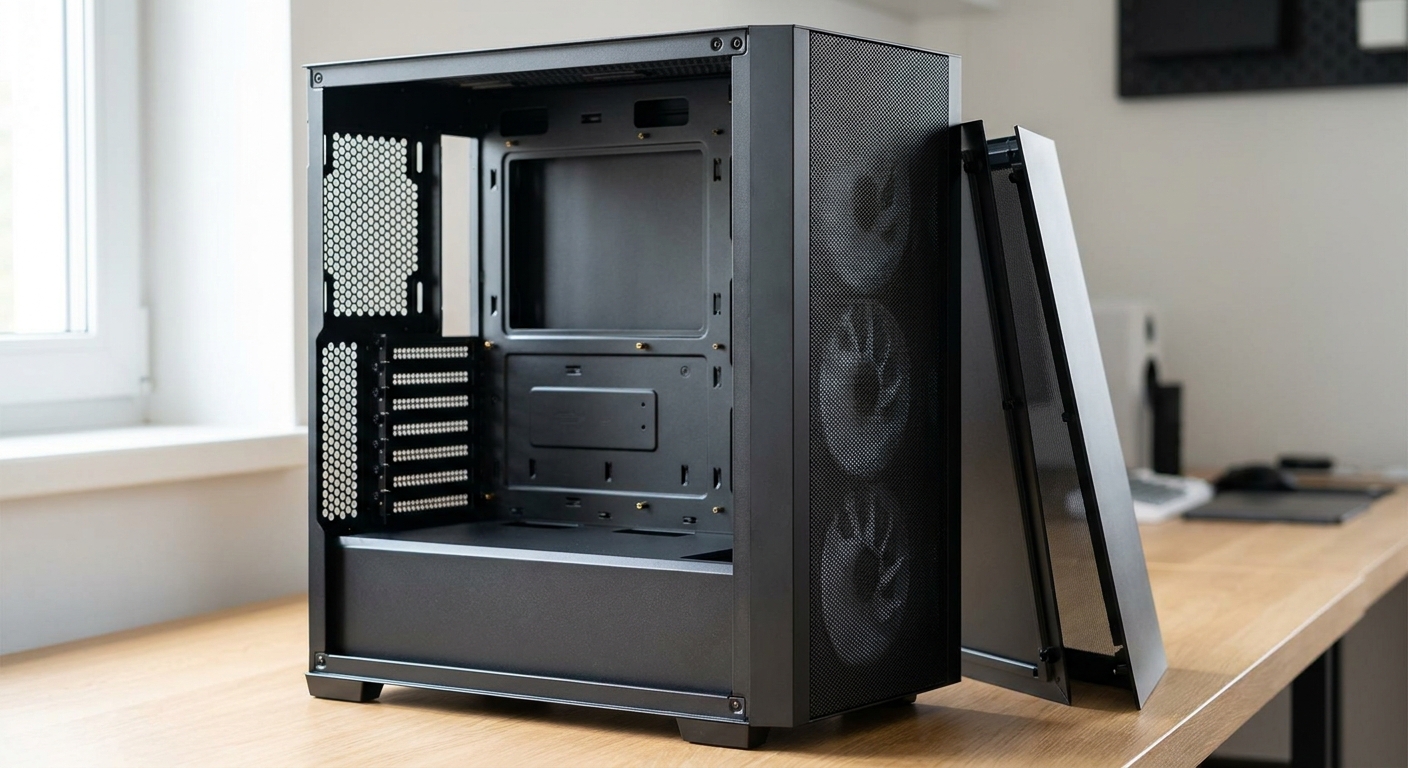
Scenario One: A Big Graphics Card and Nothing Exotic
This is most builds. You need length clearance and front intake, and everything else is preference.
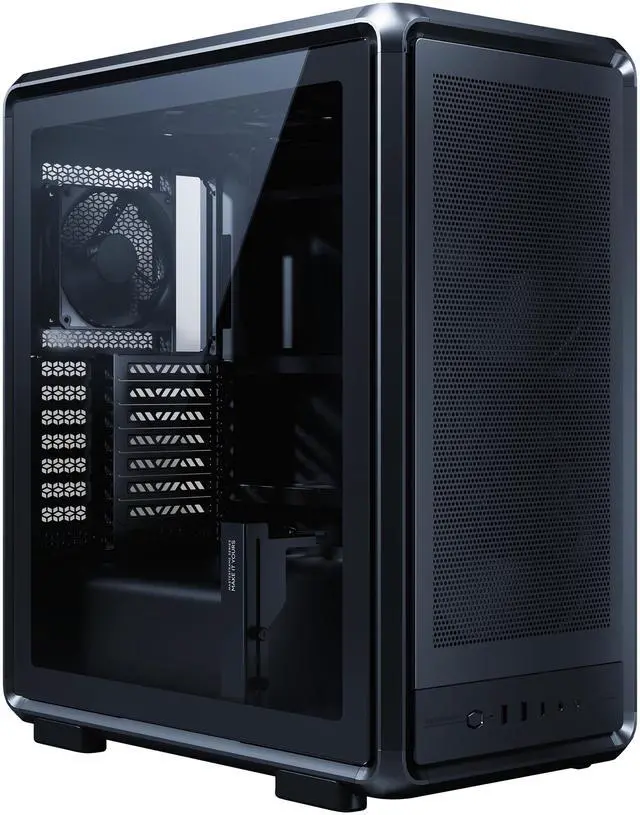
The Cooler Master MasterFrame 500 Mesh is the one I would point most people at. Two 200mm intake fans rather than three 120s, an SGCC chassis, eight expansion slots, 390mm of GPU clearance and 190mm of CPU cooler height, which is the tallest allowance here. Two large slow fans move the same air as three small fast ones with noticeably less noise.
The Fractal Design Pop Air RGB Black TG is the simpler option: a steel and tempered glass mid-tower with 405mm of GPU clearance when a front fan is mounted, 170mm of cooler height, three 3.5-inch bays and four 2.5-inch bays. If you would rather not have a window at all, the Fractal Design Pop Air Black is the same chassis with a solid panel and a pound less weight.
Scenario Two: You Want the Airflow to Be the Point
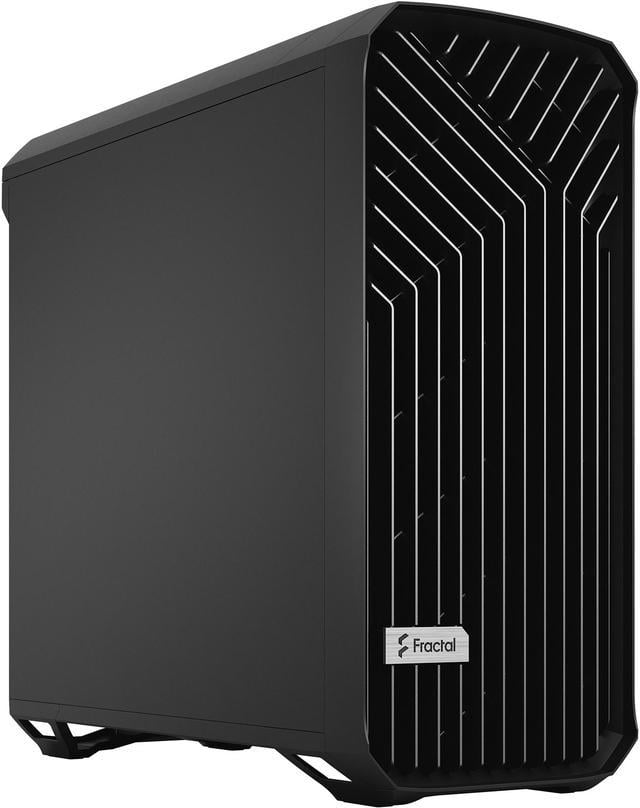
The Fractal Design Torrent is the case for someone whose priority is temperature and who does not care about a window. Steel construction, 461mm of total graphics card clearance dropping to 423mm with a front fan mounted, 188mm of CPU cooler height, two 3.5-inch and four 2.5-inch bays, and front ports that include USB 3.2 Gen 2×2 Type-C. It is a large case at 21.42 x 9.53 x 20.87 inches and it does not pretend otherwise.
The be quiet! PURE BASE 501 Airflow in white comes at it from the quiet side: an ABS, steel and tempered glass full tower with 368mm of GPU clearance, 178mm of cooler height, two 3.5-inch and five 2.5-inch bays, and a front panel carrying USB 3.2 Gen 2 Type-C alongside two Type-A ports. At 8.4 kg it is lighter than the Torrent while giving up some clearance.
Scenario Three: Lots of Drives, Lots of Fans
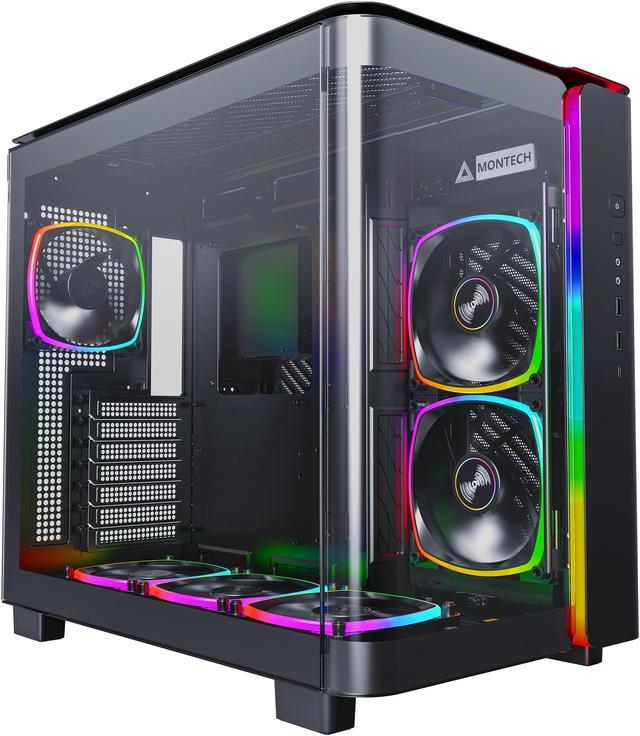
The MONTECH KING 95 PRO is the outlier on storage: eight 3.5-inch bays and five 2.5-inch bays, which is unusual in a gaming case and genuinely useful if you keep a drive array in your desktop instead of a NAS. It is a dual-chamber design with six ARGB PWM fans pre-installed and a fan hub, 420mm of GPU clearance, 175mm of cooler height, and a curved tempered glass front.
The Rosewill ATX Mid Tower is the budget end of the same idea: four 120mm PWM fans built in, a front airflow mesh, and mounts for up to six 120mm fans. Its clearances are the tightest here at 340mm for a card and 160mm for a cooler, and it supports a 360mm radiator. Check your card length against that 340mm before anything else.
Scenario Four: A Reverse-Connector Motherboard
Boards with rear-facing connectors are now common enough that cases are being designed around them. The COUGAR FV270 is built for exactly that, with a curved tempered glass front, a 120mm reversed ARGB PWM bottom fan pre-installed, and expansion slots that convert from horizontal to vertical. GPU clearance is 420mm horizontally, 450mm vertically, and drops to 330mm if you mount a radiator with fans on the motherboard side, which is the number people miss. Cooler height is 180mm.
What I Would Actually Buy
Ordinary build, big card, want it quiet: MasterFrame 500 Mesh, for the two 200mm intakes. Lowest temperatures and you do not need a window: Torrent. Quiet and tidy with a glass panel: PURE BASE 501 Airflow. A pile of hard drives: KING 95 PRO. Tight budget and a card under 340mm: the Rosewill. Reverse-connector board: FV270.
Before you order any of them, write down three numbers: your graphics card length, your cooler height, and your radiator size if you are using one. Then read the case spec sheet rather than the marketing page. The full range is in Newegg’s airflow ATX mid tower listings.
Frequently Asked Questions
Does a mesh front panel really make a difference? Yes, and more than most upgrades in this price range. A solid or glass front panel restricts intake, so the fans behind it pull air through whatever gaps exist at the edges. Under a sustained load that usually shows up as higher graphics card temperatures rather than higher CPU temperatures, because the card sits directly in the intake path.
How many case fans do I actually need? Three is plenty for most builds: two intake at the front and one exhaust at the rear. The MONTECH KING 95 PRO ships with six and the Rosewill with four, which saves you buying them, but more fans past a certain point mostly adds noise. Getting the intake and exhaust roughly balanced matters more than the count.
What clearance numbers should I check before buying a case? Three. Maximum GPU length, which runs from 340mm to 461mm across these cases. Maximum CPU cooler height, from 160mm to 190mm. And radiator support if you are using liquid cooling. Note that some figures change depending on configuration, like the COUGAR FV270 dropping from 420mm to 330mm with a radiator mounted on the motherboard side.
Is a full tower worth it over a mid tower? Only if you need the space for drives, radiators or expansion cards. The be quiet! PURE BASE 501 Airflow is listed as a full tower and still offers less GPU clearance than the mid-tower Torrent, so the label tells you less than the numbers do. Build inside a larger case is easier, which is worth something on its own.
Do I need a case with a tempered glass side panel? No, and solid panels are usually marginally better for noise. Fractal offers the Pop Air in both, and the solid version weighs about a pound less. If nobody will see the inside of the machine, the glass is buying you nothing.
Read More
- Tom’s Hardware: PC Case Reviews and Buying Guides — Thermal and acoustic testing across airflow-focused and silence-focused chassis.
- GamersNexus: Case Megacharts — Comparative thermal and noise data for a large set of cases tested on the same bench.
- Fractal Design: Torrent — Manufacturer specifications including fan layout and clearance figures.
- Cooler Master: MasterFrame 500 Mesh — Official product page with fan configuration and modular frame details.
- Newegg: Airflow ATX Mid Tower Cases — Filter current cases by GPU clearance, cooler height and included fans.