
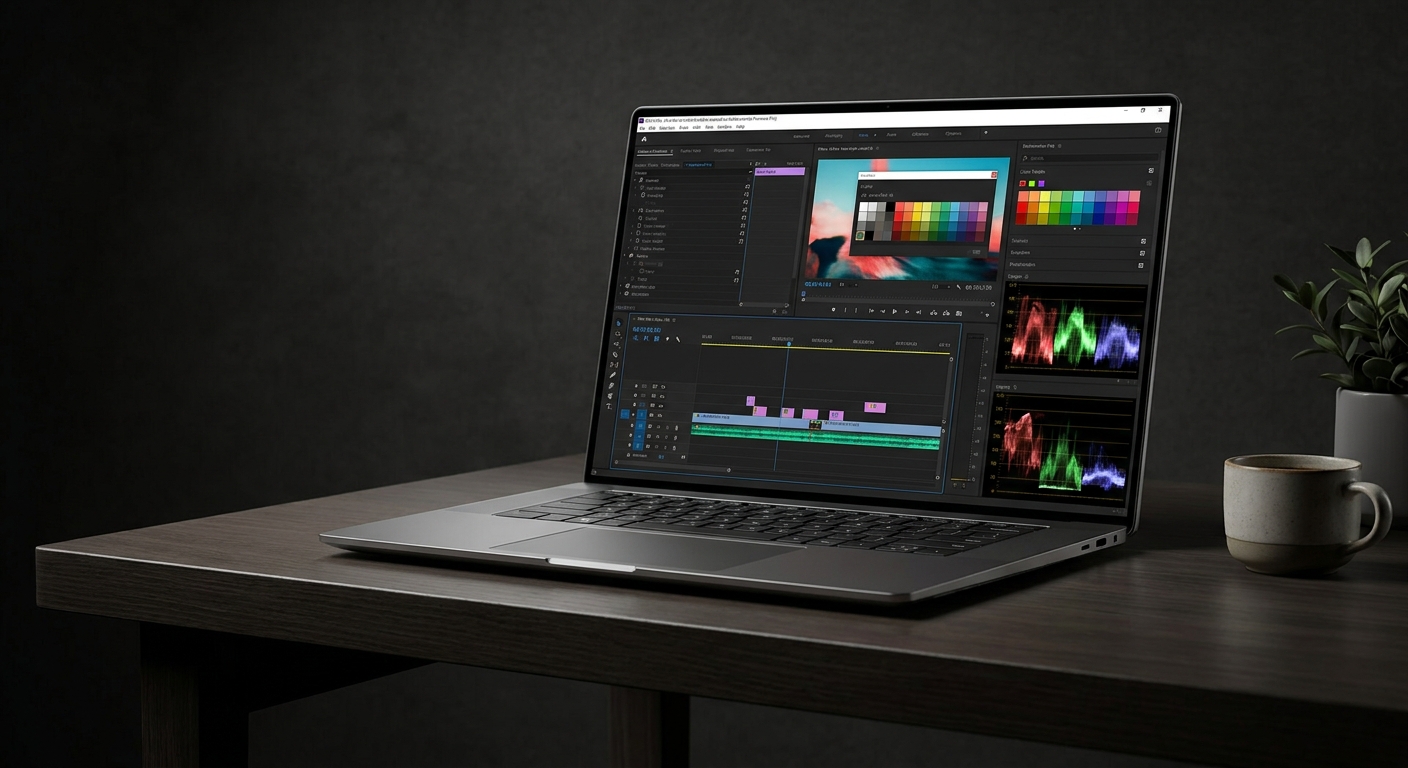
Shopping for a new laptop can feel overwhelming — especially when you’re staring at two machines that look nearly identical on the surface but carry completely different price tags. If you’ve ever wondered why a “creator laptop” costs significantly more than a standard consumer model, you’re not alone. In this guide, we break down exactly what separates creator laptops from everyday consumer laptops, and help you figure out which one is right for your needs.
What Is a Consumer Laptop?
A standard consumer laptop is designed for everyday tasks: web browsing, email, streaming video, light document editing, and casual gaming. These machines prioritize affordability, portability, and battery life. Brands like HP, Dell, Lenovo, and ASUS all offer consumer-grade laptops that cover the needs of students, office workers, and general users.
Typical specs on a consumer laptop include mid-range processors (like Intel Core i5/i7 or AMD Ryzen 5/7), integrated or entry-level dedicated graphics, 8–16GB of RAM, and 256–512GB of SSD storage. The display is usually a 1080p IPS or TN panel with standard color accuracy — perfectly fine for Netflix and spreadsheets, but not calibrated for professional creative work.
What Is a Creator Laptop?
Creator laptops — sometimes called “content creation laptops” or “mobile workstations” — are engineered for professionals who demand more from their hardware. Photographers, video editors, 3D animators, graphic designers, and music producers all rely on creator laptops to handle resource-heavy workloads without breaking a sweat.
The defining differences come down to five key areas:
1. Display Quality
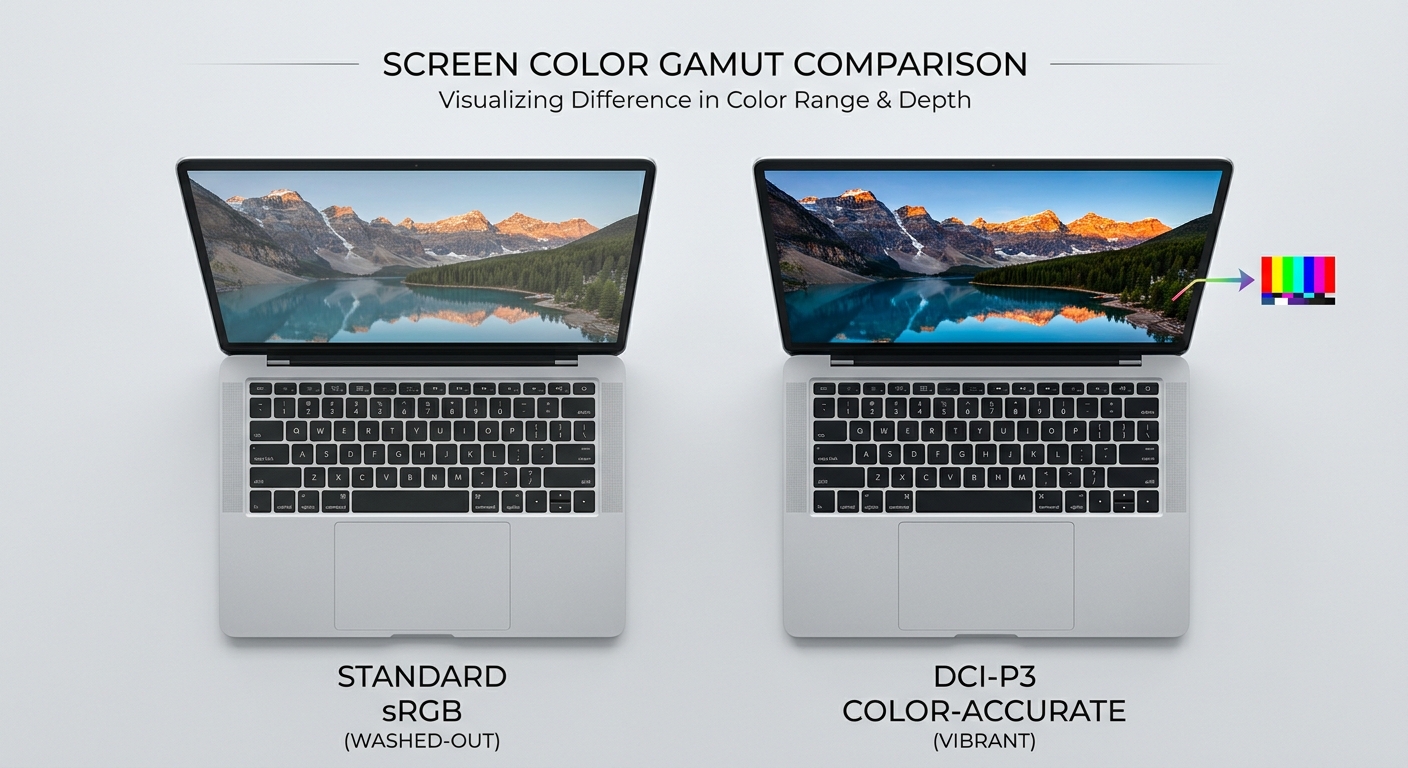
Creator laptops typically feature high-resolution OLED or IPS displays with wide color gamut coverage (often 100% DCI-P3 or sRGB), factory color calibration, and higher brightness levels. When you’re editing photos or color-grading footage, seeing accurate colors on screen is non-negotiable.
2. Processing Power
While consumer laptops use mainstream CPUs, creator laptops often ship with higher-TDP processors that sustain peak performance under prolonged workloads. Intel Core Ultra H-series, AMD Ryzen AI HX chips, and even professional-grade Intel Xeon processors are common in this category. The difference matters when you’re rendering a 4K video or running complex simulations — creator laptops maintain performance; consumer laptops throttle.
3. Dedicated GPU for Creative Tasks
Most creator laptops come equipped with powerful NVIDIA GeForce RTX or NVIDIA RTX (Quadro-class) GPUs. These aren’t just for gaming — GPU acceleration dramatically speeds up rendering in Adobe Premiere, DaVinci Resolve, Blender, and other creative applications.
4. RAM and Storage
Creator laptops routinely offer 32GB–64GB of RAM (sometimes expandable to 128GB), compared to the 8–16GB standard on consumer machines. Storage is also faster — PCIe Gen 4 or Gen 5 SSDs with 1TB–4TB capacity are common.
5. Build Quality and Connectivity
Creator laptops often feature premium chassis materials (magnesium alloy, aluminum), Thunderbolt 4/USB4 ports, SD card readers, and robust thermal cooling systems.
Creator Laptop vs. Consumer Laptop: Side-by-Side
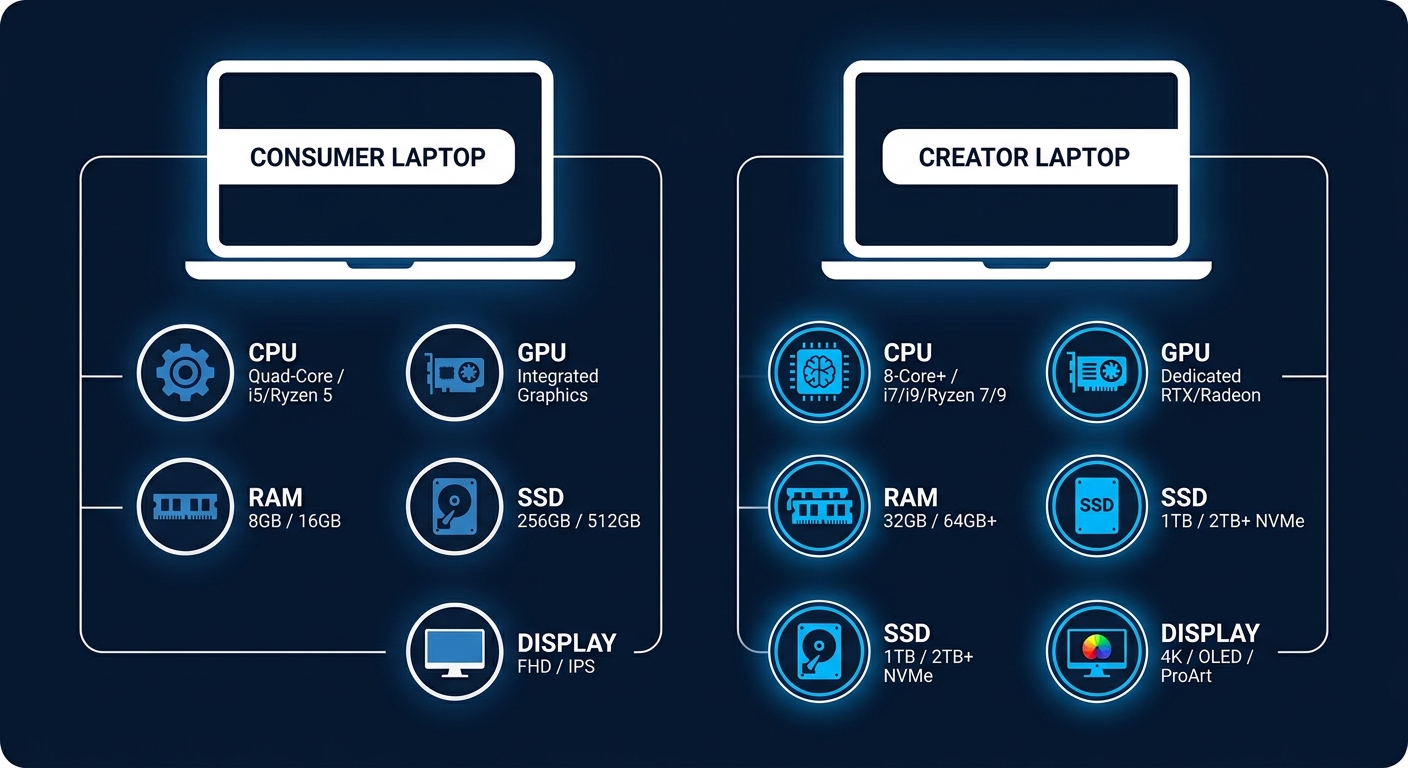
| Feature | Consumer Laptop | Creator Laptop |
|---|---|---|
| Display | 1080p, standard sRGB | 2K/4K OLED, DCI-P3 calibrated |
| CPU | Core i5/i7, Ryzen 5/7 | Core Ultra HX, Ryzen AI HX, Xeon |
| GPU | Integrated / Entry-level | RTX 4060–5070, Quadro |
| RAM | 8–16 GB | 32–64 GB |
| Storage | 256–512 GB SSD | 1–4 TB PCIe SSD |
| Price Range | $500–$1,200 | $1,500–$4,000+ |
Who Should Buy a Creator Laptop?
You should consider a creator laptop if you regularly work with 4K/8K video editing, high-resolution photo editing (RAW files), 3D modeling and rendering, music production, or CAD design. If your daily use involves web browsing and casual streaming, a consumer laptop will serve you well — and save you significant money.
Our Top Pick: ASUS ProArt P16 AI Creator Laptop
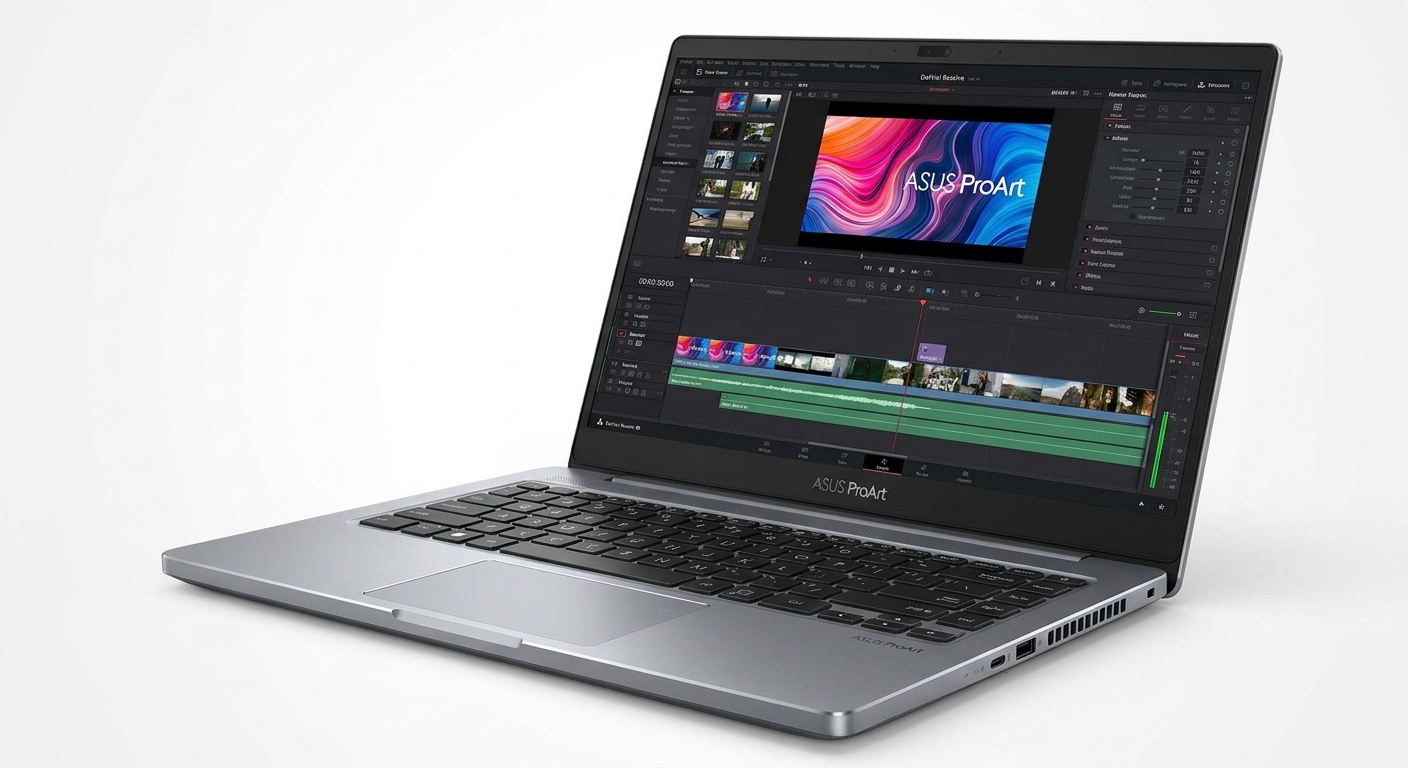
For creators who want the full package, the ASUS ProArt P16 AI Creator Laptop is a standout option on Newegg. Powered by AMD Ryzen AI 9 HX 370, a GeForce RTX 4060, 32GB LPDDR5X RAM, and a stunning 16″ 4K OLED touchscreen, it checks every box for professional creative workflows.
If you need even more firepower, the HIDevolution ASUS ProArt P16 H7606WP pushes the envelope further with an RTX 5070, 64GB of RAM, and up to 16TB of SSD storage.
Conclusion
The gap between creator laptops and consumer laptops isn’t just about specs — it’s about precision, reliability, and workflow efficiency. Whether you’re editing your first short film or delivering client work daily, investing in the right machine makes a measurable difference. Ready to upgrade? Explore the full selection of creator laptops on Newegg.