As artificial intelligence moves deeper into professional workflows, one hidden cost keeps surfacing across industries: waiting. Teams wait for models to train. Engineers wait for simulations to finish. Data scientists wait for massive datasets to load. Over time, these delays quietly drain momentum and slow innovation more than most organizations realize.
For years, professionals have faced an uncomfortable compromise. They either iterate slowly on a local machine that struggles to keep up, or they push workloads into distant data centers and accept a fragmented workflow. Cloud platforms certainly offer scale. However, they also introduce latency, cost, and operational complexity—especially during early experimentation.
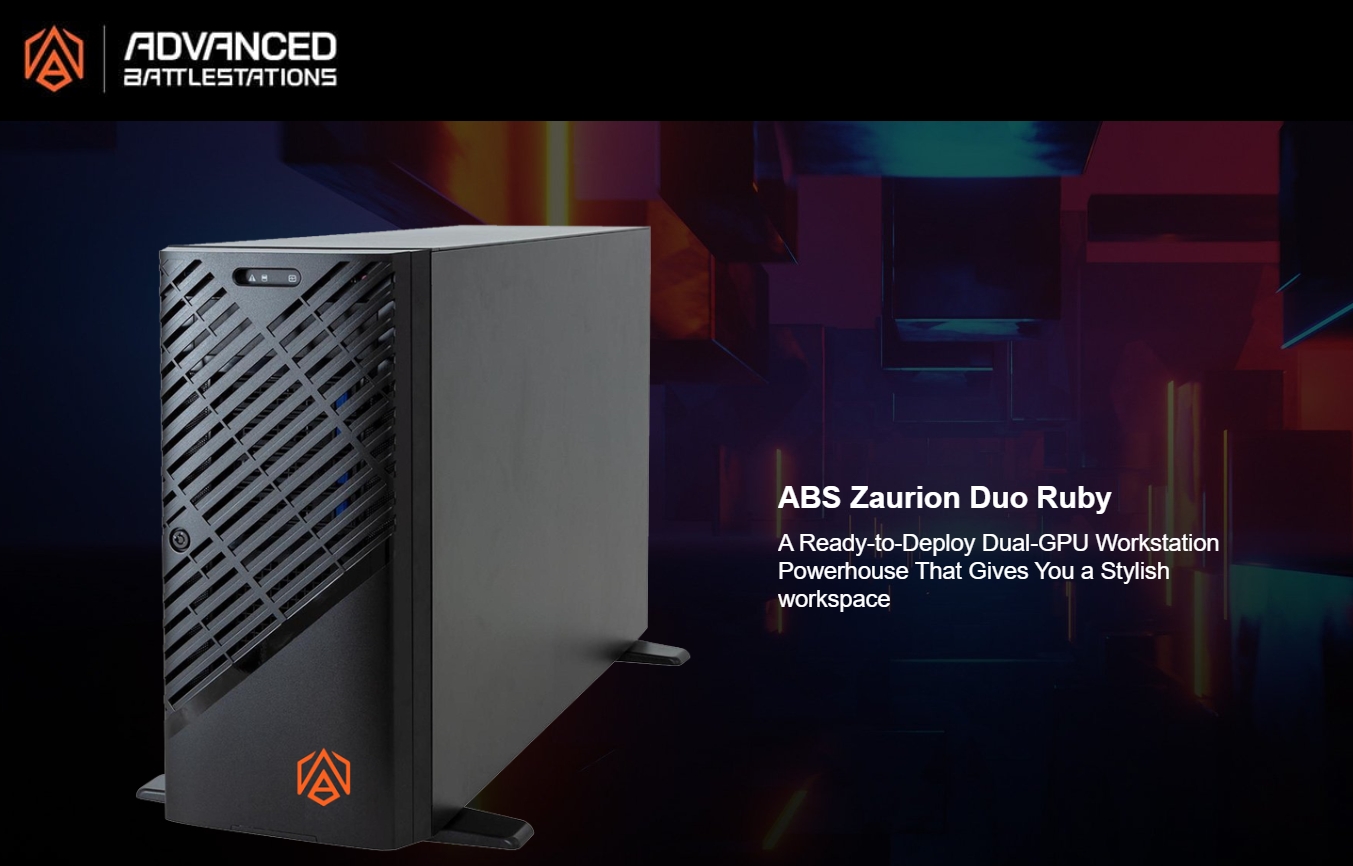
Intel’s Xeon 600 processor series for workstations challenges that tradeoff directly. Instead of forcing creators and developers to choose between local speed and cloud-scale power, Intel brings server-class capability into a single-socket workstation. As a result, the distance between the desk and the data center shrinks dramatically. Heavy compute no longer has to live somewhere else.
The Shift from “Fast Enough” to “Always Ready”
AI PCs have made local AI accessible. Built-in accelerators handle transcription, image enhancement, and assistive features efficiently. For everyday productivity, these systems are more than capable. Professional workloads behave differently. When models run continuously, when simulations last hours, and when datasets grow into the hundreds of gigabytes, performance must remain stable rather than impressive for a moment. In these environments, waiting is not a minor inconvenience. It becomes a structural limitation. AI workstations exist to remove that friction. They are not defined by a single benchmark or feature. They are defined by how little they slow you down.The Rise of the 86-Core Single-Socket Workstation
When Local AI Development Outgrows the Cloud

Memory as the Real Divider Between PCs and Workstations

A Workstation That Scales Like Infrastructure
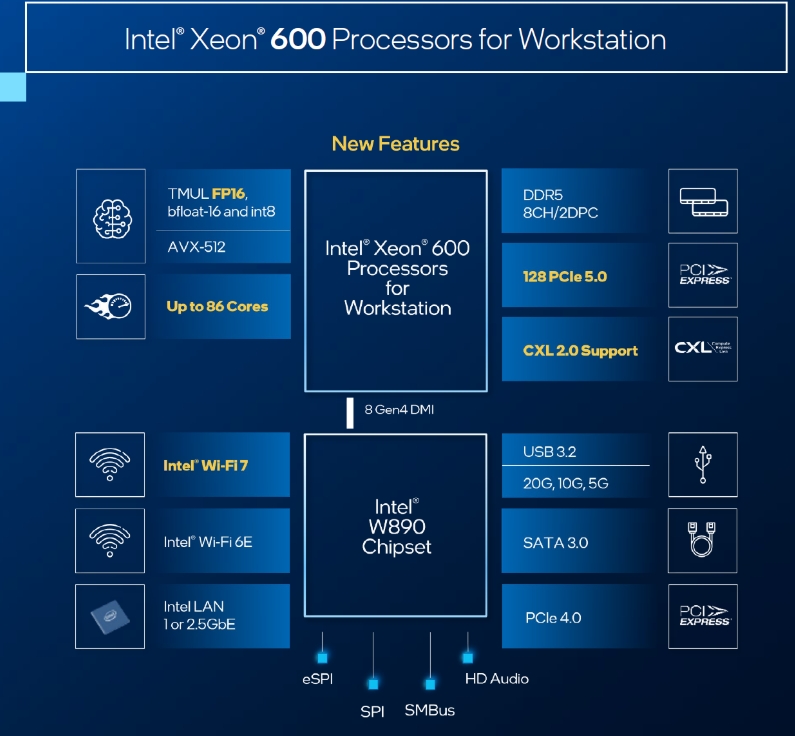
Modern AI systems rarely rely on a single accelerator. GPUs, high-speed storage, and networking all play a role. Xeon 600 platforms are designed around this reality. With extensive PCIe 5.0 connectivity directly from the processor, workstations can support multiple high-end GPUs alongside fast NVMe storage without contention. This enables systems that grow over time, evolving from development machines into production-grade local compute nodes. Support for Compute Express Link further extends this scalability. By enabling memory-coherent connections between the CPU and external devices, Xeon 600 lays the groundwork for future expansion models where memory and acceleration are no longer confined to the motherboard. The workstation becomes less like a PC and more like modular infrastructure.
Connectivity That Matches the Compute
As workflows become more distributed, connectivity becomes part of performance. Xeon 600 platforms introduce next-generation wireless and wired options designed to keep data moving. Support for Wi-Fi 7 enables multi-gigabit wireless speeds that rival traditional wired networks. For hybrid offices and flexible workspaces, this allows large datasets to move quickly without becoming tethered to a desk. Integrated Ethernet options ensure stable, high-throughput connections when wired infrastructure is required. In either case, the system is designed so that connectivity does not become the bottleneck.Stability, Security, and the Business Reality
Performance alone does not define professional hardware. AI workstations often live in environments where downtime has real costs. Xeon 600 platforms integrate enterprise-grade manageability and security features through Intel vPro technologies. Remote management, recovery capabilities, and hardware-level security support allow teams to deploy and maintain systems with confidence. For studios, labs, and enterprises, this stability is as valuable as raw performance. It is the difference between a powerful machine and a dependable one.
Who This Level of Compute Is Really For
Not every user needs an AI workstation. That is by design. Xeon 600-based systems are built for professionals whose work is constrained by waiting rather than imagination. Developers training and refining models locally. Data scientists working with massive datasets. Creators running AI-assisted rendering and simulation. Engineering teams pushing the limits of what can be done on a single machine. For these users, eliminating wait time changes how problems are solved.The New Definition of the High-Performance Desk
Intel Xeon 600 processors redefine what belongs on a professional desk. By bringing server-class compute density, memory capacity, and expansion into a single-socket workstation, they remove barriers that once separated local systems from data centers. The result is a shift from being compute-constrained to compute-unleashed. When hardware no longer dictates iteration speed, the scope of what feels possible expands dramatically. That is the true role of an AI workstation in 2026—not to impress on paper, but to disappear as a limitation.Building an AI Workstation with Newegg
Designing a workstation capable of supporting modern AI workloads requires more than choosing a powerful processor. Memory configuration, GPU selection, storage architecture, cooling, and platform compatibility all shape long-term performance and reliability. Newegg offers access to workstation-class processors, professional GPUs, high-capacity memory, and expansion-ready components that allow builders to create systems aligned with real workloads. Whether you are assembling a dedicated AI development machine or upgrading an existing platform, the right choices can turn local compute into a lasting competitive advantage.