Walk into any tech conversation and you’ll hear the terms laptop and notebook used interchangeably. But are they actually the same thing? If you’ve ever typed “what is the difference between a laptop and a notebook?” into a search bar, you’re not alone — and the answer is more interesting than you might expect.
In 2026, the distinction is largely historical, but understanding where it came from helps you shop smarter, communicate more precisely, and understand how the modern portable computing landscape got to where it is today.
A Brief History: Where the Terms Come From
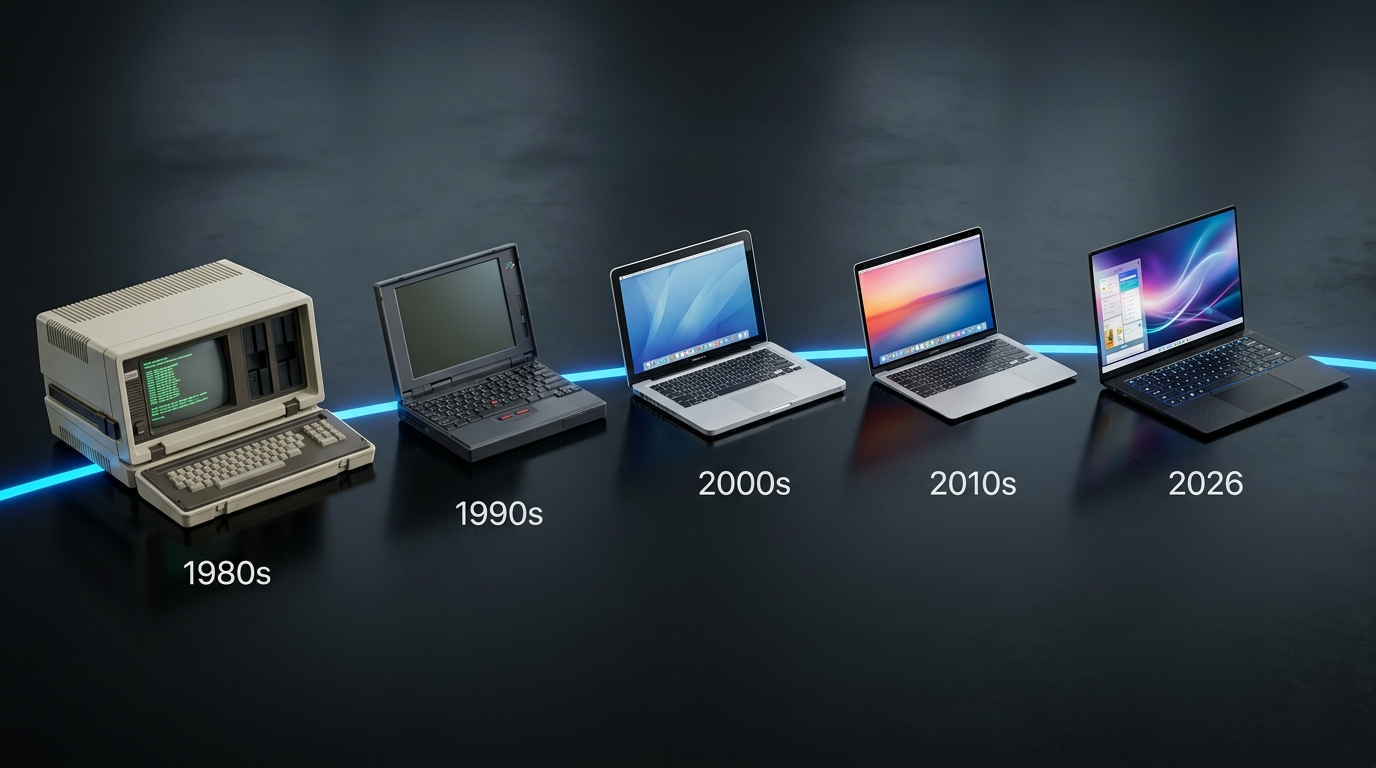
The word laptop emerged in the early 1980s to describe computers small enough to balance on your lap. These early machines were chunky, heavy, and hot — but they were portable in a way desktop computers simply weren’t. The lap in laptop was almost literal.
The term notebook appeared a few years later, in the late 1980s, as manufacturers began producing thinner and lighter machines that were closer in size and weight to a paper notebook. The design goal was clear: reduce bulk without sacrificing too much capability. Pioneering models like the NEC UltraLite (1988) and Compaq LTE were among the first to carry the notebook designation.
For most of computing history, notebook implied a thinner, lighter machine, while laptop was the broader category. But by the early 2000s, branding had largely swallowed the distinction. Marketing departments at HP, Dell, and Lenovo used both words freely, often for the same product.
Are Laptops and Notebooks the Same Thing in 2026?
Yes, in practice — and here’s why.
Modern engineering has made size and weight a baseline expectation rather than a differentiating feature. Today’s entry-level portable computers are thinner than what was once considered a “notebook” and more powerful than what was once considered a full “laptop.” The mechanical distinction — weight, thickness, screen size — that once separated the two categories has effectively collapsed.
In 2026, when a retailer or manufacturer uses the word laptop, they mean any portable, clamshell-style personal computer. Notebook is now synonymous.
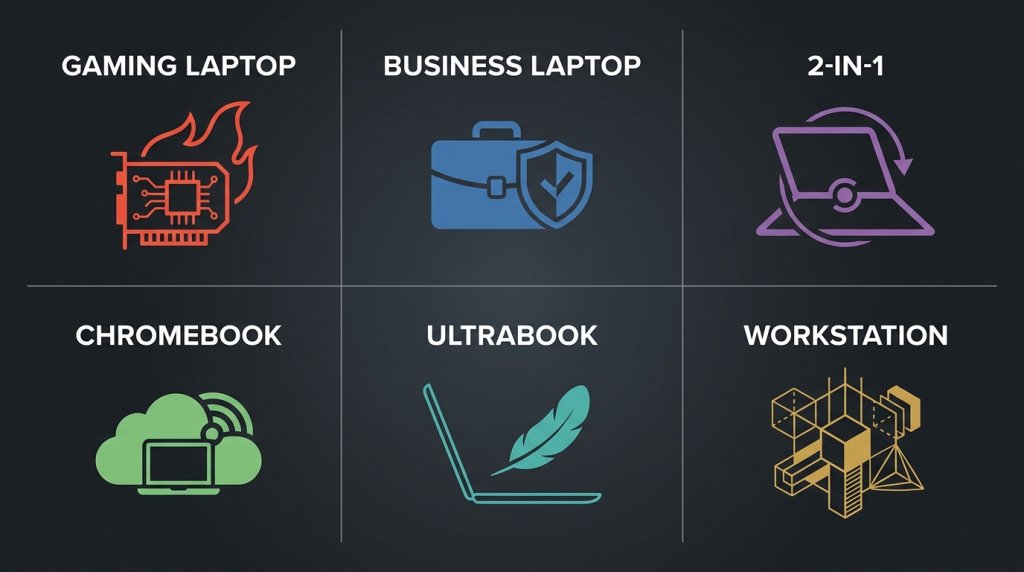
What has replaced the old laptop/notebook distinction is a richer ecosystem of subcategories:
| Category | Key Characteristic | Example Products |
|---|---|---|
| Ultrabook / Thin & Light | Under 1.4 kg, under 18mm thick | Business and premium travel machines |
| Gaming Laptop | Dedicated GPU, high-refresh display | RTX 50 Series gaming configurations |
| 2-in-1 / Convertible | 360° hinge or detachable keyboard | Touch-first, stylus-compatible designs |
| Chromebook | Chrome OS, cloud-first design | Education and lightweight browsing |
| Workstation Laptop | ISV-certified GPU, ECC RAM support | Professional CAD, scientific computing |
| Business Laptop | Security features, vPro/PRO platform | Enterprise deployment, durability certified |

What Actually Defines a Modern Laptop in 2026?
Regardless of what you call it, a modern portable computer is defined by a handful of core capabilities:
1. Processing Platform
The CPU is what makes a modern laptop feel fast or sluggish. In 2026, all three major chip families — Intel Core Ultra, AMD Ryzen AI, and Qualcomm Snapdragon X — deliver more than enough performance for everyday tasks. The newest additions to all three lineups include dedicated NPUs for AI-accelerated features, making Copilot+ PCs the most future-ready option available.
2. Operating System
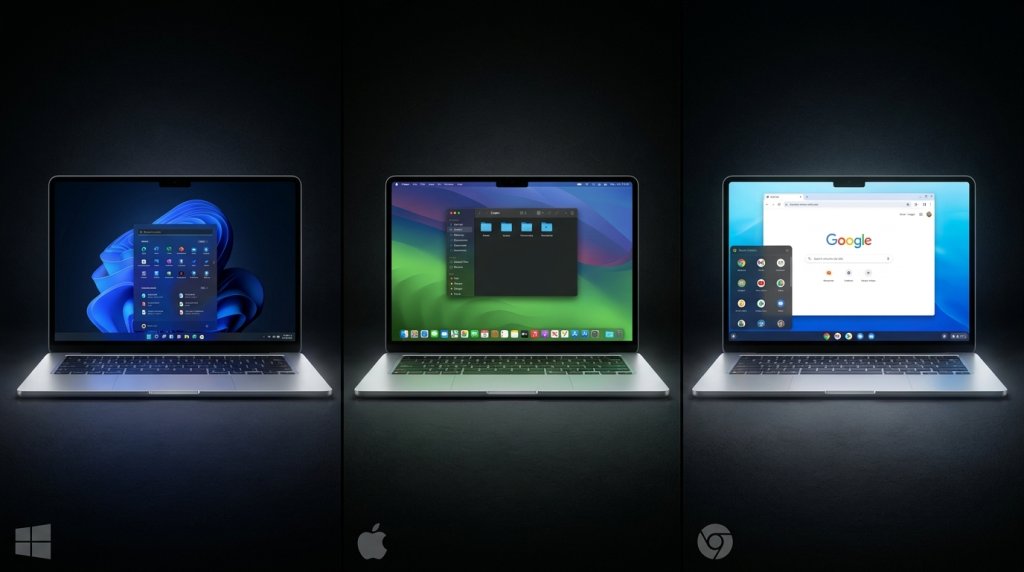
The operating system shapes the entire user experience. Most laptops run Windows 11, which offers the broadest software compatibility and the most mature AI assistant integration. Windows laptops range from lean productivity machines to fully loaded gaming rigs.
macOS laptops (MacBooks) run Apple Silicon and are particularly popular with creative professionals. Chromebooks run Google’s Chrome OS and are optimized for cloud-centric workflows — popular in education and for users who live in the browser.
3. Display and Form Factor
Screen size conventionally ranges from 11 to 17 inches. Smaller screens favor portability; larger screens favor productivity and immersive use. High-refresh displays (120 Hz+) are increasingly standard even in non-gaming configurations. 2-in-1 laptops add touch input and stylus support to the traditional clamshell.
4. Storage and Memory
Virtually all 2026 laptops ship with NVMe SSDs as primary storage. Traditional spinning hard drives have essentially disappeared from portable computers except in rare budget configurations. RAM is moving from 8GB minimums to 16GB as the new baseline, with 32GB becoming common even in mid-range machines.
Subcategory Deep Dive: Which “Laptop” Is Right for You?
Since the laptop/notebook distinction no longer guides purchasing, the subcategory you choose matters far more.
For gaming: The modern gaming laptop packs a dedicated GPU — in 2026, top configurations sport NVIDIA GeForce RTX 50 Series graphics — alongside high-refresh displays and aggressive cooling. These aren’t ultrabooks in disguise; they’re serious performance machines.
For work and travel: Business laptops prioritize battery life, security features (biometric authentication, TPM 2.0), and durability ratings. They’re built to survive the rigors of daily commuting and airport security lines.

For creativity and flexibility: 2-in-1 devices blur the line between laptop and tablet, adding touch and stylus capabilities while maintaining full productivity when the keyboard is in use.
Unsure which subcategory fits your needs? The Newegg Laptop Finder lets you filter by use case, operating system, screen size, and more — turning a potentially overwhelming decision into a short, manageable list.
The AI Shift: A New Layer of Differentiation
If the laptop/notebook distinction faded in the 2000s, AI is creating a new dividing line in 2026: Copilot+ certified vs. non-certified. Machines with NPUs rated at 40+ TOPS gain access to a growing suite of AI-powered tools that run locally, without cloud latency. This is becoming a meaningful differentiator — not a marketing footnote.
When shopping today, asking “is this a Copilot+ PC?” is arguably more useful than asking whether something is a “laptop” or a “notebook.”
The Short Answer
A laptop and a notebook are the same thing. The terms evolved from different eras of portable computing, converged in the 2000s, and are now fully interchangeable. What matters in 2026 isn’t the name — it’s the subcategory, the chip inside, the operating system, and the AI capabilities the machine supports.
Don’t get distracted by legacy vocabulary. Use the Newegg Premium Laptop Upgrades page to explore curated options across every subcategory — and focus on finding the right machine for how you actually work.