
The RTX 3060 12GB has quietly returned to Newegg at $329, matching its February 2021 launch price almost exactly five years later. In a GPU market where new cards launch above $500 and used prices whiplash every quarter, watching a mid-range card hold its number for half a decade is genuinely rare. So why is a 2021 GPU suddenly one of the most-discussed cards on the Newegg store page? The short answer: 12 GB of VRAM at $329 is now competitive with brand-new $400+ cards that ship with only 8 GB, and a wave of AI and gaming workloads has made VRAM the number one thing budget buyers care about.
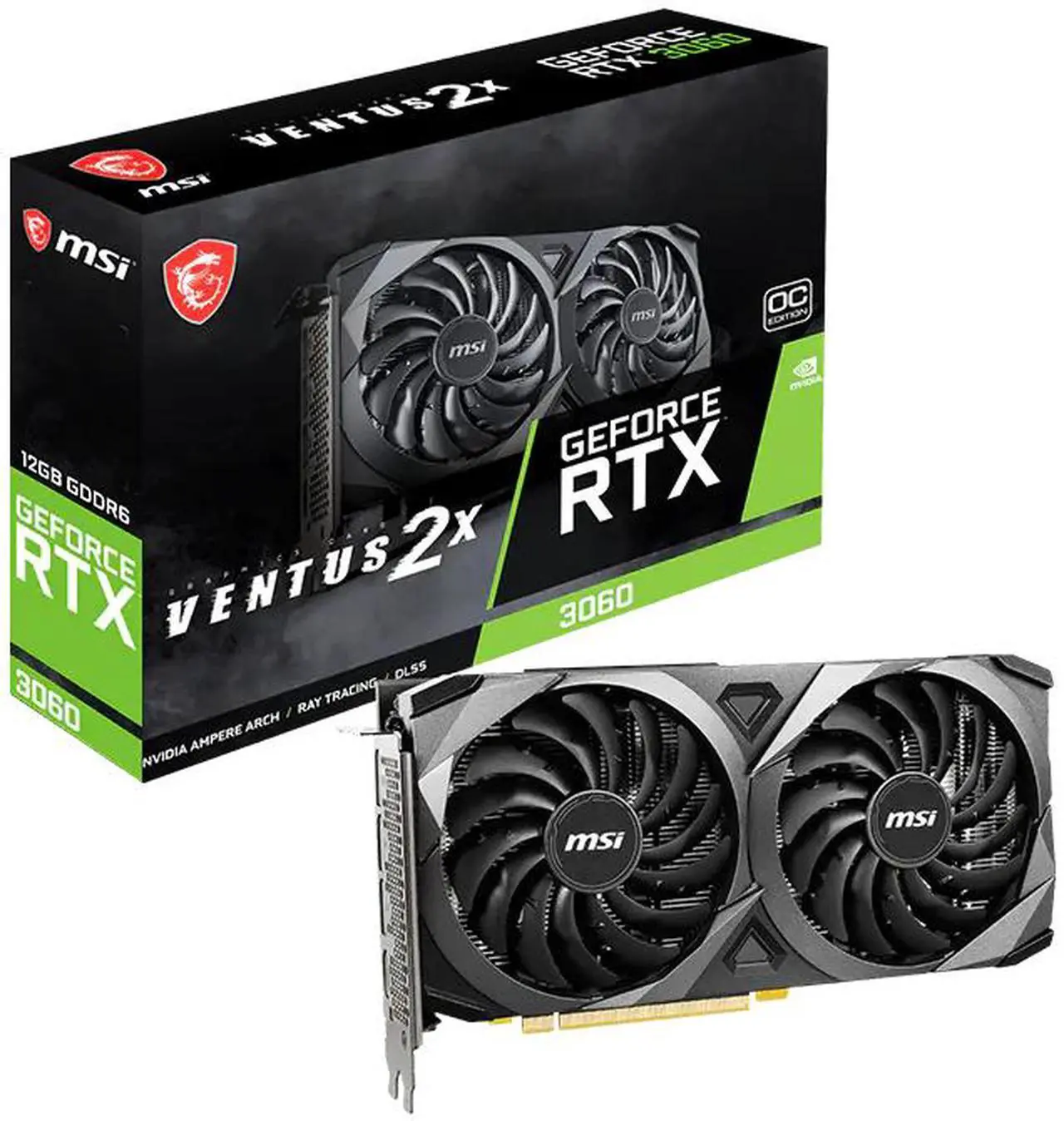
MSI Ventus GeForce RTX 3060 12GB GDDR6 PCI Express 4.0 Graphics Card RTX 3060 Ventus 2X 12G OC
The $329 story — a rare five-year price hold
In the desktop GPU market, price stability is the exception, not the rule. Most 2021 cards spent 2022 selling above MSRP due to shortages, dipped in 2023, and disappeared from mainstream shelves by 2024. However, the RTX 3060 12GB has taken a different path. NVIDIA has kept its board partners producing new units, and Newegg is once again the primary US channel. As of July 2026, the card is listed at the same $329 it launched at in early 2021.
Why relaunch a five-year-old card? Two reasons. First, the RTX 3060 12GB fills a price band that NVIDIA’s newer Blackwell cards do not — the RTX 5050 and RTX 5060 launched at higher price points, and both ship with only 8 GB of VRAM. Second, worldwide demand for capable, VRAM-heavy budget cards has jumped, driven by hobbyist AI, streaming, and student PC builds. Rather than let AMD sweep that band, NVIDIA is keeping the RTX 3060 12GB alive.
Why 12GB of VRAM matters more than ever
Video memory has quietly become the single most important spec for budget GPU buyers in 2026. Modern AAA games at 1080p Ultra now routinely allocate 9-11 GB of VRAM. Meanwhile, most $250-$400 competing cards from the current generation ship with 8 GB, which forces gamers to drop texture settings or leave DLSS Quality mode on at all times.
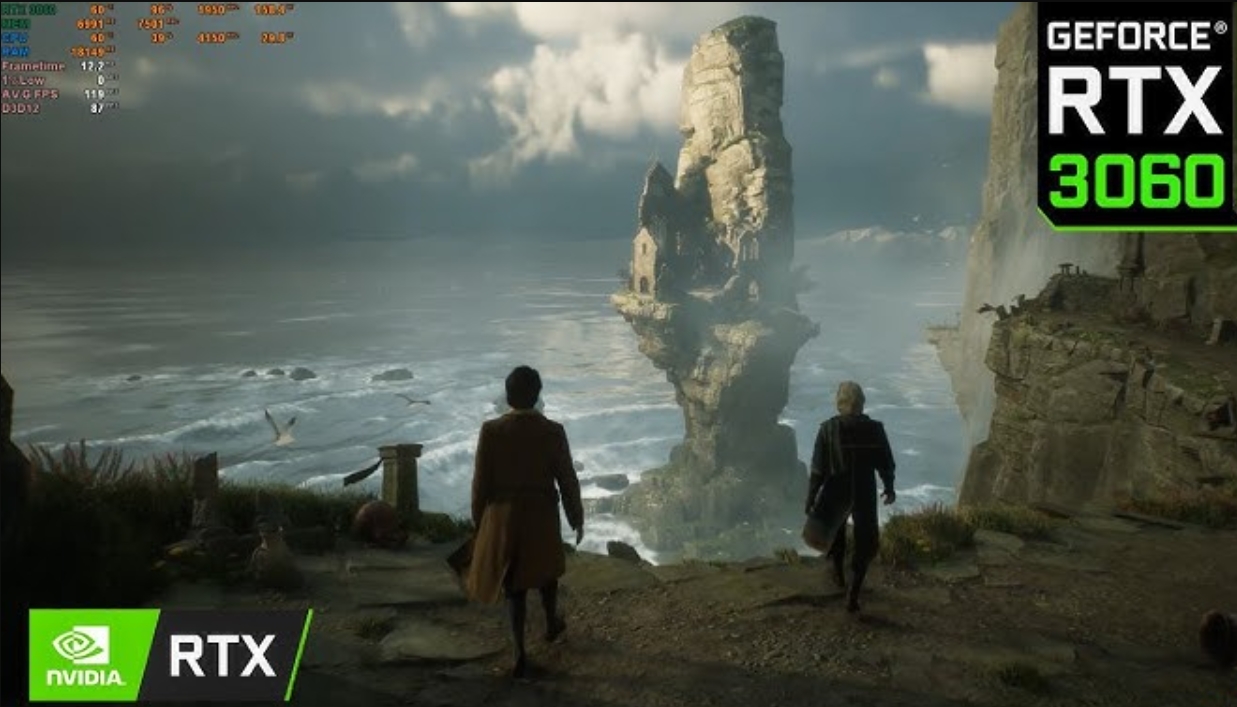
By contrast, the RTX 3060 12GB has 50 percent more memory than the 8 GB tier. That headroom is exactly what modern engines want. For instance, Hogwarts Legacy at 1080p Ultra with ray tracing on can allocate more than 10 GB. On an 8 GB card the game will stutter and swap textures constantly. On the RTX 3060 12GB it stays smooth because the working set fits entirely in memory.
The VRAM advantage extends far beyond gaming. In addition, Stable Diffusion SDXL requires roughly 10 GB to run comfortably. Small local LLMs like Llama 3 8B quantized to 4-bit fit in 6-8 GB, but the 12 GB card leaves headroom for longer contexts and larger batch sizes. In short, 12 GB is the practical minimum for anyone dabbling in local AI in 2026, which is why the RTX 3060 12GB has become a favorite budget entry point.
Gaming with the RTX 3060 12GB in 2026
The RTX 3060 12GB is not the fastest card on the shelf. However, it is a smooth, capable 1080p gamer in 2026 and a reasonable 1440p option with DLSS help. Here is what it actually delivers in current titles.
At 1080p Ultra, the RTX 3060 12GB clears 60 fps in most 2025-2026 AAA games without needing DLSS. So if you want the same class of performance in a portable form factor, check the current gaming laptop selection with equivalent-tier mobile GPUs. For example, expect 75-95 fps in Cyberpunk 2077 with settings tuned, and 60-75 fps in Alan Wake 2 with medium ray tracing. Esports titles like Valorant, CS2, and Apex Legends run at 200+ fps easily. This is exactly where the card shines — mainstream 1080p high-refresh play.
At 1440p, the RTX 3060 12GB needs DLSS Quality to keep smooth frame rates in AAA titles. With DLSS 4 upscaling, most modern games land between 55 and 75 fps at 1440p High. That is a very playable experience, especially if your monitor tops out at 144 Hz.
The one place the card struggles is heavy ray tracing at 1440p, and path tracing at any resolution. So if Cyberpunk 2077 with path tracing is on your list, the RTX 3060 12GB is not the right pick. Otherwise, it handles just about everything a mainstream player throws at it. Pair the card with a solid gaming desktop chassis and PSU to make the most of it.
Local AI is where the RTX 3060 12GB really shines
For hobbyist AI users, the RTX 3060 12GB has become the community’s default recommendation for a budget starter GPU. The reason is simple: at $329 you get 12 GB of VRAM plus mature CUDA support, which unlocks almost every popular open-source AI stack.
Stable Diffusion runs comfortably. SD 1.5 renders 512×512 images in 2-3 seconds. SDXL at 1024×1024 takes 12-18 seconds with default settings, which is slower than a modern flagship but very usable for exploration. The 12 GB buffer means you can run higher resolutions, larger batch sizes, and heavier ControlNet stacks without hitting out-of-memory errors.
Local LLMs work well within the card’s tier. A 7B parameter model quantized to 4-bit fits in about 5 GB of VRAM, leaving room for a generous 8k-16k context window. Even 13B models at 4-bit slip in with room to breathe. So if you want a private ChatGPT-style assistant on your desk, the RTX 3060 12GB is the cheapest reasonable path. You will not run 70B models, but everything under 13B is fair game.
Voice, transcription, and image classification all work. For instance, ultra-low-cost school builds pair well with a lightweight Chromebook or Chrome OS laptop for portable schoolwork, while the desktop handles heavier local AI at night. Whisper Large runs in near real time. YOLO object detection processes at 100+ frames per second. Furthermore, most Jupyter notebook tutorials that reference “one GPU” implicitly assume something like an RTX 3060 12GB. Pair the card with fast NVMe SSD storage so model loads do not become the bottleneck.
Content creation and streaming
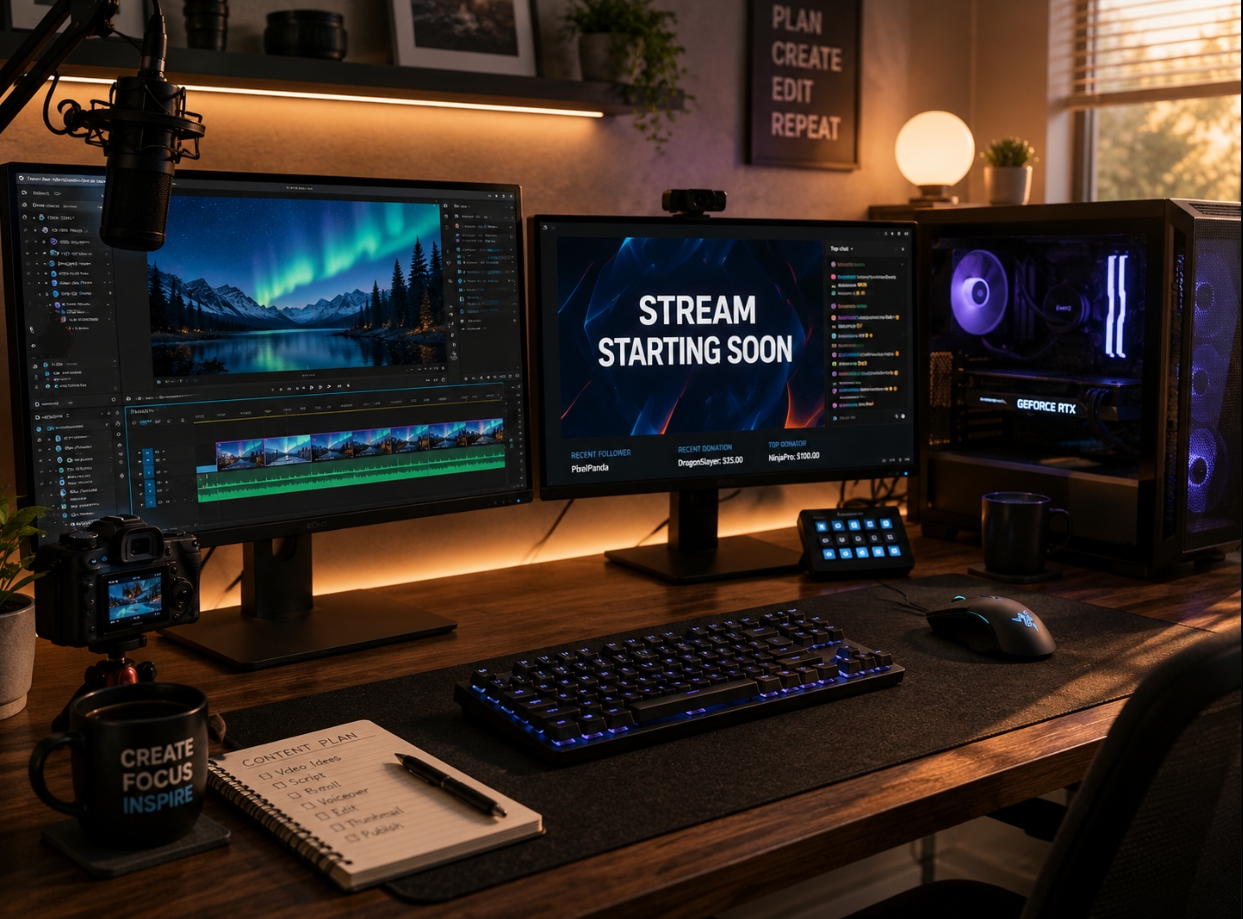
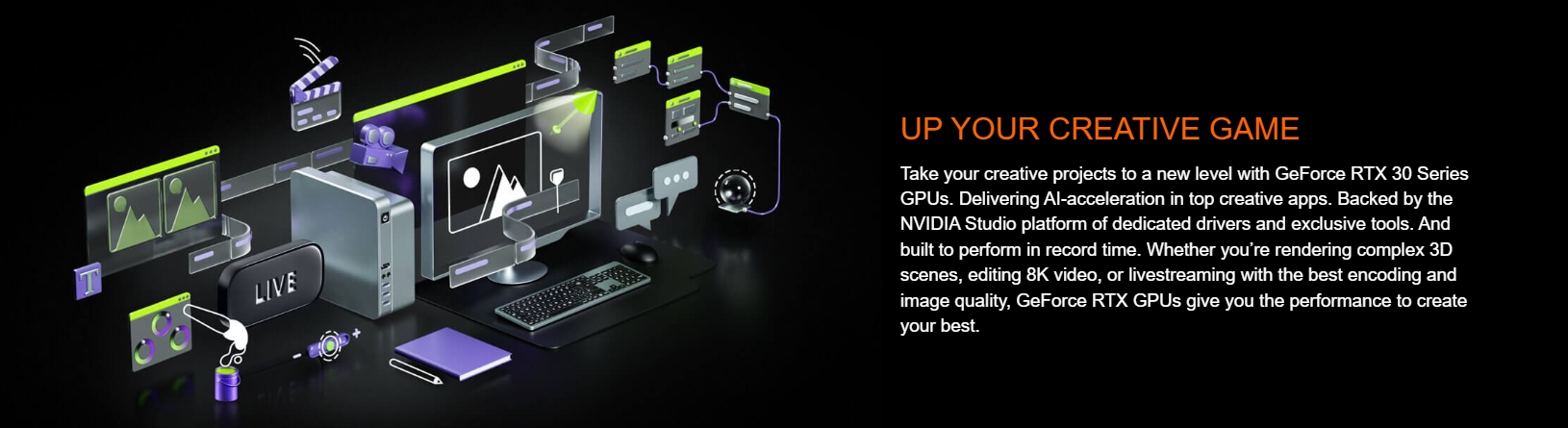
The RTX 3060 12GB is a strong content-creation card for its price. It includes NVIDIA’s NVENC encoder, which offloads video encoding for streaming and recording. In OBS, that means you can stream at 1080p 60 fps with minimal impact on game performance. Twitch and YouTube streamers on a budget consistently rank this card as their sweet-spot pick.
For video editing, DaVinci Resolve and Premiere Pro both accept the RTX 3060 12GB and use CUDA-accelerated effects. Timelines up to 4K play smoothly with GPU-accelerated color grading. 3D applications like Blender see substantial speedups too. In addition, adding 32 GB of system RAM by browsing DDR4 or DDR5 memory kits matters more for creative work than raw GPU horsepower.
Streamers especially benefit. Because NVENC handles encoding, the CPU stays free for game logic. So you can push high game settings and still stream at high bitrates without dropped frames.
RTX 3060 12GB vs a new RTX 5050 or 5060
The natural comparison for a $329 RTX 3060 12GB in 2026 is the new RTX 5050 and 5060 desktop cards. The RTX 5050 launches $500+ with 8 GB of VRAM. The RTX 5060 launches with 8 GB. Both use the newer Blackwell architecture and support DLSS 4 Multi Frame Generation.
So the trade-off is clear. The RTX 5050 and 5060 are 15-25 percent faster in raster performance and support DLSS 4 Frame Generation. However, both are stuck at 8 GB of VRAM. As a result, they hit texture-swap stalls in modern AAA titles at Ultra settings, and they are effectively locked out of most local AI workloads that need more than 10 GB.
The RTX 3060 12GB is slower but has more memory. If your priority is 1080p gaming plus AI experimentation, the extra VRAM matters more than the newer architecture. If your priority is pure gaming performance and you rarely touch AI, the RTX 5060 is the better choice. Browse the current RTX 50 gaming laptop lineup if you want the same silicon in a portable form factor.
There is also a used market angle. Used RTX 3060 12GB cards trade at $180-$220 on second-hand sites. If you accept the risk of a used card with no warranty, that is even cheaper. However, at $329 the new card includes the standard manufacturer warranty and a fresh silicon batch, which many buyers prefer.
What to pair it with
The RTX 3060 12GB is a modest card by 2026 standards, so it does not need a top-tier build around it. A midrange CPU, 16-32 GB of DDR4 or DDR5 memory, and a 650 W 80 Plus Bronze power supply are more than enough. Total build cost for a competent RTX 3060 12GB gaming PC lands around $800-$1,000 depending on the parts you already own.
For the CPU, aim for a Ryzen 5 or Intel Core i5 from the last three generations. Anything faster is wasted money on this GPU tier. For system memory, 16 GB is the practical minimum and 32 GB is the sweet spot for AI experimentation, so size your kit to your motherboard when shopping. Compare bundled options in the Copilot+ AI PC lineup if you want a prebuilt AI-optimized alternative.
Storage matters more than most buyers assume. Modern AAA game installs run 80-150 GB each, and AI models can eat 20-50 GB per checkpoint. As a result, 1 TB of NVMe storage is the floor for a gaming AI build in 2026. Add an external hard drive for backups and model libraries you access less often.
For the power supply, 550 W is technically enough, but 650 W leaves headroom for future upgrades. Case airflow matters too — the RTX 3060 12GB is a two-slot card that runs warm under sustained load, so pick a chassis with at least two intake fans.
Who should buy the RTX 3060 12GB right now
Four buyer profiles get real value out of an RTX 3060 12GB at $329 in 2026. First, the mainstream 1080p gamer who wants smooth AAA performance without paying $500+ for a current-gen card. Second, the AI hobbyist who wants a first CUDA card to learn Stable Diffusion and small LLMs. Third, the streamer or content creator who needs NVENC and CUDA acceleration on a budget. Fourth, the parent building a first family gaming PC that also needs to handle school and creative work.
In contrast, the card is not a great fit if you want 1440p or 4K gaming with maxed settings, if you play mostly path-traced titles, or if you already own an RTX 4060 or better. For those users, the newer RTX 5060 or a step-up card makes more sense.
Also worth noting: because this is a five-year-old chip on a mature process, the RTX 3060 12GB tends to run cool and quiet compared to newer high-power cards. That matters for small-form-factor builds and for anyone assembling a quiet living-room PC.
Final thoughts on the RTX 3060 12GB relaunch
The RTX 3060 12GB is not a spec-sheet champion in 2026. However, at $329 with 12 GB of VRAM, mature CUDA support, and a full manufacturer warranty, it is one of the smartest budget picks on the market. Modern gaming increasingly asks for more than 8 GB of memory, and the local AI wave has turned VRAM into the single most important spec for hobbyist buyers. The RTX 3060 12GB happens to sit right at the intersection of those two trends.
So if you are shopping for a budget desktop, look at the price-to-VRAM ratio, not just the raw benchmark numbers. Browse a complete DIY parts and prebuilt options at Newegg if a business-first laptop plus a console makes more sense than a full desktop, or spec a DIY build around it with a matching CPU, memory kit, and NVMe drive. For a mobile alternative, the Newegg Laptop Finder filters by GPU class and budget, or browse the Windows 11 laptop lineup and the broader all-laptop catalog are the places to compare. Either way, the RTX 3060 12GB deserves a fresh look — five years on, it still solves real problems better than most cards in its price band.
Related Posts
- How Does the New NVIDIA RTX 3060 Stack Up Against 20-series RTX Cards?
- Wi-Fi 8 Is Almost Here: What ASUS’s Wi-Fi 8 Routers Actually Mean
- Best OLED Gaming Monitors in 2026
- How to Upgrade a Prebuilt Desktop PC: What You Can and Cannot Change
- Best PCIe 5.0 NVMe SSDs in 2026
Frequently Asked Questions
Common questions about the RTX 3060 12GB relaunch, gaming performance, local AI use, and power requirements.