
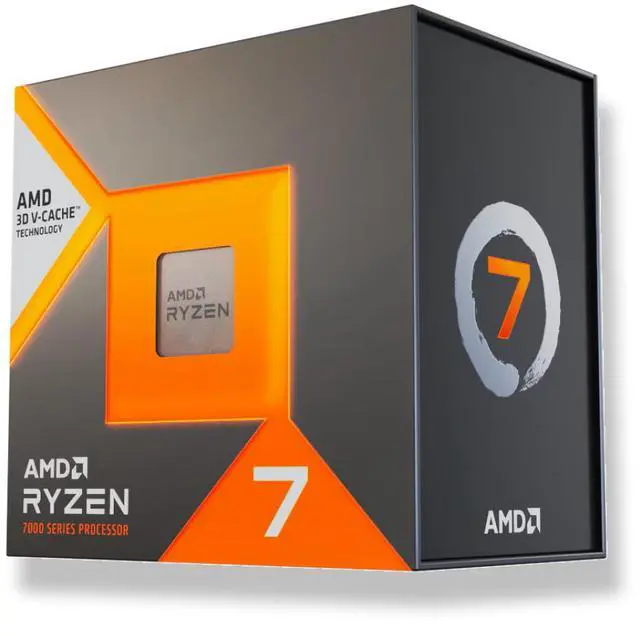
If you’re shopping for a new gaming CPU, the AMD Ryzen 7 7700X3D is the kind of processor that immediately gets attention. It brings together an 8-core, 16-thread design, Zen 4 architecture, Socket AM5 support, a 4.0 GHz operating frequency, and a massive 96MB L3 cache. That spec mix points to the kind of desktop chip many Newegg buyers want: fast, modern, and tuned for responsiveness.
What makes this preview especially interesting is how clearly the 7700X3D is aimed at real-world gaming appeal. Big cache sizes often matter most in titles and workloads that respond well to lower memory access pressure, and that can translate into smoother-feeling performance in the right build. Below, we’ll break down what stands out about the Ryzen 7 7700X3D and what kind of system it makes sense in, using only the confirmed specifications.
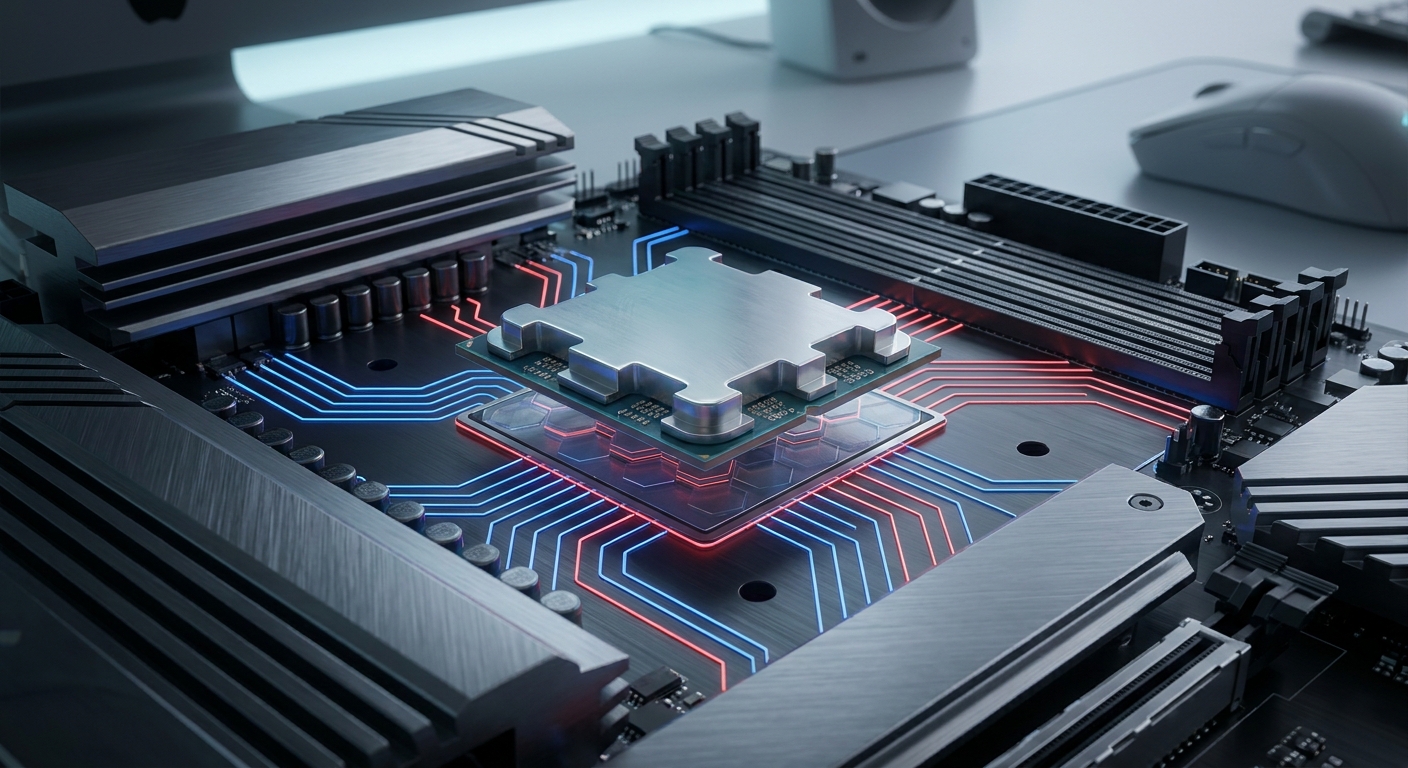
AMD Ryzen 7 7700X3D: Why It Matters
The AMD Ryzen 7 7700X3D stands out because it lands in a very practical performance lane. An 8-core, 16-thread layout is already a comfortable fit for modern gaming and everyday multitasking, and the large cache design gives it a more specialized edge for buyers who care about frame pacing and system responsiveness.
It also fits into AMD’s AM5 ecosystem, which is a big part of the value here. Socket AM5 support opens the door to a wide range of AMD 600- and 800-series boards, plus modern platform features like PCIe 5.0 storage and DDR5 memory. For anyone building from scratch or refreshing an older setup, that makes the 7700X3D feel like part of a longer-term desktop upgrade path.
- 8 cores and 16 threads for a strong gaming and multitasking balance
- 96MB L3 cache for latency-sensitive workloads
- Zen 4 architecture on a 5nm process node
- Socket AM5 support for current AMD desktop platforms
- 120W TDP for a serious performance-focused desktop class
AMD Ryzen 7 7700X3D: Core Specs That Shape Performance
The confirmed specs give the Ryzen 7 7700X3D a very clear identity. It is built on the Raphael Zen 4 core design, manufactured on 5nm, and runs at a 4.0 GHz operating frequency. Memory support includes DDR5-5200 in dual-channel mode, up to 128GB of capacity, and ECC support. Cache specs include 512KB of L1 cache, 8MB of L2 cache, and 96MB of L3 cache.
That 96MB L3 cache is the headline feature, and it’s the one most likely to shape how this CPU feels in use. Paired with 16 threads, it should help keep background activity, game engines, and general desktop workloads moving smoothly. The integrated AMD Radeon Graphics base at 2200 MHz is another helpful detail, especially for basic display output and troubleshooting during setup.
- Architecture: Zen 4
- Core count: 8
- Thread count: 16
- Base operating frequency: 4.0 GHz
- L1 cache: 512KB
- L2 cache: 8MB
- L3 cache: 96MB
- Memory support: DDR5 5200, dual channel
- Maximum memory size: 128GB
- Integrated graphics: AMD Radeon Graphics
What To Look For in a Ryzen 7 7700X3D Build
If you’re planning a build around the Ryzen 7 7700X3D, the rest of the platform matters just as much as the chip itself. Newegg-listed motherboard support includes AMD A620, B650, B650E, X670, X670E, X870, X870E, B840, and B850 boards, which gives shoppers plenty of flexibility depending on budget and feature priorities.
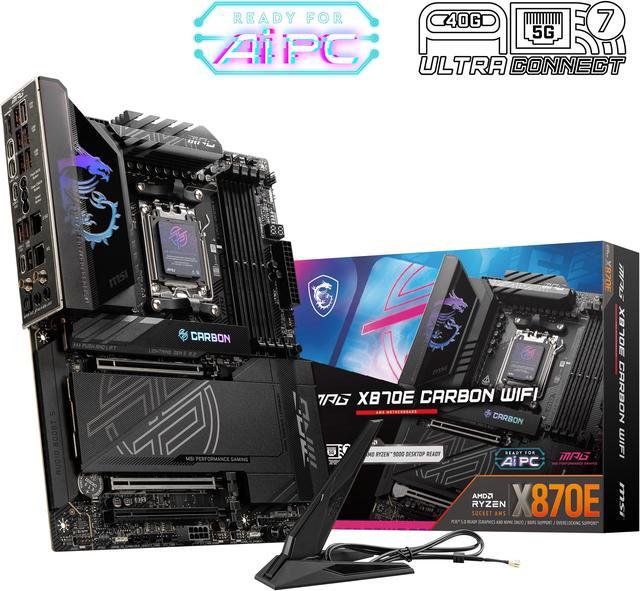
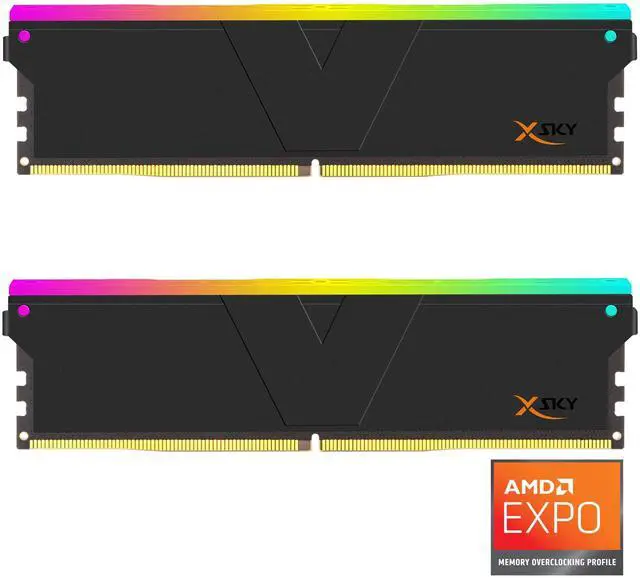
Memory is another area where buyers can fine-tune the experience. The CPU specification lists DDR5 5200 support, but AM5 motherboards can support much faster memory through overclocking, including DDR5 8400+ MT/s on the MSI MPG X870E CARBON WIFI spec sheet. In practice, a tuned kit like 32GB DDR5-6000 CL30 with AMD EXPO is an easy recommendation for gaming builds, since it offers a strong balance of speed, latency, and straightforward setup.
- Choose an AM5 motherboard with strong VRM cooling for sustained boost behavior
- Use DDR5 memory, ideally a well-tuned EXPO kit for simpler setup
- Plan for a discrete cooler, since cooling device is not included
- Match the CPU with a GPU that can keep up at higher refresh rates
- Prefer PCIe 5.0 M.2 support if you want fast storage expansion
For buyers building a system around the platform, the AMD Ryzen 7 7700X3D is the centerpiece, while the MSI MPG X870E CARBON WIFI motherboard shows how far the AM5 ecosystem can go in terms of PCIe 5.0, Wi-Fi 7, and fast DDR5 support. For memory, the V-COLOR Manta XSky DDR5 32GB 6000MHz CL30 kit is a strong example of a balanced, gaming-friendly configuration.
AMD Ryzen 7 7700X3D vs Typical Gaming CPU Priorities
When shoppers compare gaming CPUs, the conversation usually goes beyond core count and clock speed. Frame pacing, background-task handling, and platform overhead all matter once you move from spec sheets to actual play. That’s where the Ryzen 7 7700X3D becomes especially compelling. Instead of chasing higher core counts just for the sake of it, this CPU looks aimed at reducing memory delays and improving consistency where cache capacity matters most.
Compared with more conventional desktop chips that lean heavily on frequency alone, the 7700X3D’s 96MB L3 cache is the standout advantage. With 8 cores and 16 threads, it still has the headroom for modern gaming, streaming, launch-day multitasking, and everyday productivity, while the 120W TDP keeps it firmly in serious desktop territory.
- Large L3 cache can reduce dependence on slower main memory access
- 8-core design is often the practical sweet spot for gaming-focused desktops
- 16 threads help with background apps, streaming, and light content creation
- Zen 4 keeps the platform modern and compatible with current AM5 boards
- Integrated Radeon Graphics adds a useful fallback for setup and diagnostics
AMD Ryzen 7 7700X3D: Who It Is Likely For
The Ryzen 7 7700X3D looks like a strong fit for buyers building a performance-first gaming system that still needs to handle everyday multitasking without slowing down. If you want a CPU that makes sense for high-refresh gaming, fast NVMe storage, and modern DDR5 memory, this chip has the kind of platform profile that belongs in a premium mid-range or upper-mid-range build.
It also makes sense for builders who like having control over their cooling and system layout. Since the processor is sold without a cooler, you can choose the thermal solution that best matches your noise and aesthetics goals. And because the chip supports virtualization, ECC memory, and both Windows and Linux desktop operating systems, it has flexibility beyond gaming alone.
- Gamers who want strong frame-time consistency from a large-cache CPU
- Desktop builders using AM5 and DDR5 for a modern upgrade path
- Users who multitask while gaming or streaming
- Enthusiasts who want integrated graphics as a troubleshooting fallback
- Buyers planning a premium system with PCIe 5.0 storage and strong motherboard I/O
Final Verdict on the AMD Ryzen 7 7700X3D
Based on the confirmed specs, the AMD Ryzen 7 7700X3D looks built around one clear idea: deliver the kind of performance gamers actually feel. Its 8-core, 16-thread Zen 4 design, 96MB L3 cache, AM5 support, DDR5 compatibility, and 120W desktop profile make it a focused and appealing processor for shoppers who want a modern platform with cache-heavy gaming potential.
For a preview, the biggest takeaway is the shape of the product itself. The Ryzen 7 7700X3D appears to be a strong fit for buyers who want a gaming-centric CPU with enough flexibility for serious everyday use. If the final release matches what the spec sheet suggests, this could be one of the more interesting AM5 processors for builders looking for balanced high-end performance without jumping to a larger core-count class.
Frequently Asked Questions
Is the Ryzen 7 7700X3D compatible with AM5 motherboards?
Yes, it is designed for AMD’s AM5 platform, so it should work with compatible AM5 motherboards. You should still confirm BIOS support on the exact board model before buying, especially if you are choosing a newer 800-series board.
Is the Ryzen 7 7700X3D a good CPU for gaming?
Based on its 8-core, 16-thread layout and 96MB L3 cache, it looks especially well suited for gaming-focused builds. That kind of cache-heavy design is typically attractive for smoother frame pacing and strong responsiveness in modern games.
Do I need to buy a cooler separately?
Yes, you should plan on a separate cooler because the processor is sold without one. A quality air cooler or a 240mm AIO is a practical starting point for a gaming build, especially if you want quieter operation.
What memory works best with this CPU?
The confirmed support spec lists DDR5-5200, but many AM5 builders will prefer a tuned EXPO kit for a better real-world experience. A 32GB DDR5-6000 CL30 kit is a strong sweet spot for gaming, multitasking, and easy setup.
Will this CPU be easy to find in stock?
Stock availability can change quickly when a new or previewed CPU becomes popular. If you are planning a build around it, it is smart to watch major retailers and compatible motherboard bundles so you can buy when inventory appears.
Read More
- AMD Ryzen 7 7800X3D Product Page — Official AMD page for a closely related X3D gaming processor and its platform details.
- AMD Ryzen 7 9800X3D Product Page — AMD’s official page for a newer X3D gaming CPU, useful for comparing platform direction.
- MSI MPG X870E CARBON WIFI Motherboard — Official motherboard page showing a high-end AM5 platform with modern connectivity and DDR5 support.
- AMD Ryzen 7 7700X Review — A detailed review of a nearby Ryzen 7 desktop chip that helps frame expectations for performance and thermals.
- The AMD Ryzen 7 7800X3D Review — Independent review coverage of an established X3D gaming CPU, useful for understanding the cache advantage.
Related Posts
- Is Your Gaming PC Ready for GTA 6? Best ABS Gaming Desktops to Consider
- RTX 50 Series Gaming Desktops: Which ABS PC Is Right for You?
- How to Choose the Right ABS Gaming PC by GPU
- Smart PC Upgrades with AI: Your Questions About Newegg’s PC Upgrader, Answered
- Build Your First Home NAS with Newegg’s NAS Builder: Three Real Scenarios