
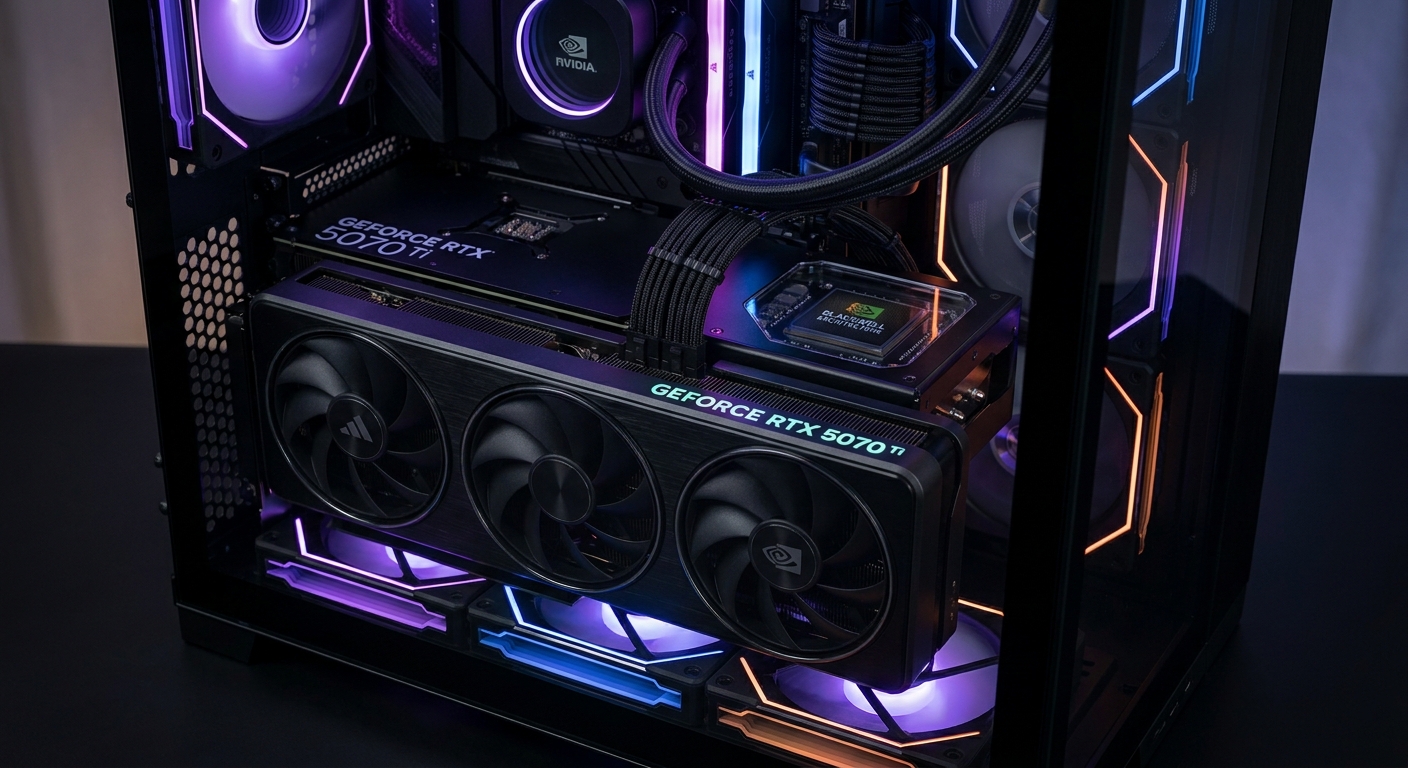
Choosing between the GeForce RTX 5070 Ti and the RTX 5080 is one of the most common dilemmas for PC builders in 2026. Both are built on NVIDIA’s Blackwell architecture, both support DLSS 4, and both deliver outstanding 4K gaming performance. But at a $250–$400 price difference depending on the model, they are not interchangeable choices. This guide breaks down the specs, real-world gaming performance, and value proposition of each card so you can make a confident decision.
The Contenders: A Quick Overview
The GeForce RTX 5070 Ti launched in early 2025 with 8,960 CUDA cores, 16GB of GDDR7 memory on a 256-bit bus, and a 300W TDP. The RTX 5080, released alongside it, steps up to 10,752 CUDA cores, 16GB of GDDR7 on the same bus configuration, and a 360W TDP. Both cards support DisplayPort 2.1b, HDMI 2.1b, and DLSS 4 with Multi-Frame Generation.
On Newegg, the RTX 5070 Ti starts at $979.99 for the MSI Ventus GeForce RTX 5070 Ti 16G Ventus 3X OC, while the RTX 5080 starts at $1,249.99 for the ZOTAC SOLID CORE OC RTX 5080. That gap matters when you are spending your own money.
Side-by-Side Specification Comparison
| Spec | RTX 5070 Ti | RTX 5080 |
|---|---|---|
| Architecture | Blackwell (GB203) | Blackwell (GB203) |
| CUDA Cores | 8,960 | 10,752 |
| Boost Clock | ~2,572 MHz | ~2,617 MHz |
| Memory | 16GB GDDR7 | 16GB GDDR7 |
| Memory Bus | 256-bit | 256-bit |
| Memory Bandwidth | 896 GB/s | 960 GB/s |
| TDP | 300W | 360W |
| Recommended PSU | 750W | 850W |
| Starting Price on Newegg | $979.99 | $1,249.99 |
Gaming Performance: 1440p and 4K
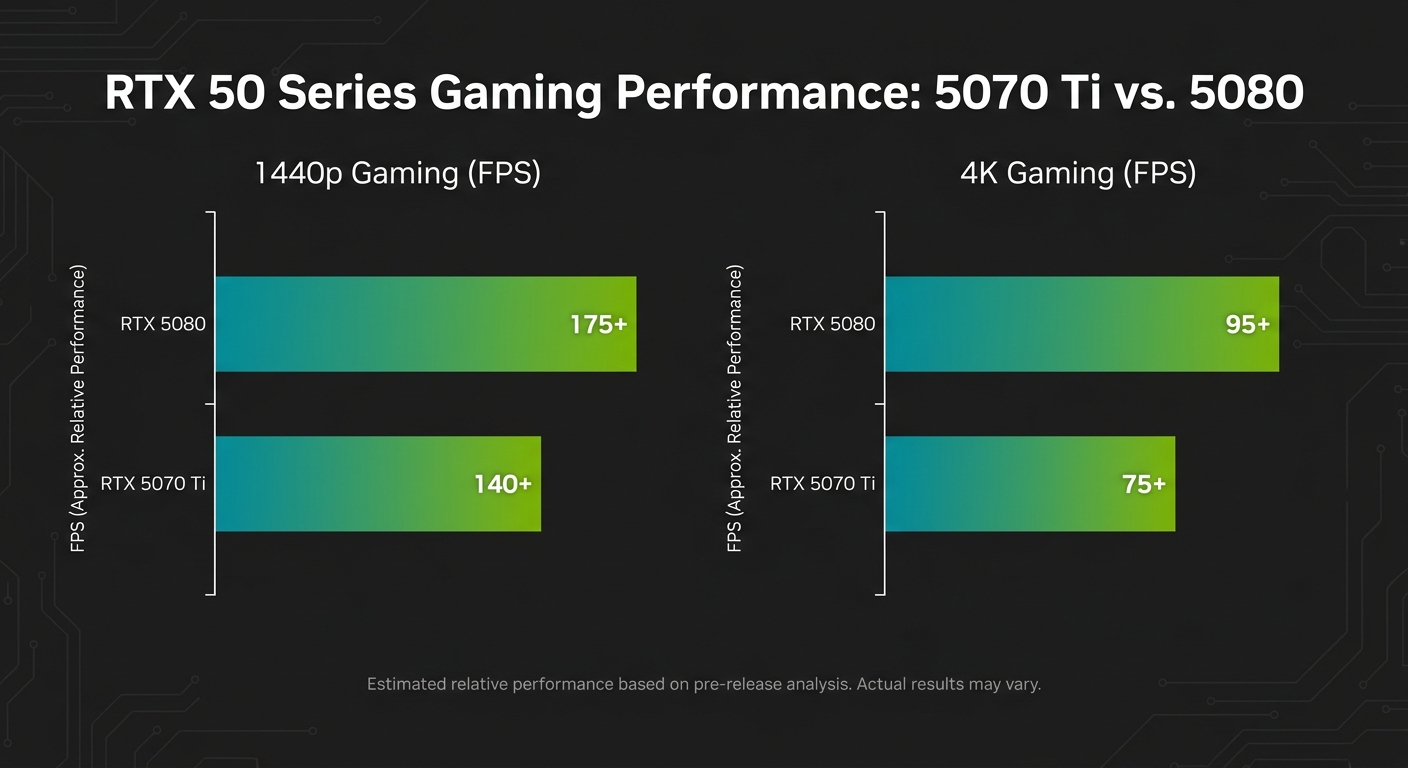
At 1440p, both cards are effectively overkill for most games. The RTX 5070 Ti consistently delivers 120–180 FPS in titles like Cyberpunk 2077 and Alan Wake 2 at Ultra settings with ray tracing enabled and DLSS 4 Quality mode active. The RTX 5080 edges ahead by roughly 10–14%, meaning you might see 135–200 FPS in the same scenarios — a difference that is noticeable in competitive titles but less meaningful in cinematic games.
At native 4K without upscaling, the gap widens slightly. The RTX 5080’s additional shader processors and higher memory bandwidth give it a consistent 15–18% lead. In Cyberpunk 2077 at 4K Ultra Ray Tracing Overdrive, the RTX 5070 Ti averages around 55–65 FPS natively, while the RTX 5080 pushes 65–75 FPS. Engage DLSS 4 Quality on either card and both clear 90 FPS comfortably, making the native difference less relevant for everyday gaming.
For competitive gamers targeting 240Hz at 1440p, the RTX 5070 Ti is more than adequate in all but the most GPU-demanding esports titles. The RTX 5080 becomes compelling only if you are simultaneously pushing 4K and leaving DLSS off, or if you run a multi-monitor setup with intense GPU workloads.
Content Creation and Productivity
Both cards share the same fifth-generation Tensor Core design and identical VRAM capacity, so AI-accelerated workflows in applications like Adobe Premiere Pro, DaVinci Resolve, and Blender perform very similarly. Where the RTX 5080 pulls ahead is in raw compute throughput — tasks like 3D rendering, video transcoding with CUDA acceleration, and large-model AI inference benefit from its higher CUDA core count. For casual creators handling 4K video editing or 3D visualization, the difference is rarely worth $300 extra. For professional render farms or heavy daily compute work, the RTX 5080 makes more sense.
Power and Thermals
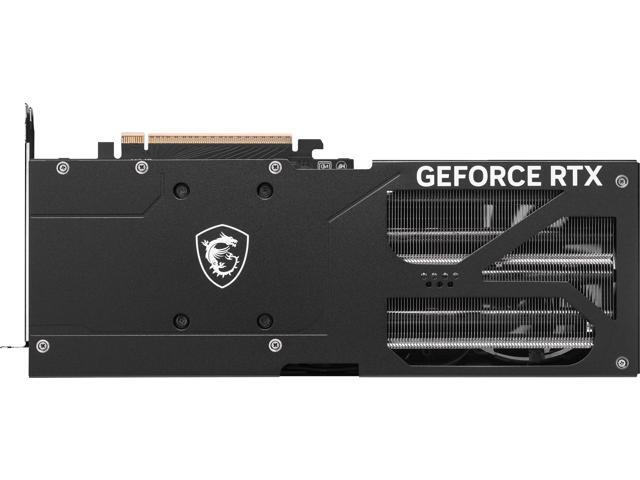
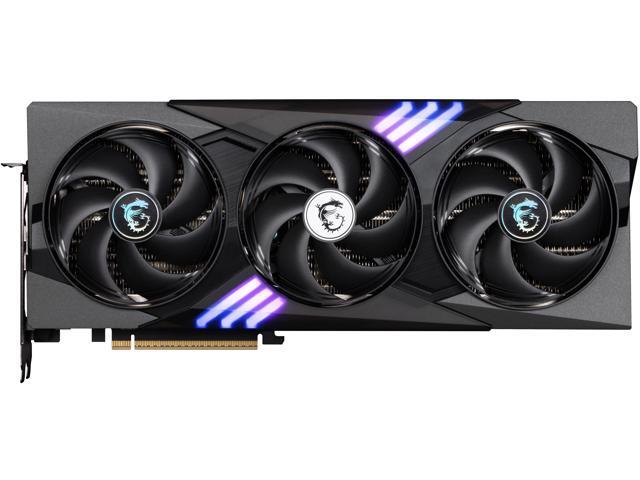
The RTX 5070 Ti’s 300W TDP fits comfortably into a quality 750W PSU, leaving headroom for a modern CPU. The RTX 5080 at 360W recommends an 850W unit. Neither card runs hot by modern standards — triple-fan models from MSI, GIGABYTE, and ASUS keep thermals under 75°C at full load in typical cases with decent airflow. The MSI SHADOW RTX 5080 16G SHADOW 3X OC, currently $979.99 on Newegg, uses the same cooler footprint as the RTX 5070 Ti models, making thermal management predictable across both tiers.
Best Picks on Newegg Right Now
Best Overall RTX 5070 Ti — Value Pick: The MSI Ventus GeForce RTX 5070 Ti 16G Ventus 3X OC at $979.99 delivers the full RTX 5070 Ti experience with a clean triple-fan cooler and factory overclock at the lowest entry price.
Best RTX 5070 Ti — Premium Pick: The GIGABYTE Gaming GeForce RTX 5070 Ti GV-N507TGAMING OC-16GD at $1,099.99 adds GIGABYTE’s WINDFORCE cooling and RGB accents with a higher out-of-box boost clock.
Best RTX 5080 — Value Pick: The ZOTAC SOLID CORE OC RTX 5080 at $1,249.99 is currently the most affordable RTX 5080 in stock on Newegg, making it the logical entry point for those committed to the higher tier.
Best RTX 5080 — Mid-Range Pick: The MSI SHADOW GeForce RTX 5080 16G SHADOW 3X OC at $1,349.99 gives you the MSI build quality and an elegant triple-fan cooler at one of the better RTX 5080 value points.
Winner by Category
Best 1440p Gaming: RTX 5070 Ti — delivers more than enough performance for any game at 1440p at a substantially lower cost.
Best 4K Gaming: RTX 5080 — the extra shader cores and memory bandwidth produce a consistent lead at native 4K, especially with ray tracing.
Best Value: RTX 5070 Ti — roughly 15% less performance for 20–25% less money depending on models compared. The performance-per-dollar math favors the 5070 Ti clearly.
Best for Creators: RTX 5080 — the additional compute throughput earns its keep in professional render and video production workloads.
Best Power Efficiency: RTX 5070 Ti — 300W vs 360W, meaningful in a small-form-factor build or a system with an already-loaded PSU.
Final Verdict
For most PC gamers in 2026, the RTX 5070 Ti is the smarter buy. It handles everything from 1440p 240Hz competitive gaming to 4K ray tracing with DLSS 4 engaged, and it does so while leaving more budget for the rest of your build — or your game library. The RTX 5080 is the right choice if you are a professional creator who needs every CUDA core available, a hardcore 4K gamer who refuses to engage upscaling, or someone building a workstation that doubles as a gaming machine.
Browse all RTX 5070 Ti graphics cards on Newegg or explore the full RTX 5080 lineup to find your ideal match.
Related Posts
- RTX 5070 Ti FAQ: Everything You Need to Know Before Buying
- Best Power Supplies in 2026
- Best Gaming Laptops in 2026
- How Much Memory an AM5 Build Actually Needs in 2026
- CL36, CL30, CL28 or CL26? Picking a DDR5-6000 Latency Tier
Frequently Asked Questions
Common questions about choosing between the RTX 5070 Ti and RTX 5080.