
If you only play games, this comparison has a clear winner and has for a while. If you also render, compile, encode or stream, it does not. That tension is the whole story of desktop processors in 2026: AMD’s 3D V-Cache chips own the frame-rate charts, Intel’s Core Ultra parts own multi-core throughput, and the right answer depends entirely on what you do with the machine when you are not playing. Here is what the benchmark data actually shows, what changed with Intel’s 2026 refresh, and which platform is the safer long-term bet.
The Contenders
On the AMD side, the Ryzen 7 9800X3D is the reference point: eight Zen 5 cores boosting to 5.2GHz with 96MB of L3 cache on Socket AM5, a 120W TDP and 28 PCIe 5.0 lanes. Above it, the Ryzen 9 9950X3D adds 16 cores, 32 threads and 128MB of L3 at 170W. The non-X3D options are the Ryzen 7 9700X (eight cores, 32MB L3, 65W) and the Ryzen 5 9600X (six cores, 65W).
On the Intel side, the Core Ultra 9 285K brings 24 cores — eight performance plus 16 efficient — to 5.7GHz on LGA 1851 with a 125W base and 250W maximum turbo. The Core Ultra 7 265K is the 20-core version. And the 2026 refresh is represented by the Core Ultra 5 250K Plus, an 18-core part with official DDR5-7200 support. If the budget is tight and the platform can be older, the Ryzen 5 5600 on AM4 is still the value entry point, and it is the only chip here that includes a cooler.
Round 1: Gaming
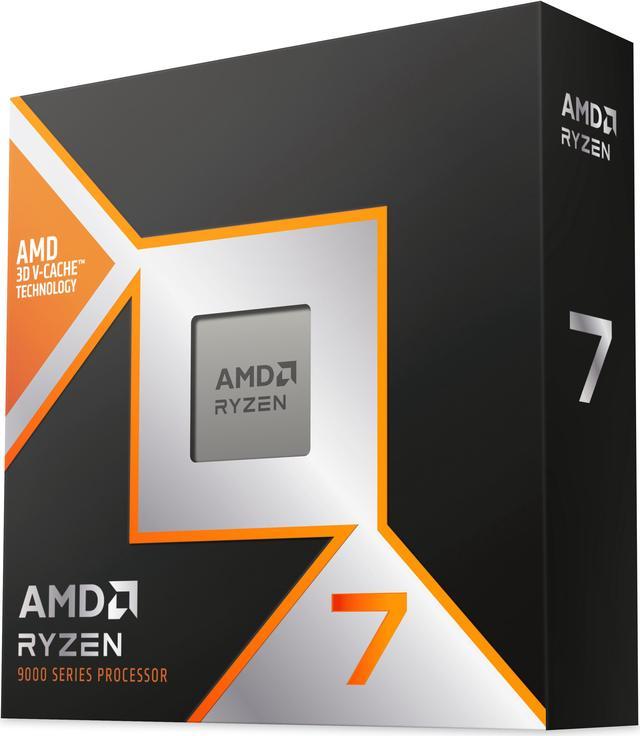
This is not close. On Tom’s Hardware’s 1080p gaming hierarchy the X3D parts occupy the top of the chart, with the 9800X3D at 97% of the leader and the 9950X3D at 95.7%, while the Core Ultra 7 270K Plus sits at 77.5%, the Core Ultra 9 285K at 71.8% and the Core Ultra 7 265K at 70.3%.
Head-to-head numbers back that up. Tom’s Hardware measured the 9800X3D roughly 35% faster than the 285K in average frame rate across 16 games at 1080p, with about 25% better 1% lows. TechSpot’s larger 45-game suite put the gap at 24% on averages and 29% on 1% lows, and noted there was no game in which the Ryzen chip was slower. Against AMD’s own non-cache part, the 9800X3D is about 30% ahead of the 9700X.
Round 1 to AMD, decisively.
Why 3D V-Cache Wins, and Where It Does Not
The mechanism is simple. Stacking extra L3 on the compute die gives the 9800X3D 96MB against the 9700X’s 32MB, so far more of a game’s working set — draw calls, AI, physics, world state — is served from on-die cache instead of going out to system memory. Cache misses are the dominant stall in game engines, so cutting them lifts both averages and, more visibly, 1% lows.
The benefit is not evenly spread. The biggest gains land in simulation and physics-heavy racing (Assetto Corsa Competizione showed roughly 45% over the 9700X and a 75% lead over the 285K), strategy (Homeworld 3 around 46%), large open worlds (Cyberpunk 2077: Phantom Liberty around 35%) and high-refresh competitive titles that run far past any GPU limit — Counter-Strike 2 around 30%, Rainbow Six Siege around 26%. The smallest gains are in GPU-bound cinematic games and well-optimized console ports: Star Wars Outlaws in the 5 to 10% range, The Last of Us Part I 5 to 9%, Hitman 3 around 7%.
Worth correcting a common belief: esports titles are not a poor fit for X3D. Because they run at frame rates no GPU limits, they show some of the largest cache gains. It is the graphically heavy AAA game at high settings where the advantage collapses.
Round 2: Everything That Is Not a Game
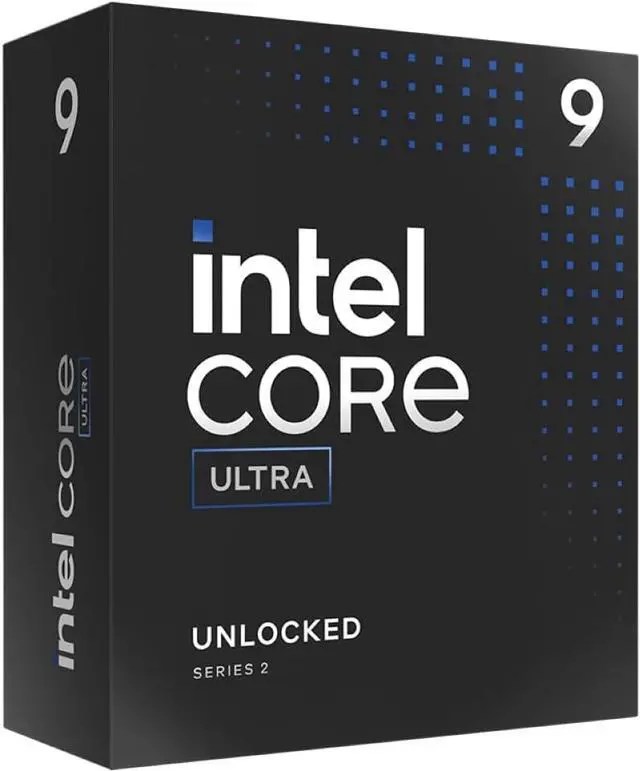
Flip the workload and the result flips with it. Tom’s Hardware measured the Core Ultra 9 285K at roughly 81% ahead of the 9800X3D in Cinebench 2024 multi-core and nearly 99% ahead in POV-Ray multi-core, plus about 11% ahead in single-core. TechSpot found the Core Ultra 7 270K Plus roughly 106% ahead of the Ryzen 7 9700X in Cinebench multi-thread, 121% in Blender and 62% in 7-Zip compression. Gamers Nexus had the 270K Plus completing a Chromium compile within two minutes of a Ryzen 9 9950X and beating the 9950X3D in DaVinci Resolve.
The reason is core count, not architecture magic: an eight-core gaming chip runs out of threads. If your machine renders, compiles or encodes for a living, that is the number that matters. AMD’s answer is the 9950X3D, which pairs 16 cores with the cache — near-9800X3D gaming at 95.7% of the leader, plus full multi-core throughput.
Round 2 to Intel, or to the Ryzen 9 X3D if you want both.
Round 3: Power and Cooling
Under heavy all-core load, Tom’s Hardware measured the 9800X3D at 176W in y-cruncher against 287W for the 285K, and 171W versus 325W in Prime95 AVX — about 90% more power for Intel in that test. In games the 9800X3D drew about 93W in Cyberpunk 2077, roughly 36% less than the 285K. TechSpot found the Core Ultra 7 270K Plus pulling 42 to 58% more power than a Ryzen 7 9700X in games for 12 to 17% more performance.
That translates directly into cooler budget. Tom’s Hardware recommends a mid-range air cooler for the 9800X3D and a high-end air cooler or a 240mm-plus liquid cooler for the 285K. Neither ships with one. Intel does win at idle, marginally — 16W against 20W.
Round 4: The Platform Bet
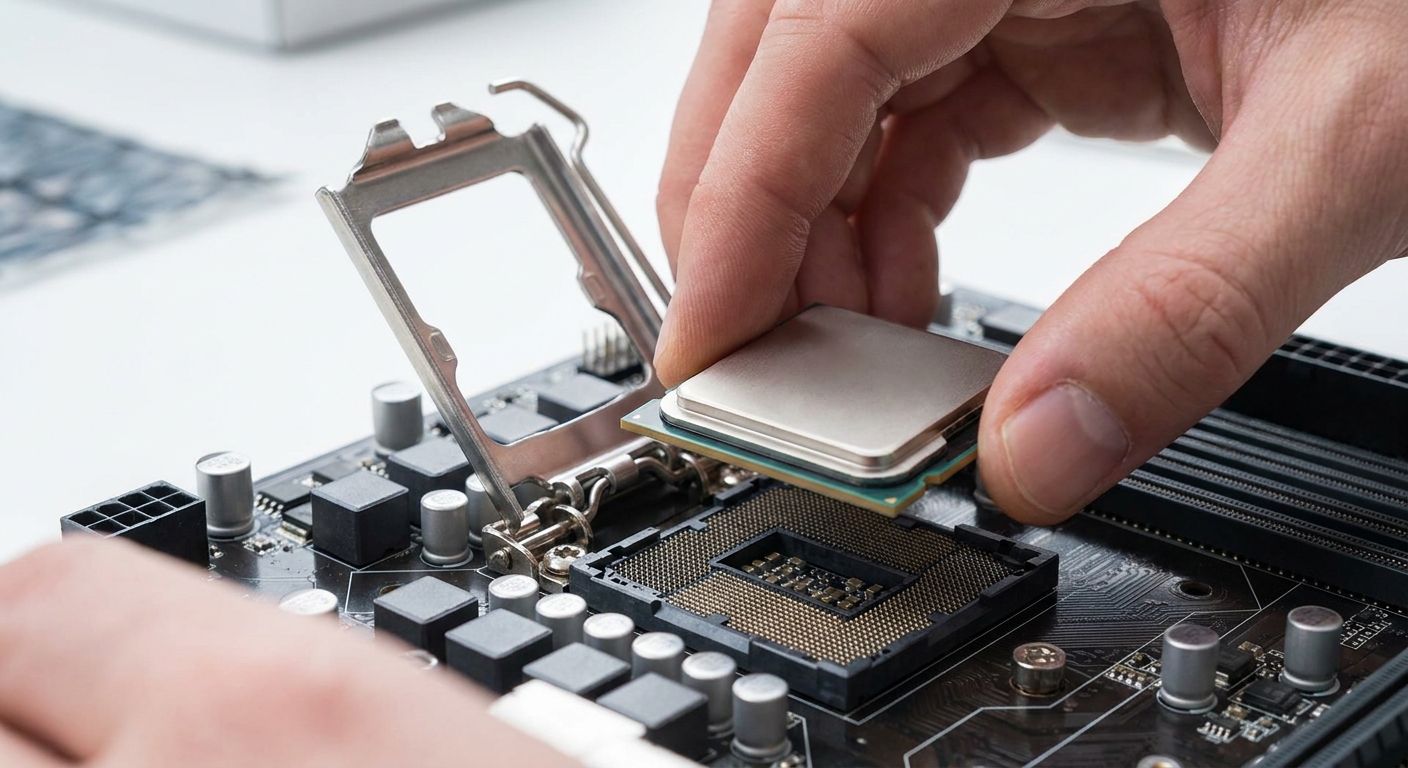
This may matter more than either chip. At Computex 2026 AMD confirmed AM5 support through 2029 — notably without the “and beyond” its earlier commitments carried — which should cover at least two more processor generations on the same socket. Intel’s LGA 1851, by contrast, delivered effectively one generation plus a refresh; reporting indicates the successor socket, LGA1954, arrives later in 2026 with Nova Lake. Treat the Intel socket change as reported rather than officially confirmed, but plan around it.
Two smaller platform notes. Intel’s Arrow Lake Refresh officially supports DDR5-7200 and CUDIMM modules, which is a real memory advantage. And AMD’s AM5 chips expose 28 PCIe 5.0 lanes against Intel’s 24 on LGA 1851.
What Actually Changed in the Core Ultra “Plus” Refresh
Intel announced three Plus SKUs in March 2026. Each tier gains one extra efficient-core cluster (four more E-cores), the die-to-die interconnect rises by up to 900MHz to around 3GHz, the ring bus gains 200MHz, official memory moves to DDR5-7200 with 4-rank CUDIMM support, and a new binary optimization layer joins APO. Base power stays at 125W and there is no new chipset — the parts drop into existing 800-series boards with a firmware update. The result is Intel’s best desktop gaming showing in years, and still roughly 20% behind the 9800X3D at 1080p.
The Verdict
Buy the Ryzen 7 9800X3D if gaming is the point — it is the fastest gaming chip you can reasonably buy, it runs cool enough for a mid-range air cooler, and AM5 has a confirmed runway to 2029. Buy a Core Ultra 9 285K or a Plus refresh part if your day job is rendering, compiling or encoding and games are the evening activity. Buy the Ryzen 9 9950X3D if you genuinely need both and would rather not choose. And one honest note about resolution: reviewers test at 1080p specifically to remove the GPU bottleneck, so the gaps above compress as you move to 1440p and 4K — but they do not vanish, because what determines whether the CPU matters is the frame rate you are targeting, not the resolution. Compare current chips in Newegg’s desktop processor listings.
Frequently Asked Questions
Is the Ryzen 7 9800X3D really the best gaming CPU in 2026? Among widely available chips, yes. It sits at 97% of the leader on Tom’s Hardware’s 1080p gaming hierarchy, above every Core Ultra part, and measured roughly 24 to 35% faster than the Core Ultra 9 285K depending on the test suite. The larger Ryzen 9 9950X3D is within a few percent of it while adding twice the cores.
Does the CPU still matter at 1440p or 4K? Yes, but less. Reviewers test at 1080p with a flagship GPU specifically to isolate the processor, so published margins are the maximum. As resolution rises the GPU becomes the limiter and the gaps narrow. What actually decides whether your CPU matters is the frame rate you want to hit — a fast card paired with a slow CPU can produce no gain at all.
Why is Intel so much faster in Cinebench and Blender? Core count. The Core Ultra 9 285K has 24 cores against the 9800X3D’s eight, which is worth roughly 81% in Cinebench 2024 multi-core and nearly double in Blender. Extra cache helps games; extra cores help rendering, compiling and encoding.
Which platform will last longer, AM5 or LGA 1851? AM5, on current information. AMD confirmed support through 2029 at Computex 2026, which should span at least two more processor generations on the same socket. LGA 1851 has received one generation plus a refresh, and reporting points to a new socket arriving with Intel’s next architecture — treat that as reported rather than confirmed by Intel.
Read More
- Tom’s Hardware: CPU Benchmarks Hierarchy — The continuously updated ranking of every current desktop chip by gaming and productivity performance.
- TechSpot: Ryzen 7 9800X3D vs Core Ultra 9 285K — A 45-game head-to-head with per-title averages and 1% lows.
- Intel ARK: Core Ultra 9 285K Specifications — The official specification page for cores, clocks, cache, power, memory and PCIe support.
- Hardware Unboxed: 9800X3D vs Core Ultra 9 285K, 45 Game Benchmark — The same comparison walked through game by game on video.
- Newegg: Desktop Processors — Filter current CPUs by socket, core count and platform.