




 here!
here!
I’m your shopping assistant for PC builds, upgrades, and everything tech.
Got questions? Ask away!
Start a conversation
here!
I’m your shopping assistant for PC builds, upgrades, and everything tech.
Got questions? Ask away!
Start a conversation Top Rated Top Rated


Make informed decisions with expert advice. Learn More






Any questions? Ask CelesteSM will help you find out quickly.

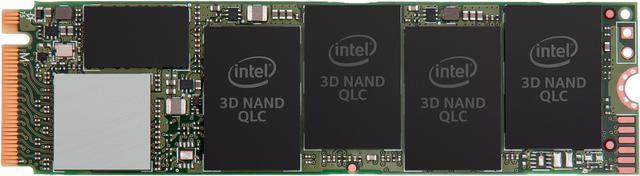
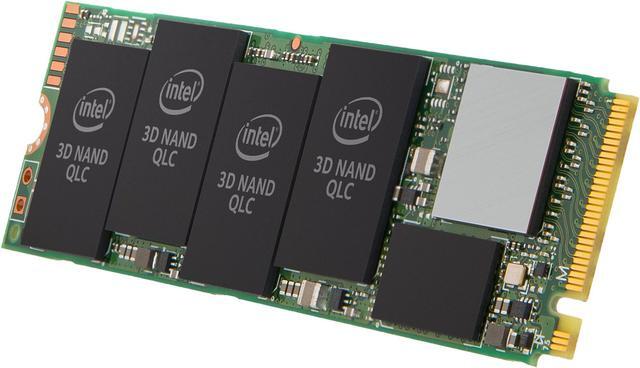
Combining PCIe standard with Intel QLC 3D NAND technology, the Intel 660p Series SSD delivers blazing data transfer speed and enables the possibility of high capacity. Its ultra-compact M.2 form factor makes it a perfect choice to boost the performance of any slim modern laptops. Together with affordability, it is a great SDD upgrade.

Empowered by Intel’s innovative Intel QLC Technology, the Intel SSD 660p offers higher capacities at a lower cost than TLC-based options1. With PCIe, the new SSD 660p skips SATA and its limitations to provide up to 2TB in one drive.

These client SSDs pack more data than TLC-based storage, allowing up to 2x more capacity in identical footprints. The thin M.2 80mm form factor makes it perfect for notebooks, desktops, and mobile devices that need storage for everyday computing.

The SSD 660p hits the marks that matter for client SSDs. This drive is tuned to deliver a capacity optimized NVMe performance and deliver an intelligent storage option for mainstream and entry-level computing.
| Model Name | Intel Solid State Drive 660p Series |
|---|---|
| Capacity (GB) | 2TB |
| Sequential Read | Up to 1,800MB/s |
| Sequential Write | Up to 1,800MB/s |
| Random Read (8GB Span) | Up to 220,000 IOPS |
| Random Write(8GB Span) | Up to 220,000 IOPS |
| Interface | PCIe NVMe 3.0 x4 |
| Form Factor & Height | M.2 2280 @ 80mm |
| Weight | <10 grams |
| Power Consumption | Active: 0.1W, Idle: 0.040W |
| Operating Temperature | 0 °C to 70 °C |
1. Intel SSD 660p 512GB vs Intel SSD 545s 512GB ($109.99)
2. 2x more capacity in identical footprints based on specification comparisons between the Intel SSD 660p Series (up to 2TB) and Intel SSD 600p Series (up to 1TB).
The Intel 660p Series SSDPEKNW020T8X1 is a 2TB M.2 2280 NVMe SSD with PCIe 3.0 x4 and sequential read and write speeds up to 1,800 MB/s, suited to everyday computing upgrades in compatible laptops and desktops.
| Attribute | Value |
|---|---|
| Best For | Consumer laptops and desktops used for everyday computing |
| Capacity And Memory | 2TB M.2 SSD with 3D2 QLC memory |
| Interface And Form Factor | M.2 2280 form factor with PCIe NVMe 3.0 x4 interface |
| Read And Write Performance | Sequential read and write speeds up to 1800 MB/s; random read and write rates up to 220,000 IOPS |
| Endurance And Reliability | 400TB total bytes written (TBW) and 1,600,000-hour MTBF |
| Power And Operating Conditions | 40 mW idle and 100 mW active power consumption; operates from 0°C to +70°C at 5–95% humidity; storage temperature range −55°C to +95°C |
| Shock And Vibration Resistance | Shock resistance: 1000G operating and 1500G non-operating, at 0.5 ms; vibration resistance: 2.17 GRMS operating (5–700 Hz) and 3.13 GRMS non-operating (5–800 Hz) |
| Dimensions And Weight | 80 × 22 × 2.38 mm; weighs less than 10 g |
| Model Identifiers | Intel 660p Series; model SSDPEKNW020T8X1 |
Q: Intel 660p 2TB or Crucial P1 2TB: which should I choose?
A: Both are budget PCIe 3.0 NVMe drives using QLC NAND, so compare their current prices and warranty terms rather than assuming one is always faster. Choose the 660p if it costs less for the same capacity or if your workload is mostly everyday computing and reads; AnandTech’s testing found the 660p retained strong performance in some sustained random-write tests. For frequent large writes, consider a TLC drive instead, because both models can slow when their write caches are exhausted.
Q: Should I get the Intel 660p or Samsung 970 EVO Plus for large file transfers?
A: Choose the Samsung 970 EVO Plus if you regularly move large files or want higher rated sequential speeds and write endurance: its 2TB specification lists up to 3,500 MB/s read, 3,300 MB/s write, and 1,200 TBW, compared with the 660p’s 1,800 MB/s read/write and 400 TBW. The 660p is the more fitting choice when 2TB capacity and everyday use matter more than sustained transfer performance, especially if it is less expensive.
Q: Is the Intel 660p 2TB worth choosing over the newer Intel 665p?
A: Choose the 665p if the prices are close and you want the newer generation’s improved rated performance and endurance: Intel’s product brief lists up to 600 TBW for its 2TB model, versus 400 TBW for the 660p. The 660p can make sense if it is meaningfully cheaper and your use is mainly everyday computing, game storage, or reads rather than frequent large writes.
Q: Intel 660p NVMe or a SATA SSD like the Crucial MX500?
A: Choose the 660p if your computer supports an M.2 2280 PCIe NVMe drive and you want 2TB in that slot with higher peak sequential speeds than SATA can provide. Choose a SATA SSD such as the MX500 if your system needs SATA storage or you do not need NVMe’s higher peak throughput. For repeated, very large writes, compare sustained-write testing rather than advertised peak speeds: the 660p can slow after its SLC write cache fills.
Q: Will this SSD work in any M.2 slot?
A: No. It requires an M.2 2280 slot that supports PCIe NVMe; an M.2 SATA-only slot is not sufficient. Check the computer or motherboard specifications before buying.
Q: Can I use this in a laptop or a desktop?
A: Either, if the system has an M.2 2280 slot that supports PCIe NVMe. The product’s form factor and interface—not whether the computer is a laptop or desktop—determine compatibility.
Q: Is the 2TB version single-sided or double-sided?
A: It is a single-sided M.2 2280 NVMe card, according to the product’s retail Q&A. Check your device’s clearance requirements before installing it.
Q: Is this a good fit for everyday use or frequent large file writes?
A: It is positioned for everyday computing and provides 2TB of storage, with sequential read and write speeds listed up to 1,800 MB/s. Those are maximum figures, not a stated sustained-write rate, so they do not establish how it will perform during repeated, very large transfers.
Q: Is the Intel 660p 2TB suitable for gaming and everyday use?
A: It can suit gaming, general computing, and bulk storage when the computer supports an M.2 2280 PCIe NVMe drive. Reddit discussions describe it as adequate for typical gaming and consumer workloads, while noting that it is not designed for consistently heavy writes.
Q: Will the 660p slow down during large file transfers or when it is nearly full?
A: It can. Reddit discussions about the 660p describe reduced write performance after its SLC cache is exhausted, with less cache available as the drive fills. The listed 1,800 MB/s sequential-write figure is an up-to maximum, not a guarantee for long, uninterrupted writes.
Q: Is the 660p a good choice for frequent large writes, such as video editing or recording?
A: It is a less suitable choice for workloads that regularly write large amounts of data. Its QLC design can slow after the cache is exhausted, and this 2TB model is rated for 400 TBW. Reddit discussions distinguish occasional transfers from frequent, sustained large-file work.
Q: Will this NVMe drive work in any M.2 slot?
A: No. The 660p uses PCIe NVMe, so the computer’s M.2 slot must support NVMe; a slot that supports only M.2 SATA is not compatible. Check the computer or motherboard specifications before buying.