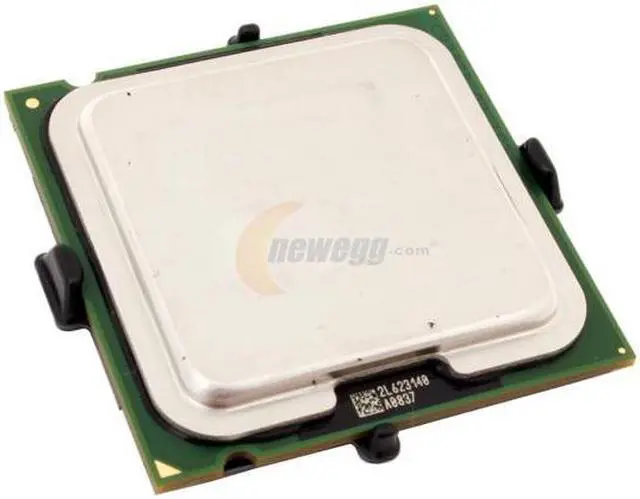
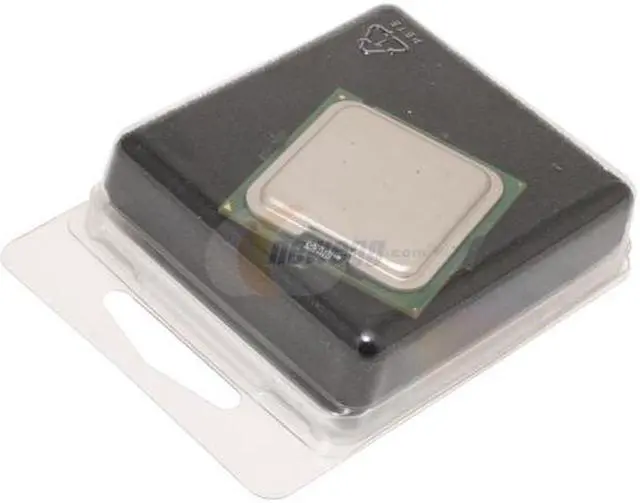
The Intel Celeron D processor delivers a balanced level of proven technology and exceptional value of desktop PCs. The Celeron D 355 processor is no exception and features a 3.33GHz clock speed, 533MHz FSB, and 256KB L2 cache. The Intel Celeron D processor is a competitive budget solution for home, office and class room computing.
With the Intel Celeron D 355 processor, popular tasks like surfing the Internet, using educational programs, working with home-office applications and listening to music are easily juggled. Other advanced features, including Intel Execute Disable Bit and EM64T support are presented for enhanced system security and enabled 64-bit computing.
The Celeron D is an excellent step in Intel's evolution!
The Intel Celeron D processor delivers a balanced level of proven technology and exceptional value of desktop PCs. The Celeron D 355 processor is no exception and features a 3.33GHz clock speed, 533MHz FSB, and 256KB L2 cache. The Intel Celeron D processor is a competitive budget solution for home, office and class room computing.
With the Intel Celeron D 355 processor, popular tasks like surfing the Internet, using educational programs, working with home-office applications and listening to music are easily juggled. Other advanced features, including Intel Execute Disable Bit and EM64T support are presented for enhanced system security and enabled 64-bit computing.
The Celeron D is an excellent step in Intel's evolution!
 Scalability and Performance with Intel EM64TIntel Extended Memory 64 Technology (Intel EM64T) can improve performance by allowing the system to address more than 4 GB of both virtual and physical memory. Intel EM64T also provides support for 64 bit computing to help handle the applications of tomorrow.
 Execute Disable Bit (EDB)Intel's Execute Disable Bit function can prevent certain classes of malicious "buffer overflow" attacks when combined with a supporting operating system. Execute Disable Bit allows the processor to classify areas in memory where application code can execute and where it cannot. When a malicious worm attempts to insert code in the buffer, the processor disables code execution, preventing damage or worm propagation.







 Scalability and Performance with Intel EM64TIntel Extended Memory 64 Technology (Intel EM64T) can improve performance by allowing the system to address more than 4 GB of both virtual and physical memory. Intel EM64T also provides support for 64 bit computing to help handle the applications of tomorrow.
 Execute Disable Bit (EDB)Intel's Execute Disable Bit function can prevent certain classes of malicious "buffer overflow" attacks when combined with a supporting operating system. Execute Disable Bit allows the processor to classify areas in memory where application code can execute and where it cannot. When a malicious worm attempts to insert code in the buffer, the processor disables code execution, preventing damage or worm propagation.