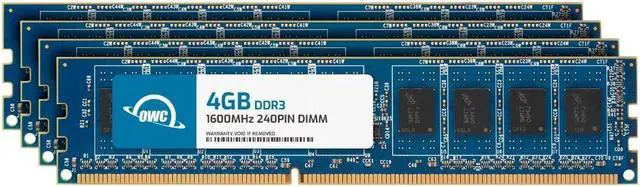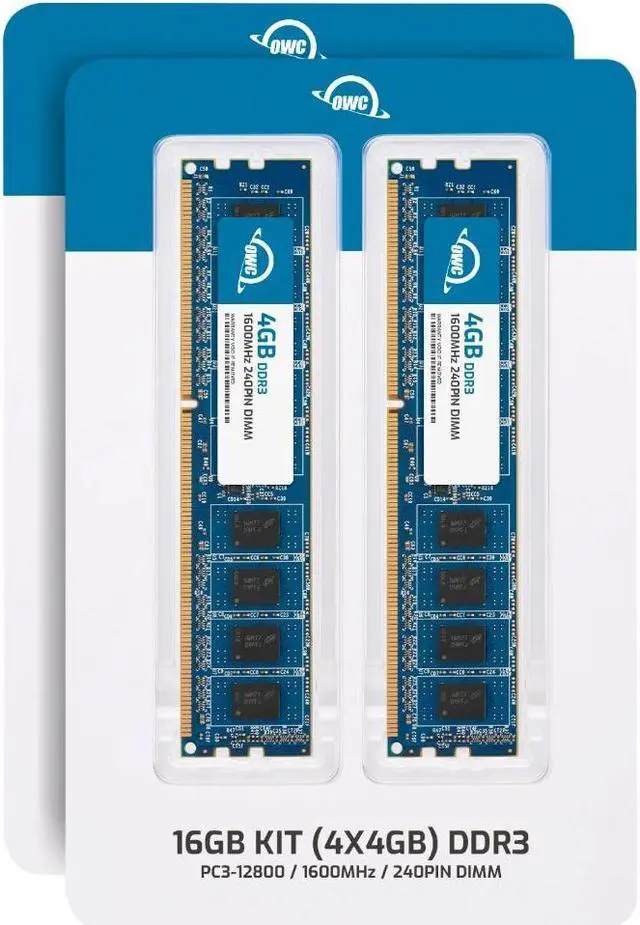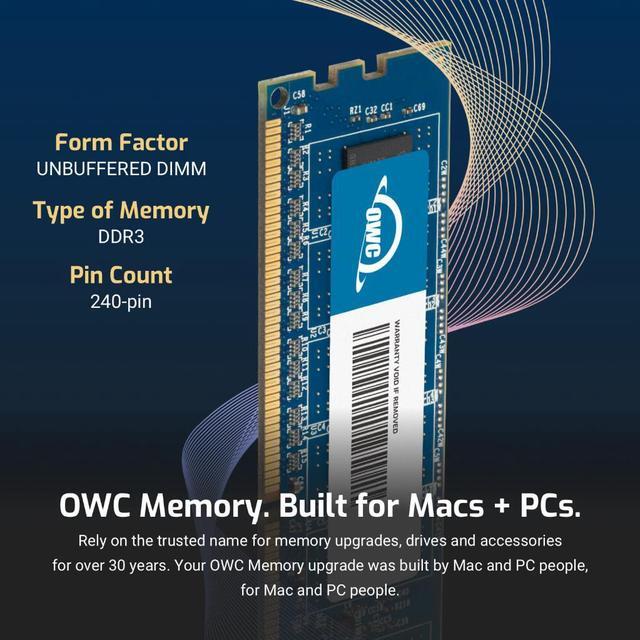


The OWC 16GB DDR3-1600 desktop memory kit includes four 4GB, 240-pin unbuffered, non-ECC DIMMs rated at 1.5V and CL11, making it suitable for upgrading compatible desktop PCs that use DDR3 memory.
Recommended For
- Owners of a compatible DDR3 desktop that runs short on memory during everyday multitasking, such as working across office apps and browser tabs, and whose system supports 16GB of non-ECC, unbuffered memory.
- People maintaining an older desktop with four compatible DIMM slots who want a matched 4×4GB kit to bring the system to 16GB, subject to the motherboard’s memory limits.
- Refurbishers or repairers replacing memory in a supported legacy desktop that specifically takes 240-pin DDR3-1600 UDIMMs and does not require ECC or registered memory.
Real-World Use Scenarios
- On a compatible older desktop that is short on memory, upgrading to 16GB can make it easier to keep browser tabs, email, and office apps open together, with fewer slowdowns caused by memory pressure. Check the motherboard’s supported memory type and capacity before installing.
- For everyday work on a DDR3 desktop, such as switching between documents, spreadsheets, and many browser tabs, 16GB can leave more room for those apps to remain open at once; it won’t necessarily speed up tasks limited by the processor or storage.
- When editing photos on an older desktop, the additional memory can help keep larger images and editing software available alongside other open apps, especially if the system previously ran short of RAM; it does not replace the need for a capable CPU or graphics hardware.
- For casual gaming on a compatible DDR3 PC, moving to 16GB may help when the game and background apps were competing for limited memory, but it should not be expected to increase frame rates consistently when the graphics card or processor is the limiting factor.