here!
I’m your shopping assistant for PC builds, upgrades, and everything tech.
Got questions? Ask away!
Start a conversation
here!
I’m your shopping assistant for PC builds, upgrades, and everything tech.
Got questions? Ask away!
Start a conversation Top Rated



Make informed decisions with expert advice. Learn More




Any questions? Ask CelesteSM will help you find out quickly.
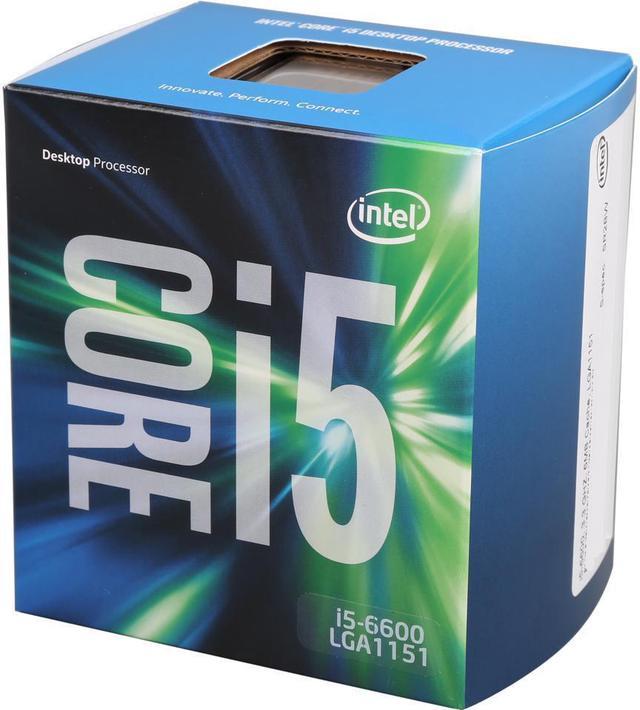
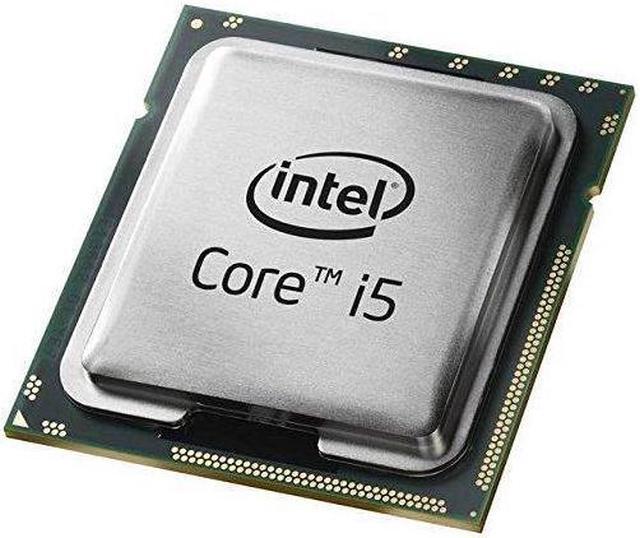
The Intel Core i5-6600 is a 6th Gen Skylake desktop processor with four cores, a 3.3 GHz base speed, Intel Turbo Boost, and Intel HD Graphics 530. It suits compatible LGA 1151 desktops for everyday productivity, home computing, and general-purpose use.
| Attribute | Value |
|---|---|
| Best For | Desktop computer builds using a desktop processor |
| Processor Type | Desktop processor |
Q: Should I buy the Intel Core i5-6600 or the cheaper Core i5-6500?
A: Choose the Core i5-6600 when the price difference is small and you want slightly higher CPU performance. Both processors have 4 cores, 4 threads, a 65W TDP, LGA 1151 support, and Intel HD Graphics 530; the i5-6600 raises the base clock from 3.2 GHz to 3.3 GHz and maximum Turbo frequency from 3.6 GHz to 3.9 GHz. Choose the i5-6500 when it is meaningfully less expensive, because the real-world performance difference is modest.
Q: Is the Core i5-6600 or Core i7-6700 better for multitasking and content creation?
A: The Core i7-6700 is the better choice for multitasking, rendering, and other workloads that use multiple threads because it has 4 cores and 8 threads, compared with the i5-6600's 4 cores and 4 threads. The i5-6600 is the more practical option for basic desktop use and lighter gaming when it costs substantially less or when the system does not need extra threaded performance.
Q: Should I choose the Core i5-6600 or the Ryzen 5 1600 for a budget PC?
A: Choose the Ryzen 5 1600 for heavily threaded workloads and longer-term multitasking because it has 6 cores and 12 threads. Choose the Core i5-6600 when reusing an LGA 1151 motherboard and DDR4 or DDR3L memory, or when integrated graphics are important; the i5-6600 includes Intel HD Graphics 530, while the Ryzen 5 1600 requires a separate graphics card. The Ryzen platform is generally the stronger fit for productivity, while the i5-6600 can be simpler for an existing compatible Intel system.
Q: Is the Core i5-6600 or Core i5-6600K better for a gaming upgrade?
A: Choose the Core i5-6600K if you have a compatible Z-series motherboard, adequate cooling, and intend to overclock. It has a higher 3.5 GHz base clock, a 3.9 GHz maximum Turbo frequency, and an unlocked multiplier. Choose the standard i5-6600 for a simpler, lower-power configuration with a 65W TDP and no overclocking requirement.
Q: Is the Core i5-6600 still a sensible upgrade for an older PC?
A: The Core i5-6600 is most sensible as a low-cost replacement or platform-preserving upgrade when you already have an LGA 1151 motherboard that supports 6th-generation processors. It is less suitable as the foundation for a new performance-focused PC because Intel lists it as discontinued, it has only 4 cores and 4 threads, and community upgrade discussions commonly recommend moving to a newer platform when a motherboard and memory replacement is already required.
Q: What motherboard and memory are compatible with the Intel Core i5-6600?
A: The Intel Core i5-6600 requires an LGA 1151 motherboard with an Intel 100 Series chipset. It supports either DDR4 or DDR3L memory, but the motherboard determines which memory type can be installed. It is not compatible with every LGA 1151 motherboard, especially boards designed for later processor generations.
Q: Is the Intel Core i5-6600 suitable for everyday office and productivity work?
A: Yes. As a desktop quad-core processor with a 3.3 GHz base frequency and Intel Turbo Boost, it is suitable for office applications, web browsing, video meetings, document work, and general multitasking when paired with adequate RAM and storage. It is intended for desktop systems rather than laptops or travel devices.
Q: Can the Intel Core i5-6600 run a computer without a separate graphics card?
A: Yes. The processor includes Intel HD Graphics 530, so a compatible motherboard with video outputs can run a display without a separate graphics card. Its integrated graphics are best suited to office work, media playback, and basic visual workloads; demanding modern gaming and GPU-intensive applications generally require a dedicated graphics card.
Q: Can the Intel Core i5-6600 support a 4K display?
A: The processor supports display resolutions up to 4096 x 2304 through its Intel HD Graphics 530. Actual 4K support also depends on the motherboard’s display outputs, connection standard, BIOS configuration, and operating system. This resolution capability should not be interpreted as high-end 4K gaming performance.
Q: Is the Intel Core i5-6600 a good choice for upgrading an older desktop?
A: It can be a practical upgrade when the existing system uses a compatible Intel 100 Series LGA 1151 motherboard and supports the required DDR4 or DDR3L memory. It is less suitable for a new platform build because it is a 6th-generation desktop processor with an older socket and chipset ecosystem. Verify the motherboard CPU-support list and BIOS requirements before purchasing.
Q: Is the Intel Core i5-6600 worth buying today?
A: It can be reasonable as a low-cost replacement for an existing compatible LGA 1151 system. It is less suitable as the basis for a new build because it is an older quad-core processor, and community discussions report limitations in newer CPU-heavy games and demanding multitasking.
Q: Is the i5-6600 suitable for gaming?
A: It remains suitable for older and less CPU-intensive games, especially with a midrange graphics card. YouTube testing shows the processor paired with a GTX 1650 Super in 1080p games, but Reddit discussions report stuttering or frame-time dips in newer CPU-intensive titles and high-refresh-rate gaming.
Q: Should I upgrade from an i5-6600 or keep it for another build?
A: Keep it if your current games and applications run acceptably and the system is limited by the graphics card. Upgrade when the processor is reaching full usage, causing stutters, or preventing a high-refresh-rate target. Community discussions generally favor moving to a newer platform rather than paying a high price for an older i7 upgrade.
Q: Is the i5-6600 good for work and multitasking?
A: It is adequate for general desktop work, browsing, and moderate application use, but its four-core design can become limiting when many demanding programs or work files are open simultaneously. It is not the best choice for sustained rendering, compiling, streaming, or other heavily threaded workloads.
Q: What motherboard and memory are compatible with the i5-6600?
A: The processor uses the LGA 1151 socket and is designed for Intel 100-series chipset motherboards. It supports DDR4 or DDR3L memory, but the motherboard must support the specific memory type and processor. Compatibility should be checked before purchase because not every LGA 1151 board is interchangeable.