• $7,999.00
  • Free 30-day Returns
  • Sold by Adorama
    Top Rated
    4.5 (5,784 seller ratings)

    Shipped by Adorama

    Price alert
    Shop it at NeweggBusiness.

    Meet Your Seller

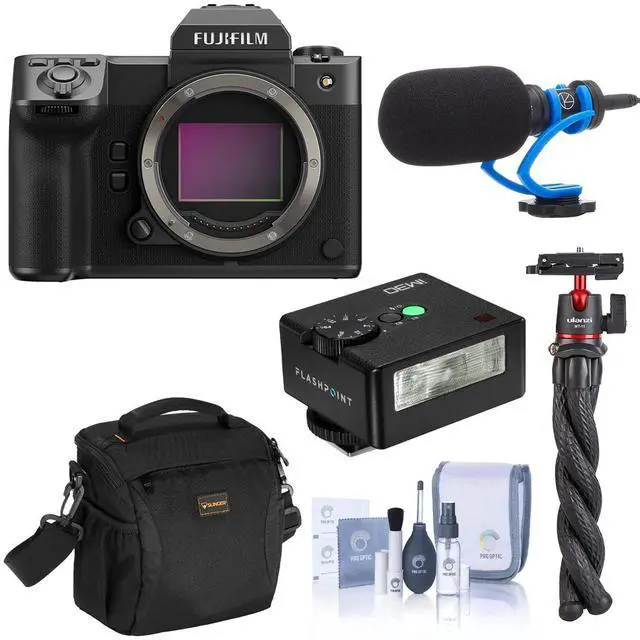
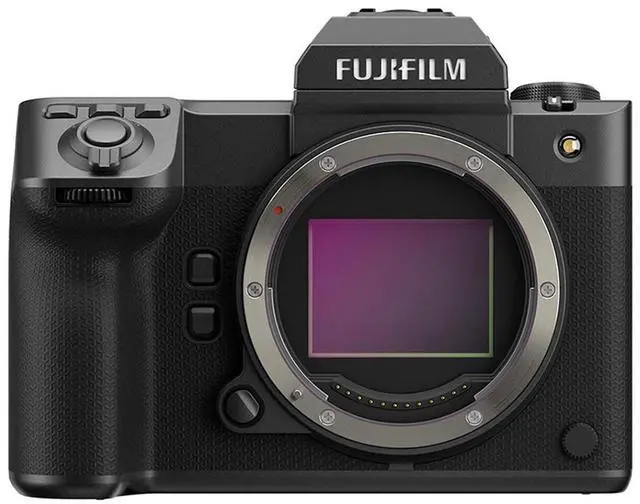
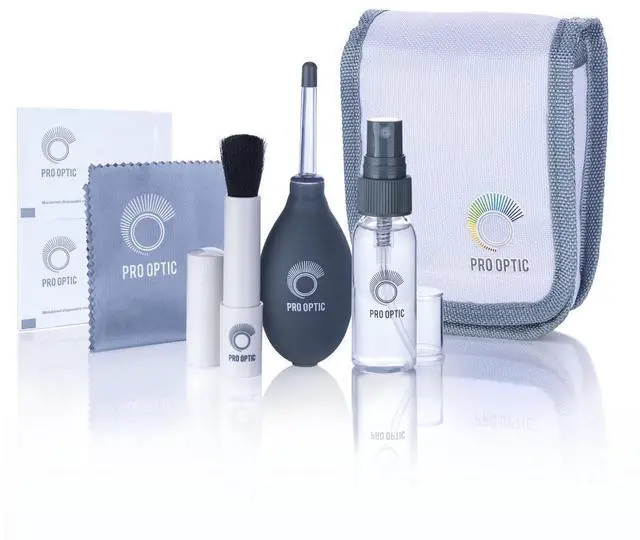
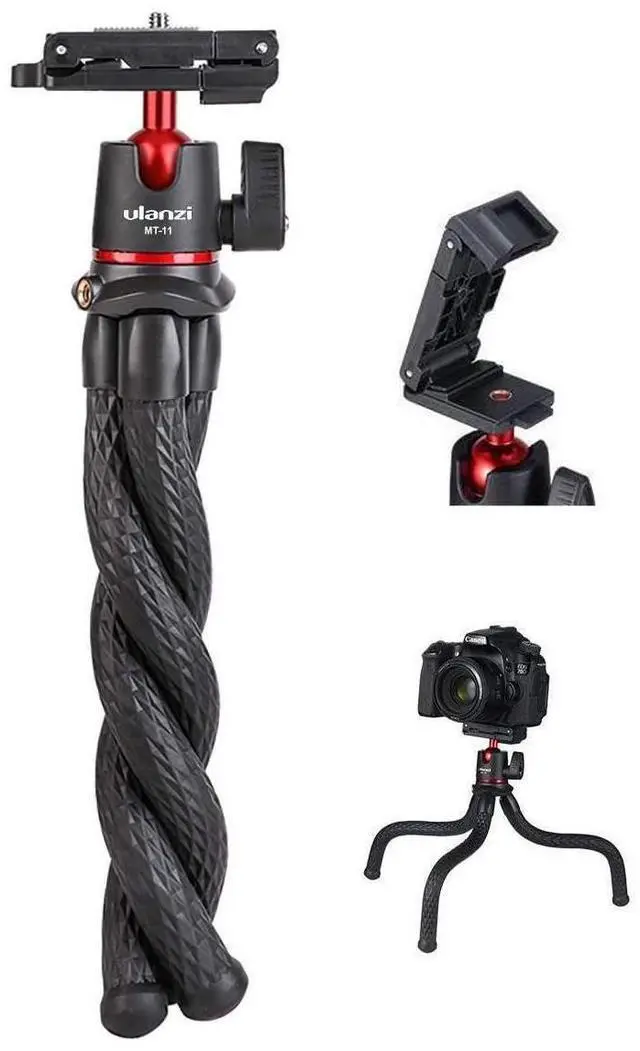
    Fujifilm GFX 100 II Medium Format Mirrorless Camera, with Content Creator Kit

    • New GFX 102 MP CMOS II HS Imaging Sensor and X-Processor 5
    • 8fps continuous mechanical shutter, innovative AI Autofocus algorithm, up to 8 Stops of In-Body Image Stabilization (IBIS)
    • Internally Record 4K/ 60p at full sensor width in 4:2:2, 10-Bit Apple ProRes and jam sync timecode with ATOMOS AirGlu BT
    • World First: Natively enabled for Frame.io Camera-to-Cloud integration with no accessory requirements
    • Multiple Cinema Formats: Fujinon PREMISTA, 35mm, and 35mm Anamorphic
    +
    +
    Overview
    Reviews
    See all Q & A

    Any questions? Ask CelesteSM will help you find out quickly.

    A powerhouse with advanced video features never before available in a GFX System or X Series camera. This medium format camera is equipped with a new 102MP CMOS II HS Imaging Sensor and X-Processor 5 for improved image quality for both photo and video over its predecessor. It can internally record 4K up to 60p at full sensor width in 4:2:2, capable of outputting 10-Bit Apple ProRes RAW. For cinematographers, the GFX100 II offers Vista Vision, 35mm FF, and 35mm FF Anamorphic formats for various crops and aspect ratios.

    Native integration of Frame.io Camera to Cloud technology will streamline video workflows with easy, immediate uploads. With eight stops of in-body image stabilization, 8fps continuous mechanical shutter and an improved AI Autofocus algorithm, the Fujifilm GFX100 II Mirrorless Camera is an exceptional tool for both photographers and videographers.

    High Speed Performance

    Subject Detection AF
    X-Processor 5 features subject detection AF, which delivers an autofocus performance previously unseen on a large format camera. Built using deep-learning AI technology, its advanced AF tracking and detection not only works on human faces and eyes, but also animals, birds, cars, motorcycles, bicycles, airplanes, and trains. With such power on tap, photographers can concentrate on creativity, confident GFX100 II will produce an autofocus performance to match.

    Updated AF algorithm
    GFX100 II uses an updated AF prediction algorithm to deliver reliable performance in sports and other situations where accurate, high-speed motion tracking is needed.

    120fps Display Frame Rate in Boost Mode
    Activating Boost mode on GFX100 II supercharges the display frame rate to approximately 120 frames-per-second - more than enough to keep up with fast-moving subjects.

    The Ultimate in Image Quality

    ISO 80 Standard Sensitivity
    By improving the pixel structure on the new sensor, standard sensitivity has been extended to ISO 80. Now, photographers can make 16-bit images with wider dynamic range and lower noise than ever before.

    HEIF Image Format Support
    GFX100 II supports the HEIF format, a 10-bit image file with over a billion colors. It delivers higher image quality, but uses up to 30% less space than a JPEG.

    Pixel Shift Multi-Shot
    For the ultimate quality, GFX100 II can produce an ultra-high-resolution 400-megapixel image with a single press of the shutter release.

    Using in-body image stabilization to precisely shift the sensor by a half pixel between each frame, GFX100 II makes 20 frames in which every red, green, and blue pixel has the same information. The result is a detail-rich file with almost no false colors visible.

    Power and Precision for Video

    4K/60p, 8K/30p, FHD/120p: 4:2:2 10-bit Internal Recording
    Proving itself as a hybrid powerhouse, GFX100 II offers 4K/60p and 8K/30p 4:2:2 10-bit in-camera recording. ISO 100 can also now be used as the standard movie sensitivity for the highest quality footage.

    High speed rolling shutter
    Follow high speed subjects with confidence - GFX100 II's increased readout rate suppresses rolling shutter for true-to-life results.

    Improved Subject Tracking
    Tracking subjects just got easier. Select AF-C mode with Wide/Tracking AF, then simply touch the subject on the rear LCD. GFX100 II will then track the object, even in situations with multiple subjects.

    Compatible with Frame.io Camera to Cloud
    Embrace cloud first workflows and open lines of collaboration with GFX100 II's World First, no accessary needed integration for Frame.io Camera to Cloud and deliver photos or video straight to the cloud the moment after they are created.

    New MF assist Focus MAP

    Warranty & Returns

    Warranty, Returns, And Additional Information

    Warranty

    • Please contact the Seller directly for warranty information. Warranty information may also be found on the Manufacturer's website.
    • Read full details
    • CONTACT

    Return Policies

    • Return for refund within: 30 days
    • Return for replacement within: non-replaceable
    • This item is covered by Adorama Return Policy

    Manufacturer Contact Info

    LOADING...

    The Fujifilm GFX 100 II is a 102MP medium-format mirrorless camera with a 4:2:2 10-bit 4K/60p video workflow, suited to professional photographers and filmmakers who want high-resolution stills and advanced video in one camera.

    Recommended For

    • Commercial, product, and landscape photographers who make large prints, crop heavily, or need high-resolution files for detailed retouching.
    • Portrait and fashion photographers who work at a deliberate pace and want medium-format rendering, detailed files, and subject-detection autofocus for people and animals.
    • Cinematographers and production teams who want large-sensor footage, internal 10-bit recording, multiple lens-format options, and camera-to-cloud workflows in a stills-capable body.
    • Professional hybrid photographers who prioritize high-detail stills but also need serious video features, stabilization, and direct delivery options for collaborative shoots.

    Real-World Use Scenarios

    • For studio or editorial portraits, a photographer can let eye detection track a model who shifts pose while concentrating on framing; reviewers found it useful for keeping attention on directing the session, though it is not a guarantee against missed focus.
    • For landscape or architecture work, photographers can capture detailed scenes and retain room to crop or prepare large prints; reviewers identify these as natural uses for the GFX system’s high-resolution files.
    • For commercial still-life or brand shoots, the camera can capture fine product detail for close inspection and retouching; its high-resolution files are most useful when the job values image detail over a lightweight setup.
    • For short films, interviews, or fashion videos with planned shots, a crew can record high-quality footage in-camera and work with cinema-oriented framing options; controlled focus is a sensible choice because reviewers report that video autofocus can hunt in some situations.
    • For a production team sharing footage with remote editors or clients, the camera’s built-in Frame.io Camera to Cloud support can make it easier to send media for review without adding a separate camera-to-cloud accessory.

    Spec Summary

    AttributeValue
    Best ForPhotographers and content creators seeking a medium-format mirrorless camera, with listed compatibility for 120-format film
    Camera Format And FeaturesMedium-format camera with auto exposure
    PowerOne lithium-ion cell is listed. Battery information is inconsistent: a rechargeable battery is marked as included and packed with the equipment, but batteries are also marked as not included
    Physical DesignMatte black; 6.78 lb; 9.4 × 7.7 × 5.5 in
    Model IdentifiersFujifilm GFX 100 II

    Reference Q&A

    Q: Should I get the Fujifilm GFX100 II or GFX100S II for video and burst shooting?

    A: Choose the GFX100 II when your workflow benefits from 4K/60p or 8K/30p internal recording, bursts up to 8 fps, and CFexpress Type B support. The GFX100S II is a lighter 102MP option with up to 7 fps and 4K/30p, while both models offer AI subject detection and up to 8 stops of IBIS.

    Q: Is the GFX100 II a worthwhile upgrade from the original GFX100?

    A: The GFX100 II is a strong upgrade choice for photographers and filmmakers who want newer autofocus and faster sensor readout, plus 4K/60p and 8K/30p recording. It retains 102MP medium-format resolution and adds up to 8 stops of IBIS; Fujifilm rates the original GFX100 at up to 5.5 stops.

    Q: GFX100 II or GFX100S II—which is better for a lighter 102MP kit?

    A: The GFX100S II is Fujifilm’s lighter 102MP body at 883 g, making it the portability-focused choice. Choose the GFX100 II when you prioritize expanded video formats, up to 8 fps mechanical bursts, a higher-resolution electronic viewfinder, and CFexpress Type B support.

    Q: Is the GFX 100 II suitable for both high-resolution photography and video?

    A: Yes. Its 102-megapixel medium-format sensor is suited to detailed still images, and it can record 4K/60p video across the full sensor width in 4:2:2 10-bit Apple ProRes. Its video and production features make it suitable for creators who need both stills and video, though its high-resolution files and advanced recording options may call for capable storage and editing workflows.

    Q: What memory cards does the GFX 100 II use?

    A: It has one SD/SDHC/SDXC UHS-II slot and one CFexpress Type B slot. The two slots use different card formats, so check your existing cards and storage workflow before buying; using both slots is optional.

    Q: Does the GFX 100 II have autofocus for tracking subjects?

    A: Yes. It has autofocus with subject-detection algorithms, including eye autofocus, and can shoot continuously at up to 8 frames per second with its mechanical shutter. These features support tracking moving subjects, although the camera’s maximum burst rate is not as high as that of cameras designed primarily for fast action.

    Q: Is the GFX 100 II practical to carry for travel?

    A: It can be carried for travel, but it is a substantial camera rather than a compact point-and-shoot: B&H lists its weight at about 1.03 kg (2.27 lb) with battery, recording media, and viewfinder, before adding a lens. It is best suited to travelers who prioritize medium-format image quality and video features over a lightweight kit.

    Q: Is the GFX 100 II worth choosing over a less expensive GFX body?

    A: It is most compelling when you need its specific advantages, such as the higher-speed shooting, advanced video features, CFexpress workflow, or high-resolution viewfinder. A Reddit comparison discussion suggests that photographers focused mainly on still-image quality may prefer a less expensive GFX body and put the savings toward lenses. The product information does not include a price, so value depends on the price difference and which features you will use.

    Q: Is the GFX 100 II suitable for video work?

    A: It offers substantial video capability, including internal 4K/60p recording across the full sensor width in 10-bit 4:2:2, plus timecode and Camera-to-Cloud features listed in the product information. Community discussions also raise concerns about rolling shutter and comparisons with dedicated video cameras. It is worth considering for hybrid or planned video work, but assess motion and workflow requirements before relying on it for fast-moving, run-and-gun production.

    Q: Is the GFX 100 II a good choice for sports or other fast-moving subjects?

    A: It has an 8 fps mechanical burst rate and an AI autofocus algorithm, but community discussions still caution that autofocus, burst workflow, and rolling shutter can limit fast-action use. It is a better fit for deliberate or predictable action than for situations where consistently tracking rapid movement is the main requirement.

    Q: Is the GFX 100 II practical to take traveling?

    A: It can be used for travel photography, but the camera and lenses may make the kit heavy to carry. Reddit travel discussions describe weight as a meaningful trade-off in the GFX system. Consider the body-and-lens combination you plan to bring and whether portability matters more than the camera’s high-resolution imaging and features.