here!
I’m your shopping assistant for PC builds, upgrades, and everything tech.
Got questions? Ask away!
Start a conversation
here!
I’m your shopping assistant for PC builds, upgrades, and everything tech.
Got questions? Ask away!
Start a conversation





Any questions? Ask CelesteSM will help you find out quickly.


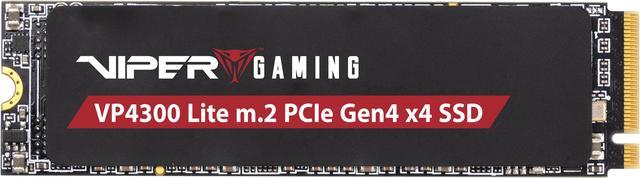
The VP4300 Lite offers lightning-fast speed and an unrivaled gaming experience with read speeds of up to 7,400MB/s.


The VP4300 Lite fully supports NVMe 2.0, ensuring compatibility and performance across all systems.

Our special edition ultra-thin graphene cooling heat spreader provides optimal cooling to run smoothly through intense gaming sessions.

With compatibility between PC and PS5, the VP4300 Lite offers strong performance built for both systems. When in use with the PS5, the VP4300 Lite offer robust sequential read speeds of up to 6,100MB/s.


With the VP4300 Lite offering capacities of up of 4TB, gamers will have plenty of space for all their games, files, and media whenever they need it.

Built with best-in-class materials, the VP4300 Lite also comes with a five-year warranty to ensure guaranteed protection and long-lasting performance.


The Patriot Viper VP4300 Lite is a 1TB M.2 2280 PCIe Gen4 x4 internal SSD with sequential speeds up to 7,400MB/s read and 6,400MB/s write, suited to gamers and PC users seeking fast storage or a PS5-compatible capacity upgrade.