




 here!
I’m your shopping assistant for PC builds, upgrades, and everything tech.
Got questions? Ask away!
Start a conversation
here!
I’m your shopping assistant for PC builds, upgrades, and everything tech.
Got questions? Ask away!
Start a conversation Hot Seller
 Top Rated Top Rated



Make informed decisions with expert advice. Learn More




Any questions? Ask CelesteSM will help you find out quickly.
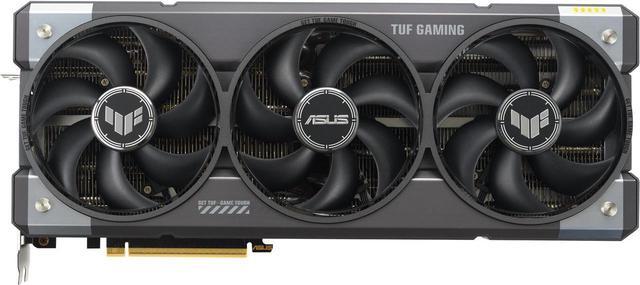
The ASUS TUF Gaming GeForce RTX 5070 OC 12GB is a triple-fan ATX graphics card built for gamers and creators who want strong 1440p performance, modern display connectivity, and NVIDIA Blackwell features in a full-size desktop PC.
| Attribute | Value |
|---|---|
| Best For | High-performance desktop gaming and VR on PCIe 5.0 systems; suited for multi-monitor and high-resolution displays up to 7680×4320 |
| Model Identifiers | ASUS TUF Gaming TUF-RTX5070-O12G-GAMING (Part No. 90YV0LZ0-M0AA00) |
| GPU And Architecture | NVIDIA GeForce RTX 5070 (GeForce RTX 50 Series) — Blackwell architecture, chipset manufacturer NVIDIA |
| Memory Configuration | 12GB GDDR7 on a 192-Bit memory bus with an effective memory speed of 28 Gbps |
| Clocks And CUDA Cores | Boost clocks — OC mode: 2640 MHz; Default mode: 2610 MHz; 6144 CUDA cores |
| Display Outputs & Multi-Monitor | 2× HDMI 2.1b and 3× DisplayPort 2.1b outputs, supports up to 4 simultaneous displays and max resolution 7680×4320 |
| Interface And Expansion | PCI Express 5.0 x16 interface (PCIe x16) |
| Power And Cooling | Single 16-pin power connector, recommended PSU 750W, cooled by a triple-fan design (3 fans) |
| Physical Dimensions And Weight | Card 12.95 × 5.51 × 2.46 inches (max GPU length 329 mm); slot width 3.125 Slot; item weight 3.4 lb |
| Compatibility And Form Factor | ATX form factor; designed for desktop systems; VR Ready |
| Software, APIs And Standards | Supports DirectX 12 Ultimate and OpenGL 4.6; HDCP ready; CrossFireX and SLI not supported |
| Package Contents And Extras | Includes Speedsetup manual, TUF graphics card holder, TUF Velcro hook & loop, TUF magnet, TUF Gaming certificate, thank-you card, and an adapter cable (1 to 2) |
Q: Should I buy the ASUS TUF RTX 5070 OC or an RTX 4070 Super for 1440p gaming?
A: Choose the ASUS TUF RTX 5070 OC if you want a newer NVIDIA platform with GDDR7 memory, DLSS 4 support, and a modest step up over RTX 4070 Super-class performance in current reviews. Choose an RTX 4070 Super instead if pricing is meaningfully lower and your goal is strong 1440p performance without paying extra for the newer generation. For most buyers, the RTX 5070 makes more sense when the price gap is small.
Q: Is the ASUS TUF RTX 5070 OC worth it over an RTX 5070 Ti?
A: Buy the ASUS TUF RTX 5070 OC if you want to stay closer to the midrange-high-end price band and your main target is high-refresh 1440p gaming with access to NVIDIA's latest features. Step up to an RTX 5070 Ti if you want a clearer performance increase for heavier 4K gaming, more headroom for ray tracing, and typically 16GB-class positioning in that tier. The RTX 5070 Ti is the performance-first option, while the RTX 5070 is the value-and-efficiency step below it.
Q: Is the ASUS TUF RTX 5070 OC a good upgrade from RTX 4070?
A: Yes, it is a sensible upgrade from an RTX 4070 if you want more 1440p headroom, newer generation features, and better support for newer NVIDIA upscaling and frame-generation workflows. It is a more practical upgrade for users moving into higher settings, higher refresh rates, or occasional 4K play. If your current RTX 4070 already meets your needs, the upgrade is easier to justify when you specifically want the newer feature set rather than just a small FPS gain.
Q: RTX 5070 or Radeon RX 9070: which is the better buy?
A: Choose the ASUS TUF RTX 5070 OC if you prefer NVIDIA features such as DLSS, stronger ray-tracing positioning in many comparisons, and broader NVIDIA ecosystem support for creators or AI-adjacent workloads. Choose the Radeon RX 9070 if your priority is rasterization value at the same class of pricing, because multiple reviews and community comparisons treat it as a strong price-to-performance alternative. The RTX 5070 is the better fit for buyers who specifically want NVIDIA's software stack; the RX 9070 is the better fit for buyers optimizing around traditional gaming value.
Q: Will this ASUS TUF RTX 5070 fit in most PC cases?
A: It fits many mid-tower builds, but it is not a compact card. This model is 329 mm long and about 3.1 slots thick, so buyers should check both GPU clearance and adjacent slot space before buying. It is a safer fit for roomy ATX cases than for compact or older prebuilts.
Q: Can I use this card with a 650W power supply?
A: Usually not the best choice. ASUS lists a 750W recommended PSU for this card, so a 650W supply may be borderline depending on the rest of the system. This card is better suited to builds with a quality 750W or higher PSU and the required 16-pin GPU power connection or included adapter support.
Q: Is this a good choice over a smaller or cheaper RTX 5070 model?
A: Choose this ASUS TUF model if you want a larger cooler, factory overclock, and a more full-size board design. Choose a smaller or cheaper RTX 5070 if case space, weight, or price matter more than cooler size and premium build features. The trade-off is simple: this card is more accommodating for airflow-heavy desktop builds, but less ideal for compact systems or strict budgets.
Q: Will this RTX 5070 work in a PCIe 4.0 motherboard?
A: Yes. Although the card uses a PCIe 5.0 x16 interface, it is generally the right choice for buyers upgrading an existing PCIe 4.0 desktop, as modern graphics cards are designed to work backward with older PCIe generations. You do not need a PCIe 5.0 motherboard to use it, but you still need enough case space and power capacity.
Q: Who is this card most suitable for?
A: This card is most suitable for desktop gamers and creators who want a current-generation RTX 5070 with a full-size cooler, 12GB of GDDR7 memory, and support for up to four displays. It is less suitable for small-form-factor builds, low-wattage systems, or buyers who only need a basic GPU upgrade.
Q: Is the ASUS TUF RTX 5070 OC a good buy for 1440p gaming?
A: Yes, it is a reasonable 1440p-focused choice if you want an NVIDIA card with a large triple-fan cooler, factory overclock, and current display support. Community discussion repeatedly treats the RTX 5070 as a solid 1440p class GPU, but not the strongest long-term option for buyers who want more VRAM headroom or a bigger jump over lower-priced alternatives.
Q: Who is the ASUS TUF RTX 5070 OC most suitable for?
A: It is best suited to desktop builders who want a full-size ATX graphics card for 1440p gaming, modern display connectivity, and a heavier cooler design. It fits buyers who already have a 750W-class PSU and enough case clearance for a 329 mm, 3.125-slot card. It is less suitable for compact builds or buyers trying to minimize size, power cable complexity, or total system cost.
Q: What are the main trade-offs of buying the ASUS TUF RTX 5070 OC instead of stepping up to a 5070 Ti or 16GB alternative?
A: The main trade-off is memory and tier positioning. This card gives you 12GB of GDDR7 on a 192-bit bus, which is enough for many current 1440p gaming workloads, but repeated community discussion questions its long-term headroom versus 16GB cards. Buyers choosing this model are usually trading lower cost for less VRAM margin and less performance than higher-tier options.
Q: Is the ASUS TUF RTX 5070 OC worth paying extra for over cheaper RTX 5070 models?
A: Usually only if you specifically want the TUF design, larger cooler, or ASUS build preference. Repeated buyer discussions around RTX 5070 cards focus more on price, warranty, noise, and thermals than on meaningful performance gaps between OC-branded models. Since this TUF version is still a GeForce RTX 5070 with a modest factory overclock, it makes the most sense when its price is close to other well-cooled 5070 cards.


