here!
I’m your shopping assistant for PC builds, upgrades, and everything tech.
Got questions? Ask away!
Start a conversation
here!
I’m your shopping assistant for PC builds, upgrades, and everything tech.
Got questions? Ask away!
Start a conversation



Any questions? Ask CelesteSM will help you find out quickly.

Low-ESR Japanese capacitors and other premium components help to achieve 80 PLUS Titanium and Cybenetics Titanium Certification

The fan impeller spins on a dual ball bearing setup that will last up to twice as long as a sleeve bearing design.

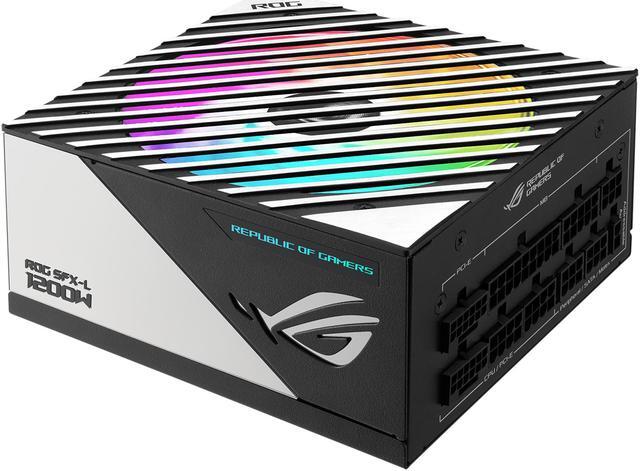
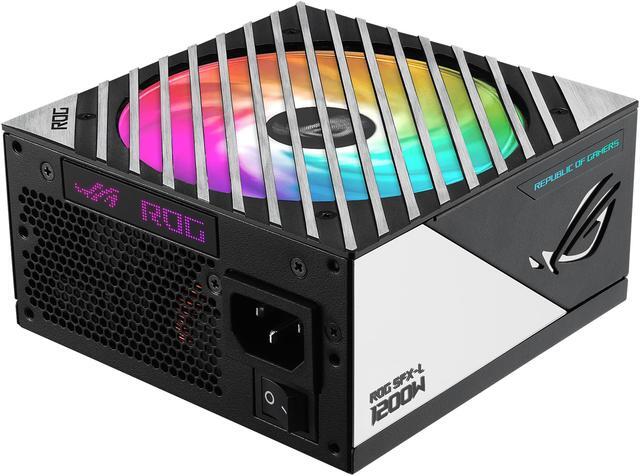
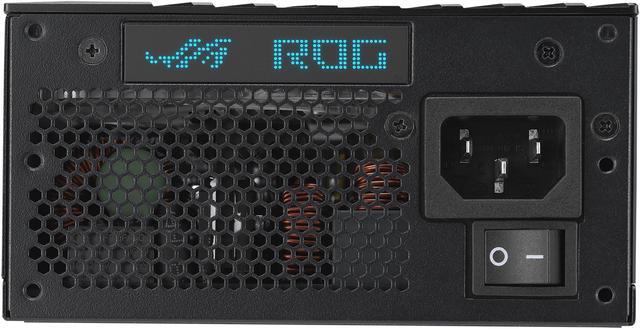
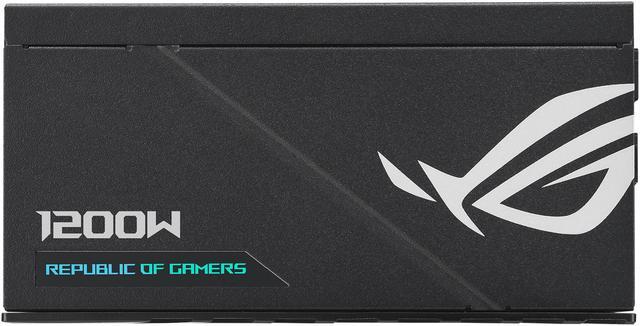
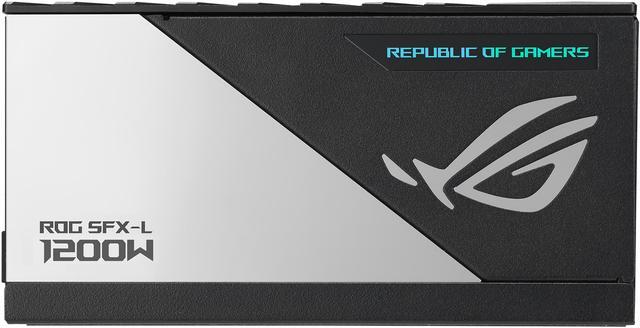
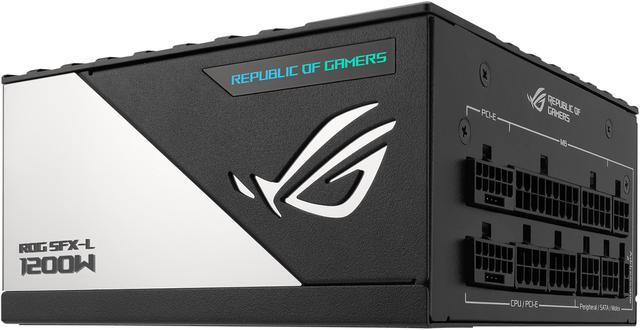
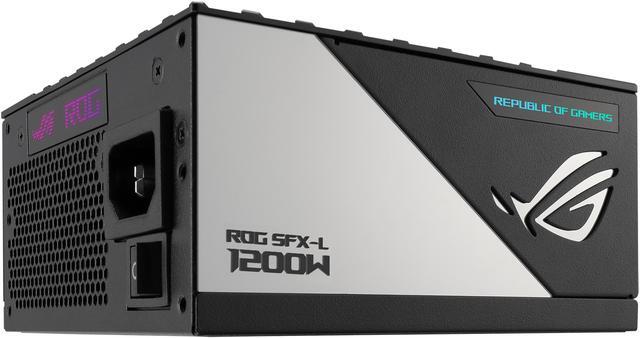
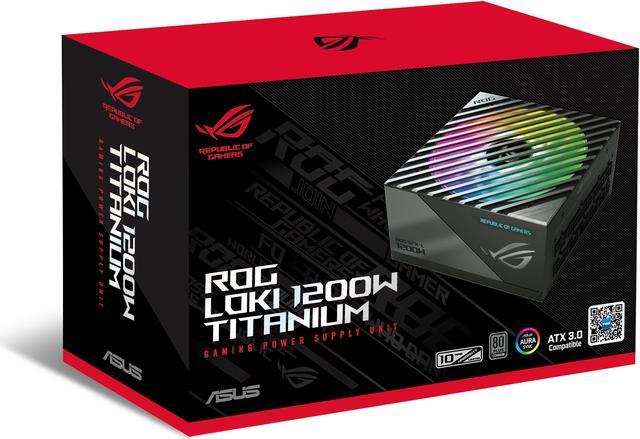
ROG Loki is a high-performance, SFX-L PSU for ITX motherboards and SFF builds.

ROG LOKI is compliant with ATX 3.1 guidelines and bundled with a 16-pin PCle cable that can pipe up to 600W of power to PCle Gen 5.1 graphics cards.

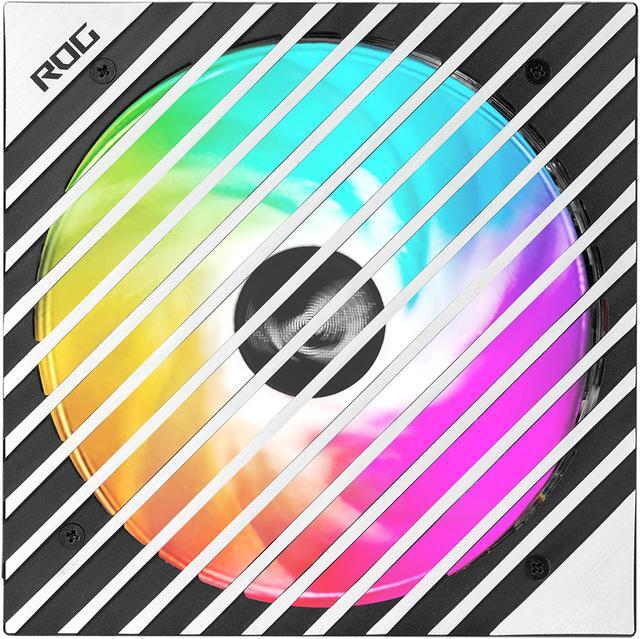
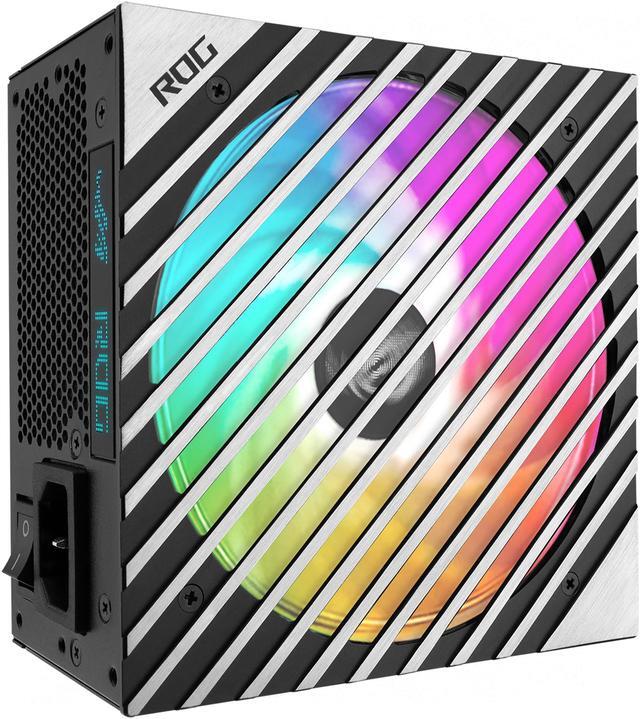
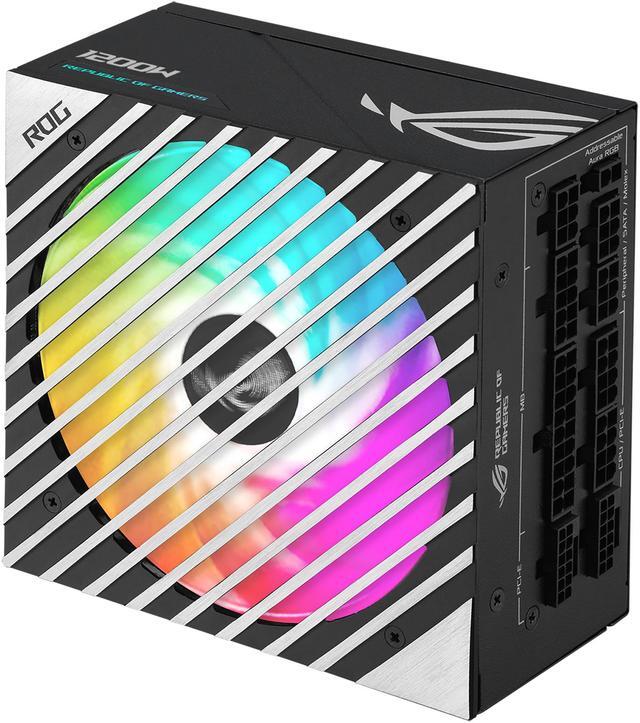
The Loki's 120 mm fan features eight addressable LEDs ready to be customized with Aura Sync to create coordinated lighting patterns across your build.

The ROG Loki SFX-L 1200W Titanium is backed with a 10-year* warranty.

* Core product operation is guaranteed for 10 years. The RGB LEDs are subject to a 3-year warranty.
The premium heatsink and dual ball fan bearing can reduce fan operation and keep the average noise level below 35 dB, making the PC build quiet.

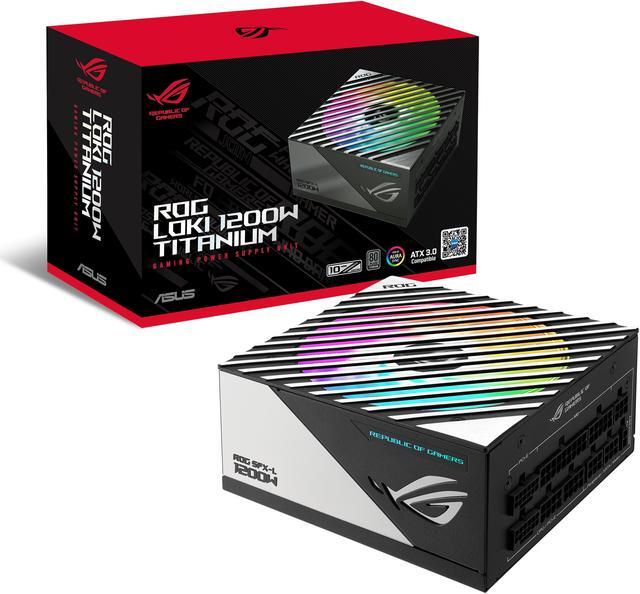
The ASUS ROG Loki SFX-L 1200W Titanium is a fully modular power supply for compact, high-performance gaming PCs and workstations that need substantial GPU power, with ATX 3.0 compatibility, PCIe 5.0-ready 16-pin cables, 80 PLUS Titanium efficiency, and a 125 mm SFX-L form factor.
| Attribute | Value |
|---|---|
| Best For | Compact high-power desktop builds that need a 1200W SFX-L fully modular power supply with ATX motherboard, CPU, PCIe graphics, and SATA drive connections |
| Power Capacity And Efficiency | 1200W power output with 80 PLUS Titanium certification, active PFC, and 100–240V input support |
| Form Factor And Construction | Black SFX-L design measuring 125 x 125 x 63.5 mm, with a maximum PSU length of 125 mm |
| Cooling And Noise | Air-cooled by one fan with Cybenetics Standard ++ noise certification |
| Protection And Reliability | OPP, OVP, UVP, SCP, OCP, and OTP protection with an MTBF exceeding 120,000 hours at 25°C |
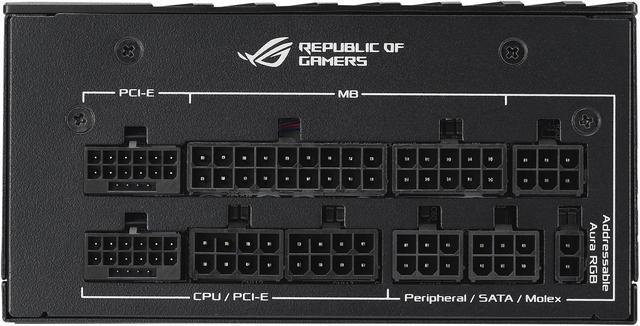
| Connectors And Cabling | Fully modular cabling includes a 24-pin ATX connection, two 4+4-pin EPS CPU connections, two 16-pin PCIe connections, four 6+2-pin PCIe connections, six SATA connections, and four peripheral connections |
| Package Contents | Includes a power cord, user manual, ATX-to-SFX adapter bracket, modular cables, and an addressable RGB cable |
| Model Identifiers | ASUS ROG-LOKI-1200T-SFX-L-GAMING, part number 90YE00N0-BTAA00 |
Q: ASUS ROG Loki 1200W vs Corsair SF1000: which should I buy for a high-end small-form-factor PC?
A: Choose the ASUS ROG Loki 1200W when the system uses a high-power CPU and GPU, needs additional power headroom, or benefits from two native 16-pin PCIe connections, 80 PLUS Titanium efficiency, and Aura Sync lighting. Choose the Corsair SF1000 when the smaller SFX form factor, simpler cable management, lower capacity, and 7-year warranty are more important. Both support modern ATX 3.x power requirements and include a native 16-pin GPU cable.
Q: Should I buy the ROG Loki 1200W or the ROG Loki 1000W?
A: Buy the ROG Loki 1000W if the estimated system load remains comfortably below 1000W and the build does not require two native 16-pin PCIe connections. Buy the Loki 1200W for more headroom with flagship GPUs, power-intensive CPUs, future upgrades, or sustained heavy workloads. Both models use the same 125 x 125 x 63.5 mm SFX-L chassis, while the 1200W model adds 200W of capacity, Titanium efficiency instead of Platinum, and two 16-pin PCIe connectors instead of one.
Q: ASUS ROG Loki 1200W vs SilverStone Extreme 1200R: which SFX-L PSU is the better fit?
A: Choose the ASUS ROG Loki 1200W when efficiency certification, dual native 16-pin PCIe connectivity, RGB integration, and a 10-year product warranty are priorities. Choose the SilverStone Extreme 1200R when its cable layout, compact high-power design, or availability better matches the build. Both provide 1200W in an SFX-L format and support ATX 3.1-class GPU power delivery; professional testing found the SilverStone effective under heavy loads but increasingly audible at high output.
Q: Is the ASUS ROG Loki 1200W suitable for the smallest SFF cases?
A: The Loki 1200W is suitable only when the case supports the SFX-L standard and provides clearance for a 125 mm-long, 63.5 mm-high power supply. It is not the preferred choice for cases restricted to standard SFX dimensions. For maximum case compatibility and portability, a standard SFX unit such as the Corsair SF1000 is the safer choice; for performance-first compact systems, the Loki provides higher capacity in the same general SFX family.
Q: Do I need the ROG Loki 1200W, or is a lower-wattage SFX-L PSU enough?
A: A lower-wattage SFX-L PSU is enough when the system has a midrange or upper-midrange GPU and the calculated peak load leaves adequate reserve below its rated capacity. The Loki 1200W is the more appropriate configuration for flagship GPUs, high-end CPUs, multiple power-hungry components, or planned upgrades. Its main benefits are capacity and connector headroom rather than higher gaming performance, because the PSU does not increase component performance by itself.
Q: Will the ASUS ROG Loki 1200W fit my small-form-factor PC case?
A: It will fit only if the case supports the SFX-L form factor and provides clearance for a 125 x 125 x 63.5 mm power supply. The included ATX adapter bracket can help mount it in some larger ATX-compatible cases, but the case manufacturer’s PSU compatibility and cable-clearance requirements should be checked first.
Q: Can this PSU power a modern graphics card with a 16-pin PCIe connector?
A: Yes. It is ATX 3.0 compatible and includes two PCIe Gen 5 16-pin cables rated to deliver up to 600W to compatible graphics cards. It also includes four traditional 6+2-pin PCIe connectors, but total system power requirements should still be checked before purchase.
Q: Does the ASUS ROG Loki 1200W include all the cables needed for a new build?
A: It includes a 24-pin motherboard cable, two CPU EPS cables, two PCIe Gen 5 16-pin cables, two PCIe adapter cables, SATA cables, a peripheral cable, an addressable RGB cable, and a power cord. Because it is fully modular, only the cables required by the build need to be connected. Use the supplied cables rather than mixing modular cables from another PSU.
Q: Is this PSU suitable for a quiet compact gaming PC?
A: It is designed for relatively quiet operation, with 0dB technology for lighter loads, a 120mm PWM ARGB fan, dual ball bearings, ROG heatsinks, and Lambda Standard ++ noise certification below 35 dB. Fan noise can still increase during sustained high loads, especially in a compact case with limited airflow.
Q: Who should buy a 1200W SFX-L power supply?
A: It is best suited to compact gaming or workstation systems that need unusually high power in an SFX-L enclosure, such as systems with a high-end graphics card, power-demanding processor, multiple drives, or future upgrade plans. It may be excessive for a basic office PC or a lower-power gaming build, where a lower-wattage PSU can be a more practical choice.
Q: Is the ASUS ROG Loki 1200W worth buying over a cheaper power supply?
A: It is mainly worth considering when you need a high-output SFX-L PSU, ATX 3.0 and PCIe 5.0 support, or Titanium efficiency in a compact build. Community discussions frequently describe the Loki as expensive, so a cheaper, well-reviewed PSU may offer better value if those features are unnecessary.
Q: Is the ROG Loki SFX-L suitable for a small-form-factor or ITX case?
A: It can work in many SFF and ITX cases, but compatibility depends on the case’s PSU-length limit and internal layout. Its 125 mm length makes it longer than standard SFX units, so it may create clearance problems in very small cases or builds using a large GPU and radiator.
Q: Is cable management difficult with the ASUS ROG Loki 1200W?
A: Cable management can be challenging in tightly packed SFF builds because the PSU is SFX-L and includes multiple long 450 mm cables. Stock cables may work in larger SFF cases, but custom-length cables can improve routing and clearance, especially with a large GPU, radiator, or restricted cable path.
Q: Is the ROG Loki 1200W quiet enough for a low-noise PC?
A: It is designed for low noise, with 0dB fan operation, a 120 mm PWM fan, and a Cybenetics Standard++ noise rating below 35 dB. Reddit users commonly report that the fan is quiet or inactive at low loads, although fan-start behavior and noise can vary by system load and build acoustics.