here!
I’m your shopping assistant for PC builds, upgrades, and everything tech.
Got questions? Ask away!
Start a conversation
here!
I’m your shopping assistant for PC builds, upgrades, and everything tech.
Got questions? Ask away!
Start a conversation Top Rated
 Hot Seller Hot Seller



Make informed decisions with expert advice. Learn More




Any questions? Ask CelesteSM will help you find out quickly.


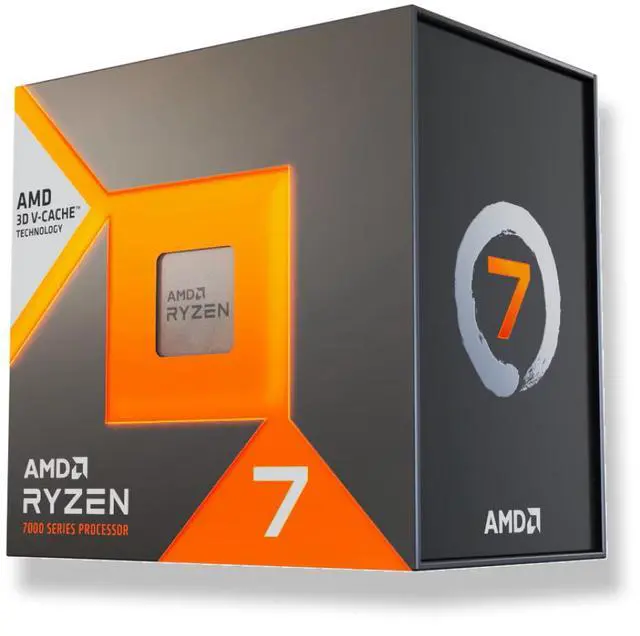
AMD Ryzen™ 7 7700X3D processor featuring AMD 3D V-Cache™ technology delivers absolute gaming performance that exceeds the highest expectations.


With time-saving connectivity features and technologies, like PCIe 5.0® storage support, ultra-fast WiFi® 6E wireless, and 8 cores/16 processing threads, elevate your creator experience with an AMD Ryzen™ 7 7700X3D processor.
Power. Performance. Possibility. AMD Socket AM5 motherboards deliver new features for gamers, from the speed of DDR5 memory and AMD EXPO™ technology to the increased bandwidth with PCle® 5.0.

| Cores / Threads | Total Cache | Architecture | TDP | PCIe® Version | Socket | Cooler |
| 8/16 | 104MB | "Zen 4" | 120W | 5.0 | AM5 | Cooling device not included - Processor Only |
123
Q: Is the Ryzen 7 7700X3D a better buy than the Ryzen 7 9700X for a gaming PC?
A: For a gaming-first build, the Ryzen 7 7700X3D is the safer choice because AMD’s X3D chips are consistently favored for game performance, especially in CPU-limited scenarios. For mixed workloads with more emphasis on general desktop and creator tasks, the Ryzen 7 9700X is the more conventional choice because non-X3D Ryzen 7 parts typically trade some gaming advantage for higher general-purpose clock-focused performance.
Q: Should I get the Ryzen 7 7700X3D or a regular Ryzen 7 7700X?
A: Get the Ryzen 7 7700X3D if your main goal is higher gaming performance, especially when pairing the CPU with a strong graphics card and playing at settings where the processor can limit frame rates. Get the Ryzen 7 7700X if you want a simpler value-oriented 8-core AM5 option for balanced everyday use, or if your workload is less gaming-centric and more sensitive to clocks than cache.
Q: Is the Ryzen 7 7700X3D worth it over the Ryzen 7 5800X3D?
A: The Ryzen 7 7700X3D makes more sense for buyers starting a new build on AM5, because it adds the newer platform, DDR5 support, and a clearer long-term upgrade path. The Ryzen 7 5800X3D is still the more practical choice if you already own an AM4 motherboard and want a strong gaming upgrade without replacing the board and memory.
Q: Is this CPU a good choice mainly for gaming, or is it better for mixed work and creation tasks?
A: This CPU is best suited for gaming-first desktop builds. Its 8 cores, 16 threads, and 96MB L3 cache indicate an X3D-style design aimed at game performance. It can still handle everyday productivity, streaming, and moderate creator workloads, but buyers focused on heavy rendering, large compile jobs, or workstation-class multitasking may get better value from a higher-core alternative such as a Ryzen 9 model.
Q: Do I need a new motherboard and DDR5 memory for this processor?
A: Yes. This processor uses the AM5 socket and DDR5 memory, so it is not a drop-in upgrade for older AM4 or DDR4 systems. It is a practical fit for buyers already planning a platform upgrade or starting a new build, but it is less suitable if you want to reuse an older AM4 motherboard or DDR4 RAM.
Q: Does this processor include a cooler or thermal paste?
A: No. The product data states that no cooling device is included, so you should plan to buy a compatible AM5 CPU cooler separately. Thermal paste also should not be assumed to be included with the processor itself; in practice, paste may come with the cooler, but buyers should verify that before checkout.
Q: Can I reuse my Ryzen 5 setup with this CPU, or is compatibility limited?
A: It depends on which Ryzen 5 system you have. If your current build already uses AM5 and DDR5, this upgrade may be straightforward with BIOS support. If your Ryzen 5 system is older AM4-based, you will typically need a new AM5 motherboard and new DDR5 memory, so the total upgrade cost is much higher than the CPU price alone.
Q: Is this a better buy than a higher-end Ryzen 9 alternative?
A: For a gaming-focused buyer, this type of 8-core X3D processor is usually the simpler and more cost-efficient choice than moving up to a Ryzen 9. A Ryzen 9 makes more sense if your workload regularly includes heavy parallel tasks such as rendering, simulation, or professional content creation. The trade-off is straightforward: prioritize gaming efficiency and lower platform cost here, or pay more for extra multicore headroom with Ryzen 9.
Q: Who is the Ryzen 7 7700X3D best for?
A: It is best suited to buyers who want an 8-core AM5 CPU primarily for gaming, but still want enough threads for general productivity. Its 8-core / 16-thread layout and 96MB L3 cache point to a gaming-first desktop CPU rather than a heavy workstation chip. It is a better fit for gaming builds and mixed everyday use than for users choosing mainly on multi-core productivity value.