here!
I’m your shopping assistant for PC builds, upgrades, and everything tech.
Got questions? Ask away!
Start a conversation
here!
I’m your shopping assistant for PC builds, upgrades, and everything tech.
Got questions? Ask away!
Start a conversationShipped by Newegg



Make informed decisions with expert advice. Learn More



Any questions? Ask CelesteSM will help you find out quickly.

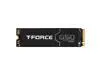
Built for laptops, handhelds, and compact systems, the Patriot P410 delivers responsive speed and everyday reliability to elevate your computing experience. With PCIe Gen4 x4 performance of up to 5,000MB/s read and 4,500MB/s write, it enables fast startups, smooth loading, and quicker access to files and applications.
An advanced caching architecture boosts write performance while helping to lower power consumption and reduce system heat—extending battery life for mobile devices. The slim, single-sided 2280 form factor ensures broad compatibility in space-constrained systems, and capacity options up to 4TB provide the flexibility to store more of what matters. Backed by a 5-year Patriot warranty, the P410 is engineered to power your everyday—effortlessly.


We want to ensure your holiday shopping this year is hassle-free. That’s why we’re automatically extending our return policies on almost every product! For purchases placed between November 1st, 2025 and December 31, 2025 you will have until January 31, 2026 to return your product.
The Patriot P410 is a 1TB M.2 2280 NVMe SSD for PCIe 4.0 x4 systems, with sequential speeds up to 5,000 MB/s read and 4,500 MB/s write; it suits PC users upgrading storage for everyday computing, apps, and games.
| Attribute | Value |
|---|---|
| Best For | Internal storage for consumer and business desktop or laptop systems, with stated compatibility for Sony PlayStation 5 |
| Capacity | 1TB |
| Interface And Form Factor | M.2 2280 internal SSD with PCIe 4.0 x4 interface and NVMe 1.4 protocol |
| Read Write Performance | Sequential read speeds up to 5,000 MB/s and sequential write speeds up to 4,500 MB/s |
| Controller And Drive Features | PCIe 4x4 controller, DRAM-less design with Host Memory Buffer, SmartECC, and a slim graphene heatshield; no separate heatsink |
| Endurance And Operating Temperature | 320TBW endurance rating; operating temperature range of 0–70°C |
| Model Identifiers | Patriot P410, model and part number P410P1TBM28H |
Q: Patriot P410 or WD Black SN770 1TB: which should I choose?
A: Choose the P410 if its price is lower and you want a PCIe 4.0 M.2 drive for everyday use. Choose the SN770 if its higher published sequential speeds and 600TBW endurance rating are worth the difference: its 1TB specifications are up to 5,150/4,900MB/s read/write and 600TBW, versus the P410 1TB listing’s 5,000/4,500MB/s and 320TBW. These are manufacturer specifications, not a direct head-to-head performance result.
Q: Is the P410 enough, or should I pay more for a WD Black SN850X?
A: Choose the P410 for a standard internal-storage upgrade if its 5,000MB/s read and 4,500MB/s write ratings meet your needs. Consider the SN850X for higher rated throughput or its optional heatsink: 1TB models are specified for up to 7,300MB/s read and 6,300MB/s write. The SN850X’s higher sequential ratings do not by themselves guarantee noticeably faster game loading or everyday use.
Q: Should I replace a PCIe Gen3 NVMe SSD with the P410?
A: The P410 is a reasonable upgrade when your system supports PCIe 4.0 and you want its higher rated sequential speeds of up to 5,000MB/s read and 4,500MB/s write. If your system only supports Gen3, or your current drive already feels fast for booting and routine tasks, the P410’s Gen4 rating may not justify replacing a working drive. Actual performance depends on the system and workload.
Q: Will this SSD work in my laptop or desktop?
A: It can fit systems with an available M.2 2280 slot that supports NVMe over PCIe. Check your device’s specifications first: an M.2 slot alone does not guarantee NVMe compatibility, and some systems may not have a free slot.
Q: Does this SSD need a separate heatsink?
A: The P410 listing says it has a slim graphene heatshield but does not include a separate heatsink. If your system has an M.2 heatsink, check that it fits; for sustained, heavy workloads, cooling needs depend on the system and its airflow.
Q: Will it reach 5,000 MB/s in my computer?
A: 5,000 MB/s is the listed maximum sequential read speed, not a guaranteed speed in every system or workload. The P410 uses PCIe 4.0 x4; actual performance depends on the device’s supported interface and other system conditions.
Q: Is the Patriot P410 suitable for storing and playing games?
A: It can suit a game library or secondary-storage role: the 1TB model is an M.2 2280 PCIe 4.0 NVMe drive rated for up to 5,000 MB/s reads, and one P410 owner reported good game loading. That report is anecdotal, not a guarantee for every system.
Q: Is the P410 a good choice for large file transfers or heavy multitasking?
A: It may not be the best fit if sustained transfers and multitasking are priorities. Reddit users have reported slowdowns or brief freezes during bulk extraction and other heavy disk activity. The listed 5,000/4,500 MB/s figures are maximum sequential speeds, not a guarantee of sustained performance in those workloads.
Q: Should I use the P410 as my main boot drive?
A: It can serve as a boot drive, but consider a different model if your main priority is demanding, sustained workloads. The P410 is DRAM-less and uses Host Memory Buffer; Reddit discussions include concerns about disk slowdowns on some systems, but those reports do not establish that every P410 will have the same issue.
Q: Is the P410 worth buying over a higher-end SSD?
A: That depends on the price and workload. Its listed specs make it a PCIe 4.0 option for general storage and gaming, while Reddit comparisons raise concerns about heavier workloads such as handling large audio libraries. Since no purchase price is provided, value against alternatives cannot be determined here.