




 here!
I’m your shopping assistant for PC builds, upgrades, and everything tech.
Got questions? Ask away!
Start a conversation
here!
I’m your shopping assistant for PC builds, upgrades, and everything tech.
Got questions? Ask away!
Start a conversation




Any questions? Ask CelesteSM will help you find out quickly.
/11-352-181/clogo.jpg)
/11-352-181/ch1.jpg)
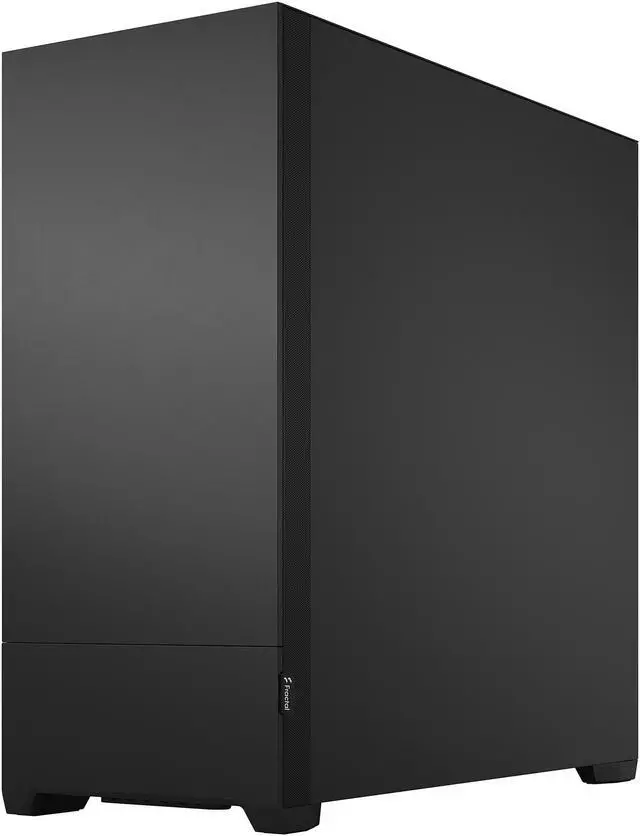
Fractal fuse flair with function in the new Pop series of cases that doesn’t skimp on aesthetics or flexibility. The entire series offers a solid foundation and excellent build quality, giving all users plenty of options and room to maneuver.
/11-352-181/split-line.jpg)
/11-352-181/p0.jpg)
/11-352-181/1.jpg)
Flair fuses with function in a case that doesn’t skimp on aesthetics or flexibility.
/11-352-181/2.jpg)
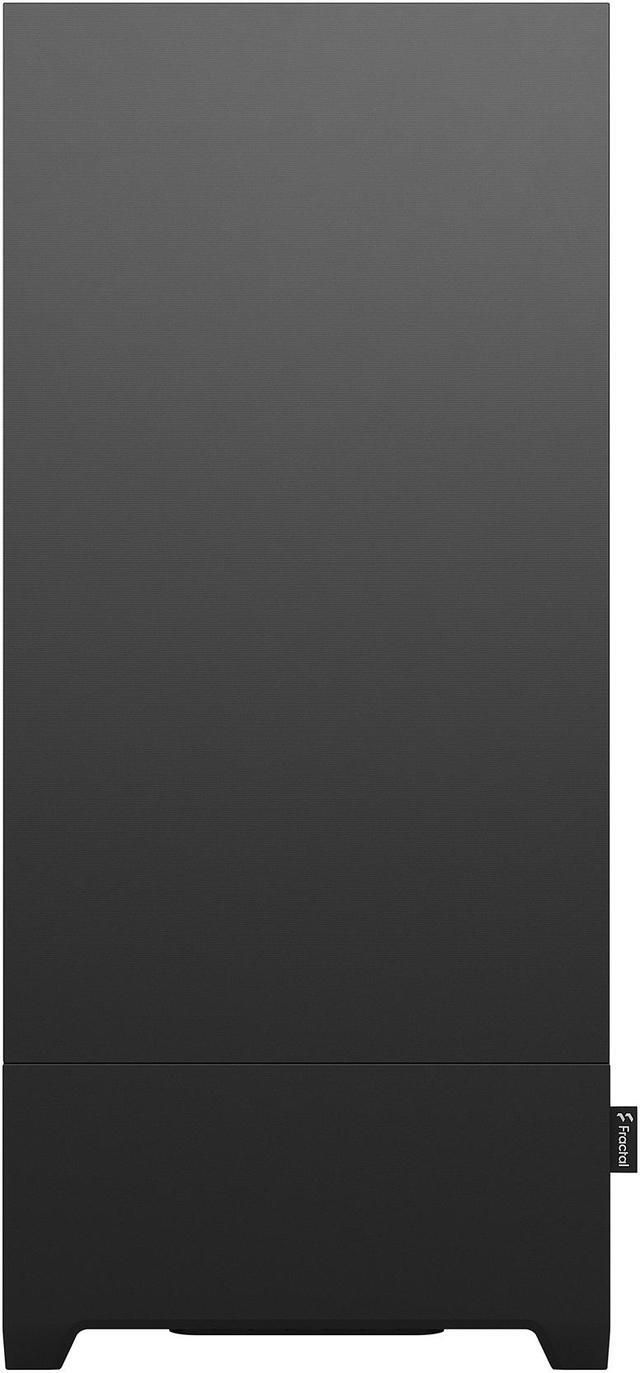
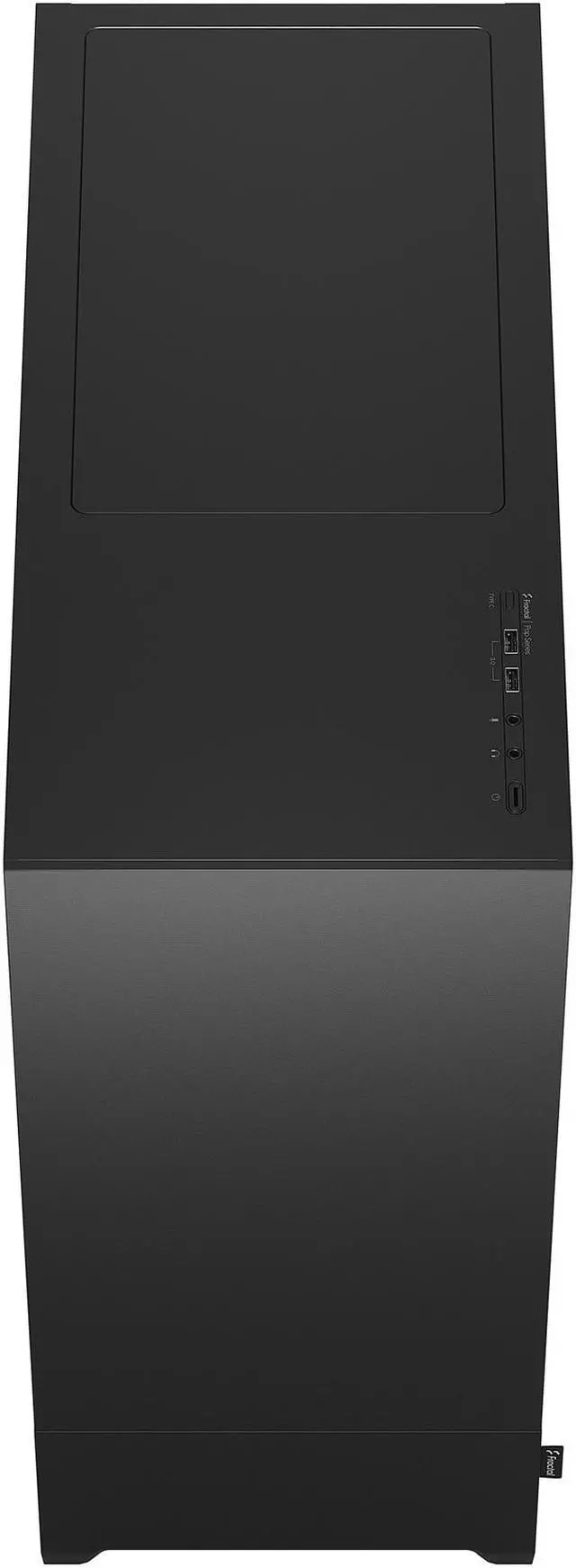
Excellent noise reduction thanks to the closed front and top, bitumen side panels and foam.
/11-352-181/3.jpg)
Two neatly concealed 5.25” bays with storage drawer and magnetic cover.
/11-352-181/4.jpg)
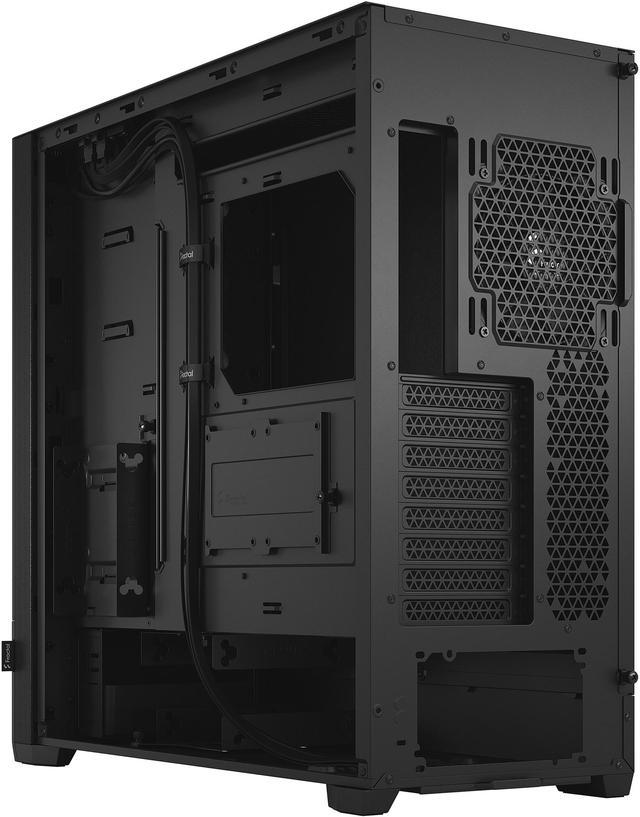
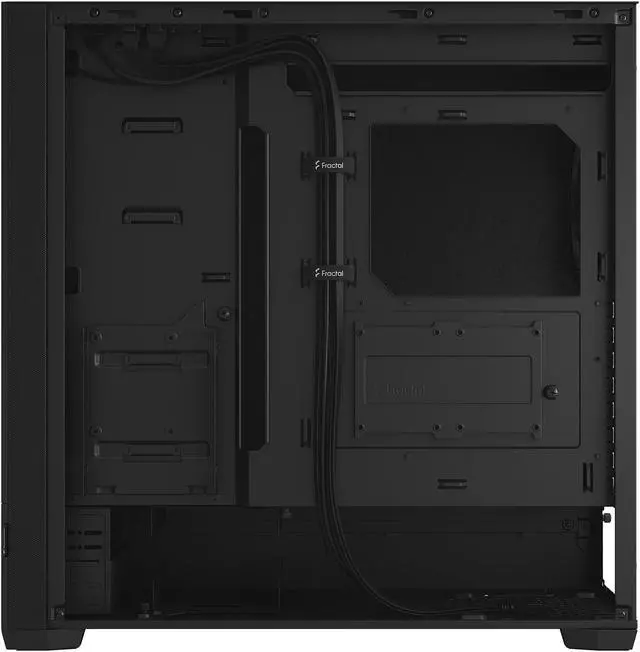
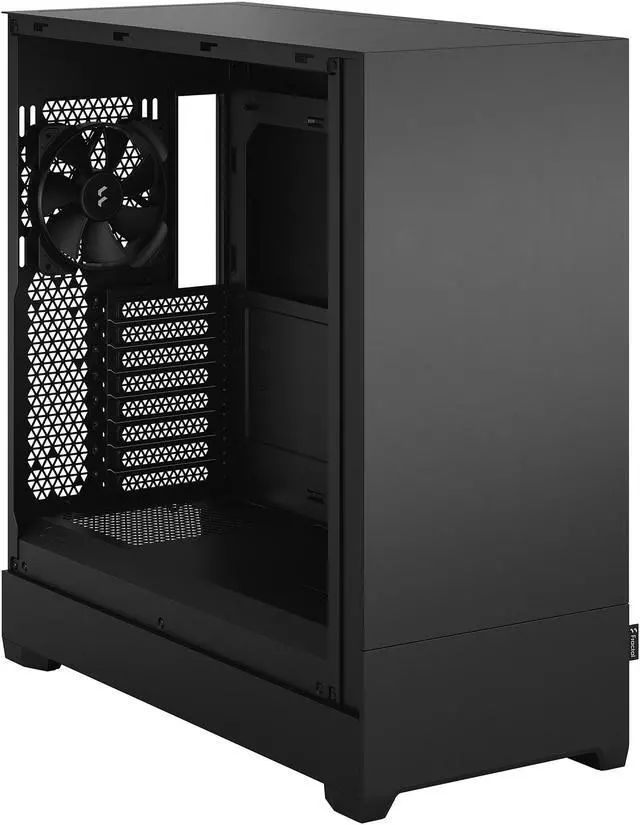
Enjoy multiple tie-down points, pre-mounted velcro straps and extra-large pass-through holes for a clean interior.
/11-352-181/5.jpg)
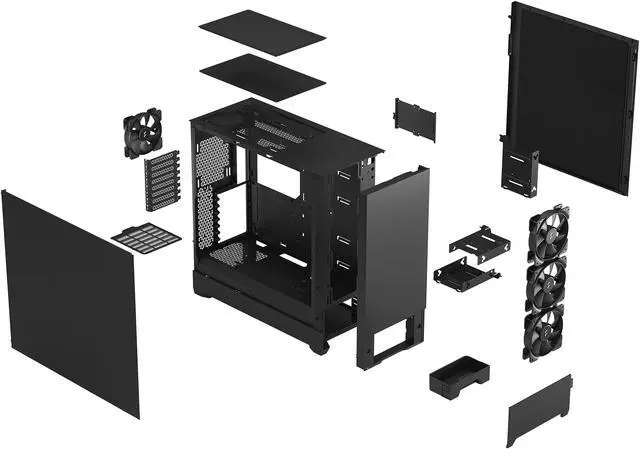
The top panel can be quickly removed, making place for two additional fan placements.
/11-352-181/6.jpg)
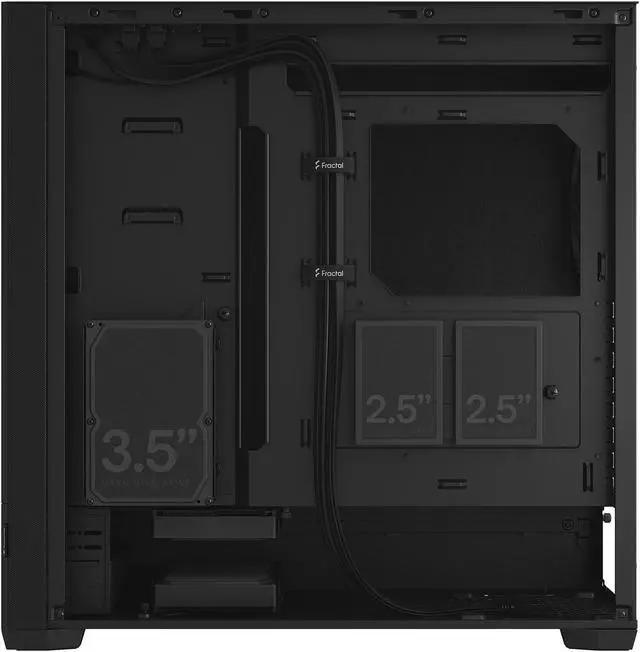
Three ultra-versatile storage trays each support a 3.5” and a 2.5” drive simultaneously. A dedicated SSD bracket for 2x 2.5” is also included.
/11-352-181/7.jpg)
The I/O welcomes the optional, easily installed USB-C module available separately.
/11-352-181/8.jpg)
/11-352-181/p1.jpg)
/11-352-181/9a.jpg)
/11-352-181/9.jpg)
/11-352-181/10.jpg)
/11-352-181/11.jpg)
We want to ensure your holiday shopping this year is hassle-free. That’s why we’re automatically extending our return policies on almost every product! For purchases placed between November 1st, 2025 and December 31, 2025 you will have until January 31, 2026 to return your product.
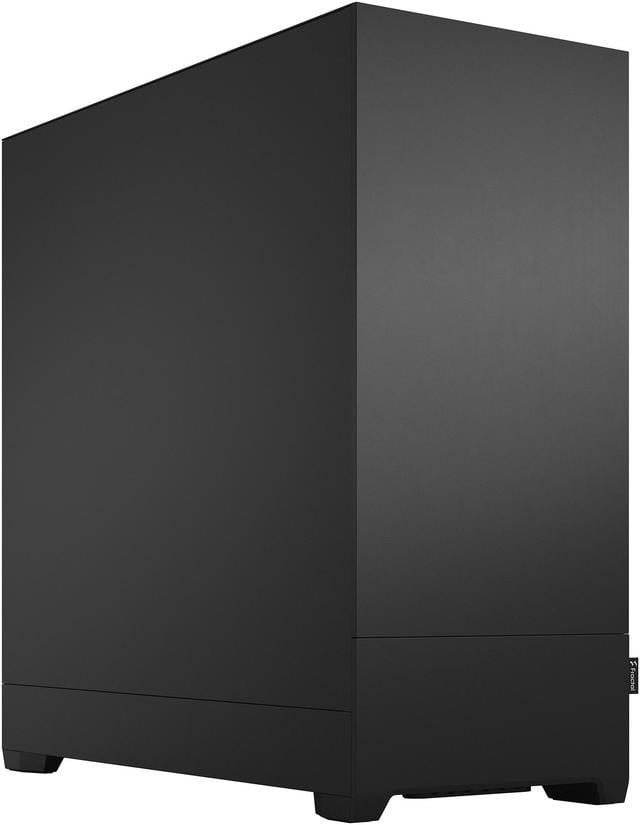
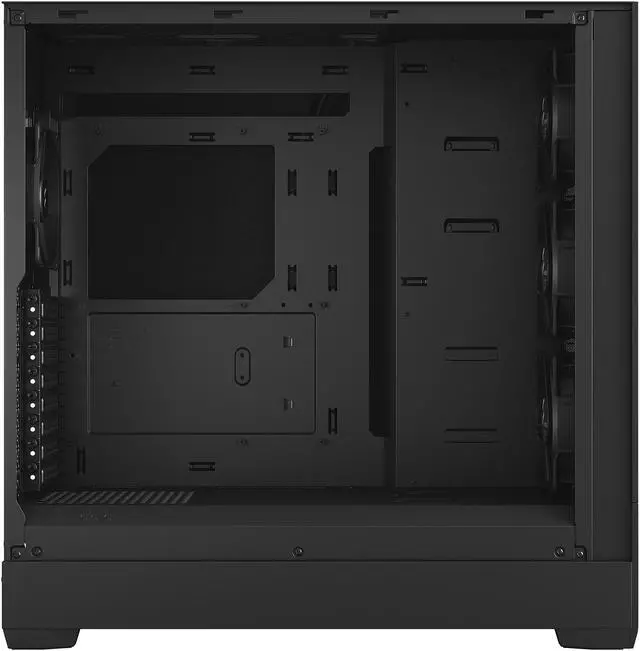
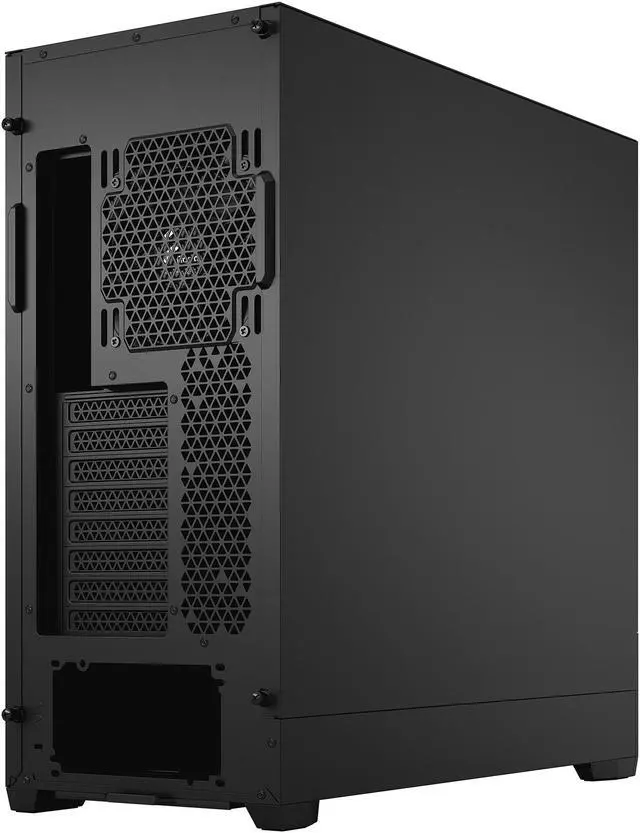
The Fractal Design Pop XL Silent is a full-tower ATX PC case built for quiet high-capacity desktop builds, making it a strong fit for users who want E-ATX support, sound-damped panels, four included 120 mm fans, and room for large GPUs, tall air coolers, and multiple drives.
| Attribute | Value |
|---|---|
| Best For | Full-tower builders who need E-ATX (up to 280 mm) support with sound-damped solid panels, extensive multi-drive capacity and radiator space for quiet, air-cooled workstation or gaming-style builds |
| Chassis & External Bays | Steel full-tower chassis with a solid (no-window) side panel and two concealed 5.25" external bays with a storage drawer and magnetic cover |
| Materials & Noise Reduction | Closed front and top design with bitumen side panels and sound-damping foam for reduced case noise |
| Motherboard & Expansion | Supports E-ATX (max 280 mm), ATX, microATX and Mini-ITX motherboards with 8 expansion slots |
| Drive Bays & Storage | Flexible storage: up to four 3.5" HDDs and six 2.5" SSDs (or 3 HDDs and 5 SSDs with one optical bay in use); includes three storage trays (each supports a 3.5" and a 2.5") and a dedicated 2×2.5" SSD bracket |
| Cooling & Fans | Includes four 120 mm Aspect fans (3 front, 1 rear); supports multiple fan layouts (front: up to 3×120 or 2×140, top: up to 2×120 or 2×140, rear: 1×120 or 1×140) for air-based cooling |
| Radiator Support | Radiator support front 360/280 mm (155 mm max width), top 240/280 mm (68 mm max motherboard component height), rear 120/140 mm |
| Maximum Component Clearances | Max GPU length 430 mm (with front fan mounted), max CPU cooler height 185 mm, max PSU length 205 mm |
| Front I/O & Connectivity | Front I/O includes 2× USB 3.0 (5 Gb/s) and separate mic/headphone jacks; optional full-speed USB-C front port available via a separate upgrade kit (USB 3.2 Gen 2x2 Type-C); compatible with Fractal Design USB-C 10Gbps Cable – Model D |
| Power Supply & Mounting | No PSU included; bottom-mounted power supply bay supporting up to 205 mm length |
| Dimensions & Weight | External dimensions 20.55" × 9.06" × 20.47"; weight 22.97 lbs |
| Included Items | Includes Pop XL Silent case, accessory bag, user manual, and the pre-installed fans |
| Additional Features | Dust filters plus easy cable management with multiple tie-down points and pre-mounted Velcro straps |
| Model Identifiers | Fractal Design Pop XL — FD-C-POS1X-01 (Pop XL Silent Black – Solid) |
Q: Should I get the Fractal Design Pop XL Silent or the Pop XL Air?
A: Choose the Pop XL Silent if your priority is a more closed, quieter-looking build with sound-damped panels, hidden 5.25-inch bays, and support for large air coolers or front-mounted radiators. Choose the Pop XL Air if you are building around hotter gaming hardware and want stronger out-of-box airflow. Across official positioning and community discussion, the main trade-off is simple: Pop XL Silent favors lower direct noise leakage, while Pop XL Air favors easier thermal headroom.
Q: Is the Pop XL Silent a better choice than the standard Pop Silent?
A: The Pop XL Silent is the better choice if you want more interior space, broader cooling options, and fewer fit compromises for long GPUs, tall air coolers, and multi-drive builds. The standard Pop Silent makes more sense when you want a smaller ATX footprint and your parts are moderate in power draw. For users comparing the two, the XL version is typically the safer pick for easier building and future upgrades.
Q: Should I buy the Pop XL Silent or step up to the Fractal Define 7?
A: Buy the Pop XL Silent if you want a simpler, lower-cost full tower with sound damping, legacy 5.25-inch support, and enough room for large modern hardware. Step up to the Define 7 if you want a more premium silence-focused platform with more refinement, a front door, and a stronger reputation for workstation-style builds. In practice, buyers usually choose Pop XL Silent for value and choose Define 7 for a more feature-rich quiet-build experience.
Q: For a high-performance gaming build, is the Pop XL Silent better than a mesh case like the Meshify 2?
A: For a high-performance gaming build, a mesh case like the Meshify 2 is usually the better fit because it is designed around stronger airflow for high-TDP CPUs and GPUs. The Pop XL Silent is the better choice when you still want roomy hardware support but care more about reducing direct noise escape than maximizing cooling throughput. The buying decision depends less on size and more on whether your build is noise-first or airflow-first.
Q: Is the Pop XL Silent a better quiet-build option than the be quiet! Silent Base 802?
A: Choose the Pop XL Silent if you want a more straightforward quiet full tower with Fractal's simpler layout and do not need a convertible airflow-focused design. Choose the Silent Base 802 if you want more tuning flexibility, since it is positioned around both silent and airflow panel configurations. The Pop XL Silent is the more focused choice for a traditional closed-case build, while the Silent Base 802 is the better fit if you expect to switch between quieter and higher-airflow setups.
Q: Is the Fractal Design Pop XL Silent a good choice for a quiet high-performance gaming or workstation build?
A: Yes, if low noise matters more than maximum airflow. The Pop XL Silent uses closed front and top panels plus sound-damping material, and it still supports large hardware such as E-ATX boards up to 280 mm, GPUs up to 430 mm with front fans installed, and front 360 mm radiators. The trade-off is cooling headroom: compared with airflow-focused cases, a silent chassis usually runs hotter or needs higher fan speeds under heavy GPU or CPU loads. It is best suited to users who want a quieter full tower and are willing to accept some thermal compromise.
Q: Who is this case most suitable for?
A: This case is most suitable for builders who want a large, understated full tower with support for big components, quieter acoustics, and legacy-friendly features like 5.25-inch bays. It fits E-ATX systems up to 280 mm board width, offers room for multiple HDDs and SSDs, and includes four 120 mm fans. It is a stronger fit for productivity PCs, content creation systems, storage-heavy builds, and quiet gaming setups than for users chasing the lowest possible temperatures.
Q: Is the Pop XL Silent better than an airflow-focused alternative like the Pop XL Air?
A: It is better only if your priority is lower perceived noise and a solid-panel look. An airflow-focused alternative is usually the better choice for hotter gaming builds, sustained rendering loads, or top-end GPUs because mesh-front designs move more air more easily. The Pop XL Silent is the better fit for buyers who prefer quieter everyday operation, while the airflow version is usually the safer choice for peak thermal performance.
Q: Will this case fit large modern parts like a long GPU, tall air cooler, and big power supply?
A: Yes. The Pop XL Silent is designed for large mainstream components. It supports GPUs up to 430 mm with the front fan mounted, CPU coolers up to 185 mm tall, and power supplies up to 205 mm long. It also supports front radiators up to 360 mm and top radiators up to 280 mm. Buyers should still check exact part dimensions, especially if using thick radiators, wide E-ATX boards, or unusually long power supplies.
Q: Does this case make sense if I need optical drives or a lot of storage?
A: Yes. This is one of the clearer reasons to choose it over many newer cases. It includes two concealed 5.25-inch bays, supports multiple 3.5-inch and 2.5-inch drives, and is better aligned with storage-heavy or legacy-component builds than most modern airflow cases that remove optical support entirely. The trade-off is that these legacy-friendly features come in a larger chassis with a more traditional internal layout.
Q: Who is the Fractal Design Pop XL Silent best for?
A: It is best for buyers who want a large, understated full tower with low-noise design, solid panels, and room for many drives or larger parts. It fits E-ATX boards up to 280 mm, long GPUs, tall air coolers, and includes four 120 mm fans. It is a stronger fit for quiet workstations, mixed-use desktops, and storage-heavy builds than for airflow-first showcase builds.
Q: Is the Pop XL Silent a good choice if quiet operation matters more than maximum airflow?
A: Yes, if lower noise is the priority. The case uses a closed front and top plus sound-damping material, which helps reduce noise. The trade-off is that it is not an airflow-first design, so buyers planning very high heat loads should expect weaker cooling headroom than a mesh-front alternative.
Q: Is the Pop XL Silent worth buying over a mesh case?
A: It is worth buying if you prefer a quieter, cleaner-looking case and do not need the strongest possible airflow. Compared with a mesh case, its main advantages are lower noise, solid-panel styling, and support for optical drives and multiple storage devices. The main compromise is cooling efficiency under heavier GPU or CPU loads.
Q: Is the Pop XL Silent suitable for storage-heavy or legacy-drive builds?
A: Yes. It is unusually friendly to storage-heavy builds for a modern case because it supports multiple 3.5-inch and 2.5-inch drives and includes two concealed 5.25-inch bays. That makes it more suitable than many newer cases for users who still want optical drives, front-bay accessories, or a larger number of internal drives.
Q: Is the Pop XL Silent a good fit for very high-power or multi-GPU systems?
A: Only with caution. Its size and component clearance are strong, but the silent-oriented closed design is a weaker match for extreme heat output than a high-airflow case. It can physically fit large hardware, but buyers building very high-power workstations should choose it for acoustic goals, not for maximum thermal margin.





