


  • In Stock
  • Sold by Newegg
  • New
Brands
Show More
Price
Show More
Type
Material
Show More
Diameter
Color
Show More
Sold by
Availability
Condition
Useful Links
Customer Ratings
  • Fox 3D Scanner
  • Falcon A1
  • Featured Brands

    See Deals from Rosewill
Sort By:
View:
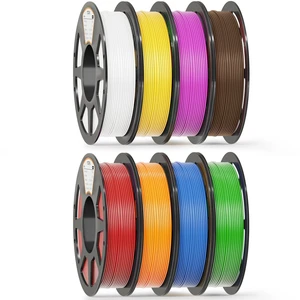
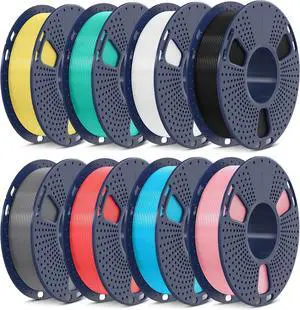
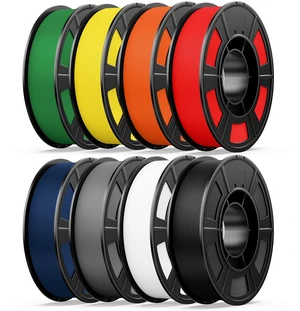
PLA Filament Bundle 1.75mm, 250g x 8 Vibrant Colors, Beginner Friendly | Multicolor PLA+ 3D Printing Filament Bundle, Compatible with Bambu Lab, FlashForge, Prusa, Toybox & More 3d Printer
Quick View
  •  
  • $59.98 –
  • Free Shipping
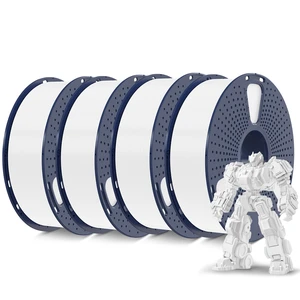
SUNLU 3D Printer Filament PLA Plus 1.75mm White 4KG | Neatly Wound, Upgrade PLA Filament Bundle, For Most FDM 3D Printer, 1kg Spool, 4 Packs
Quick View
  •  
  • $89.98 –
  • Free Shipping
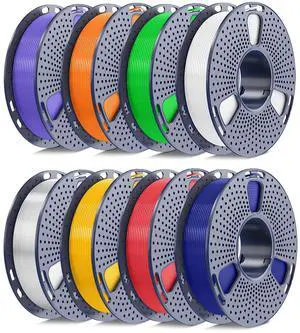
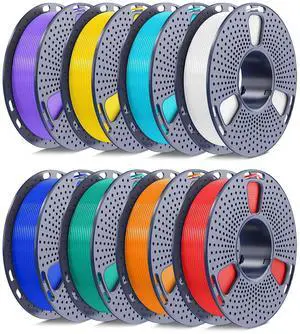
PETG Filament 1.75mm, SUNLU 3D Printer Filament Bundle for Bambu Lab 3D Printers, Neatly Wound, Individually Vacuum Packed, 250g Spool, 8 Rolls, White+Transparent+Red+Blue+Yellow+Green+Orange+Purple
Quick View
PETG Filament 1.75mm, SUNLU 3D Printer Filament Bundle for Bambu Lab 3D Printers, Neatly Wound, Individually Vacuum Packed, 250g Spool, 8 Rolls, White+Transparent+Red+Blue+Yellow+Green+Orange+Purple
  • Material: Polyethylene Terephthalate Glycol
  • Diameter: 1.75
  • Color: 250gx8 - White+transparent+red+blue+yellow+green+orange+purple
  • Brand: YOOPAI
  • Model #:
  •  
  • $68.38 –
  • Free Shipping
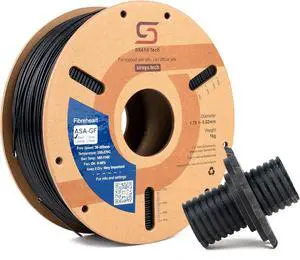
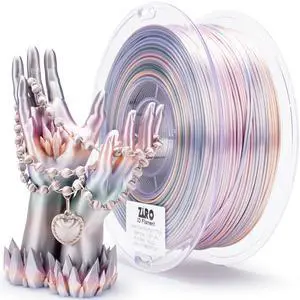
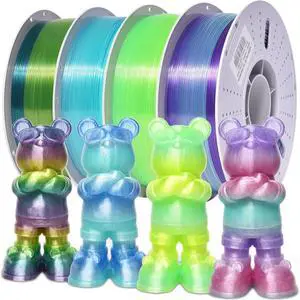
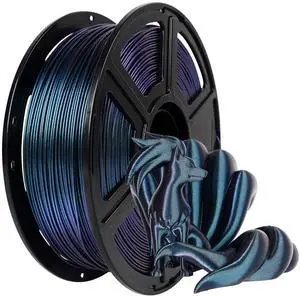
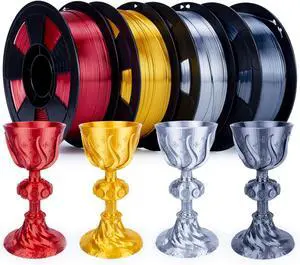
ZIRO 3D Printer Filament PLA, Fast Color Change Silk, 1KG Earth Tone
Quick View
ZIRO 3D Printer Filament PLA, Fast Color Change Silk, 1KG Earth Tone
  • Material: Polylactic Acid
  • Diameter: 1.75
  • Color: Earth Tone(silk)
  • Brand: ZIRO
  • Model #:
  •  
  • $65.98 –
  • Free Shipping
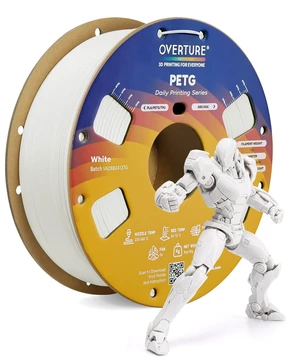
High Speed PETG Filament 1.75mm, 1kg White | Neatly Wound & Clog-Free, 1kg (2.2lbs) Rapid PETG, Dimensional Accuracy +/- 0.02mm, Fit Most FDM Printers (White)
Quick View
  •  
  • $34.99 –
  • Free Shipping
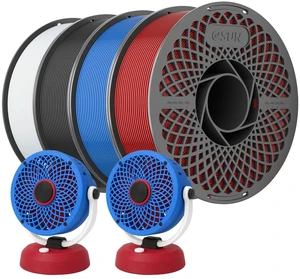
eSUN Basic PLA Fliament 3D Printer Fliament 4KG, High Speed PLA,Multicolor | 3D Printing Filament 1.75mm, Smooth Printing, Neatly Wound, +/-0.02mm Accuracy, Compatible with Most FDM 3D Printers
Quick View
  •  
  • $71.98 –
  • Free Shipping
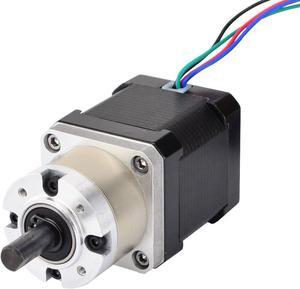
STEPPERONLINE Nema 17 Geared Stepper Motor Gear Ratio 5:1 3D Printer Extruder Motor DIY CNC Robotics
Quick View
  •  
  • $78.89 –
  • Free Shipping
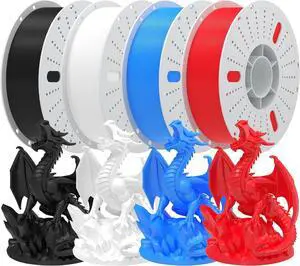
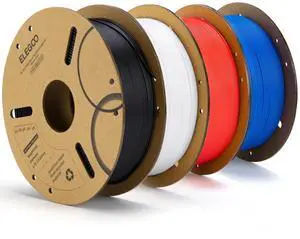
ELEGOO PLA 3D Printer Filament 1.75mm 4KG Black/White/Dark Blue/Red | Bundle Filament, Dimensional Accuracy +/- 0.02mm, 4 Pack 1kg Spools 3D Printing Filament, Fits Most FDM 3D Printers
Quick View
  •  
  • $78.12 –
  • Free Shipping
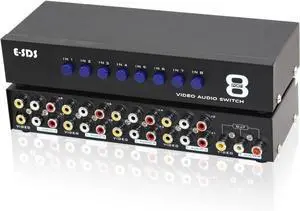
E-SDS 8-Way RCA Switch AV Switcher 8 in 1 Out Composite Video L/R Audio Selector Box for DVD STB Game Consoles
Quick View
  •  
  • $45.89 –
  • Free Shipping
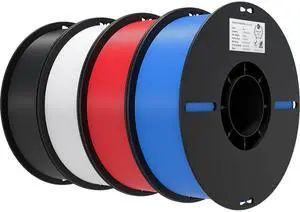
Creality PLA 3D Printer Filament 4KG, Black & White & Red & Blue, 4-Pack | PLA Filament 1.75mm, Smooth Printing, Neatly Wound, +/-0.02mm Accuracy, Compatible with Most FDM 3D Printers
Quick View
  •  
  • $74.28 –
  • Free Shipping
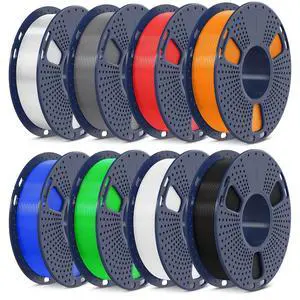
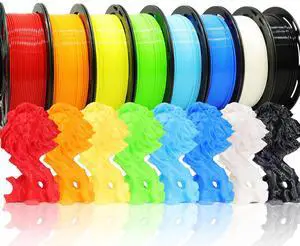
1.75mm 8 Spools Popular Colors 3D Printer PLA Filament Bundle Pack: Black White Red Blue Yellow Orange Limegreen SkyBlue, Each Spool 250g, Widely Compatible, Total 2Kg 3D Printing Filament
Quick View
1.75mm 8 Spools Popular Colors 3D Printer PLA Filament Bundle Pack: Black White Red Blue Yellow Orange Limegreen SkyBlue, Each Spool 250g, Widely Compatible, Total 2Kg 3D Printing Filament
  • Material: Polylactic Acid
  • Diameter: 1.75
  • Color: Black, White, Red, Blue, Yellow, Orange, Limegreen, Skyblue
  • Brand: Bblife
  • Model #:
  •  
  • $79.98 –
  • Free Shipping
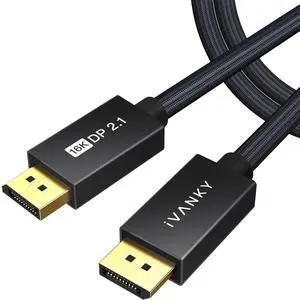
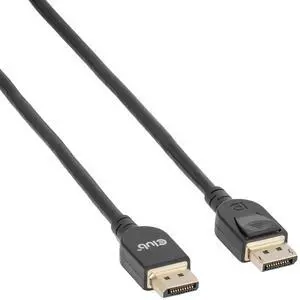
Club3D CAC-1060 VESA Certified DisplayPort to DisplayPort 1.4/Hbr3 M/M Cable DP 1.4 8K 60Hz 3m- 9.84ft
Quick View
  •  
  • $49.89 –
  • Free Shipping
ANYCUBIC 3D Printer Filament PLA Bundle 4KG, Black | Dimensional Accuracy +/- 0.02mm, 3D Printing PLA Filament, Reusable Spool, Fits for Most FDM 3D Printers
Quick View
  •  
  • $79.74 –
  • Free Shipping
UJOY3D 8 Color Bundle Hyper PLA+ 3D Printer Filament, Multicolor PLA+ Filament 1.75mm, Individually Vacuum Packed, 0.25kg Spool, 8 Pack (Black+Jade White+Grey+Red+Dark Blue+Green+Orange Yellow+Yellow)
Quick View
  •  
  • $61.98 –
  • Free Shipping
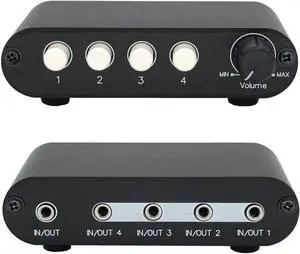
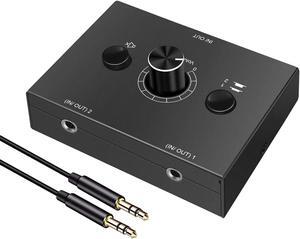
3.5mm Stereo Audio Switch Audio Switcher Passive Speaker Headphone Manual Selector Splitter Box Audio Sharing
Quick View
  •  
  • $47.89 –
  • Free Shipping
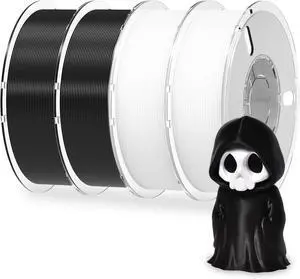
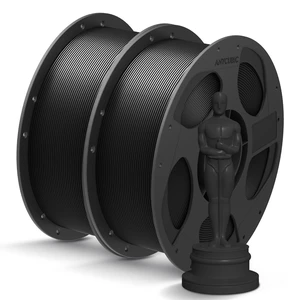
ANYCUBIC PLA+ 3D Printer Filament Bundle, PLA Plus 1.75mm Dimensional Accuracy +/- 0.02mm, Fit Most FDM 3D Printers, 1KG Reusable Spool, 2KG Black+Black
Quick View
  •  
  • $64.18 –
  • Free Shipping
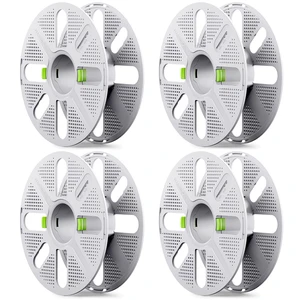
MarsWork Quick-Swap Reusable Spool for Refill Filament, Two-Finger Press Design, Compatible with Bambu Lab 3D Printers, 4 pcs
Quick View
  •  
  • $67.98 –
  • Free Shipping
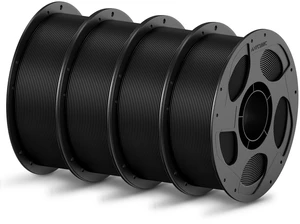
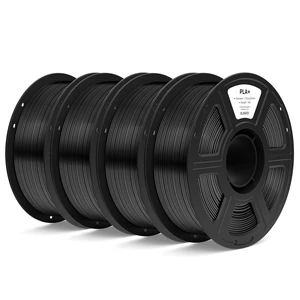
ELEGOO PLA+ 3D Printer Filament 1.75mm Black 4KG | High Toughness PLA Plus, Dimensional Accuracy +/- 0.02mm, 4pcs 1kg Spools, Fits for Most FDM 3D Printers
Quick View
  •  
  • $70.28 –
  • Free Shipping

3D Printer Filament: Diverse Materials for Every Project

Explore a wide selection of 3D printer filaments including PLA blends with wood and metal, durable ABS, and flexible TPU. This page is designed for hobbyists, designers, and engineers seeking materials suited for prototyping, crafts, and functional parts.

How to Choose Filament

Key Features to Consider When Choosing 3D Printer Filament

  • Material Type: Options range from PLA filament, known for its ease of use and eco-friendliness, to ABS filament which offers superior durability and heat resistance. Specialty blends include wood, metal, and flexible filaments for unique textures and properties.
  • Print Temperature: Each filament requires specific nozzle and bed temperatures to print optimally, which affects equipment compatibility and print quality.
  • Diameter Consistency: Common diameters like 1.75mm and 2.85mm must match your 3D printer extruder for consistent flow and precise layering.
  • Flexibility and Strength: Consider how rigid or flexible the filament needs to be depending on your project's functional demands, from rigid prototypes to wearable parts made with TPU or nylon variants.
  • Environmental and Safety Factors: Biodegradable filaments and low-emission types provide safer, more sustainable printing for home and educational settings.

The Importance of Filament Material Composition

Understanding the chemical and physical makeup of your filament is key to achieving strong, accurate prints tailored to your needs. PLA filament, for example, is a biodegradable thermoplastic derived from renewable resources, making it excellent for beginner and detailed projects due to its low warping tendency and ease of use. On the other hand, ABS filament's petroleum-based structure delivers high durability and heat resistance but demands a controlled printing environment with a heated bed or chamber to prevent warping and cracking. Specialty materials often incorporate additives like wood fibers or metallic powders, adding complex textures but sometimes requiring slower print speeds or refined extrusion settings. By focusing on the intrinsic composition, you can predict not only the print quality but also post-processing options such as sanding, dyeing, or melting behavior.

For Professionals: Advanced Filament Handling and Optimization

Experienced users and developers can push the limits of 3D printing by leveraging multi-material and flexible filament technologies that open new possibilities beyond basic prototyping. Integrating these materials effectively often requires advanced 3D Printing setups with features like dual extrusion systems, precise temperature control, and enclosed print chambers to stabilize environmental conditions. Mastering filament drying and proper storage also becomes critical, as moisture-laden filaments degrade print integrity and mechanical properties. By refining slicer profiles and testing layer adhesion with different filament blends, developers can achieve ultra-durable functional prototypes and effect-driven artistic outputs that meet stringent project specifications.

Performance and Setup Tips

  • Store filaments in airtight containers with desiccants to prevent moisture absorption that causes printing defects.
  • Calibrate your printer’s nozzle and bed temperatures according to manufacturer guidelines for each filament type to minimize warping and stringing.
  • Use a heated bed when printing with ABS filament to improve adhesion and reduce curling on complex parts.
  • Consider adjusting print speed and fan cooling to accommodate specialty materials with unique extrusion requirements.
  • Regularly clean extruder nozzles and check filament diameter consistency with calipers for reliable feeding and accurate prints.
  • Experiment with layer height and infill settings to balance printing time, mechanical strength, and surface finish for your specific application.
  • Explore slicer software features that optimize support structures and multi-material prints for seamless integration.

Newegg shopping tip: When selecting filament, consider the material’s strength, flexibility, and melting temperature to match your printer’s capabilities and project needs. Also, check the filament diameter for compatibility with your 3D printer model.

Explore Filament & Related Categories

3D printer

Explore 3D printers with advanced extruders and heated beds designed to handle diverse filament types and improve print precision.

PLA filament

PLA filament offers biodegradable, low-warp material perfect for detailed desktop prints and beginner-friendly use.

ABS filament

ABS filament excels in durability and heat resistance but needs a heated chamber to prevent warping in complex models.

Getting Started with 3D Printer Filament

If you’re new to 3D printing, selecting the right filament can feel overwhelming. The simplest and most beginner-friendly option is PLA filament. It’s easy to print, produces detailed objects, and requires minimal setup like no heated bed or enclosure. Before jumping in, make sure your 3D printer supports the filament you choose, especially in terms of diameter and extruder temperature. Starting simple with PLA lets you learn the basics before exploring specialty materials.

Professional Prototyping and Functional Parts

For rapid prototyping and applications requiring durability, heat resistance, or mechanical strength, ABS filament is a go-to for engineers and designers. ABS delivers toughness and can withstand higher stress than some alternatives, making it ideal for functional parts or prototypes subjected to real-world conditions. Just note that ABS printing typically requires a heated bed or enclosure to prevent warping during cooling, so your printer setup must match the material’s demands.

Crafting and Artistic Projects with Specialty Filaments

When your goal is unique aesthetics or flexible creations, specialty filaments open exciting possibilities. You’ll find PLA blends infused with wood, metal, or even stone particles that mimic natural textures perfect for artistic crafts and miniatures. For projects requiring elasticity, flexible TPU filament gives you rubber-like stretchiness ideal for wearables or soft prototypes. Explore our 3D Printing selection to find materials geared toward creative applications beyond traditional functionality.

Before You Buy

  • Confirm your 3D printer’s compatibility with the filament diameter—commonly 1.75mm or 2.85mm.
  • Check nozzle temperature ranges and bed heating capabilities to ensure proper extrusion and adhesion.
  • Consider the filament’s intended use—are you after ease of printing, durability, flexibility, or special effects?
  • Look for spool size and weight that fit your printer’s feeder and your project volume.
  • Review the filament’s material safety, ventilation needs, and storage recommendations.
  • Use Newegg’s Power Search to narrow filters for specs that match your printer and build goals.

Research more: When choosing 3D printer filament, consider the material’s strength, flexibility, and ease of use based on your project needs. If you're unsure which type suits your printer or printing goals, Newegg Insider’s buying guides offer detailed insights to help you decide.

Last Updated: September 2026 | Newegg Filament Buying Guide


Filament FAQs:

How does PLA filament compare to ABS for everyday 3D printing projects?

PLA is easier to print with and produces less odor, making it better for beginners and indoor use, while ABS is stronger and more heat-resistant but requires a heated bed and proper ventilation.

Is there a noticeable difference between using brand-name filament and generic options?

Brand-name filaments often offer more consistent diameter and color quality, which helps reduce print failures, but many generic filaments can still work well if you’re willing to fine-tune your printer settings.

What types of filament materials are available for 3D printing, and how do they differ?

Common filament materials include PLA, ABS, PETG, and TPU. PLA is easy to print and eco-friendly, ABS is more durable and heat resistant, PETG offers a good balance of strength and flexibility, and TPU is soft and flexible for rubber-like prints.

How do I choose the right filament diameter for my 3D printer?

Filament usually comes in either 1.75mm or 2.85mm diameters, so check your printer’s specifications to match the filament size. Using the wrong diameter can cause feeding problems or print failure.

How do I pick the right filament type for my 3D printer projects?

Start by checking what materials your printer supports, then think about your project’s needs—PLA is easy and good for beginners, while ABS or PETG offer more strength and heat resistance.

Is it worth spending more on premium filament, or will budget options work just as well?

Budget filaments can be fine for simple prints or prototypes, but premium filaments usually provide better consistency, fewer clogs, and stronger finished parts, which saves time and frustration in the long run.

How often do filaments tend to clog printers, and what should I watch for in reviews about this issue?

Filament clogs can be pretty common, especially with cheaper or poorly stored spools. Look for reviews mentioning smooth feeding and consistent diameter, as these usually mean fewer jams.

Are there particular filament brands or types that have known reliability problems?

Some lesser-known brands might have inconsistent quality or moisture issues that affect print results. Check if users report frequent brittleness or partial spools, which can signal reliability troubles.

How do I properly load filament into my 3D printer for the first time?

Start by heating up your printer’s nozzle to the recommended temperature for your filament type, then carefully insert the filament into the extruder until you see it come out smoothly from the nozzle. Be sure to trim the filament tip at an angle to help it feed more easily.

What’s the best way to store filament when I’m not using it?

Keep your filament in a dry, airtight container with desiccant packs to avoid moisture absorption, which can cause print quality issues. Avoid exposing filament to direct sunlight or extreme temperatures to maintain its consistency.