
The power supply is the least exciting component in a PC and the one most likely to take other parts with it when it fails. It is also the component people are most tempted to under-buy, which became a genuinely bad idea when modern graphics cards started drawing brief power spikes far above their rated draw. In 2026 the picture is clearer than it used to be: the ATX 3.1 specification defines how a supply must handle those transients, the 12V-2×6 connector has replaced the earlier 16-pin design, and efficiency certification has a new top tier. This guide is organized by the kind of machine you are actually building, because a 1600W flagship and a 650W office box are answering different questions.
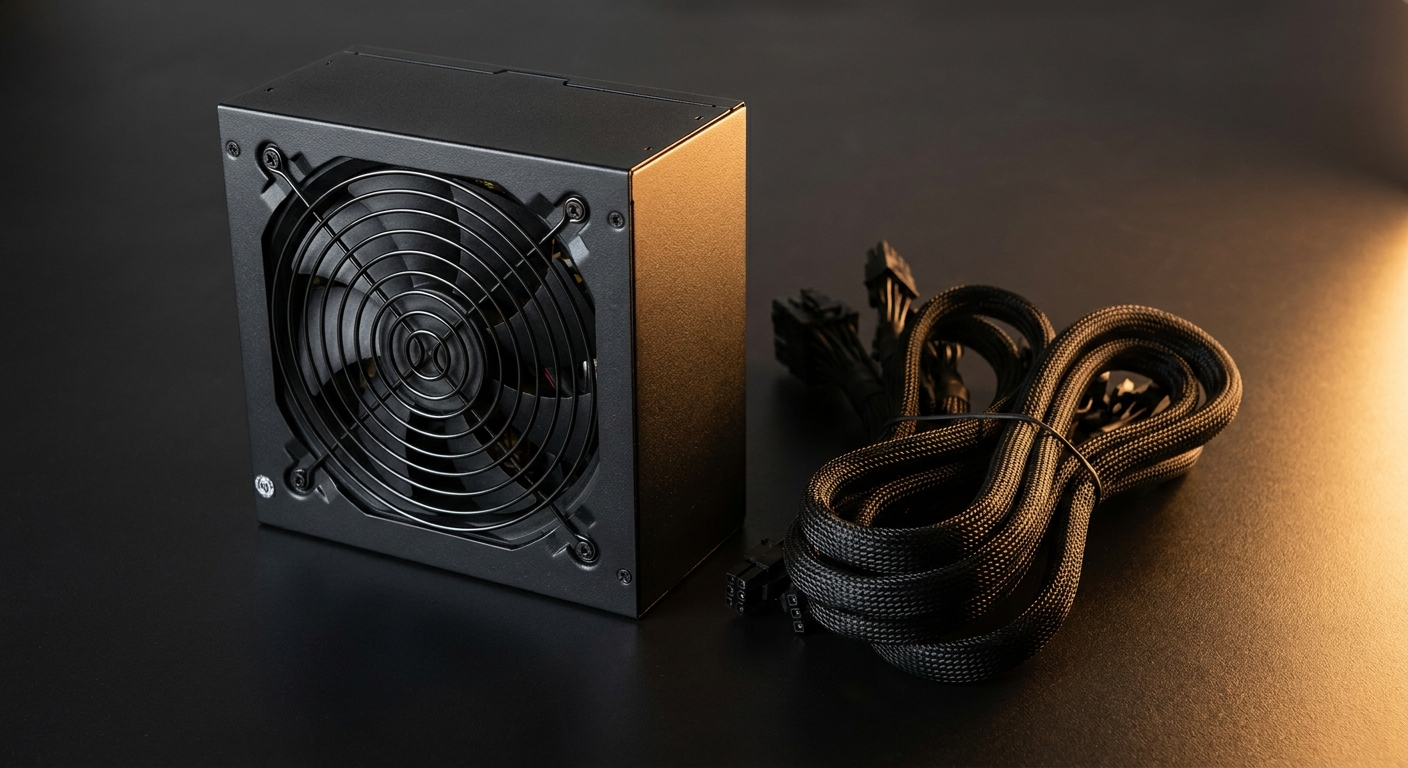
What the Ratings Actually Mean
Efficiency is what 80 PLUS certification measures — how much of the power drawn from the wall reaches your components rather than becoming heat. Gold is the mainstream standard, Platinum and Titanium sit above it. There is now a tier above Titanium: in August 2026 Seasonic announced the PRIME ENTERPRISE RX-1600 as the first ATX power supply certified 80 PLUS Ruby at 115V. Per Seasonic’s own release, Ruby at 115V requires 85% efficiency at 5% load, 91% at 10%, 93% at 20%, 95% at 50% and 91% at 100%. The interesting part is that 5% load requirement, a point standard Titanium does not test at all — an acknowledgement that modern PCs spend most of their lives nearly idle.
ATX 3.1 is about behavior under stress rather than efficiency. It defines how a supply must ride out the brief excursions modern GPUs produce, and it pairs with the 12V-2×6 connector, a revised version of the earlier 12VHPWR design with improved contact engagement. If you are buying a new supply for a current graphics card, ATX 3.1 with a native 12V-2×6 cable is what you want.
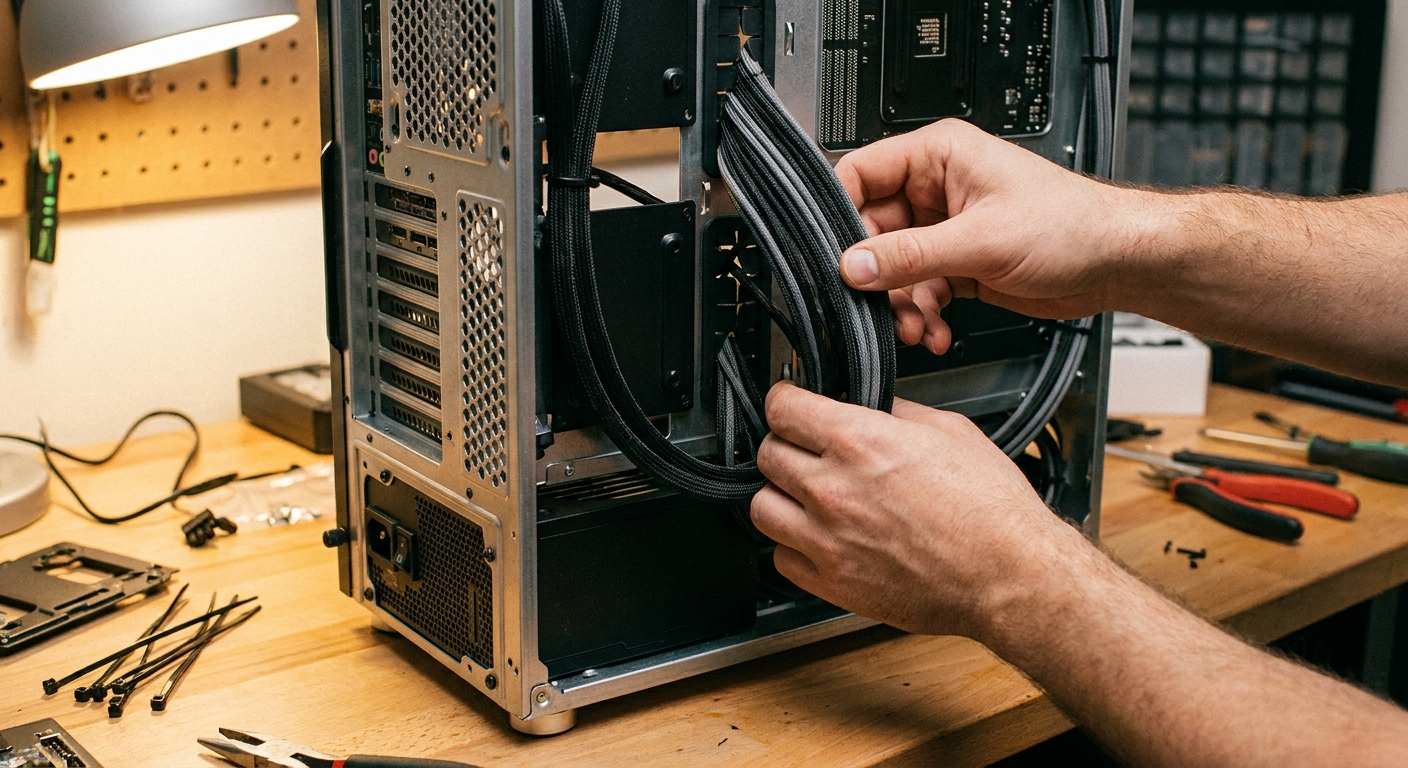
Modularity affects your build, not your performance. A fully modular supply lets you attach only the cables you need, which matters enormously in a small case and makes cable routing far tidier in a large one.
The Field at a Glance
| Unit | Wattage | Rating | Spec | Best for |
|---|---|---|---|---|
| ASRock PRO-650G | 650W | 80 PLUS Gold | ATX 3.1 compatible | Budget 1080p build |
| Rosewill VMG850 | 850W | 80 PLUS Gold | ATX 3.0 / 3.1 | Value mainstream |
| Seasonic FOCUS GX-850 | 850W | 80 PLUS Gold | ATX 3.1 | Mainstream mid-tower |
| Corsair RM850x | 850W | Cybenetics Gold | ATX 3.1 / PCIe 5.1 | Quiet mainstream |
| Corsair RM1000x | 1000W | Cybenetics Gold | ATX 3.1 / PCIe 5.1 | High-end single GPU |
| be quiet! Dark Power 13 | 1000W | 80 PLUS Titanium | ATX 3.0 / PCIe 5.0 | Silence and efficiency |
| Corsair SF850 (2024) | 850W | 80 PLUS Platinum | ATX 3.1 ready | SFX / ITX build |
| MSI MPG Ai1600TS | 1600W | 80 PLUS Titanium | ATX 3.1 / PCIe 5.1 | Flagship / dual 12V-2×6 |
If You Are Building a Budget 1080p Machine
A modest build with a mid-range card does not need a kilowatt. The ASRock PRO-650G delivers 650W with 80 PLUS Gold certification and ATX 3.1 compatibility, backed by a three-year parts and labor warranty. Note that it is a fixed-cable unit and its listed PCIe output is a single 6+2-pin connector, so check your card’s connector requirement before buying.
If you want a little more headroom and full modularity without moving far up market, the Rosewill VMG850 is 850W, 80 PLUS Gold, fully modular, ATX 3.0 and 3.1 compatible with a native 12V-2×6 connector, uses all-Japanese electrolytic capacitors and a 120mm fluid dynamic bearing fan, and carries a five-year warranty.
If You Are Building a Mainstream Mid-Tower
This is where most builds land, and 850W is the sensible modern default. The Seasonic FOCUS GX-850 is a fully modular 850W ATX 3.1 unit with 80 PLUS Gold certification, a 12V-2×6 connector and NVIDIA RTX 40 Super and 50-series certification.
The alternative is the Corsair RM850x, which takes a different approach to certification: it is rated Cybenetics Gold rather than 80 PLUS Gold, a scheme that measures noise as well as efficiency across a wider load range. It is fully modular, ATX 3.1 and PCIe 5.1 compliant with a native 12VHPWR-class 12+4 connector, uses Japanese capacitors and is backed by a ten-year warranty.
If You Are Building a High-End RTX Machine
A flagship graphics card plus a high-core-count processor is where 1000W starts making sense — not because the machine draws that much continuously, but because headroom keeps the supply in its efficient, quiet band and absorbs transients comfortably. The Corsair RM1000x is the straightforward pick: 1000W, Cybenetics Gold, fully modular, ATX 3.1 and PCIe 5.1 with a native 12V-2×6 connector.
If You Want Maximum Efficiency and Minimum Noise
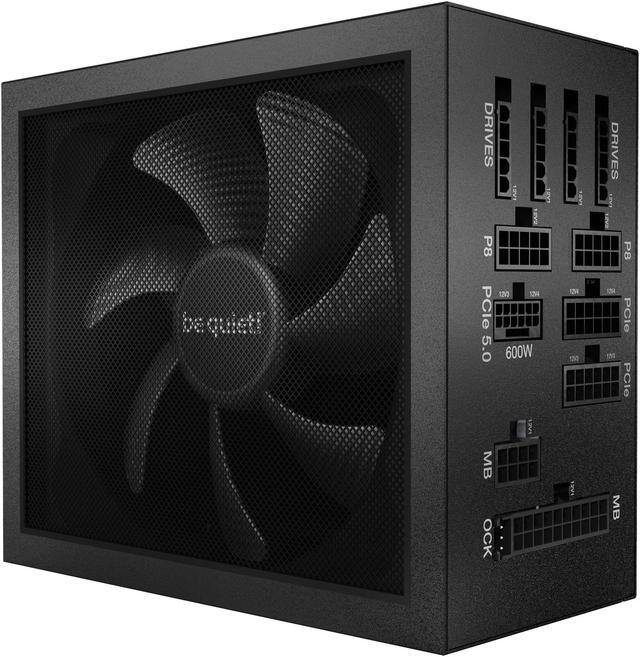
The be quiet! Dark Power 13 1000W is 80 PLUS Titanium certified, fully digital, fully modular, with a native 12+4 connector and an overclocking key that switches the unit between multi-rail and single-rail operation. One thing to be precise about: this unit is ATX 3.0 and PCIe 5.0, not ATX 3.1. For most builds that is fine — ATX 3.0 already defines transient handling — but if native 12V-2×6 compliance is a hard requirement, note the difference.
If You Are Building Small
Small-form-factor cases usually need an SFX or SFX-L unit, and there are far fewer good options. The Corsair SF850 (2024) is the standout: 850W of 80 PLUS Platinum efficiency in the SFX form factor, fully modular with Type-5 Micro-Fit connectors, ATX 3.1 compliant and PCIe 5.1 ready with a 12+4 PCIe cable, and a seven-year warranty. That is enough power for an RTX-class card in a case a fraction of the size of a tower.
If You Are Building Something Extreme
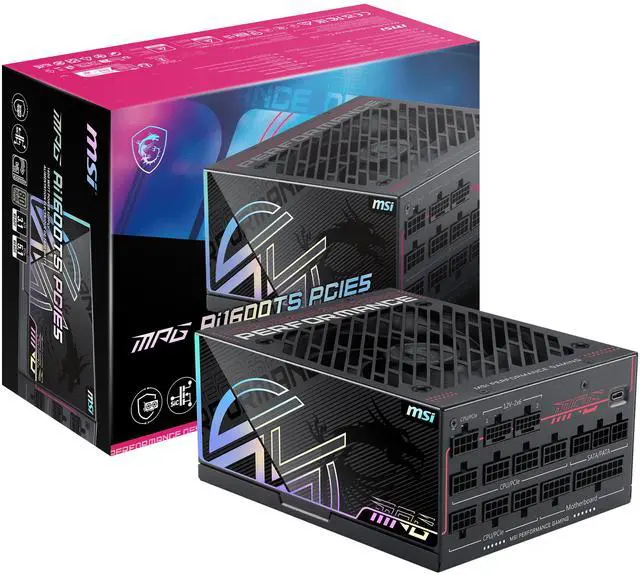
For a workstation, a dual-GPU AI rig or a no-compromise flagship build, the MSI MPG Ai1600TS PCIE5 is the answer: 1600W, 80 PLUS Titanium rated up to 94% efficiency, fully modular, ATX 3.1 and PCIe 5.1, and crucially two native 12V-2×6 connectors rated 600W each. MSI backs it with a twelve-year warranty, which tells you something about the intended service life.
The Verdict
For most builds, an 850W ATX 3.1 Gold unit with a native 12V-2×6 connector — the Seasonic FOCUS GX-850 or the Corsair RM850x — is the correct answer and will outlast two or three graphics cards. Go 1000W if you are running a flagship GPU, choose the be quiet! Dark Power 13 if efficiency and silence matter more than the 3.1 label, take the Corsair SF850 if the case is small, and reach for the MSI Ai1600TS only if you genuinely need two 600W GPU connectors. Whatever you choose, buy the warranty as much as the wattage. You can compare the full range in Newegg’s power supply listings.
Frequently Asked Questions
How many watts do I actually need? Start from your graphics card’s recommended system wattage, then add headroom. A mid-range card is comfortable on 650-750W, a mainstream high-end card on 850W, and a flagship card with a high-core-count CPU on 1000W or more. Headroom is not waste: a supply running at roughly half load is at its most efficient and its quietest.
What is 80 PLUS Ruby? A new efficiency tier above Titanium. Per Seasonic’s announcement of the PRIME ENTERPRISE RX-1600 — reported as the first ATX unit to earn it — Ruby at 115V requires 85% efficiency at 5% load, 91% at 10%, 93% at 20%, 95% at 50% and 91% at 100%. The 5% load requirement is what distinguishes it, since standard Titanium does not test that point.
Do I need ATX 3.1 specifically, or is ATX 3.0 fine? ATX 3.0 already defines the transient-handling behavior that modern graphics cards need. ATX 3.1 refines it and pairs with the 12V-2×6 connector, which has better contact engagement than the original 12VHPWR design. If you are buying new for a current card, prefer 3.1 with a native 12V-2×6 cable; a good 3.0 unit is not unsafe.
Is a fully modular power supply worth it? In a small case, yes, without question — unused fixed cables have nowhere to go. In a large case it is a convenience and a tidiness improvement rather than a performance one, but it also makes future upgrades far easier.
Read More
- Tom’s Hardware: Best Power Supplies — A continuously updated buying guide ranking units by wattage class with load-tested results.
- Cybenetics — The independent lab behind the ETA efficiency and LAMBDA noise ratings that several units here carry.
- Seasonic: PRIME ENTERPRISE RX-1600 Announcement — The primary source for the 80 PLUS Ruby efficiency requirements.
- Gamers Nexus: The Brewing Problem with GPU Power Design — Why GPU transient spikes trip protections and why ATX 3.x headroom matters.
- Newegg: Power Supplies — Filter current units by wattage, efficiency rating and form factor.
Related Posts
- Best 80 Plus Gold Power Supplies for High-End PC Builds in 2026
- How to Pick the Right PSU for Your PC Build
- Best PSUs for High-End Gaming Builds in 2026: Don’t Cheap Out on Power
- Power Supply Wattage and Budget Guide 2026: Right-Sizing Your PSU Investment
- Powering Gaming and Professional Workstations in 2026: PSU Requirements for High-Performance Systems