DLSS 5 has drawn strong reactions since its March announcement. It has shipped in NBA 2K27 in September, Hogwarts Legacy on November 5 and War Thunder in mid-November, and Nvidia announced Where Winds Meet support for November 23.
So the question is practical. What does it actually do, and which card do you need to use it? These are the questions I'd want answered before buying an RTX card for it.
What does DLSS 5 actually do?
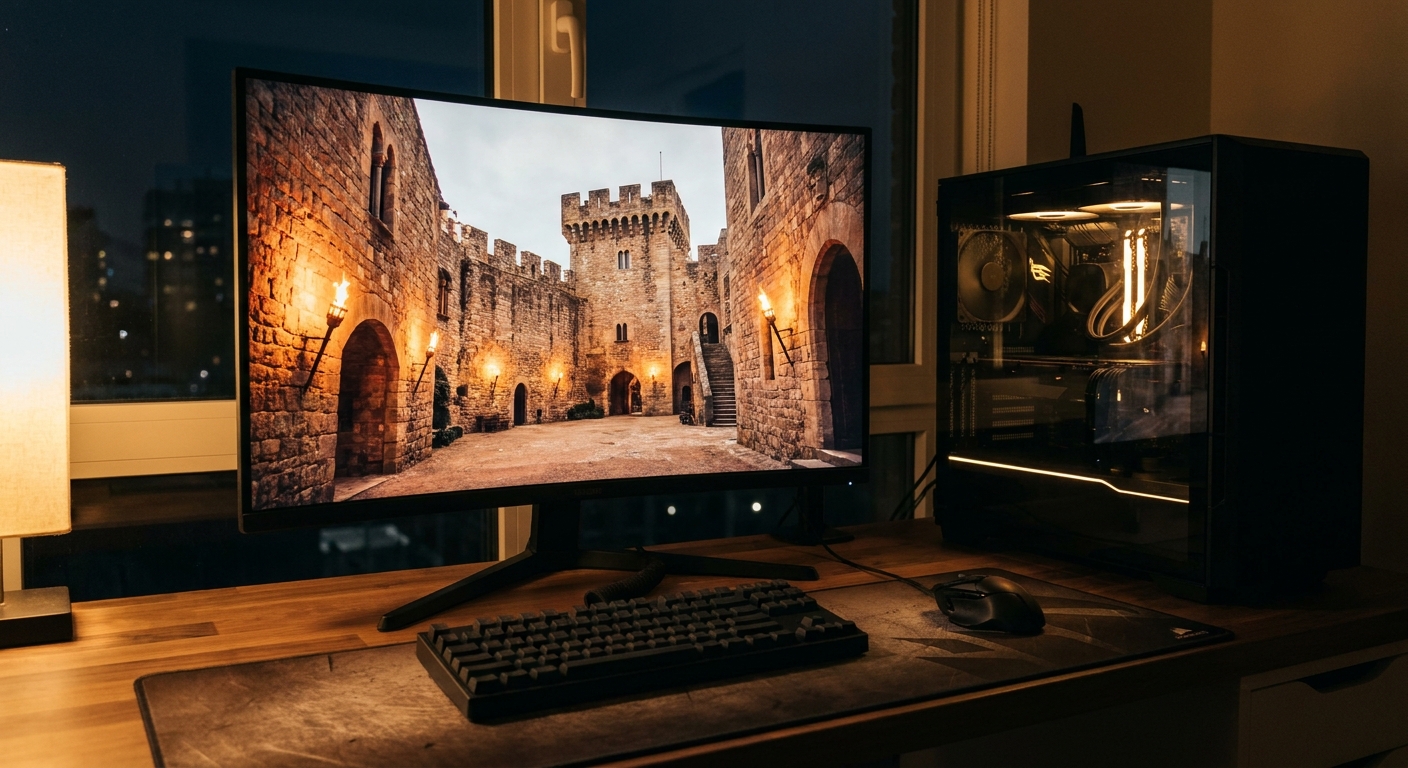
Earlier DLSS versions mostly upscaled the image and generated extra frames. DLSS 5 adds what Nvidia calls 3D-guided neural rendering. It runs as the last stage of the graphics pipeline, takes the game's rendered frame along with its color and motion vectors, and uses an AI model to add lighting and material detail.
The important part, in Nvidia's words, is that the engine frame "defines what must remain, and the artist directs what may change." Developers get controls such as structure and tone intensity, plus masking, so they decide how much the model changes the look.
Which GPUs support it?
Nvidia lists all GeForce RTX 50 Series GPUs and laptops, RTX Spark PCs and GeForce NOW Ultimate members. When DLSS 5 launched in September, Nvidia said it planned to work on expanding official support to RTX 40 Series, but it didn't give a date. If you're buying a card partly for DLSS 5, that means RTX 50.
Does it cost performance?
Yes. The first version was very demanding, and reviewers noted that the headline frame rates relied on Multi Frame Generation. Nvidia says its October model is about 24% smaller, at roughly 118 million parameters, uses 20% less VRAM at 4K and runs about twice as fast as the September version. That's Nvidia's claim, not a universal benchmark, but it's a meaningful improvement.
Which RTX 50 card would I pair with it?
Because the neural rendering step adds work and uses memory, I'd lean toward more VRAM than I'd pick for DLSS upscaling alone.
At 1080p, the GIGABYTE Gaming OC RTX 5060 Ti 16GB is where I'd start, with 16GB of GDDR7 and a 650W recommended PSU. The GIGABYTE Eagle OC RTX 5060 and the GIGABYTE WINDFORCE RTX 5050 also support DLSS 5, but with 8GB I'd keep expectations modest.

At 1440p, the GIGABYTE WindForce RTX 5070 has 12GB, and the GIGABYTE Eagle OC RTX 5070 Ti has 16GB on a 256-bit bus. I'd take the 5070 Ti for DLSS 5 if the budget allows.
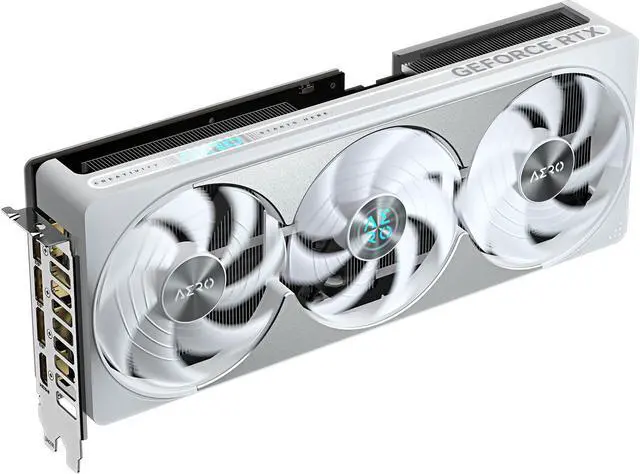
At 4K, the GIGABYTE AERO OC RTX 5080 has 16GB of GDDR7, a 360W board power and an 850W recommended PSU. The ASUS ROG Astral RTX 5090 uses the same GPU behind Nvidia's headline numbers, with 32GB, and its listing calls for a 1000W PSU.
Do I need a high-refresh monitor for it?
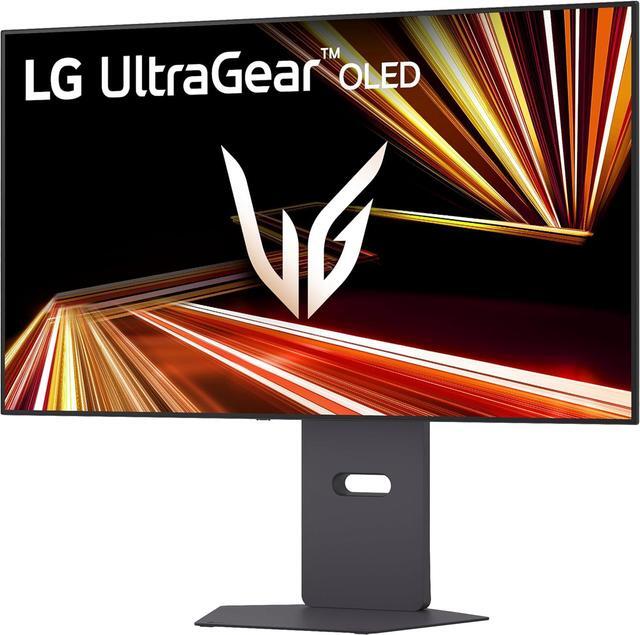
If you use Multi Frame Generation to offset the cost, a high-refresh screen is how you'll see the benefit. The LG UltraGear 32-inch dual-mode OLED runs 4K at 240Hz or 1080p at 480Hz, which suits a 4K DLSS 5 setup well.
Will it look the same in every game?
No, and that's by design. Because developers set how much the model changes structure and tone, the effect in a basketball game can look quite different from the effect in a fantasy RPG. That's also why I'd judge it game by game rather than from one trailer.
How do I turn it on?
In Hogwarts Legacy, Nvidia says to install the game update and switch on the "Neural Rendering" option in the settings. Keep your Game Ready driver current, since new DLSS releases often depend on it.
Should I buy a GPU just for DLSS 5?
I wouldn't. It's in a handful of games so far, and whether you like the look is personal. But if you're already choosing an RTX 50 card, it's a reason to lean toward more VRAM, and it's worth trying in the games that support it. Turn it on, compare it with it off, and keep whichever version you think looks more like the game you want to play.
Frequently Asked Questions
What is DLSS 5? DLSS 5 adds what Nvidia calls 3D-guided neural rendering. It runs as the final stage of the graphics pipeline, takes the game's rendered frame with its color and motion vectors, and uses an AI model to add lighting and material detail. Developers control how strongly it changes the image.
Which GPUs support DLSS 5? Nvidia lists all GeForce RTX 50 Series desktop GPUs and laptops, RTX Spark PCs and GeForce NOW Ultimate members. In September 2026, Nvidia said it planned to work on expanding official support to RTX 40 Series, without giving a date.
Which games support DLSS 5? It launched in NBA 2K27 in September 2026 and came to Hogwarts Legacy on November 5. Nvidia also announced War Thunder for mid-November and Where Winds Meet for November 23.
Does DLSS 5 lower performance? The neural rendering step costs performance, and the first version was very demanding. Nvidia says its October 2026 model is about twice as fast and uses 20% less VRAM at 4K, and it pairs DLSS 5 with Multi Frame Generation to raise frame rates.
How do I turn on DLSS 5? In supported games, it is an in-game setting. In Hogwarts Legacy, Nvidia says to update the game and turn on the Neural Rendering option. Keeping your Game Ready driver current is also a good idea.
Read More
- DLSS 5 Available Now in Hogwarts Legacy (NVIDIA): Nvidia's details on how DLSS 5 works and which games support it.
- DLSS 5 Powered by a 2X Faster Model (NVIDIA): Nvidia's update on the smaller, faster DLSS 5 model.
- NVIDIA Third Quarter Fiscal 2027 Results (NVIDIA Newsroom): Where Nvidia summarized its DLSS 5 rollout.
- RTX 5070 Ti vs RX 9070 XT (Newegg Insider): How DLSS and FSR factor into the 1440p GPU choice.
- DirectX Ray Tracing Update Explained (Newegg Insider): Another rendering change that affects VRAM.