NVIDIA's RTX Spark laptops went on sale on October 16, and Windows Central's review calls local AI its strongest workflow by far, with gaming a secondary benefit. With up to 128GB of unified memory, they join a small group of machines that can hold very large language models in memory. The other two members are already on Newegg's shelves: desktops built on NVIDIA's GB10 chip, the same one inside DGX Spark, and mini PCs using AMD's Ryzen AI Max+ 395.
Choosing between them comes down to a few questions I'd answer before spending anything.
Why Does Memory Size Matter So Much?
A model has to fit in memory to run at a reasonable speed. As a rough guide, a 70-billion-parameter model quantized to 4 bits needs something like 35 to 40GB just for its weights, before you add context. A 32GB graphics card can't hold that on its own. A machine with 128GB of shared memory can, with room left for a long context window.
So Is a Big Unified Memory Machine Always Better Than a GPU?
No, and this is the part people miss. How fast a model produces text depends largely on memory bandwidth. NVIDIA's documentation lists DGX Spark at 273GB/s. AMD's Ryzen AI Max+ 395 uses LPDDR5X-8000 on a 256-bit bus, which works out to about 256GB/s. An RTX 5090 has a 512-bit GDDR7 bus that delivers around 1.8TB/s. So for any model that fits in 32GB, the 5090 will generate tokens far faster. The unified memory machines win when the model is simply too big for a graphics card.
What's Different About Each Platform?
GB10 (DGX Spark class): a 20-core Arm CPU and a Blackwell GPU sharing 128GB. NVIDIA rates it for models up to 200 billion parameters, or up to 405 billion with two units linked through the built-in ConnectX-7 networking. It runs NVIDIA's Linux-based DGX OS, and the main appeal is the full CUDA software stack in a box small enough to sit beside your monitor.
Ryzen AI Max+ 395 (Strix Halo): 16 Zen 5 cores, Radeon 8060S graphics and up to 128GB of LPDDR5X. AMD's drivers let Windows assign up to 96GB of that to graphics, and tools like LM Studio and llama.cpp support it. These are also normal Windows PCs that can game reasonably well.
RTX Spark (N1X): NVIDIA's Arm-based laptop chip with up to 20 CPU cores and up to 6,144 Blackwell GPU cores, running Windows 11. Among the machines in this article, it's the only laptop.
Product Spotlight
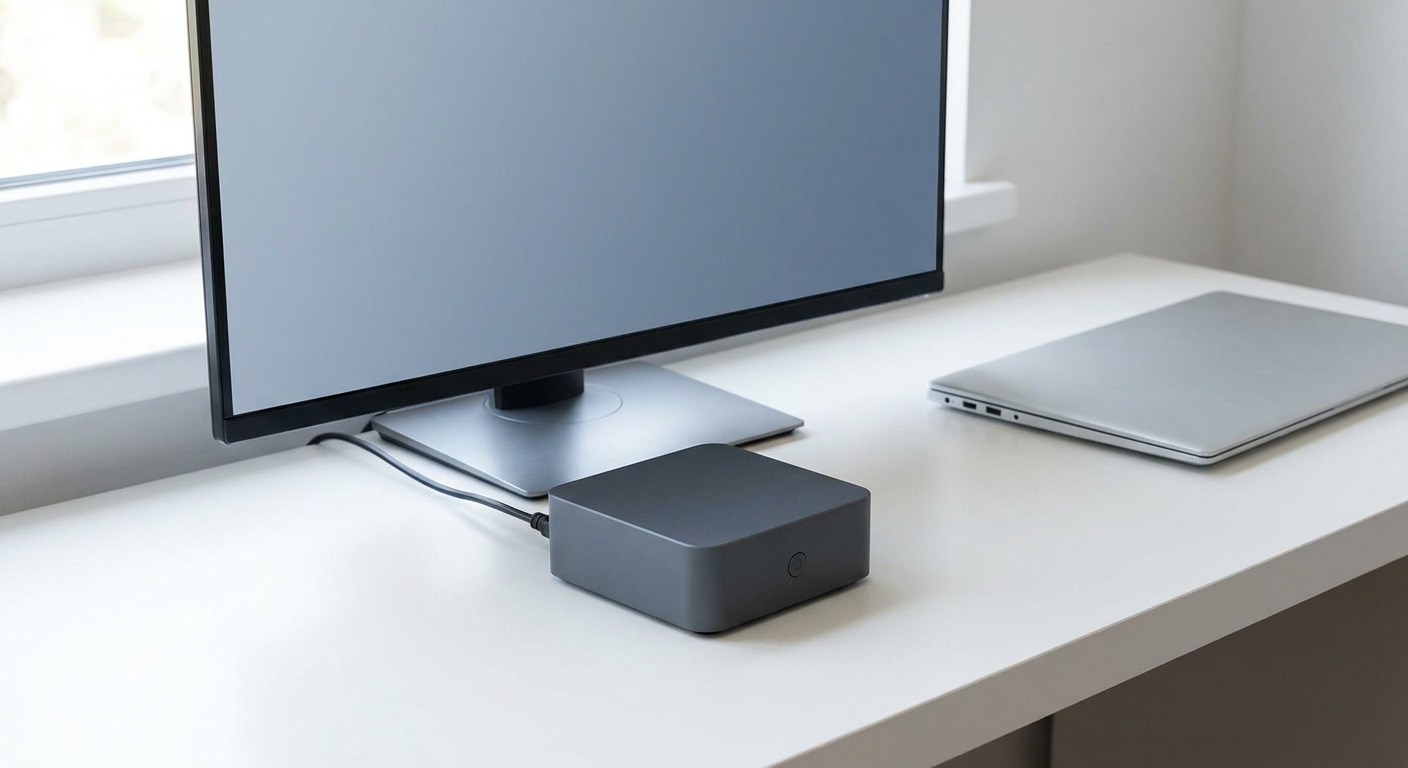
For CUDA developers, the ASUS Ascent GX10 is the GB10 system I'd start with. It has 128GB of LPDDR5x, a 1TB PCIe 4.0 SSD, Wi-Fi 7 and DGX OS. The MSI EdgeXpert 13SUS is built on the same GB10 platform with a 4TB PCIe Gen5 SSD, which matters once you start keeping several large models and datasets locally.

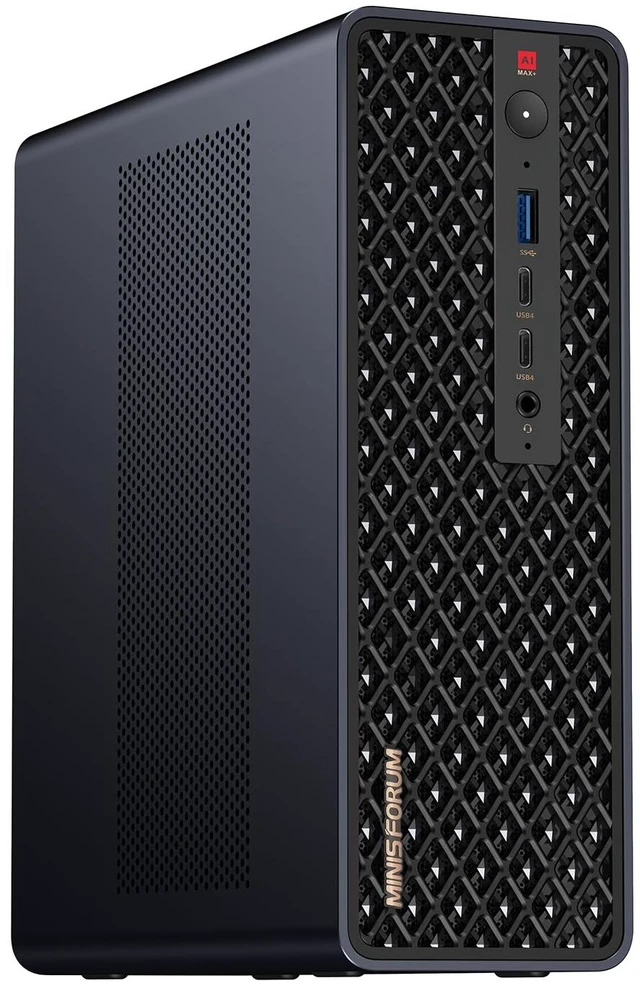
On the AMD side, the MINISFORUM MS-S1 Max stands out for connectivity: 128GB of LPDDR5x-8000, a 2TB SSD, two 10Gbps Ethernet ports and two 80Gbps USB4 v2 ports, with a 320W power supply. The BOSGAME M5 and GMKtec EVO-X2 pair the same chip and 128GB with a 2TB PCIe 4.0 SSD, and the GMKtec ships with Windows 11 Pro installed. If you need a business-class machine from a major brand, the HP Z2 Mini G1a uses the Ryzen AI Max PRO 395, though this configuration has 64GB, so I'd treat it as a machine for mid-sized models.
The ASUS ProArt P14 RTX Spark on Newegg is configured with 128GB of LPDDR5X and a 4TB PCIe 4.0 SSD, plus a 14-inch 3K 120Hz OLED touchscreen. It is an expensive way to get there, but it is a large-memory AI machine that fits in a backpack.
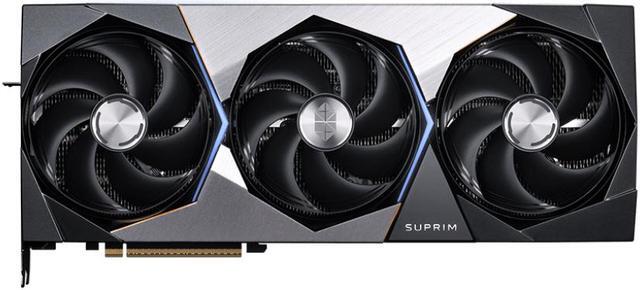
And if your models fit in 32GB, the MSI GeForce RTX 5090 32G SUPRIM SOC in a desktop is still the fastest option here. It has 21,760 CUDA cores and 32GB of GDDR7 on a 512-bit bus. Plan for a large case and power supply, because the card is 359mm long and its gaming mode is rated at 600W.
Side by Side
| Platform | Max Memory | Memory Bandwidth | OS | Best For |
|---|---|---|---|---|
| NVIDIA GB10 (Ascent GX10, EdgeXpert) | 128GB unified | 273GB/s | DGX OS (Linux) | CUDA development, fine-tuning |
| Ryzen AI Max+ 395 (MS-S1 Max, M5, EVO-X2) | 128GB, up to 96GB to graphics on Windows | About 256GB/s | Windows or Linux | Large models plus everyday PC use |
| RTX Spark N1X (ProArt P14) | 128GB unified | Up to 300GB/s (per Windows Central) | Windows 11 on Arm | Portable large-model work |
| RTX 5090 desktop | 32GB GDDR7 | About 1.8TB/s | Windows or Linux | Fast inference on models that fit |
What I'd Recommend
If you write CUDA code or fine-tune models, get a GB10 box. If you want one machine that runs 70B-class models and is also your everyday Windows PC, a Ryzen AI Max+ 395 mini PC with 128GB is the better value. Only buy an RTX Spark laptop if portability is the whole point. And if your models fit in 32GB (roughly 30B parameters or smaller at 4-bit), a desktop RTX 5090 will be quicker than all of them. More systems are listed under Newegg's Ryzen AI Max+ 395 search.
Frequently Asked Questions
How much memory do I need to run a 70B model locally? A 70-billion-parameter model quantized to 4 bits needs roughly 35 to 40GB for its weights, plus more for context. A 128GB unified memory machine handles that comfortably; a 32GB GPU cannot hold it alone.
Is DGX Spark faster than an RTX 5090 for AI? Not for models that fit in 32GB. DGX Spark's memory bandwidth is 273GB/s, while an RTX 5090 delivers about 1.8TB/s. DGX Spark's advantage is fitting much larger models.
Can a Ryzen AI Max+ 395 run large language models on Windows? Yes. AMD's drivers allow up to 96GB of a 128GB system to be assigned to graphics, and tools such as LM Studio and llama.cpp support it.
What operating system does the ASUS Ascent GX10 use? Its Newegg listing specifies NVIDIA DGX OS, a Linux-based operating system built around NVIDIA's AI software stack.
When did RTX Spark laptops launch? NVIDIA says RTX Spark laptops became available on October 16, 2026, through its laptop partners.
Read More
- NVIDIA Docs: DGX Spark Hardware Overview -- Official GB10 specs, including memory bandwidth and supported model sizes.
- NVIDIA: RTX Spark Launch Details -- NVIDIA's launch-day overview of the RTX Spark laptop platform.
- Windows Central: RTX Spark Benchmarks -- Hands-on testing of RTX Spark across CPU, GPU, gaming and local AI workloads.
- Futurum: AMD Expands Ryzen AI Max Model Capability -- Coverage of AMD's update allowing up to 96GB of graphics memory on Windows.
- AMD: Ryzen AI Max+ 395 -- AMD's official specifications for the Strix Halo chip in these mini PCs.