On November 12, Nvidia announced that Jensen Huang had resigned as president and CEO, effective immediately, after 33 years at the company he co-founded. CFO Colette Kress is serving as interim CEO while keeping her CFO role, Harvey C. Jones became Nvidia's first-ever Chair of the Board, and the board is searching for a permanent CEO.
The news drew a lot of attention, and with Black Friday on November 27, a lot of people shopping for a graphics card are asking a practical question: should any of this change what I buy? For most people, my answer is no. Here's how I'd think about it depending on what you're shopping for.
What Nvidia has actually said
The announcement was short. It didn't give a reason, and the board chair said the company expects "operations, customer commitments and product roadmap to continue without interruption." Five days later, on November 17, Nvidia reported third-quarter fiscal 2027 (covering August–October 2026) results with revenue up 103% year over year. The release listed Kress as interim CEO and still highlighted gaming work, including DLSS 5 launching in NBA 2K27 and Hogwarts Legacy and RTX Spark laptops shipping from several PC makers.
So the company didn't stop shipping, and the features people buy GeForce cards for kept rolling out.
If you're buying a gaming GPU on Black Friday
A leadership change doesn't change the card in the box. Drivers come from Nvidia's software teams, and warranty on most retail GeForce cards is handled by the card brand, whether that's MSI, GIGABYTE, ASUS or ZOTAC.
So I'd shop exactly as I would have a month earlier. For a card to keep a few years, I still aim for 16GB. The GIGABYTE WindForce RTX 5070 Ti has 16GB of GDDR7 on a 256-bit bus. A step up, the GIGABYTE WINDFORCE RTX 5080 also has 16GB on a 256-bit bus but recommends an 850W power supply. For 1080p, the MSI Ventus RTX 5060 Ti 16G keeps the 16GB buffer on a 128-bit bus.
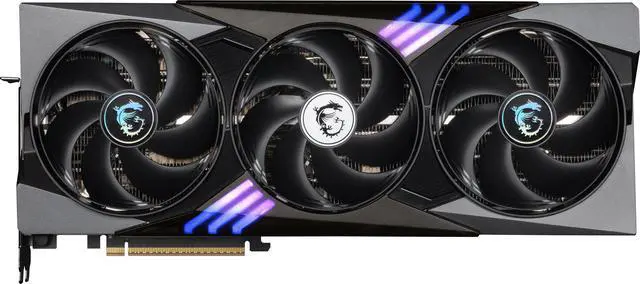
At the top, the MSI RTX 5090 Gaming Trio OC has 32GB of GDDR7 on a 512-bit bus. Its listing shows a 575W board power and a 1000W recommended PSU, so the rest of the system has to be ready for it.
If you're buying for local AI
This is where people worry more, because so much AI software runs on Nvidia's CUDA stack. But software ecosystems don't disappear when a CEO leaves. Developers, libraries and drivers keep moving, and the products already on shelves keep working.
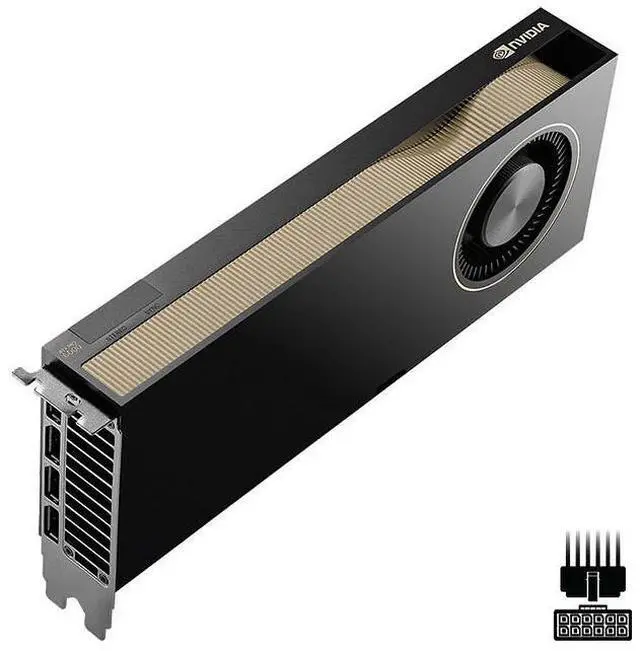
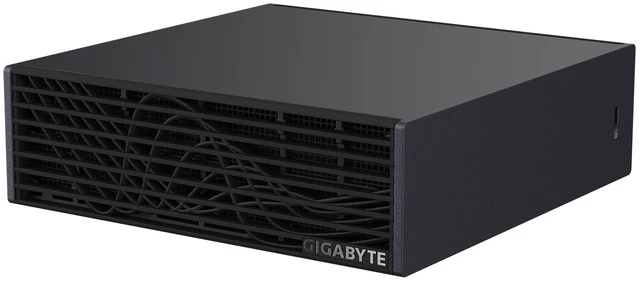
If you need a lot of VRAM in one card, the NVIDIA RTX PRO 6000 Blackwell Max-Q has 96GB of ECC GDDR7 in a dual-slot design. If you'd rather have a small, self-contained box, the GIGABYTE AI TOP ATOM is a GB10-based system with 128GB of LPDDR5x, a 20-core Arm CPU and 10GbE.
If the news makes you want a backup plan
It's reasonable to look at AMD on its merits. The SAPPHIRE PULSE RX 9070 XT has 16GB on a 256-bit bus and supports FSR 4. For AI work, the ASRock Creator Radeon AI PRO R9700 gives you 32GB of GDDR6 in a dual-slot card.
The trade-offs are the usual ones. If you rely on DLSS features in specific games, or on AI tools that only support CUDA, Nvidia is still the safer pick. If your games support FSR 4, or your AI stack supports ROCm, AMD is a fair alternative. That decision should come from your software, not from a headline.
If you're waiting for the next generation
Nobody outside Nvidia knows how a permanent CEO will change product timing, and I wouldn't guess. If your current card is fine, keep it and watch for official announcements. If it isn't, buying during the holiday sales and using the extended holiday return window on eligible Newegg items gives you some breathing room. Items marked with the return badge and bought between November 1 and December 31, 2026 can be returned or replaced until January 31, 2027.
My take
The CEO change is a big story about a company that matters to everyone in PC hardware. For a person buying one graphics card, though, it changes very little. Buy the VRAM you need, check your power supply, pick based on the software you use, and don't let a news cycle make the decision for you.
Frequently Asked Questions
What happened at Nvidia in November 2026? On November 12, 2026, Nvidia announced that Jensen Huang had resigned as president and CEO, effective immediately. CFO Colette Kress became interim CEO while remaining CFO, Harvey C. Jones became the company's first Chair of the Board, and the board began a search for a permanent CEO.
Will GeForce drivers or the RTX 50 roadmap change? Nvidia's board chair said the company expects its operations, customer commitments and product roadmap to continue without interruption. Nvidia also kept rolling out features such as DLSS 5 after the announcement.
Who handles warranty on my GeForce card? Warranty on most GeForce cards sold at retail is handled by the card brand, such as MSI, GIGABYTE, ASUS or ZOTAC, so check that brand's terms.
Should I switch to AMD because of the CEO change? I would not switch for that reason alone. Choose based on the games and apps you use, the VRAM you need and features like DLSS, FSR, CUDA or ROCm support.
Is Nvidia still focused on gaming? Data center sales make up the vast majority of Nvidia's revenue, but its November 17 earnings release still highlighted gaming work such as DLSS 5 and RTX Spark laptops.
Read More
- NVIDIA Announces CEO Transition (NVIDIA Newsroom): Nvidia's official announcement of the leadership change.
- NVIDIA Third Quarter Fiscal 2027 Results (NVIDIA Newsroom): The first earnings release under the interim CEO.
- RTX PRO 6000 vs RTX 5090 for a Local AI Workstation (Newegg Insider): How I'd choose between Nvidia's two biggest single cards.
- Local LLM Rig: Used GPUs, One Big Card or a Threadripper? (Newegg Insider): Three ways to build a local AI machine.
- RTX 5070 Ti vs RX 9070 XT (Newegg Insider): The 16GB Nvidia vs AMD decision for 1440p.