Once you know what a DGX Station is, the next question is what it's actually good for. Spec sheets only get you so far, so for this piece I leaned on the two most detailed hands-on reports I've found: ServeTheHome's review of the GIGABYTE W775-V10-L01, published October 6, 2026, and developer Harrison Kinsley's (sentdex) testing of an ASUS ExpertCenter Pro ET900N G3, published October 18, 2026. Both test units were loaned by their makers, and ServeTheHome labels its review sponsored, but their numbers still tell a clearer story than any launch slide.
Who This Is For
If you already run open models locally and keep hitting a wall on memory or on how many requests you can serve at once, this is your article. If you're still deciding between a DGX Spark and a DGX Station, our beginner's guide covers the basics. The short version: a single Spark-class system tops out at 128GB, while a DGX Station gives the GPU 252GB of HBM3e and lets it reach another 496GB of LPDDR5X over NVLink-C2C.

Use 1: Running Very Large Open Models
The headline use is running models too large for most desk-side machines. ServeTheHome ran GLM-5.3 Flash, a 321-billion-parameter mixture-of-experts model, and DeepSeek V4 Flash 0731, a 284B model, on the GIGABYTE W775-V10-L01. It noted that many OpenRouter providers were serving GLM-5.3 Flash at 20 to 40 tokens per second, and the DGX Station often beat that.
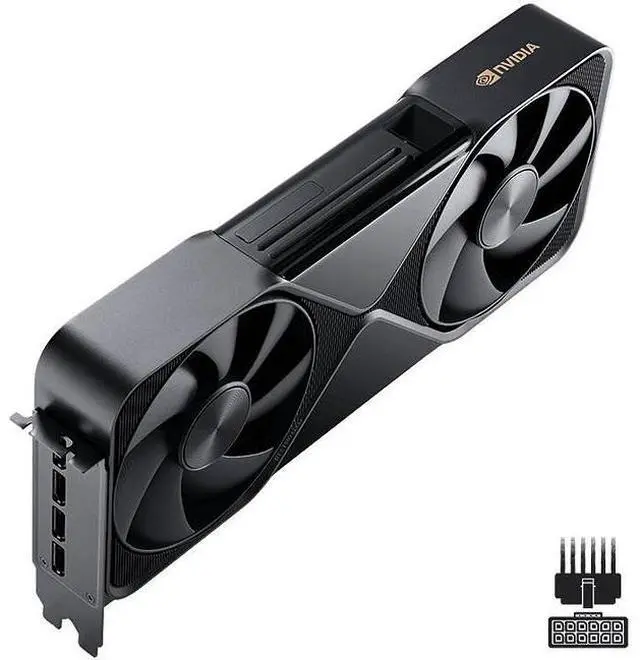
Kinsley went further with DeepSeek-V4.1 Flash on the ASUS ExpertCenter Pro ET900N G3, spreading it across the HBM, an RTX PRO 6000 in the expansion slot and the Grace CPU's LPDDR5X. He measured 407 tokens per second for a single coding stream and roughly 40,000 to 44,000 tokens per second of prefill. His advice is to spec an RTX PRO 6000 rather than the RTX PRO 4000 his unit shipped with, so if you want to copy his setup, budget for the RTX PRO 6000 Blackwell Workstation Edition or the 300W RTX PRO 6000 Blackwell Max-Q.
Use 2: Serving an Agent Swarm
Both reviewers singled this use out. ServeTheHome pushed Qwen3.6-35B-A3B past 26,000 output tokens per second at 512 concurrent requests, which it estimates at about 2.25 billion tokens a day. Kinsley found NVIDIA's Nemotron 3.5 Super, a 120B model with 12B active parameters, scaling from 524 tokens per second on one coding stream to 7,282 across 64. If you run monitoring agents, support bots or coding assistants for a whole team, this is the job the hardware seems built for. NVIDIA also lists Multi-Instance GPU support for up to seven instances, which helps when several people share one machine.
Use 3: Agentic Coding on a Model You Control
ServeTheHome had GLM-5.3 Flash and DeepSeek V4 Flash each build a browser kart-racing game from scratch. DeepSeek generated tokens about 20 percent faster, yet GLM-5.3 finished the main coding work in roughly 2.1 hours versus about 4.7. That's a useful reminder that tokens per second and time to a working result aren't the same thing. Kinsley says that since running these models locally, he has moved almost entirely off API models for his own development work, citing speed, protecting his IP and not depending on someone else's outages.
Use 4: Fine-Tuning, Data Science and Simulation
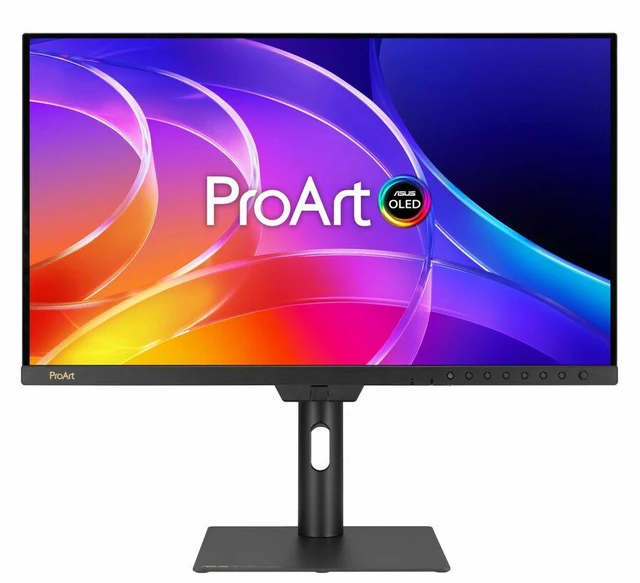
NVIDIA positions DGX Station for pretraining and fine-tuning, for data science on large datasets held in coherent memory, and for physical AI work that pairs the GB300 with an RTX PRO Blackwell card for visualization and simulation. Neither review published training results, so treat this part as NVIDIA's claim. One caution from ServeTheHome: FP64 throughput is only 1.3 teraflops, so this isn't a traditional scientific computing machine. For the visual side, a 4K 240Hz QD-OLED display like the ASUS ProArt PA32USD connects over DisplayPort 2.1a.
Use 5: Linking Stations Together
The ConnectX-8 is easy to overlook. ServeTheHome found the GPU connects to it over a PCIe Gen6 x16 link and measured 784.3Gbps between the Blackwell Ultra GPUs of two stations over two 400G links. The Grace CPU side tops out around 229Gbps. Put simply, two stations can share work over the network much like data center GPUs do.
What Living With One Is Like
Both reviews paint a calmer picture than the 1,600W rating suggests. ServeTheHome measured the GIGABYTE at 36 to 38 dBA under lighter loads and 44 to 46 dBA at full load. Kinsley's ASUS unit peaked at 75°C on the GB300 with zero thermal slowdown events. Idle power never dropped below about 250W in ServeTheHome's testing, and much of the day-to-day management happens through the BMC's web interface and remote KVM.
ServeTheHome expects many buyers to add an RTX PRO 2000 Blackwell just for video output. On some models, open M.2 slots take a bare Gen5 drive like the Samsung 9100 PRO 4TB, and a UPS such as the APC Smart-UPS SMT2200C, rated by APC at 1,920W, covers the system's 1,600W rating.
The Verdict
If I had to name one use that justifies a DGX Station, it's serving many agents or users at once on a large model. Kinsley's head-to-head with his four-card RTX PRO 6000 rig showed the biggest gap on prefill, about 3.6 times faster on a cold 8K prompt with decode roughly even, and ServeTheHome's concurrency numbers got almost silly. Running one giant model for one person is impressive, but concurrency is what changes what a small team can do.
Frequently Asked Questions
Can a DGX Station run a 300B-parameter model? Yes. ServeTheHome ran GLM-5.3 Flash, a 321B mixture-of-experts model, and DeepSeek V4 Flash 0731, a 284B model, on a GIGABYTE W775-V10-L01. Its GLM-5.3 Flash results often beat the 20 to 40 tokens per second many OpenRouter providers were delivering.
How many users or agents can one DGX Station serve? It depends on the model. ServeTheHome measured more than 26,000 output tokens per second with Qwen3.6-35B-A3B at 512 concurrent requests, and Harrison Kinsley measured 7,282 tokens per second with Nemotron 3.5 Super across 64 coding streams.
Is a DGX Station faster than four RTX PRO 6000 cards? In Kinsley's GLM-5.3 Flash (QAD checkpoint) test, sustained single-stream decode was similar (347.5 versus 335.0 tokens per second), while cold 8K prefill was about 3.6 times faster on the GB300 (33.7K versus 9.4K tokens per second).
Is a DGX Station good for scientific HPC work? Not for FP64-heavy work. NVIDIA lists FP64 throughput at 1.3 teraflops, and ServeTheHome advises against treating it as an HPC machine.
How loud is a DGX Station? ServeTheHome measured the GIGABYTE W775-V10-L01 at 36 to 38 dBA under lighter loads and 44 to 46 dBA at full load, thanks to its liquid cooling.
Read More
- ServeTheHome: GIGABYTE W775-V10-L01 Hands-On -- An eight-page deep dive with LLM throughput, networking, power and noise results.
- Harrison Kinsley: A Datacenter at Home -- Detailed DeepSeek, GLM and Nemotron testing on the ASUS ExpertCenter Pro ET900N G3.
- NVIDIA: DGX Station Datasheet (PDF) -- Official compute figures, MIG support and platform I/O.
- NVIDIA Newsroom: DGX Station for Windows -- NVIDIA's use cases for agents, fine-tuning, data science and physical AI.
- Newegg Insider: What Is NVIDIA DGX Station? -- The beginner's guide to the GB300 desktop and how it compares with DGX Spark.