A popular r/buildapc thread with more than 300 comments asked a simple question: is an RTX 5070 enough for a PC that has to last seven or eight years? The poster was moving from console to PC, and the replies never really settled it. I get why. "Will it last?" is really three questions hiding in one.
Here's how I think about it, and what I'd buy for different kinds of players.
Who Needs a "Seven-Year" Graphics Card?
Mostly people who don't want to think about hardware. Console players switching to PC are used to one box lasting a whole generation. The PS5 launched in November 2020, and Sony said in May 2026 that it hasn't decided when its next console will launch. That's a long, stable stretch for a game target, and it's a big part of why a good graphics card can age gracefully.
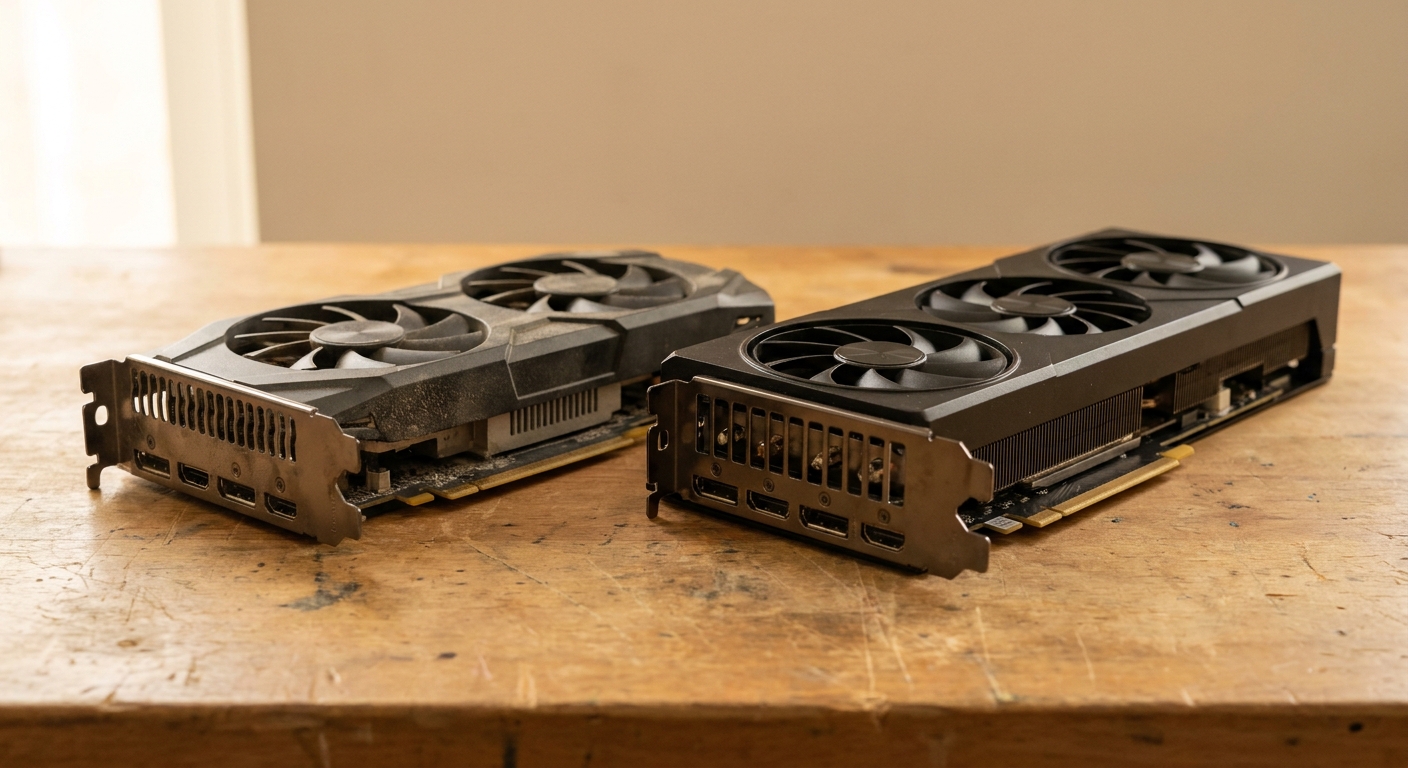
But a card doesn't stop working after a few years. It slowly moves down the settings menu. One of the most-upvoted replies in that thread put it plainly: the 5070 is "currently a 1440p 100FPS tier GPU," and "in 7-8 years you might need to run 1080p medium." If you're fine with that, seven years is realistic. If you want high settings the whole time, it isn't, with any card.
The Three Things That Actually Decide Longevity
Video memory. This is the one you can't fix later. Tom's Hardware tested the RTX 5060 Ti in 8GB and 16GB versions: almost no gap at 1080p medium, about 18 percent at 1440p ultra and about 42 percent at 4K. That gap only grows as games get heavier. For a long-term card, I'd treat 16GB as the target and 12GB as a compromise.
Driver support. NVIDIA said Game Ready drivers for Maxwell, Pascal and Volta cards would end with a final release in October 2025, followed by quarterly security updates through October 2028. Pascal launched in 2016, so that's roughly nine years of game-optimized drivers. AMD moved the RX 5000 and RX 6000 series to a separate driver branch in 2025 and later clarified that game support would continue. Either way, both companies have kept recent generations supported for many years.
Upscaling features. Upscalers do a lot of the heavy lifting in a card's later years. NVIDIA's Multi Frame Generation requires an RTX 50-series card. AMD launched FSR 4 as an RX 9000 exclusive, then brought official FSR 4.1 upscaling to the RX 7000 series in June 2026, with RX 6000 support slated for early 2027. Buying the current generation means you start with the newest feature set.
Use-Case Scenarios and My Pick for Each
1080p High Refresh, Keep It for Years
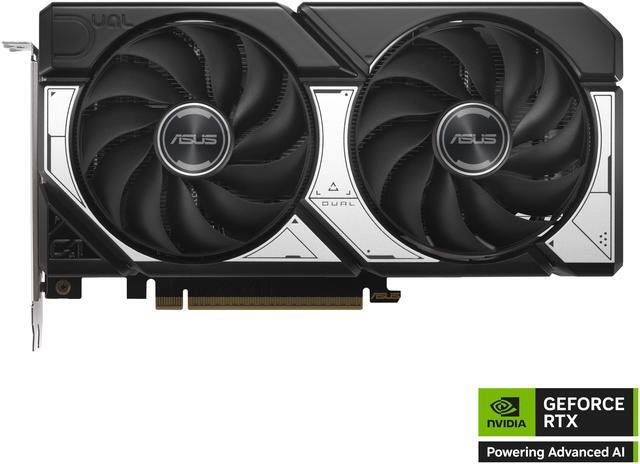
I'd look at the GIGABYTE Gaming Radeon RX 9060 XT 16GB or the ASUS Dual GeForce RTX 5060 Ti 16GB. Both have 16GB on a 128-bit bus. The ASUS card is 229mm long and 2.5 slots thick with a 550W recommended power supply, so it fits most cases. Just make sure you buy the 16GB versions, because both GPUs also come with 8GB.
1440p for a Console Switcher
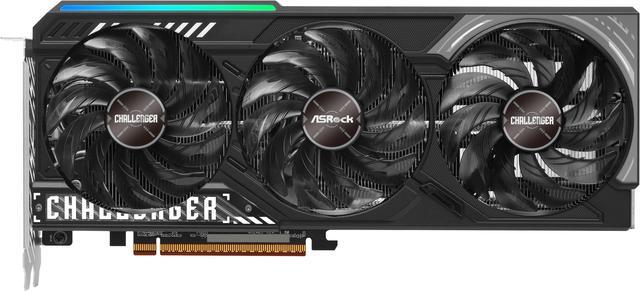
This is the scenario from the Reddit thread, and it's where I'd spend the most thought. The ASUS PRIME RTX 5070 12GB is fast, and 12GB is enough for current games. But for an eight-year plan, I'd rather have 16GB. The ASRock Challenger Radeon RX 9070 16GB gives you that with a 220W TDP and a 700W recommended PSU, and commenters in the thread pointed to the RX 9070 family for exactly that reason. If you want NVIDIA's feature set with 16GB, step up to the MSI Gaming RTX 5070 Ti 16G Gaming Trio OC.
1440p High Settings or Light 4K
The GIGABYTE Gaming Radeon RX 9070 XT 16GB is the card I'd buy with longevity in mind at this level. Note that this model uses three 8-pin connectors and lists an 850W recommended supply, so plan your PSU around it.
4K, Maximum Headroom
The GIGABYTE Gaming RTX 5080 16GB has the most performance here, with a 360W TDP and 850W recommended PSU. It's also 340mm long, so check your case. It doesn't have more memory than a 5070 Ti, though, which tells you that at the high end you're paying for speed, not extra longevity insurance.

Tight Budget, Still Want 1440p
The GIGABYTE Gaming Radeon RX 9070 GRE 12GB is a strong 1440p card in 2026. I'd buy it knowing that 12GB will probably be the first thing that forces settings down, and plan to lean on upscaling later.
Verdict
No graphics card stays a high-settings card for seven years. The ones that age best have enough memory, current-generation features and a little more performance than you need on day one. For most console switchers, that means a 16GB card like the RX 9070 or RTX 5070 Ti rather than a 12GB card. I'd also plan on one upgrade halfway through. That usually beats overbuying up front.
Frequently Asked Questions
Can a graphics card really last 7 years? Yes, if you accept lower settings later. A card that runs 1440p at high settings in 2026 will usually still play new games years later, just at reduced settings or resolution. No card stays a high-settings card for seven years.
Is the RTX 5070 enough for a PC that lasts 7 to 8 years? It's fast enough for current games, but its 12GB of VRAM is the likely limit over a long period. For an eight-year plan, I'd lean toward a 16GB card such as the Radeon RX 9070 or GeForce RTX 5070 Ti.
Is 12GB of VRAM enough in 2026? For 1440p in current games, usually yes, but it leaves less headroom than 16GB as games get heavier. For a card you plan to keep for many years, I'd choose 16GB.
How long do NVIDIA and AMD support graphics cards with drivers? NVIDIA said Game Ready drivers for Maxwell, Pascal and Volta would end with a final release in October 2025, followed by quarterly security updates through October 2028, so Pascal cards from 2016 got roughly nine years of game-optimized drivers. AMD moved RX 5000 and RX 6000 cards to a separate driver branch in 2025 while continuing game support.
Does FSR 4 work on older Radeon cards? AMD launched FSR 4 exclusively for RX 9000 cards, then added official FSR 4.1 upscaling for the RX 7000 series in June 2026. AMD has said RX 6000 support is planned for early 2027.
Read More
- Tom's Hardware: RTX 5060 Ti 8GB vs 16GB Face-Off -- How much video memory matters across resolutions and settings.
- TechSpot: GeForce RTX 5060 Ti 8GB Review -- Where 8GB cards run into trouble in modern games.
- Tom's Hardware: NVIDIA Ends Game Ready Drivers for Maxwell and Pascal -- Details on NVIDIA's driver support timeline for older GPUs.
- Tom's Hardware: AMD Clarifies RDNA 1 and 2 Driver Support -- What AMD's driver change means for RX 5000 and RX 6000 owners.
- Tom's Hardware: Official FSR 4.1 Comes to RX 7000 Series -- AMD's newer upscaling arrives on the previous Radeon generation.