

Your Browsing History
Quick View

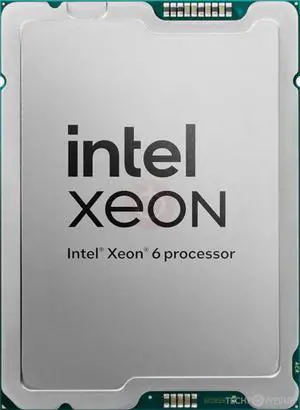
- Brand: Intel
- Name: Xeon 654
- CPU Code Name: Granite Rapids
- Operating Frequency: 3.1 GHz
- Model #: PK8072007104600
- $1,519.00 –
- More options from $1,516.84 - $1,519.00
- Free Shipping
Quick View
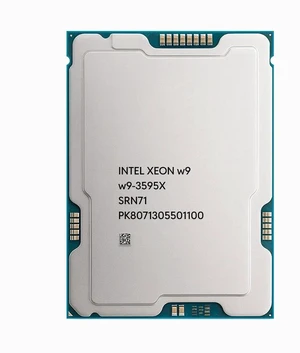
- Series: Xeon
- Brand: Intel
- CPU Socket Type: FC-LGA16A
- Part Number: PK8071305501100
- Model #: PK8071305501100
- $6,999.00 –
- More options from $6,999.00 - $7,980.06
- Free Shipping

Quick View
- Brand: Intel
- Name: Xeon 674X
- CPU Code Name: Granite Rapids
- Operating Frequency: 3.0 GHz
- Model #: PK8072007045600
- $2,790.00 –
- More options from $2,790.00 - $3,799.00
- $11.20 Shipping

Quick View
- Series: Xeon W5
- Brand: Intel
- CPU Socket Type: LGA 4677
- CPU Code Name: Sapphire Rapids
- Model #: PK8071305082000
- $2,096.94 –
- More options from $1,599.31 - $3,237.75
- Free Shipping
Quick View
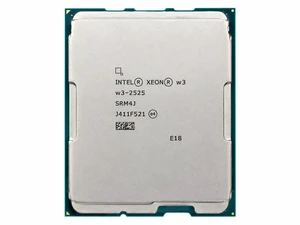
- Brand: Intel
- Part Number: PK8071305502400
- Model #: PK8071305502400
- $749.99 –
- More options from $749.99 - $845.97
- Free Shipping
Quick View
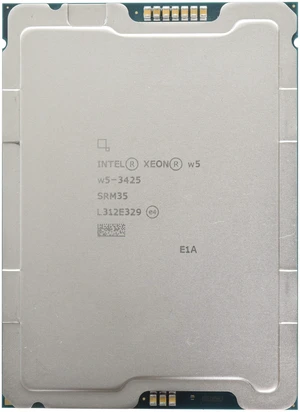
- Series: Xeon w5-3425
- Brand: Intel
- Part Number: PK8071305082100
- Model #: PK8071305082100
- $1,399.00 –
- More options from $1,399.00 - $1,613.97
- Free Shipping
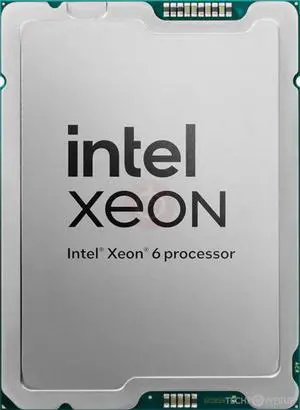
Quick View
- Brand: Intel
- Name: Xeon 638
- CPU Code Name: Granite Rapids
- Operating Frequency: 3.2 GHz
- Model #: PK8072007104500
- $1,100.00 –
- Free Shipping
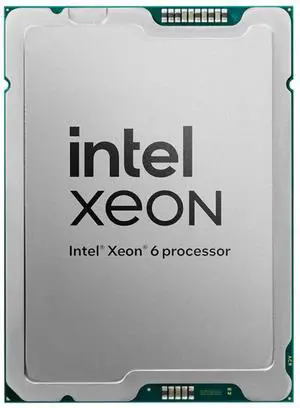
Quick View
- Brand: Intel
- Name: Xeon W9-3575X
- Operating Frequency: 2.2 GHz
- CPU Socket Type: FC-LGA16A
- Model #: PK8071305501200
- $4,450.00 –
- More options from $4,450.00 - $5,334.46
- Free Shipping
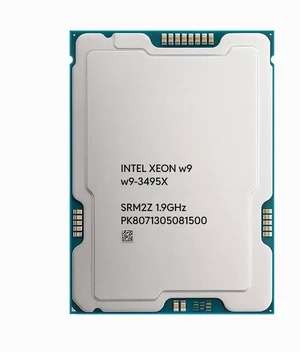
Quick View
- Series: Xeon
- Brand: Intel
- # of Cores: 56
- Part Number: PK8071305081500
- Model #: PK8071305081500
- $6,899.00 –
- Free Shipping

Quick View
- Brand: Intel
- Name: Xeon W7-3565X
- CPU Code Name: Sapphire Rapids
- Operating Frequency: 2.5 GHz
- Model #: PK8071305501300
- $3,399.99 –
- More options from $3,399.99 - $3,705.01
- Free Shipping
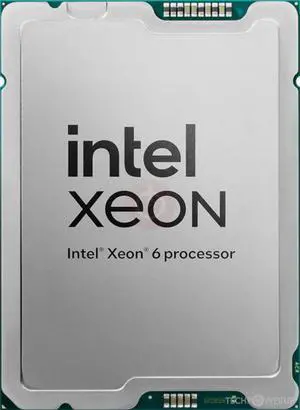
Quick View
- Brand: Intel
- Name: Xeon 656
- CPU Code Name: Granite Rapids
- Operating Frequency: 2.9 GHz
- Model #: PK8072007104700
- $1,759.00 –
- Free Shipping
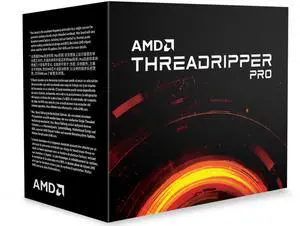
Quick View

Limited time offer, ends 10/06
- Series: Ryzen Threadripper PRO 5000 WX-Series
- Brand: AMD
- CPU Socket Type: Socket sWRX8
- CPU Code Name: Chagall PRO
- Model #: 100-100000444WOF
- $3,189.99 –
- More options from $3,189.99 - $7,028.56
- Free Shipping
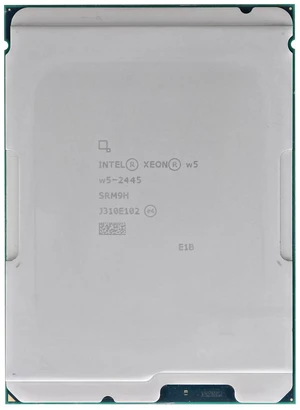
Quick View
- Brand: Intel
- # of Cores: 10
- Part Number: PK8071305127400
- Model #: PK8071305127400
- $1,099.00 –
- More options from $1,099.00 - $1,155.78
- Free Shipping
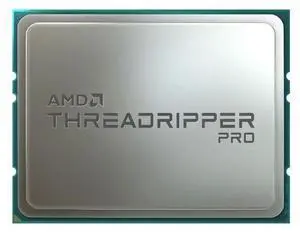
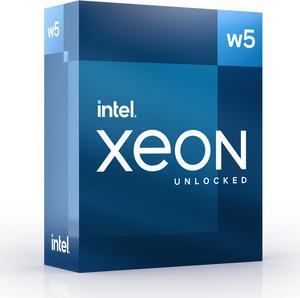
Quick View
Intel Xeon w5-3435X Hexadeca-core (16 Core) 3.10 GHz Processor - 45 MB L3 Cache - 64-bit Processing - 4.70 GHz Overclocking Speed - Socket LGA-4677 - 324 W - 32 Threads - BX807133435X
- Series: Xeon W5
- Brand: Intel
- CPU Socket Type: LGA 4677
- CPU Code Name: Sapphire Rapids
- Model #: BX807133435X
- $2,086.08 –
- More options from $1,999.99 - $4,544.45
- Free Shipping
Quick View
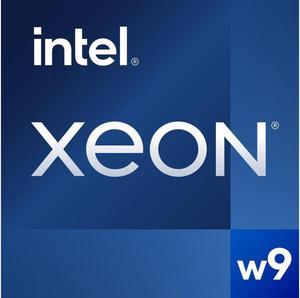
- Series: Xeon W9
- Brand: Intel
- CPU Socket Type: LGA 4677
- CPU Code Name: Sapphire Rapids
- Model #: BX807133475X
- $4,076.00 –
- More options from $4,076.00 - $6,492.00
- Free Shipping
Quick View
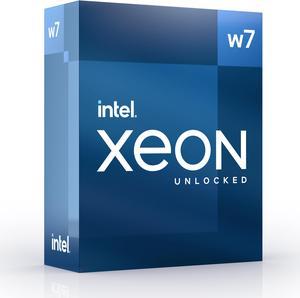
Intel Xeon w7-2495X Tetracosa-core (24 Core) 2.50 GHz Processor - 45 MB L3 Cache - 64-bit Processing - 4.80 GHz Overclocking Speed - Socket LGA-4677 - 270 W - 48 Threads- BX807132495X
- Series: Xeon W
- Brand: Intel
- CPU Socket Type: LGA 4677
- CPU Code Name: Sapphire Rapids
- Model #: BX807132495X
- $3,941.45 –
- More options from $2,353.99 - $4,000.00

Quick View
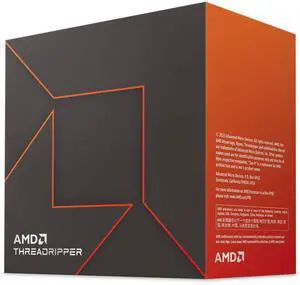
AMD Ryzen Threadripper 7970X 350W SP6 - Zen 4 32-Core/64-Threads (100-100001351WOF)
Limited time offer, ends 10/06
- Series: Ryzen Threadripper 7000 Series
- Brand: AMD
- CPU Socket Type: Socket sTR5
- CPU Code Name: Storm Peak
- Model #: 100-100001351WOF
- $1,899.98
- $1,898.99 –
- More options from $1,898.99 - $2,699.99
- Free Shipping

Quick View
- Series: Xeon W9
- Brand: Intel
- CPU Socket Type: LGA 4677
- CPU Code Name: Sapphire Rapids
- Model #: BX807133575X
- $4,749.99 –
- More options from $4,749.99 - $5,899.00
- Free Shipping

Quick View
Intel Xeon w5-3535X Icosa-core (20 Core) 2.90 GHz Processor - 52.50 MB L3 Cache - 64-bit Processing - 4.80 GHz Overclocking Speed - Socket LGA-4677 - Intel vPro Technology-40 Threads - BX807133535X
- Brand: Intel
- Name: Xeon W5-3535X
- CPU Code Name: Sapphire Rapids
- Operating Frequency: 2.9 GHz
- Model #: BX807133535X
- $2,699.00 –
- More options from $2,199.99 - $2,699.00
- Free Shipping

Quick View
- Brand: Intel
- Name: Xeon W5-2555X
- CPU Code Name: Sapphire Rapids
- Operating Frequency: 3.3 GHz
- Model #: BX807132555X
- $1,599.00 –
- More options from $1,187.99 - $1,599.00
- Free Shipping

Quick View
- Brand: Intel
- Name: Xeon W7-2575X
- CPU Code Name: Sapphire Rapids
- Operating Frequency: 3.0 GHz
- Model #: BX807132575X
- $2,399.00 –
- More options from $2,184.99 - $2,399.00
- Free Shipping
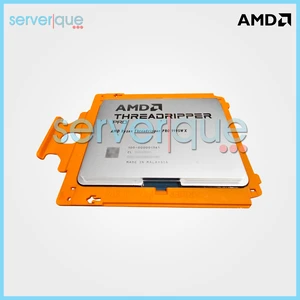
Quick View
- Brand: AMD
- Part Number: 100-000001361
- Parts: 30 Days
- Labor: 30 Days
- Model #: 100-000001361
- $12,730.00 –
- Free Shipping
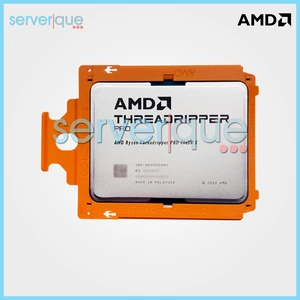
Quick View
- Brand: AMD
- Part Number: 100-000000885
- Parts: 30 Days
- Labor: 30 Days
- Model #: 100-000000885
- $1,980.00 –
- Free Shipping

Quick View
OUT OF STOCK
- Brand: Intel
- Name: Xeon W5-2565X
- CPU Code Name: Sapphire Rapids
- Operating Frequency: 3.2 GHz
- Model #: BX807132565X
- $1,492.99 –
- Free Shipping
Quick View
- $259.46 –
- Free Shipping
Workstation CPU Processors for Professional Performance
Explore a range of workstation CPUs designed for demanding tasks like 3D rendering, video editing, and scientific computing. This selection includes processors from the latest Intel Xeon and AMD Ryzen Threadripper generations to meet advanced workstation needs.
How to Choose Workstation CPU Processor
Key Features and Technologies to Consider
When selecting a workstation CPU processor, several critical features differentiate models designed for professional-grade tasks:
- Core and Thread Count: Higher core and thread numbers enable better multitasking and parallel processing, essential for rendering, simulation, and complex computational workloads.
- Cache Size: Larger and smarter cache architectures reduce latency and accelerate data access for demanding applications.
- Thermal Design Power (TDP): Careful attention to TDP helps ensure your cooling solution matches the processor’s power consumption and heat output.
- Memory Support: ECC memory compatibility and maximum RAM capacity are key for stability and performance in error-sensitive, data-heavy environments.
- PCIe Version and Lane Count: The number and generation of PCIe lanes influence GPU and storage device performance, which is crucial for data throughput.
- Platform Compatibility: Socket type and chipset support affect upgrade paths and peripheral integration, so choose a CPU that fits your broader workstation build.
The Importance of Core and Thread Count in Workstation CPUs
Among all specifications, CPU core and thread count significantly impact workstation performance. Professional workloads like 3D rendering, scientific simulations, and video editing rely heavily on parallel processing. More cores and simultaneous multithreading enable these tasks to execute in parallel, reducing overall computation time. For instance, CPUs with 12, 16, or even more cores allow applications that support multi-threading to run efficiently without bottlenecks. This aspect is why modern workstation CPUs often prioritize core density alongside single-thread performance. If your tasks are heavily multi-threaded, investing in a higher core count model can provide tangible benefits in throughput and responsiveness.
Advanced Use Cases for Developers and Professionals
For developers and professionals pushing workstation CPUs to their limits, leveraging multi-threading and high core counts becomes critical. Software developers working with complex codebases or compiling large projects will appreciate processors optimized for simultaneous multi-threaded workloads. Similarly, engineers and artists using CAD and 3D modeling suites demand reliable CPU performance under intense, sustained loads. Understanding how to balance CPU selection with complementary Workstation Components like ECC RAM and professional GPUs ensures a cohesive build tailored for maximum efficiency. Experts looking for granular control over specs can also reference Power Search to filter models by technical parameters that align with their workflow demands.
Performance and Setup Tips
- Ensure your cooling solution matches the CPU TDP for stable performance under heavy workloads.
- Pair your CPU with ECC RAM to minimize errors and improve data integrity in professional applications.
- Utilize motherboards that support the latest PCIe standards to fully leverage high-speed GPUs and NVMe storage.
- Keep BIOS and chipset drivers up to date to maximize compatibility and performance optimizations.
- Balance core count with clock speed based on whether your applications favor multi-threading or single-thread performance.
- Configure your workstation’s power settings to favor performance mode for intensive compute tasks.
Newegg shopping tip: When choosing a workstation CPU, focus on core count and clock speed relevant to your workload, especially if you're running software optimized for multi-threading. Also, check for compatibility with your motherboard and support for features like ECC memory if stability is critical.
Explore Workstation CPU Processor & Related Categories
Choosing Your First Workstation CPU Processor
Stepping into the world of workstation CPUs can feel overwhelming at first, but it’s all about understanding what makes these processors unique. Workstation CPUs offer powerful multi-core performance, enhanced reliability, and support for advanced features like ECC memory. They’re designed to handle professional applications that demand precision and endurance, such as CAD, engineering simulations, and media production. If you’re new here, start by considering the type of software you’ll be running and whether it benefits more from single-core speed or high core counts. To narrow down options based on your specific needs, use our Power Search tool.
Ideal for Content Creators and Digital Artists
Content creators working with 4K video editing, 3D modeling, and animation rely heavily on workstation CPUs that deliver robust multi-threading capabilities and fast cache systems to accelerate rendering times. High core and thread counts allow editing software and render engines to process complex scenes and effects without bottlenecks. The right CPU keeps your workflow smooth, helping projects finish faster so you can meet tight deadlines. For those pushing graphical and compute boundaries, exploring Next Page reveals the latest processors built to handle these intense creative workloads.
Engineers and Scientific Researchers: Precision and Parallelism
Engineers and scientists running simulations, finite element analysis (FEA), or data modeling depend on workstation CPUs optimized for parallel processing and stability. These CPUs often support ECC memory to prevent data corruption during long-running calculations, which is critical for accuracy in scientific results. Additionally, workstation processors enable extensive PCIe lanes for high-bandwidth connections to specialized GPUs and storage devices, maximizing throughput and system responsiveness. To build a balanced rig that complements your CPU, check out our curated Workstation Components.
Before You Buy
- Confirm the CPU socket type matches your motherboard or plan to upgrade accordingly.
- Check the number of cores and threads to ensure your CPU suits your specific workload demands.
- Verify compatibility with ECC memory if your applications require enhanced data integrity.
- Determine the total power draw (TDP) and ensure your cooling solution can handle it.
- Consider support for PCIe 4.0 or 5.0 lanes depending on your need for fast expansion cards or NVMe storage.
- Look into platform generation to ensure the CPU supports your preferred features and socket standards.
- Evaluate if integrated graphics are necessary or if a dedicated GPU will be part of your workstation build.
- Use filtering tools like Power Search to fine-tune your options before making a final choice.
Research more: Choosing the right workstation CPU often means balancing core count, clock speed, and compatibility with your software. For a deeper dive into what matters most for your specific needs, check out the detailed insights in Newegg Insider’s buying guides.
Last Updated: September 2026 | Newegg Workstation CPU Processor Buying Guide
Workstation CPU Processor FAQs:
How do Intel Xeon and AMD Ryzen Threadripper CPUs compare for workstation use?
Intel Xeon processors excel in reliability and compatibility with professional software, making them a solid choice for enterprise-grade workstations. On the other hand, AMD Ryzen Threadripper offers higher core counts and better multitasking performance, which is great for intensive video editing and 3D rendering tasks.
Should I prioritize clock speed or core count when picking a workstation CPU?
It really depends on your workload; if your tasks rely on single-thread performance like certain CAD applications, higher clock speeds matter more. For software that can spread work across many threads—like simulation or rendering—having more cores usually delivers better results.
What makes a workstation CPU different from a regular desktop processor?
Workstation CPUs are built to handle heavy multitasking and complex calculations, like 3D rendering or scientific simulations, with more cores, higher cache, and better stability compared to standard desktop processors.
Do all workstation CPUs support ECC memory?
Not all, but many workstation processors do support ECC (Error-Correcting Code) memory, which helps prevent data corruption and improves reliability for critical professional workloads.
How do I figure out which workstation CPU is best for heavy multitasking and rendering without paying for features I don’t need?
Focus on CPUs with higher core counts and strong multi-threading since rendering and multitasking benefit from parallel processing. Balance core count with clock speed depending on your software, and avoid ultra-high-end models if your projects aren’t consistently demanding.
Is it worth spending extra on workstation CPUs over regular desktop processors if I’m doing CAD and 3D modeling?
If your work involves professional software that supports ECC memory and demands high stability or precision, a workstation CPU is a smart investment. For occasional or entry-level tasks, a high-performance desktop CPU might suffice, but workstations deliver reliability under heavy, sustained workloads.
How reliable are workstation CPUs compared to regular desktop processors?
Workstation CPUs are generally built for higher reliability and longer runtimes, making them better for demanding, continuous tasks. Still, their durability often depends on proper cooling and stable power delivery.
When reading reviews for workstation processors, what common issues should I be on the lookout for?
Watch out for reports of thermal throttling, compatibility problems with certain motherboards, and inconsistent performance in multi-threaded applications. These can be signs of potential headaches down the line.
How do I know if my motherboard supports the workstation CPU I want to buy?
Check your motherboard’s CPU socket type and chipset compatibility in its manual or on the manufacturer's website, then match it with the processor specifications to ensure they are compatible.
What’s the best way to keep my workstation CPU running efficiently after installation?
Use a good quality cooling system, regularly update your BIOS, and make sure your workstation has clean, dust-free airflow to prevent overheating and maintain peak performance.
Bestselling Workstation CPU Processor Reviews:
JeffRea
11/20/2025 1:19:19 PM
Great Product...
“ super fast shipping, well packaged.. very happy ”
Intel Xeon w5-3535X Icosa-core (20 Core) 2.90 GHz Processor - 52.50 MB L3 Cache - 64-bit Processing - 4.80 GHz Overclocking Speed - Socket LGA-4677 - Intel vPro Technology-40 Threads - BX807133535XAdam R.
2/2/2024 7:49:47 PM
Good processor
“ Its fast, quiet, never throttles, etc. ”
Intel Xeon w5-2465X Hexadeca-core (16 Core) 3.10 GHz Processor - 33.75 MB L3 Cache - 64-bit Processing - 4.70 GHz Overclocking Speed - Socket LGA-4677 - 240 W - 32 Threads- BX807132465XAnonymous
11/12/2023 8:24:02 PM
Great Unlocked CPU
“ fast without overclocking ”
Intel Xeon w7-3465X Octacosa-core (28 Core) 2.50 GHz Processor - 75 MB L3 Cache - 64-bit Processing - 4.80 GHz Overclocking Speed - Socket LGA-4677 - 360 W - 56 Threads - BX807133465X