
Your Browsing History
 Holiday Shipping Details & Extended Holiday Returns
 BEST SELLERS


BEST SELLERS
In Network Interface Cards
Our most popular products, based on sales and updated frequently.Shop Department
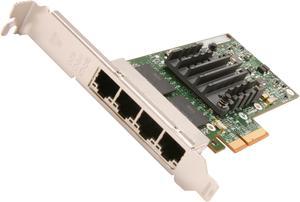
Intel E1G44HTBLK PCI-Express 2.0 Server Adapter I340-T4 (Bulk Pack)
- Standards: IEEE802.3, IEEE802.3u, IEEE802.3ab
- Connectors: 4 x RJ45
- Temperature: 0°C ~ 55°C
- Weight: 1
- Model #: E1G44HTBLK
- Item #: 9SIA4A0K9D6750
- Return Policy: View Return Policy
$99.99
Free Shipping
Runs LAGG well, bonds with LAGG over all 4 ports, and also across other compatible Intel network ports such as motherboard nics and other E1G44HT cards. Runs decently cool, dedicated controllers for each nic, and comes with low-profile bracket.
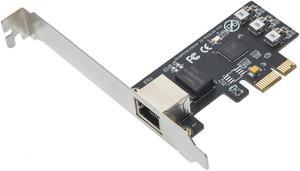
2.5 Gigabit Ethernet PCI Express PCI-E Network Controller Card 10/100/1000/25000 Mbps RJ45 LAN Adapter Converter for Desktop PC
- Connectors: 1 x RJ45
- Parts: 3 Year
- Model #: SI-PEX24059
- Item #: 9SIA3XWCK32024
- Return Policy: View Return Policy
$16.99
Free Shipping
Works as said and gets the speeds I need!
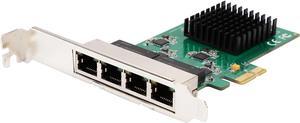
SYBA SI-PEX24042 4 Port Gigabit Ethernet PCI-e x1 Network Interface Card
- Wake On LAN: Yes
- Weight: 0.3
- Package Contents: 1 x PCI-Express Four Gigabit Ethernet controller card 1 x User Manual 1 x Driver CD 1 x Low Profile Bracket
- Parts: 1 Year
- Model #: SI-PEX24042
- Item #: 9SIA3XW5E92184
- Return Policy: View Return Policy
$37.99
Free Shipping
Easy to install, and compatible with most operating systems. Very cost effective. Great for converting the PCIe interface into 4 ports. I was able to turn my old PC into a NAS with enough bandwidth for multiple users.
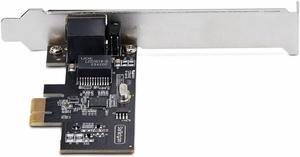
StarTech.com 1-Port 2.5G NBASE-T PCIe Network Card Intel®I225-V, Single-Port Ethernet, Multi-Gigabit NIC
- Part Number: PR12GI-NETWORK-CARD
- Model #: PR12GI-NETWORK-CARD
- Item #: 14U-002S-000U6
- Return Policy: Manufacturer Only Return Policy
$44.99
$6.99 Shipping
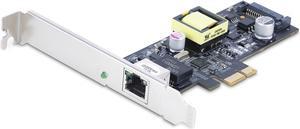
StarTech.com 1-Port 2.5Gbps PCI Express PoE Network Card, Intel I225-V, PCIe 802.3af/at PoE+ Multi-Gigabit NIC, SATA Powered Ethernet Card
- Model #: PR12GIPNETWORKCARD
- Item #: 14U-002S-000U5
- Return Policy: Extended Holiday Return Policy
$105.99
Free Shipping
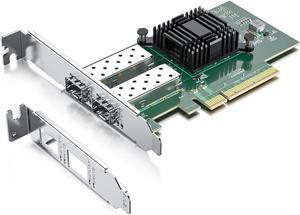
10Gtek For Intel X520-DA2, Intel E10G42BTDA Adapter Card with Intel 82599EN Controller 10Gb PCI-E Network Card, PCI Express2.0 x8, Dual SFP+ Ports, Support Windows Server/Linux/VMware
- Standards: IEEE802.3, IEEE802.3u, IEEE802.3ab
- Connectors: 2 x SFP+
- Temperature: 0°C ~ 55°C
- Features: Intel X520
- Model #: 603149402218
- Item #: 9SIA9Z940P2269
- Return Policy: View Return Policy
$59.99
Free Shipping
Doesn't require any weird pro-grade server backplanes to connect, just a regular PCI Express slot If drivers are needed, they can be downloaded as a bundle beforehand and installed offline SFP+ ports accept a few varieties of transceiver, so you don't even need to replace your ethernet wiring to use this
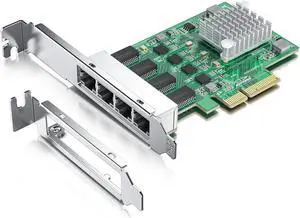
10Gtek 2.5Gbps Ethernet Network Adapter Card, PCIe x4 to RJ45 w/ Realtek RTL8125BG Controller, 2500/1000/100Mbps PCI Express Gigabit Ethernet Quad RJ45 Ports Support Windows/Linux/Ubuntu/Centos/Vmware
- Connectors: 4 x RJ45
- Weight: 9.02 x 5.98 x 1.14 inches; 7.05 Ounces
- Model #: RTL8125-2.5G-4T-X4
- Item #: 9SIA9Z9JVU4984
- Return Policy: View Return Policy
$65.99
Free Shipping
easy plug and play install did improve net speed.
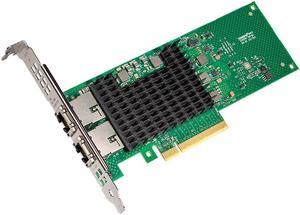
Intel - X710T2LBLK - Intel Ethernet Network Adapter X710-T2L - BLK - PCI Express 3.0 x 8 - 2 Ports (s) - BLK
- Connectors: 2 x RJ45
- Temperature: Operating Temperature: 0 °C to 55 °C (32 °F to 131 °F) Storage Temperature: -40 °C to 70 °C (-40 °F to 158 °F)
- Humidity: Storage Humidity Maximum: 90% non-condensing relative humidity at 35 °C
- Dimensions: 167 mm x 69 mm
- Model #: X710T2LBLK
- Item #: 0XM-009Y-001B1
- Return Policy: Extended Holiday Return Policy
$249.00
Free Shipping
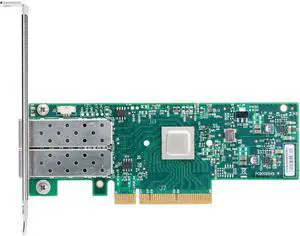
NVIDIA MCX4121A-ACAT ConnectX-4 Lx EN Adapter Card 25GbE - PCI Express 3.0 x8 - 2 Port(s) - Optical Fiber - 25GBase-X - SFP - Plug-in Card | MCX4121A-ACAT
- Model #: MCX4121AACAT
- Item #: 9SIA4A0K9D5776
- Return Policy: View Return Policy
$96.99
Free Shipping
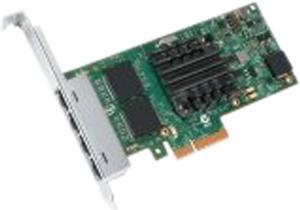
Intel Ethernet Server Adapter I350-T4
- Weight: 1
- Parts: Lifetime
- Labor: 30 DAYS WARRANTY
- Model #: I350T4V2BLK
- Item #: 9SIAC3KKD14010
- Return Policy: View Return Policy
$147.25
Windows 10 Pro support VLANS Jumbo Frames More ports than i could ever use.
Dell 557M9 1GbE Dual Port PCI-e Network Interface Card Adapter Broadcom 5720
- Model #: 557M9-n-dell-atp
- Item #: 9SIA4A0KMV7853
- Return Policy: View Return Policy
$34.99
Free Shipping
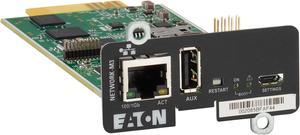
Eaton Network Card-M3 - Remote management adapter - Gigabit Ethernet x 1
- Weight: 2.0000
- Model #: NETWORK-M3
- Item #: 9SIA4A0KEM7171
- Return Policy: View Return Policy
$338.99
Free Shipping
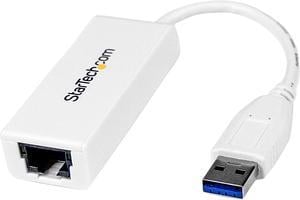
StarTech.com USB to Ethernet Adapter, USB 3.0 to 10/100/1000 Gigabit Ethernet LAN Adapter, USB to RJ45 Adapter, TAA Compliant
- Weight: 0.35
- Package Contents: USB 3.0 to Gigabit Ethernet NIC Network Adapter 1 x Driver CD 1 x Instruction Manual
- Parts: 2 Year
- Labor: 2 Year
- Model #: USB31000SW
- Item #: N82E16833114088
- Return Policy: Manufacturer Only Return Policy
$31.99
Free Shipping
Fast way to get direct web into a netbook, tablet or other device for upgrades. if you are not aware of this windows and some flavors of linux cannot upgrade all of their files over wifi-- once a month you need to directly connect to the web if you need bugfixes and want upgrades. it cannot be done over wifi, if you dont believe me dive into some microsoft support pages or get into a linux forum or just google it. some things just cannot be done on wifi, read your fine print people. this will fix what ails your netbooks and tablets and slimline lappys that have no Ethernet jack.
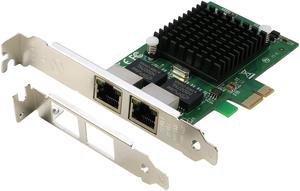
2Port 1000M PCI-E Gigabit Ethernet Network Adapter Card Intel82576 Chipset, Dual RJ45 1G 1000 Mbps PCIe Network Controller LAN Card, with Low Profile Bracket
- Standards: IEEE802.3, IEEE802.3u, IEEE802.3x
- Connectors: 2 x RJ45
- Package Contents: 1x PCIE Dual Port Network Card Adapter(10/100/1000M). 1x Low Profile Bracket.
- Class: 1000M, Dual RJ45
- Model #: NIC-PCE1G-2P
- Item #: 9SIARE9F3N2824
- Return Policy: View Return Policy
$29.99
Free Shipping
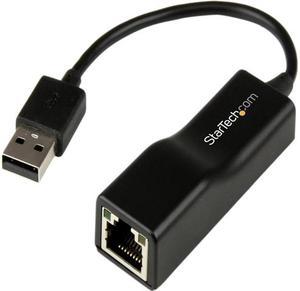
StarTech.com USB 2.0 to 10/100 Mbps Ethernet Network Adapter Dongle
- Weight: 0.3
- Package Contents: USB 2.0 to 10/100 Mbps Ethernet Network Adapter Dongle 1 x Driver CD 1 x Instruction Manual
- Parts: 2 Year
- Labor: 2 Year
- Model #: USB2100
- Item #: 9SIA6ZPK9X6846
- Return Policy: View Return Policy
$29.17
Ran the installer and plugged it in - no issues. Now I got 2 machines sharing an Ethernet port. Internet is just as fast as a normal connection.
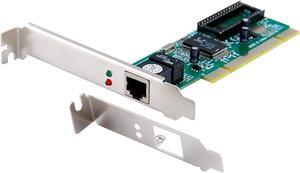
Gigabit Ethernet LAN Low Profile PCI Network Controller Card 10/100/1000
- Connectors: 1 x RJ45
- Weight: 1 pound
- Model #: LAN-PCI
- Item #: 9SIA20PK0X8011
- Return Policy: View Return Policy
$10.99
Free Shipping
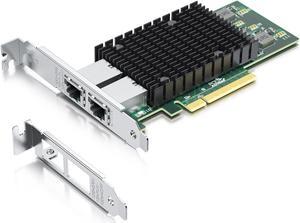
10Gtek 10Gb PCI-E NIC Network Card, Dual Copper RJ45 Port, with Intel X540 Controller, Compare to Intel X540-T2, PCI Express Ethernet LAN Adapter Support Windows Server/Windows/Linux/ESX
- Standards: IEEE802.3, IEEE802.3u, IEEE802.3ab
- Connectors: 2 x RJ45
- Temperature: 0°C ~ 55°C
- Model #: X540-10G-2T-X8-X
- Item #: 9SIA9Z9JYM0582
- Return Policy: View Return Policy
$65.99
Free Shipping
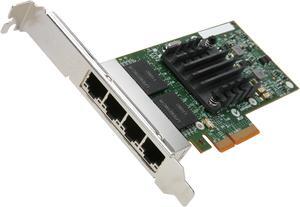
Intel E1G44HT PCI-Express 2.0 Server Adapter I340-T4
- Standards: IEEE802.3, IEEE802.3u, IEEE802.3ab
- Connectors: 4 x RJ45
- Temperature: 0°C ~ 55°C
- Weight: 0.45
- Model #: E1G44HT
- Item #: 9SIA4A0K9D6911
- Return Policy: View Return Policy
$85.99
Free Shipping
Running with OpenSuSE Linux. Card was immediately recognized by BIOS and all drivers attached. Simple file transfer tests show expected bandwidth. I have not bothered to use any of the 802.3ad (link aggregation) features in the card; all I need is VLANs and gigabit interfaces. Those parts I'm using work well, and I have no opinion on the rest.
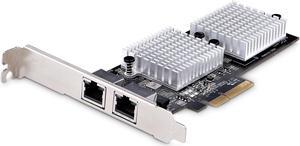
StarTech.com 2-Port 10Gbps PCIe Network Adapter Card, Network Card for PC/Server, PCIe Ethernet Card w/Jumbo Frame, NIC/LAN Interface Card
- Part Number: ST10GSPEXNDP2
- Standards: IEEE 802.3an (10GBASE-T) 802.3bz (5GBASE-T) 802.3bz (2.5GBASE-T) IEEE 802.3ab (1000BASE-T) IEEE 802.3u (100BASE-T) IEEE 802.3 (10BASE-T) IEEE P802.3az Energy Efficient Ethernet (EEE) IEEE 1588 (PTP) Wake-on-LAN (WOL) PCI Express Version 3.0
- Connectors: 2 x RJ45
- Wake On LAN: Yes
- Model #: ST10GSPEXNDP2
- Item #: N82E16833114446
- Return Policy: Extended Holiday Return Policy
$170.99
$309.99
Free Shipping
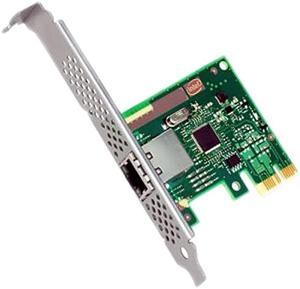
Intel I210T1 PCI-Express Network Adapter
- Parts: Lifetime
- Labor: Lifetime
- Model #: I210T1BLK
- Item #: 9SIAFJ8BGG9704
- Return Policy: View Return Policy
$51.34
Free Shipping
The obvious question is why one would purchase this card over the far cheaper options. Generic 1Gbps NICs can be had for just over a tenth the cost, while Intel's desktop varieties run less than half the price of this card. Leaving aside the cheapest cards - ones I've found to cause more problems with data corruption and reliability than it's worth - the main reason to go with a server card is if you will be loading it heavily. If you're running your own datacenter, power-saving features such as EEE and DMA coalescing are handy, but that likely doesn't apply to most potential customers for this NIC. The I210T1 does an even better job at offloading calculations than previous generation NICs.Saturate a full 1Gbps connection with multiple streams and you'll see CPU usage drop in comparison to what it is with desktop cards. We put this card in a workstation to replace the on-board Realtek NIC. System CPU time dropped by 20-30% under very heavy network loads after switching to the I210T1. Another benefit to the I210T1 - and a possible reason to upgrade to this new model - is Audio Video Bridging (AVB) support. When working on projects where multiple media streams need to be perfectly synchronized, AVB worked wonders. Older NICs simply could not keep everything synced perfectly. We needed to work on 10Gbps connections instead. Being able to accomplish the same feat with a much cheaper card is great! The I210T1 is tiny. It fits easily even in systems with bulging heatsinks and video cards.